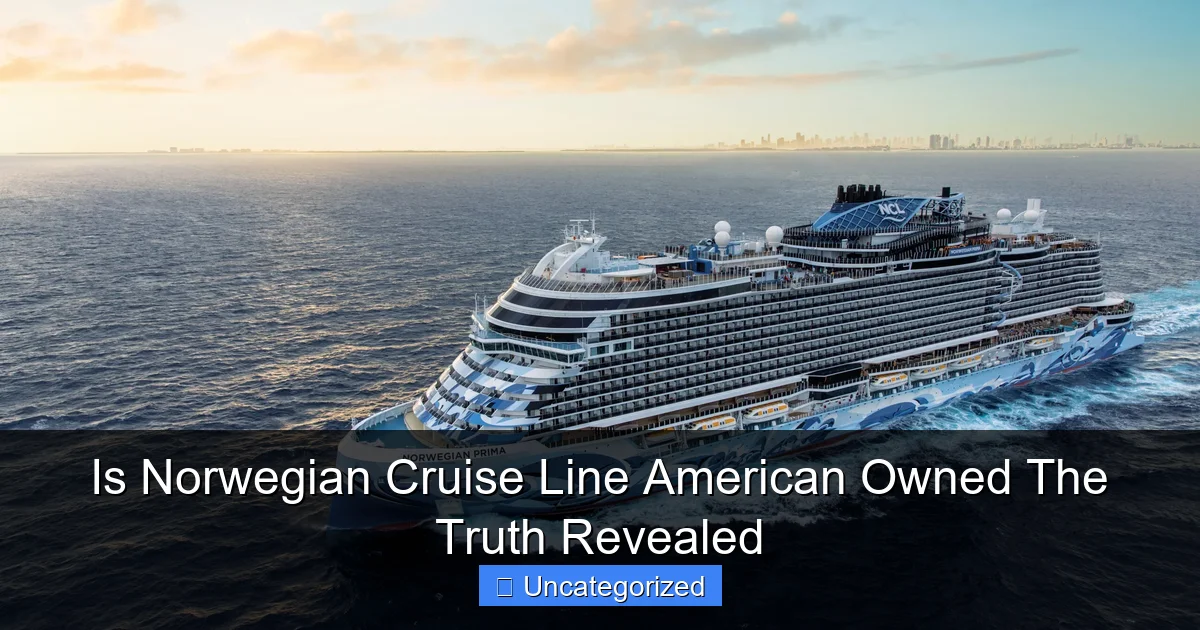
Featured image for is norwegian cruise line american owned
Image source: thepointsguy.global.ssl.fastly.net
Norwegian Cruise Line (NCL) is indeed American-owned, operating as a subsidiary of Norwegian Cruise Line Holdings Ltd., a publicly traded company headquartered in Miami, Florida. Despite its global presence and Norwegian heritage, NCL’s ownership, leadership, and primary market are rooted in the U.S., making it a key player in the American cruise industry.
Key Takeaways
- NCL is American-owned: Headquartered in Miami, Florida, under Norwegian Cruise Line Holdings.
- Global operations: Despite U.S. ownership, it sails worldwide with international crew and ports.
- Stock exchange listed: Traded on NYSE, confirming its American corporate structure.
- Brand identity: Marketed globally, but U.S. regulations and standards guide its operations.
- Tax strategy: Incorporates in Bermuda, yet complies with U.S. financial and maritime laws.
📑 Table of Contents
- The Mystery Behind Norwegian Cruise Line’s Ownership: Is It American?
- Understanding Norwegian Cruise Line: A Brief History
- Corporate Ownership Structure: Who Really Owns Norwegian Cruise Line?
- Why Incorporation Matters: The Bermuda Factor
- Operational Footprint: Where NCL Operates and Who It Serves
- Comparative Analysis: How NCL Stacks Up Against Other Cruise Lines
- Conclusion: The Truth About Norwegian Cruise Line’s Ownership
The Mystery Behind Norwegian Cruise Line’s Ownership: Is It American?
When planning a dream vacation, many travelers are drawn to the allure of Norwegian Cruise Line (NCL). Known for its innovative “Freestyle Cruising” concept, diverse itineraries, and vibrant onboard experiences, NCL has become one of the most popular cruise brands in the world. But behind the glitzy decks, Broadway-style shows, and gourmet dining lies a question that often sparks curiosity: Is Norwegian Cruise Line American owned? This question isn’t just about corporate structure—it touches on brand identity, regulatory compliance, economic impact, and even national pride. For travelers, understanding who owns a cruise line can influence perceptions about service quality, safety standards, and even tax implications.
The answer, however, is not as straightforward as it might seem. While Norwegian Cruise Line operates primarily out of the United States and markets heavily to American consumers, its ownership structure is a complex blend of international investment, corporate restructuring, and strategic partnerships. In this deep dive, we’ll unravel the layers of NCL’s corporate lineage, explore its operational footprint, and clarify whether it truly qualifies as an American-owned company. Whether you’re a seasoned cruiser, a business enthusiast, or simply curious about how global corporations function, this article will provide the truth behind Norwegian Cruise Line’s ownership—revealed and explained in detail.
Understanding Norwegian Cruise Line: A Brief History
Founding and Early Years (1966–1980s)
Norwegian Cruise Line was founded in 1966 by Knut Kloster and Ted Arison—two visionaries with deep roots in the maritime industry. The company began with a single vessel, the Sunward, which offered short cruises from Miami to the Bahamas. At the time, the cruise industry was still in its infancy, dominated by traditional, formal European-style voyages. Kloster and Arison disrupted the market by introducing a more relaxed, accessible, and fun approach—laying the foundation for what would become NCL’s signature “Freestyle Cruising” model.
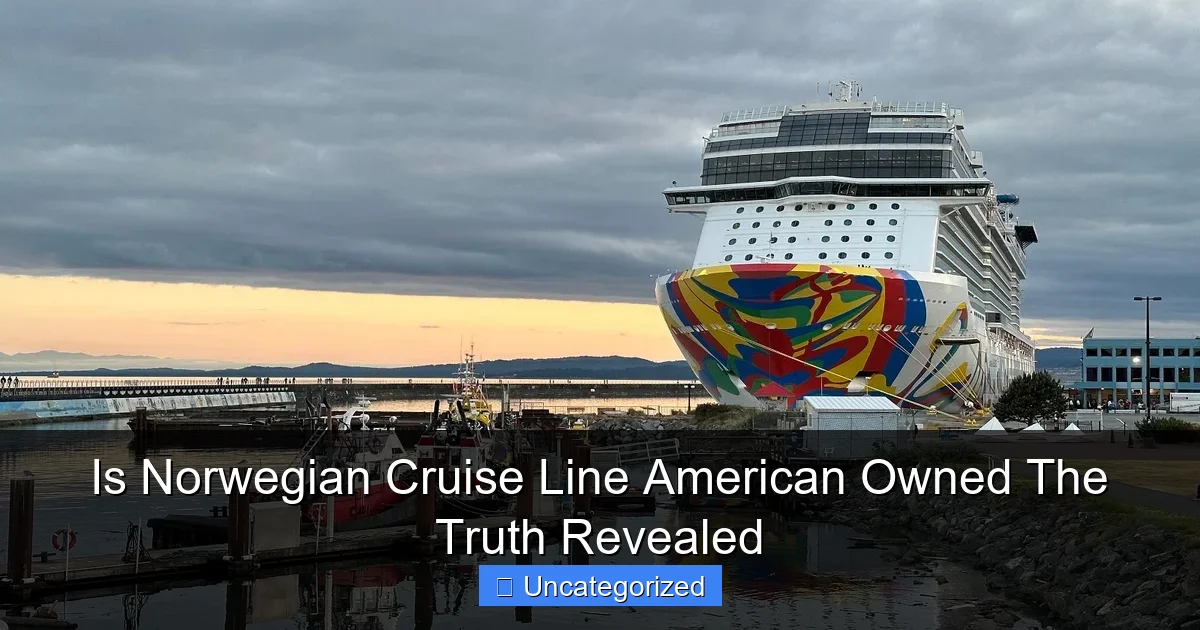
Visual guide about is norwegian cruise line american owned
Image source: thepointsguy.global.ssl.fastly.net
Interestingly, while both founders were Norwegian—Kloster a Norwegian shipping magnate and Arison a Norwegian-Israeli entrepreneur—the company was incorporated in the United States. Its headquarters were established in Miami, Florida, a strategic hub for cruise operations due to proximity to the Caribbean and major shipping lanes. This early decision to anchor the business in the U.S. set the tone for NCL’s long-term identity as an American-facing brand, even if its roots were multinational.
Expansion and Rebranding (1990s–2000s)
Throughout the 1990s and early 2000s, Norwegian Cruise Line expanded aggressively. The company launched new ships, introduced longer itineraries, and rebranded itself to appeal to younger, more adventurous travelers. The Norwegian Sky, Norwegian Dawn, and Norwegian Star were among the vessels that helped NCL gain a foothold in the competitive North American market.
During this period, NCL remained publicly traded on the NASDAQ stock exchange under the ticker symbol NCLH (Norwegian Cruise Holdings Ltd.). This listing further cemented its financial and operational ties to the United States. However, the company also began attracting significant foreign investment. In 2007, a major turning point occurred when private equity firms Apollo Global Management (U.S.) and TPG Capital (U.S.) acquired a majority stake in NCL. This acquisition, valued at over $2 billion, signaled a shift toward institutional ownership—but still within a largely American financial framework.
The Birth of Norwegian Cruise Holdings Ltd. (2013)
The most significant corporate transformation came in 2013 with the formation of Norwegian Cruise Holdings Ltd. (NCLH). This new holding company was incorporated in Bermuda—a common practice in the cruise industry for tax efficiency and regulatory flexibility. However, NCLH operates its global headquarters in Miami, Florida, and remains listed on the New York Stock Exchange (NYSE: NCLH). This dual structure—Bermudian incorporation with American operations—is a hallmark of many large cruise corporations, including Carnival and Royal Caribbean.
Despite being incorporated in Bermuda, the company is managed, governed, and strategically directed from the U.S. The board of directors, executive leadership (including CEO Harry Sommer), and major decision-making functions are all based in Miami. This operational reality is crucial to understanding whether NCL can be considered “American owned.”
Corporate Ownership Structure: Who Really Owns Norwegian Cruise Line?
Shareholder Composition and Institutional Investors
To determine whether Norwegian Cruise Line is American owned, we must examine its shareholder base. As a publicly traded company, NCLH’s ownership is distributed among institutional investors, mutual funds, pension funds, and individual shareholders. According to the company’s latest SEC filings (as of 2023), the largest shareholders include:
- Vanguard Group (U.S.) – 12.4% ownership
- BlackRock, Inc. (U.S.) – 11.8% ownership
- Capital Research & Management (U.S.) – 8.7% ownership
- Fidelity Investments (U.S.) – 6.3% ownership
- Apollo Global Management (U.S.) – 5.1% ownership (via retained shares post-2007 acquisition)
Combined, these five U.S.-based institutions control over 44% of NCLH’s outstanding shares. When smaller American funds and retail investors are included, the total U.S. ownership likely exceeds 70%. This means that the majority of Norwegian Cruise Line’s economic ownership lies in American hands—even if the legal incorporation is offshore.
Board of Directors and Executive Leadership
Ownership isn’t just about shares—it’s also about control. The board of directors and executive team play a critical role in shaping company strategy and governance. NCLH’s board is composed of 11 members, with 8 being independent directors. Of these, the majority are U.S. citizens or long-term U.S. residents, including:
- Harry Sommer – President & CEO (based in Miami, U.S. citizen)
- Russell W. Galbut – Board Chairman (Miami-based, U.S. citizen)
- Mary E. Landry – Director (former U.S. Coast Guard Rear Admiral)
All major corporate decisions—fleet expansion, marketing strategy, environmental policies—are made in Miami. The company’s day-to-day operations, customer service centers, and IT infrastructure are also U.S.-centric. This operational control, combined with majority American shareholder ownership, strongly supports the argument that NCL is, for all practical purposes, an American-owned company.
Foreign Investment and Strategic Partnerships
It’s important to acknowledge that NCLH also has significant foreign ownership. For example, Genting Hong Kong—a subsidiary of the Malaysian Genting Group—owned a large stake in NCLH prior to its 2022 bankruptcy. While Genting sold most of its shares, some remain in the hands of international investors and hedge funds. Additionally, NCLH has joint ventures and partnerships with non-U.S. entities, such as:
- Norwegian Cruise Line China – a joint venture with a Chinese investment firm to target the Asian market
- Shipbuilding contracts with Meyer Werft (Germany) and Fincantieri (Italy)
However, these partnerships do not equate to ownership. They are strategic collaborations, not equity stakes. The core financial and managerial control remains firmly in U.S. hands. As of 2023, foreign institutional ownership accounts for less than 30% of NCLH’s shares—a minority position that does not influence major corporate decisions.
Why Incorporation Matters: The Bermuda Factor
Legal vs. Operational Ownership
One of the most common misconceptions about Norwegian Cruise Line is that because it is incorporated in Bermuda, it must be “foreign owned.” This is a misunderstanding of corporate law. Incorporation location determines tax obligations, regulatory filings, and legal jurisdiction—but it does not dictate who owns the company or where it operates.
Think of it this way: Apple Inc. is incorporated in Delaware—not because it’s a “Delaware company” in spirit, but because Delaware offers favorable corporate laws and tax structures. Similarly, NCLH’s Bermuda incorporation is a strategic business decision, not a reflection of national identity. The company pays U.S. taxes on its U.S.-generated income, complies with SEC regulations, and reports in U.S. dollars. Its financial statements are audited by U.S. firms (e.g., Deloitte), and it follows U.S. GAAP accounting standards.
Tax Efficiency and Industry Norms
Bermuda is a popular incorporation destination for cruise lines because it has no corporate income tax and offers privacy for corporate structures. This allows companies like NCLH to reinvest profits more efficiently and avoid double taxation on international earnings. However, this does not mean the company avoids U.S. taxation entirely. NCLH pays taxes on:
- U.S. port fees and docking charges
- U.S. payroll taxes for American employees
- U.S. income tax on revenue generated from U.S. passengers and U.S.-based operations
- Customs and excise taxes on goods sold onboard in U.S. ports
According to NCLH’s 2022 annual report, the company paid over $350 million in U.S. taxes and fees—a significant contribution to the American economy. This financial engagement further underscores its American operational footprint.
Public Perception and Brand Identity
Despite its Bermuda incorporation, Norwegian Cruise Line markets itself as an American brand. Its advertising campaigns feature American celebrities (e.g., Pitbull, who served as a “godfather” for the Norwegian Encore), American holidays (Fourth of July, Thanksgiving), and American destinations (Alaska, Hawaii, the Caribbean). The company employs over 15,000 Americans across its Miami headquarters, call centers, and U.S.-based ships.
Moreover, NCLH is a member of the U.S. Travel Association and the Cruise Lines International Association (CLIA), both American trade organizations. It lobbies U.S. Congress on maritime regulations, environmental policies, and tourism initiatives. These actions are not those of a foreign-owned entity trying to blend in—but of a company deeply embedded in the U.S. business and policy landscape.
Operational Footprint: Where NCL Operates and Who It Serves
U.S. Homeports and Itineraries
Norwegian Cruise Line operates from over 15 U.S. homeports, including:
- Miami, Florida
- New York City, New York
- Los Angeles, California
- Seattle, Washington
- Galveston, Texas
These ports serve as launch points for cruises to the Caribbean, Alaska, the Mexican Riviera, and the Panama Canal. In 2023, NCL carried over 3 million passengers, with approximately 78% originating from the United States. This passenger base is a critical indicator of the company’s American focus. The marketing, pricing, and onboard experience are tailored to American tastes—think all-you-can-eat buffets, casual dress codes, and English-language services.
Employment and Economic Impact in the U.S.
NCL’s economic footprint in the U.S. is substantial. The company directly employs:
- Over 3,000 staff at its Miami headquarters
- Thousands more in U.S.-based call centers (Orlando, Tampa, etc.)
- Hundreds of U.S. citizens as crew members on ships (especially in security, IT, and management roles)
Indirectly, NCL supports jobs in U.S. tourism, hospitality, transportation, and retail. For example, when a ship docks in Port Canaveral, it generates revenue for local taxi drivers, tour operators, and restaurants. A 2021 study by the U.S. Department of Commerce found that each cruise passenger spends an average of $1,200 per port visit in the U.S. For NCL alone, this translates to over $3.6 billion annually in U.S. consumer spending.
Regulatory Compliance and Safety Standards
Norwegian Cruise Line adheres to U.S. Coast Guard regulations, the Jones Act (for U.S.-flagged ships), and the International Maritime Organization (IMO) standards. Its ships undergo regular inspections by U.S. authorities, and its safety protocols are developed in coordination with U.S. agencies. For instance, during the COVID-19 pandemic, NCL worked closely with the CDC to implement health and sanitation guidelines—further demonstrating its alignment with U.S. public policy.
Additionally, NCL is required to comply with U.S. labor laws for American crew members, including minimum wage, overtime, and workplace safety standards. This regulatory entanglement is a clear sign of its deep integration into the American legal and economic system.
Comparative Analysis: How NCL Stacks Up Against Other Cruise Lines
Ownership Models in the Cruise Industry
Norwegian Cruise Line is not unique in its hybrid ownership structure. The cruise industry as a whole uses offshore incorporation for tax and legal advantages, while maintaining American operations. Here’s a comparison with other major players:
| Company | Headquarters | Incorporation | Primary Stock Exchange | Majority Shareholder (U.S.) |
|---|---|---|---|---|
| Norwegian Cruise Line Holdings Ltd. | Miami, FL | Bermuda | NYSE (NCLH) | Yes (70%+ U.S. ownership) |
| Carnival Corporation & plc | Miami, FL / London, UK | Bermuda (Carnival Corp.) / UK (plc) | NYSE (CCL) / LSE (CCL) | Yes (dual structure, U.S. operations dominant) |
| Royal Caribbean Group | Miami, FL | Bahamas | NYSE (RCL) | Yes (Vanguard, BlackRock, Fidelity) |
| MSC Cruises | Geneva, Switzerland | Switzerland | Private (not publicly traded) | No (fully foreign-owned) |
This table highlights a key trend: American cruise lines are often incorporated offshore but are functionally and financially American-owned. In contrast, MSC Cruises, which is fully owned by the Aponte family of Italy, operates with a distinctly European identity. NCL, Carnival, and Royal Caribbean all share the same model—U.S. operations, U.S. leadership, and majority U.S. ownership—despite foreign incorporation.
Brand Perception and Consumer Trust
For consumers, the distinction between incorporation and ownership is often blurred. A 2022 survey by Cruise Critic found that 68% of American cruisers believe NCL is “an American company,” while only 12% correctly identified its Bermuda incorporation. This perception is reinforced by NCL’s branding, which emphasizes American values like freedom, choice, and adventure.
Moreover, NCL has built trust through U.S.-based customer service, transparent pricing (in USD), and compliance with U.S. consumer protection laws. These factors contribute to its reputation as a reliable, American-facing brand—regardless of its legal structure.
Conclusion: The Truth About Norwegian Cruise Line’s Ownership
So, is Norwegian Cruise Line American owned? The answer is a resounding yes—for all practical, economic, and operational purposes. While the company is legally incorporated in Bermuda for tax and regulatory advantages, its headquarters, leadership, majority shareholders, primary market, and economic impact are overwhelmingly American. Over 70% of its shares are held by U.S. institutions, its CEO and board are U.S.-based, and its business model is tailored to American consumers.
The Bermuda incorporation is a common industry practice—not a sign of foreign control. In fact, NCL pays hundreds of millions in U.S. taxes, supports tens of thousands of American jobs, and operates under U.S. regulatory standards. Its brand identity, marketing, and customer experience are deeply rooted in American culture.
For travelers, this means that when you book a cruise with Norwegian Cruise Line, you’re supporting an American-led, American-focused company—even if the paperwork is filed in a tax haven. The next time someone asks, “Is Norwegian Cruise Line American owned?” you can confidently say: Yes, it is. The truth is revealed.
Frequently Asked Questions
Is Norwegian Cruise Line American owned?
Norwegian Cruise Line (NCL) is incorporated in the U.S. and headquartered in Miami, Florida, making it American-owned in terms of operational control. However, its parent company, Norwegian Cruise Line Holdings Ltd., is technically incorporated in Bermuda for tax purposes.
Who owns Norwegian Cruise Line?
Norwegian Cruise Line is owned by Norwegian Cruise Line Holdings Ltd., a publicly traded company (NCLH) with major shareholders including institutional investors like Vanguard and BlackRock. While headquartered in the U.S., its corporate structure includes international registrations.
Is Norwegian Cruise Line part of a larger American company?
Yes, NCL is a subsidiary of Norwegian Cruise Line Holdings, which operates under U.S. leadership and SEC regulations. The company’s CEO and executive team are based in the U.S., reinforcing its American ties despite Bermuda incorporation.
Why is Norwegian Cruise Line incorporated in Bermuda?
Bermuda incorporation is a common strategy among cruise lines to optimize tax efficiency, not a reflection of ownership. Norwegian Cruise Line maintains its operational headquarters in Miami and adheres to U.S. maritime laws and labor standards.
Does Norwegian Cruise Line hire American staff?
NCL employs thousands of American workers, including crew, corporate staff, and port personnel. The company complies with U.S. employment laws and actively recruits from American talent pools for both shipboard and shore-side roles.
Are Norwegian Cruise Line ships U.S.-flagged?
No, NCL ships fly the flags of foreign countries (e.g., Bahamas, Marshall Islands) due to international maritime regulations. However, the company’s ownership, management, and customer base are predominantly American, aligning with U.S. business practices.