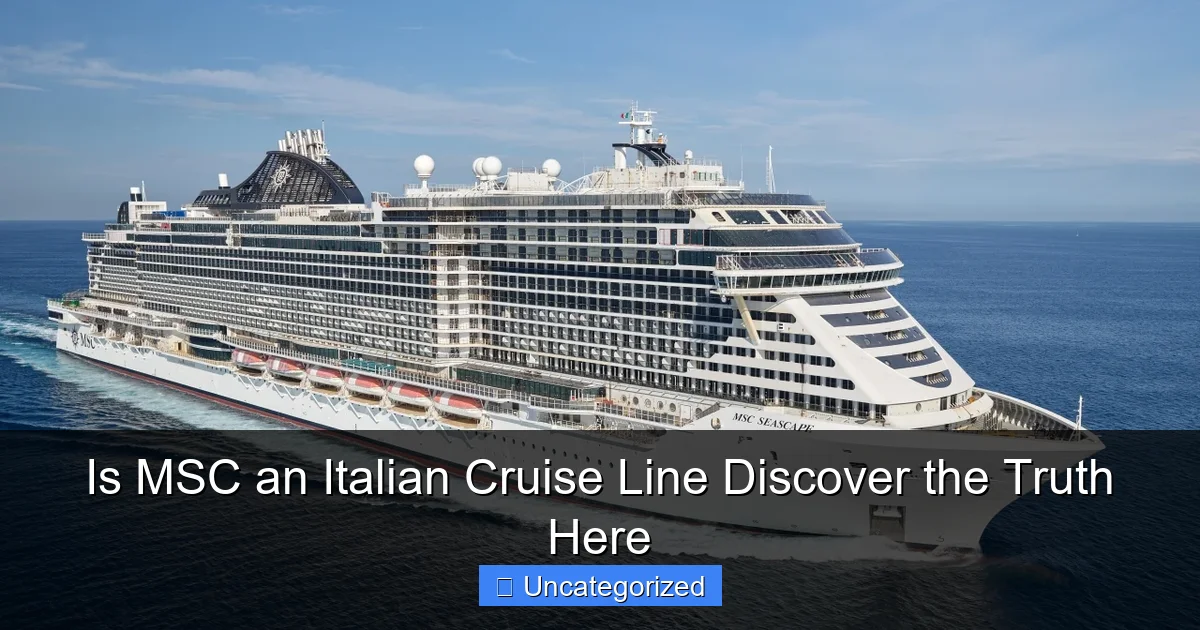
Featured image for is msc an italian cruise line
Image source: shipsatsea.de
MSC Cruises is not an Italian cruise line, despite its strong Mediterranean heritage and Italian-inspired onboard experience. Headquartered in Geneva, Switzerland, MSC is a global brand owned by the Mediterranean Shipping Company, blending Italian design, cuisine, and flair with international operations and itineraries.
Key Takeaways
- MSC is Italian-owned: Headquartered in Switzerland but founded by the Italian Aponte family.
- Global operations: Ships sail worldwide, reflecting an international brand, not just Italian.
- Authentic Italian flair: Onboard dining, design, and culture highlight Italy’s influence.
- Not all ships are Italian-crewed: Crews are multinational, though Italian is widely spoken.
- Italian roots, global reach: Choose MSC for Italian charm with international diversity.
📑 Table of Contents
- Is MSC an Italian Cruise Line? Discover the Truth Here
- The Origins and Ownership of MSC Cruises
- MSC’s Italian Cultural Influence and Brand Identity
- MSC’s Global Expansion and International Operations
- MSC’s Italian Partnerships and Collaborations
- What This Means for Cruisers: Choosing MSC in 2024 and Beyond
- Conclusion: The Best of Both Worlds
Is MSC an Italian Cruise Line? Discover the Truth Here
When it comes to luxury cruising, few names spark as much curiosity and admiration as MSC Cruises. With its elegant ships, Mediterranean-inspired cuisine, and a strong presence in ports across Italy, many travelers assume that MSC is an Italian cruise line. After all, the company’s name itself—MSC—might sound like it’s rooted in Italian heritage. But is that really the case? The answer isn’t as straightforward as it seems. While MSC Cruises is deeply intertwined with Italian culture, history, and operations, its ownership, corporate structure, and global footprint reveal a more complex and fascinating story.
MSC Cruises, formally known as Mediterranean Shipping Company Cruises, is one of the fastest-growing cruise lines in the world. With a fleet that now exceeds 20 modern vessels and ambitious expansion plans, including the launch of the MSC World Europa—the largest ship in its fleet—MSC has become a major player in the global cruising industry. Yet, despite its Italian-sounding name and strong Mediterranean roots, the company’s origins, ownership, and operational base tell a different tale. In this comprehensive guide, we’ll explore the truth behind MSC’s identity: its Italian connections, its Swiss ownership, its global operations, and what this means for cruisers today. Whether you’re a seasoned traveler or planning your first cruise, understanding MSC’s true identity will help you make informed decisions and appreciate the brand’s unique global-Italian fusion.
The Origins and Ownership of MSC Cruises
The story of MSC Cruises begins not in Italy, but in a small shipping office in Geneva, Switzerland. To understand whether MSC is an Italian cruise line, we must first look at its roots in the broader Mediterranean Shipping Company (MSC), a global shipping giant.
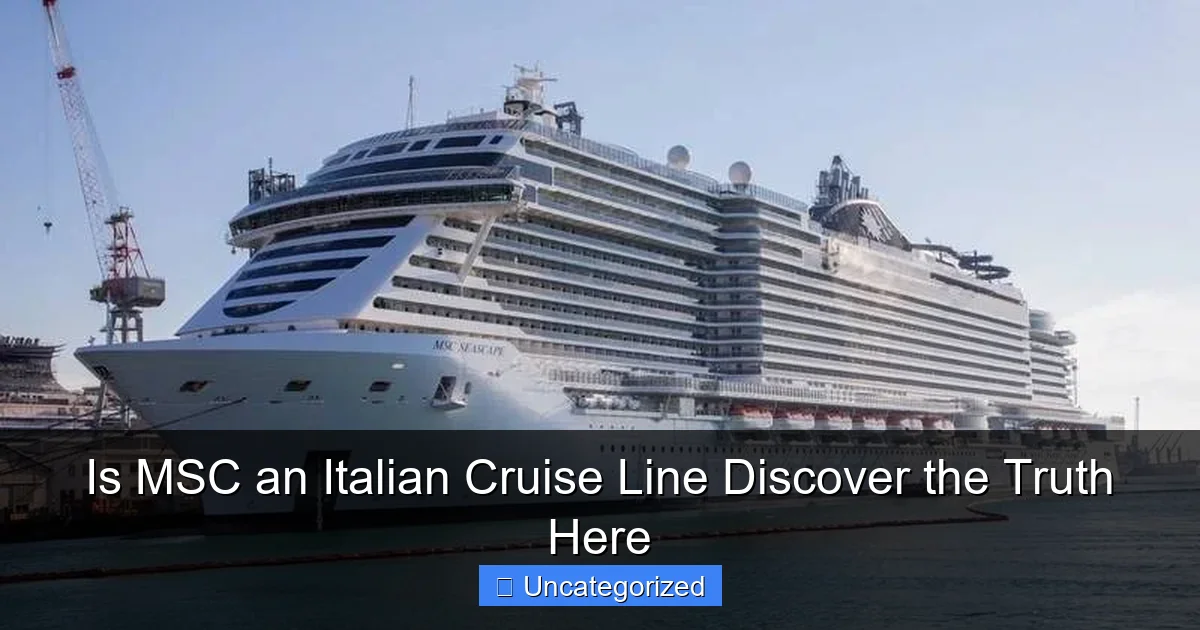
Visual guide about is msc an italian cruise line
Image source: images.marinelink.com
From Shipping to Cruising: The MSC Group’s Evolution
MSC was founded in 1970 by Gianluigi Aponte, an Italian-born entrepreneur, in Geneva, Switzerland. The company began as a modest shipping business focused on container shipping across the Mediterranean and quickly expanded into a global logistics powerhouse. By the 1990s, MSC had become one of the world’s largest container shipping companies, operating over 500 vessels and managing logistics in more than 150 countries.
In 1995, Aponte saw an opportunity in the cruise industry. He launched MSC Cruises as a subsidiary of the MSC Group, initially purchasing and refurbishing older vessels to create a mid-tier cruise experience. The goal was to offer affordable, high-quality cruising with a distinctly Mediterranean flair—hence the name “Mediterranean Shipping Company.” While the name evokes Italy, the company was legally incorporated in Switzerland, and its corporate headquarters remain in Geneva to this day.
This distinction is crucial: MSC Cruises is a Swiss-owned and headquartered company, even though it is run by an Italian family and deeply influenced by Italian culture. Think of it like the way Ferrari is an Italian car brand but is now part of the multinational Stellantis group—ownership and nationality aren’t always the same.
Family Legacy and Leadership
Gianluigi Aponte remains the Chairman of the MSC Group, and his son, Diego Aponte, has taken over as President and CEO of MSC Cruises. The Aponte family maintains full control of the company through private ownership, which is rare in today’s corporate world. This family-led structure ensures continuity and a strong personal vision for the brand, blending Swiss business acumen with Italian passion and hospitality.
Despite being headquartered in Switzerland, the Aponte family maintains strong ties to Italy. Gianluigi Aponte was born in Sorrento, Italy, and the company has always emphasized its Italian heritage in marketing, onboard experiences, and partnerships. For example, MSC Cruises collaborates with Italian chefs, designers, and artisans to create authentic dining and interior experiences. This cultural infusion is a deliberate strategy to appeal to both Italian and international travelers.
Key Takeaway: Ownership vs. Identity
So, is MSC an Italian cruise line? In terms of legal ownership and corporate structure, the answer is no—it’s a Swiss company. But in terms of brand identity, culture, and operational focus, the answer is a resounding yes. MSC Cruises is a global brand with a strong Italian soul. This hybrid identity is one of its greatest strengths, allowing it to blend the efficiency and precision of Swiss management with the warmth, elegance, and flair of Italian hospitality.
MSC’s Italian Cultural Influence and Brand Identity
While MSC Cruises may be Swiss-owned, its brand identity is unmistakably Italian. From its onboard ambiance to its marketing campaigns, MSC has masterfully woven Italian culture into every aspect of the guest experience. This cultural authenticity is not just for show—it’s a core part of the company’s DNA.
Onboard Italian Flair: Food, Design, and Service
One of the first things cruisers notice on an MSC ship is the Italian-inspired atmosphere. The interiors of MSC vessels are designed with a Mediterranean aesthetic—think terracotta tiles, wrought-iron balconies, marble accents, and artwork inspired by Italian cities like Venice, Florence, and Rome. The ships often feature open-air piazzas, gelato bars, and Italian coffee stations, creating a sense of place that feels more like a floating Italian village than a generic cruise liner.
Food is another area where MSC’s Italian identity shines. Every ship offers multiple Italian restaurants, including Eataly-branded venues in partnership with the famous Italian food brand. Guests can enjoy authentic Neapolitan pizza, fresh pasta made daily, and regional specialties from Sicily, Tuscany, and the Amalfi Coast. Wine lists feature a strong emphasis on Italian vintages, and sommeliers are often trained in Italian enology.
Service, too, reflects Italian values. While MSC employs staff from over 100 nationalities, many of the senior crew and hospitality managers are Italian or have been trained in Italian service standards. The emphasis is on warmth, personal attention, and creating a “home away from home” experience—hallmarks of Italian hospitality.
Port Operations and Italian Homeports
MSC Cruises operates a significant number of its itineraries out of Italian ports, further reinforcing its Italian identity. Major homeports include Genoa, Civitavecchia (near Rome), Naples, and Venice. These ports serve as launchpads for Mediterranean voyages, allowing guests to begin and end their trips in iconic Italian cities.
In fact, MSC is the largest cruise operator in the Mediterranean, with over 40% of its fleet dedicated to European itineraries. The company has invested heavily in port infrastructure in Italy, including private terminals and dedicated check-in facilities to streamline the embarkation process. This deep integration with Italian port systems makes MSC feel like a native operator, even if its corporate HQ is in Geneva.
Additionally, MSC has launched several “Italian Heritage” sailings, where the entire experience is themed around Italian culture. These include onboard cooking classes with Italian chefs, wine tastings from regional vineyards, and shore excursions focused on art, history, and cuisine in Italian destinations.
Marketing and Global Perception
MSC’s marketing strategy heavily emphasizes its Italian roots. Advertisements often feature scenes of Italian coastlines, couples dining al fresco in Positano, or families enjoying gelato in a Roman piazza. The tagline “Experience the Mediterranean Way” reinforces the brand’s cultural positioning.
However, MSC is careful not to overplay its nationality. In non-European markets, the company promotes itself as a global cruise brand with Italian soul, avoiding the perception of being “only for Italians.” This nuanced approach allows MSC to attract a diverse international clientele while maintaining its cultural authenticity.
MSC’s Global Expansion and International Operations
While MSC’s heart may be Italian, its reach is truly global. Over the past two decades, MSC Cruises has transformed from a regional Mediterranean operator into one of the world’s largest cruise lines, with a presence on every major continent.
Fleet Growth and Modernization
MSC’s fleet has grown dramatically since its inception. In the early 2000s, the company operated just a handful of older ships. Today, it boasts over 20 modern vessels, including the groundbreaking MSC World Europa, which entered service in 2022. At 216,000 gross tons, it’s one of the largest cruise ships in the world, featuring LNG-powered engines, a hybrid exhaust system, and a revolutionary Y-shaped stern design for panoramic ocean views.
The company is investing heavily in newbuilds, with several ships under construction in European shipyards, including Chantiers de l’Atlantique in France and Fincantieri in Italy. Notably, Fincantieri—an Italian shipbuilder—has constructed many of MSC’s most advanced vessels, including the Meraviglia and World Class series. This partnership strengthens MSC’s ties to Italian engineering and craftsmanship, even if the company itself is Swiss-owned.
Global Itineraries and Homeports
MSC now offers cruises in every major region:
- Caribbean: Homeports in Miami, Port Canaveral, and San Juan
- South America: Cruises from Buenos Aires, Rio de Janeiro, and Santos
- Asia: Itineraries from Singapore, Shanghai, and Tokyo
- Middle East: Seasonal cruises from Dubai and Abu Dhabi
- Northern Europe: Voyages from Copenhagen, Hamburg, and Southampton
This global footprint means that MSC is no longer just a “Mediterranean” cruise line. In fact, the Caribbean is now one of its fastest-growing markets, with year-round departures from Florida. The company has also launched MSC Cruises USA, a dedicated American division, to better serve the U.S. market with localized marketing, customer service, and itineraries.
Environmental and Innovation Initiatives
MSC has positioned itself as a leader in sustainable cruising. The MSC World Europa is the first LNG-powered cruise ship in the company’s fleet, reducing CO2 emissions by up to 25% and sulfur oxides by 95%. The company has also pledged to achieve net-zero emissions by 2050 and is investing in shore power connections, advanced wastewater treatment, and AI-driven energy management systems.
These innovations are developed through a global network of partners, including Italian, French, and German tech firms. For example, the LNG engines on World Europa were supplied by German manufacturer MAN Energy Solutions, while the ship’s interior design was led by Italian architect De Jorio Design.
MSC’s Italian Partnerships and Collaborations
One of the most compelling arguments for MSC’s Italian identity lies in its strategic partnerships with Italian brands and institutions. These collaborations go beyond marketing—they reflect a genuine commitment to promoting Italian excellence on a global stage.
Eataly and Culinary Excellence
MSC’s partnership with Eataly, the world-famous Italian food emporium, is one of its most successful collaborations. Eataly restaurants are featured on multiple MSC ships, offering guests a taste of authentic Italian cuisine, from handmade pasta to artisanal cheeses. The partnership includes:
- Onboard Eataly stores selling Italian groceries
- Eataly cooking classes with Italian chefs
- Exclusive wine and olive oil tastings
- Special menus featuring regional Italian dishes
This collaboration not only enhances the guest experience but also supports Italian farmers, producers, and exporters, creating a win-win for both brands.
Design and Architecture
MSC has partnered with leading Italian design firms to create luxurious, culturally authentic interiors. For example:
- De Jorio Design (Italy): Designed the public spaces on MSC World Europa
- Studio D’Alessandro (Italy): Created the spa and wellness areas on MSC Grandiosa
- Pininfarina (Italy): Contributed to the exterior design of several MSC ships
These partnerships ensure that MSC ships reflect the elegance, innovation, and attention to detail that define Italian design.
Cultural and Educational Programs
MSC collaborates with Italian museums, universities, and cultural organizations to offer enriching experiences. For example:
- Onboard lectures by Italian historians and art experts
- Shore excursions to UNESCO World Heritage sites in Italy
- Partnerships with the Uffizi Gallery and Accademia di Architettura di Mendrisio
These programs appeal to culturally curious travelers and reinforce MSC’s image as a guardian of Italian heritage.
What This Means for Cruisers: Choosing MSC in 2024 and Beyond
So, after all this, what does it mean for you as a cruiser? Whether MSC is “Italian” or not may seem like a technicality, but it has real implications for your travel experience, value, and expectations.
Cultural Authenticity vs. Global Comfort
If you’re drawn to authentic Italian culture—the food, the design, the ambiance—MSC delivers in spades. You’ll feel immersed in a Mediterranean atmosphere, even on a Caribbean cruise. But if you prefer a more homogenized, “Americanized” cruise experience, you might find MSC’s Italian flair a bit overwhelming. For example, announcements are often in Italian first, followed by English, and some dining venues have limited English menus.
Tip: If you’re new to MSC, consider a Mediterranean itinerary for the full Italian experience. Try the Eataly restaurant on your first night and book a cooking class to get the most out of the cultural offerings.
Value and Pricing
MSC is known for offering competitive pricing, especially in the Caribbean and Mediterranean markets. This is partly due to its efficient Swiss management and partly because of its strong relationships with Italian suppliers and shipyards. You’ll often find deals on last-minute bookings or early-bird discounts.
However, MSC has been upgrading its offerings, and newer ships like World Europa are positioned as luxury vessels. Prices reflect this—don’t expect budget rates on the latest builds.
Onboard Experience for International Guests
MSC has made significant strides in catering to non-Italian speakers. Most crew members speak English, and the company offers:
- Multilingual guest services
- English-language entertainment and shows
- Digital concierge apps with real-time translation
- Dedicated international dining venues
Still, the Italian influence is always present. Embrace it—it’s part of what makes MSC unique.
Data Table: MSC Fleet Overview (2024)
| Ship Name | Class | Year Built | Passenger Capacity | Key Feature |
|---|---|---|---|---|
| MSC World Europa | World Class | 2022 | 6,762 | First LNG-powered MSC ship |
| MSC Grandiosa | Meraviglia-Plus | 2019 | 6,334 | Largest MSC ship until 2022 |
| MSC Euribia | Meraviglia-Plus | 2023 | 6,334 | LNG-powered, eco-friendly |
| MSC Seascape | Seaside Evo | 2022 | 5,877 | Caribbean-focused, outdoor spaces |
| MSC Magnifica | Musica | 2010 | 3,611 | Refurbished in 2023 |
Final Advice: Is MSC Right for You?
If you value:
- Affordable luxury with a cultural twist
- Authentic Italian cuisine and design
- A global brand with strong European roots
- Modern, eco-friendly ships
Then MSC Cruises is an excellent choice. Whether it’s “Italian” or not is less important than the experience it delivers—a seamless blend of Italian charm and global innovation.
Conclusion: The Best of Both Worlds
So, is MSC an Italian cruise line? The truth is both yes and no. Legally and corporately, MSC Cruises is a Swiss company, founded and headquartered in Geneva. But culturally, emotionally, and operationally, it is deeply Italian. From its leadership and design partnerships to its onboard experiences and Mediterranean homeports, MSC embodies the spirit of Italy in a way few other cruise lines can match.
What makes MSC truly special is its ability to transcend national boundaries. It’s not just an Italian brand or a Swiss brand—it’s a global brand with an Italian heart. This duality allows it to deliver a unique cruising experience: one that combines the precision and efficiency of Swiss management with the passion, warmth, and elegance of Italian hospitality.
For travelers, this means you get the best of both worlds. Whether you’re sailing the Amalfi Coast or the Eastern Caribbean, you’ll enjoy world-class amenities, authentic Italian cuisine, and a culturally rich atmosphere—all at competitive prices. In an industry where many brands feel generic, MSC stands out by embracing its roots while looking firmly toward the future.
So the next time someone asks, “Is MSC an Italian cruise line?” you can confidently say: It’s more than that. It’s a global cruise line with an Italian soul—and that’s exactly what makes it unforgettable.
Frequently Asked Questions
Is MSC an Italian cruise line?
While MSC Cruises is headquartered in Geneva, Switzerland, it is indeed an Italian cruise line at its core. The company was founded in Italy in 1970 and is still owned by the Italian Aponte family, maintaining strong cultural and operational ties to Italy.
What makes MSC Cruises feel so Italian?
MSC Cruises embraces Italian heritage through its onboard experience, offering authentic Italian cuisine, Mediterranean-style service, and decor inspired by Italian design. The line’s roots and leadership remain deeply Italian, despite its global presence.
Is MSC part of a larger Italian company?
Yes, MSC Cruises is part of the MSC Group, a global logistics and shipping company founded by the Italian Aponte family. The group’s maritime expertise and Italian ownership reinforce MSC’s identity as an Italian cruise line.
Where are MSC cruise ships registered?
Most MSC cruise ships are registered in Malta, a common practice for European lines to benefit from favorable regulations. However, this doesn’t change the fact that MSC remains an Italian cruise line in ownership, culture, and brand identity.
Does MSC hire Italian crew members?
MSC Cruises employs crew from around the world, but many staff members, especially in leadership and hospitality roles, are Italian. This helps maintain the Italian flair and service standards the line is known for.
Why is there confusion about MSC’s nationality?
The confusion arises because MSC is headquartered in Switzerland and operates globally, which can blur its Italian identity. However, its founding history, family ownership, and onboard Italian experience confirm it as an Italian cruise line.