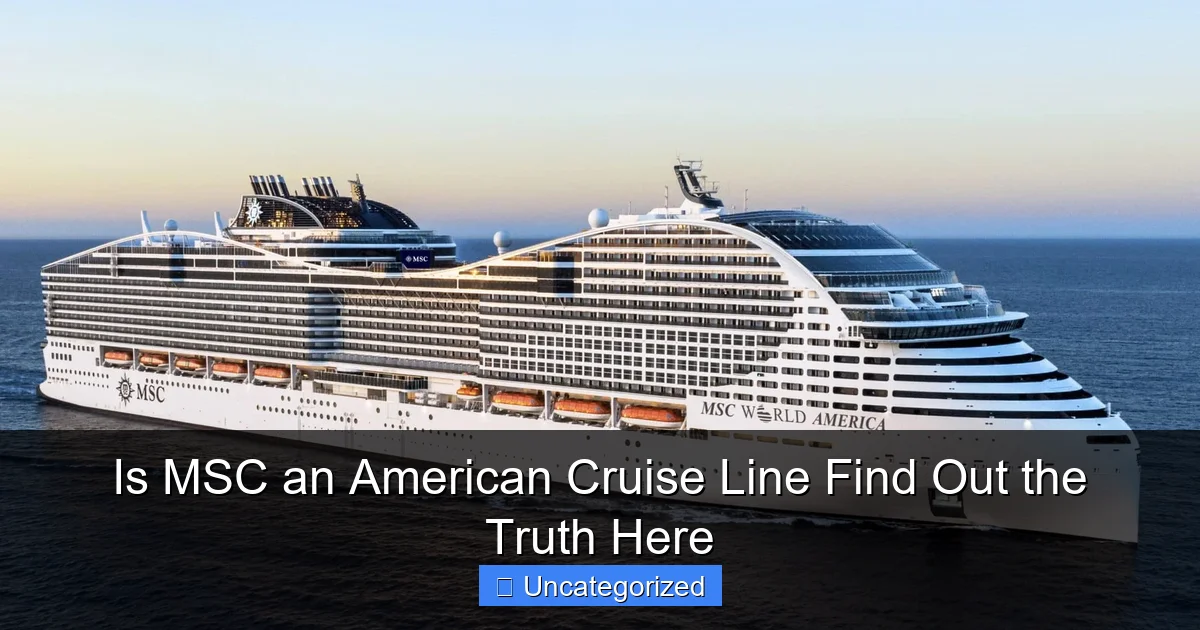
Featured image for is msc an american cruise line
Image source: cruisefever.net
MSC is not an American cruise line—it’s a Swiss-based, globally operated company under the Mediterranean Shipping Company, despite its growing presence in the U.S. market. While MSC Cruises sails from major American ports like Miami and New York, its European roots, international fleet, and corporate structure confirm it’s a global brand, not a U.S.-owned line.
Key Takeaways
- MSC is not American: It’s a Swiss-based global cruise line.
- Global presence: Operates in 100+ countries with diverse itineraries.
- U.S. market focus: Offers Caribbean cruises from Miami and Port Canaveral.
- European roots: Founded in Italy, now headquartered in Switzerland.
- Fleet expansion: Invests in LNG-powered ships for sustainability.
📑 Table of Contents
- Is MSC an American Cruise Line? Find Out the Truth Here
- The Origins and History of MSC Cruises
- Why Does MSC Feel So American?
- Corporate Structure and Ownership: Who Really Owns MSC?
- MSC’s American Strategy: Why the U.S. Matters So Much
- Comparing MSC to American Cruise Lines: A Side-by-Side Look
- Conclusion: The Truth About MSC Cruises
Is MSC an American Cruise Line? Find Out the Truth Here
When it comes to cruising, few brands have made as big a splash in recent years as MSC Cruises. With dazzling new ships, innovative technology, and aggressive expansion into the North American market, many travelers are left wondering: Is MSC an American cruise line? The short answer is no—but the full story is far more nuanced, fascinating, and relevant to anyone planning a cruise vacation in the 21st century. In this comprehensive guide, we’ll dive deep into the origins, global operations, branding, and strategic positioning of MSC Cruises to uncover the truth behind its identity.
MSC Cruises is often mistaken for an American company, especially given its strong presence in the U.S. market, its partnerships with American travel agencies, and its increasing number of sailings from major U.S. ports like Miami, Fort Lauderdale, and New York. The brand’s sleek marketing, English-language websites, and English-speaking crew further blur the lines. But behind the modern façade lies a rich European heritage, a Mediterranean soul, and a corporate structure rooted firmly in the Old World. Understanding the true nature of MSC Cruises—where it comes from, how it operates, and why it feels so American—can help travelers make informed decisions, appreciate its unique value proposition, and avoid common misconceptions. Let’s explore the facts, myths, and realities of one of the fastest-growing cruise lines in the world.
The Origins and History of MSC Cruises
Founded in Italy, Rooted in the Mediterranean
MSC Cruises—short for Mediterranean Shipping Company Cruises—was established in 1987 as a subsidiary of the Mediterranean Shipping Company (MSC), a global leader in container shipping and logistics. While the cruise division is relatively young compared to giants like Carnival or Royal Caribbean, its parent company has deep roots dating back to 1970, when it was founded by Italian entrepreneur Gianluigi Aponte in Naples, Italy. From the very beginning, MSC was an international business with a European foundation, even though it quickly expanded operations across Asia, the Americas, and Africa.
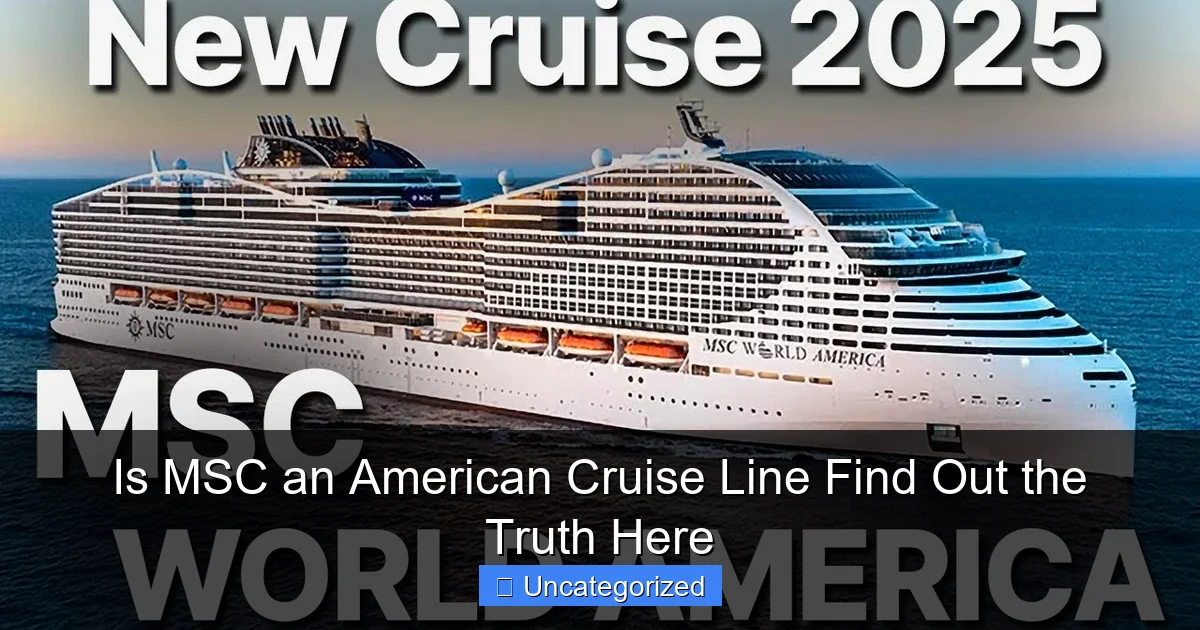
Visual guide about is msc an american cruise line
Image source: i.ytimg.com
The cruise arm began with the purchase of the cruise ship MSC Monterey in 1988, which was rebranded as MSC Melody. This marked the start of MSC’s journey into the passenger cruise industry. Unlike many American cruise lines that evolved from leisure or hospitality backgrounds, MSC entered the market with a shipping and logistics pedigree—giving it a unique operational advantage in global fleet management, port coordination, and supply chain efficiency.
Global Expansion with a European Core
Over the decades, MSC Cruises expanded rapidly, launching new ships, acquiring older vessels, and entering new markets. By the 2000s, the company began a major fleet modernization program, introducing the MSC Lirica, Musica, and Fantasia classes. These ships were designed with a distinctly European flair: elegant interiors, gourmet dining with a Mediterranean focus, and a more relaxed, continental approach to cruising.
Despite its European roots, MSC always had a global vision. The company established offices in key markets, including the U.S., UK, Germany, Brazil, and China. However, its corporate headquarters remain in Geneva, Switzerland, and its primary operational base is in Genoa, Italy. This European base is crucial: it means that MSC Cruises is regulated under European maritime laws, adheres to EU labor and environmental standards, and is governed by a board of directors with strong European ties.
Fun fact: MSC Cruises is the world’s third-largest cruise line by passenger capacity (behind Carnival and Royal Caribbean), and the largest privately-owned cruise company—a testament to its family-run heritage and European business model.
Why Does MSC Feel So American?
Heavy Investment in the U.S. Market
One of the main reasons travelers assume MSC is American is its aggressive and highly visible presence in the United States. Since the early 2010s, MSC has made a strategic push into North America, launching year-round sailings from Miami, Fort Lauderdale, and Port Canaveral—the heart of the American cruise industry. The company now operates multiple ships in the Caribbean, Alaska, and the U.S. East Coast, with itineraries tailored to American vacation patterns: 3–7 day cruises, holiday sailings, and family-friendly packages.
MSC has also invested heavily in American marketing campaigns, partnering with U.S.-based travel agencies, cruise consolidators, and online booking platforms. Their U.S. website is fully localized, with prices in USD, English content, and customer service teams based in Florida. The brand even sponsors American events, such as the MSC Foundation’s partnership with the Miami Heat and environmental initiatives in Florida’s coastal communities.
Adaptation to American Preferences
To succeed in the U.S. market, MSC has made significant operational and cultural adaptations. For example:
- English as the primary language on board, with crew trained in American customer service standards.
- Expanded buffet and snack options, including more American-style comfort foods like burgers, fries, and breakfast cereals—something not always emphasized on European ships.
- 24/7 dining venues, such as the Marketplace Buffet, which cater to the American preference for flexibility and convenience.
- Entertainment tailored to U.S. tastes, including Broadway-style shows, live music, and game shows.
Additionally, MSC has introduced American-centric promotions, such as “Kids Sail Free” deals, military discounts, and partnerships with U.S. credit card companies offering cruise rewards. These moves have made MSC feel more accessible and familiar to American travelers, even though the company itself is not American-owned or headquartered.
American Ports and Itineraries
MSC’s decision to base ships in major U.S. ports has further reinforced the perception of an American identity. For example:
- MSC Meraviglia and MSC Seashore sail from Miami year-round.
- MSC Grandiosa offers seasonal sailings from New York City.
- Alaska cruises depart from Seattle and Vancouver, targeting American and Canadian vacationers.
These itineraries are designed with U.S. vacation calendars in mind—spring breaks, summer vacations, Thanksgiving, and Christmas sailings. The result? MSC now carries over 1 million U.S. passengers annually, making the American market one of its largest by revenue.
Corporate Structure and Ownership: Who Really Owns MSC?
Family-Owned, European-Headquartered
Despite its American market presence, MSC Cruises is not a publicly traded company and is not headquartered in the U.S. The entire MSC Group—including the cruise division—is owned and operated by the Aponte family, led by Gianluigi Aponte and his son Diego Aponte, who serves as CEO of MSC Cruises. The company is structured as a private, family-run enterprise with its main offices in Geneva, Switzerland, and operational hubs in Genoa, Italy, and Southampton, UK.
This private ownership model is a key differentiator from American cruise lines like Carnival Corporation (publicly traded, NYSE: CCL) or Royal Caribbean Group (NYSE: RCL). Being privately held allows MSC to make long-term strategic decisions without shareholder pressure, invest heavily in new ships, and maintain a consistent brand vision across global markets.
Legal and Regulatory Framework
As a European-based cruise line, MSC Cruises is subject to European Union maritime regulations, including:
- EU labor laws for crew members
- EU environmental standards (such as the IMO 2020 sulfur cap)
- EU consumer protection laws
- EU data privacy regulations (GDPR)
This means that American passengers are protected under EU consumer rights, which often offer stronger protections than U.S. maritime law. For example, EU regulations require cruise lines to provide clear refund policies, transparent pricing, and assistance in case of itinerary changes due to force majeure (like hurricanes or pandemics).
Global Fleet and Ship Registration
Another clue to MSC’s non-American status lies in ship registration. Most MSC cruise ships are flagged under Panama, Liberia, or Malta—a common practice in the global shipping industry known as “flags of convenience.” These flags offer favorable tax and regulatory environments, but they also indicate that the ships are not registered in the U.S. or under U.S. maritime authority.
For comparison:
- Carnival Cruise Line ships are registered in Panama but operate under U.S. labor and safety standards due to their American base.
- Norwegian Cruise Line is headquartered in Miami and publicly traded in the U.S., making it an American company with international operations.
- MSC, however, is headquartered in Europe, privately owned, and operates under EU oversight—making it a European company with a global footprint.
MSC’s American Strategy: Why the U.S. Matters So Much
The Largest Cruise Market in the World
The United States is the largest cruise market globally, accounting for over 15 million passengers annually (pre-pandemic). With high disposable income, a culture of vacation travel, and proximity to popular destinations like the Caribbean and Alaska, the U.S. represents a massive opportunity for any cruise line. MSC’s decision to invest heavily here is not about rebranding as American—it’s about capturing market share in the world’s most lucrative cruise region.
Building Brand Trust and Loyalty
To gain trust among American travelers, MSC has focused on:
- Transparency in pricing, including all-inclusive packages and clear breakdowns of fees.
- Customer service training for U.S.-based call centers and on-board staff.
- Partnerships with trusted U.S. brands, such as Royal Caribbean’s former executives joining MSC to lead U.S. operations.
- Investing in U.S. infrastructure, including terminal upgrades in Miami and Port Canaveral.
For example, the MSC Seashore, one of MSC’s newest ships, was specifically designed with American passengers in mind. It features:
- More spacious cabins with U.S.-style outlets
- Expanded pool decks and outdoor lounging areas
- Enhanced Wi-Fi and connectivity options
- Family staterooms with extra beds and storage
Future Plans: The American Dream Continues
MSC has ambitious plans for the U.S. market. The company is currently building the MSC World America, a massive 6,762-passenger ship scheduled to launch in 2025. This vessel will be based in Miami and will feature:
- U.S.-inspired dining venues (think barbecue, lobster rolls, and craft beer bars)
- An exclusive “Amerika” district with American-themed entertainment
- Enhanced sustainability features to meet U.S. environmental standards
Additionally, MSC is exploring Alaska expansion and Hawaiian itineraries, both of which are highly desirable for American travelers. These moves confirm that while MSC is not American, it is deeply committed to serving the American market with American-style experiences.
Comparing MSC to American Cruise Lines: A Side-by-Side Look
To better understand MSC’s place in the cruise industry, let’s compare it to two major American cruise lines: Carnival Cruise Line and Royal Caribbean International. The table below highlights key differences in ownership, branding, operations, and passenger experience.
| Feature | MSC Cruises | Carnival Cruise Line | Royal Caribbean International |
|---|---|---|---|
| Headquarters | Geneva, Switzerland / Genoa, Italy | Miami, Florida, USA | Miami, Florida, USA |
| Ownership | Private (Aponte family) | Public (Carnival Corporation, NYSE: CCL) | Public (Royal Caribbean Group, NYSE: RCL) |
| Primary Market | Global (strong in Europe, expanding in U.S.) | North America | Global (strong in U.S. and Asia) |
| Ship Registration | Panama, Liberia, Malta | Panama | Liberia, Bahamas |
| Onboard Culture | European elegance, Mediterranean dining, multilingual crew | American fun, casual dining, high-energy entertainment | Innovative tech, global dining, family-focused |
| U.S. Presence | High (Miami, NYC, Seattle) | Very High (multiple ports nationwide) | Very High (global hubs, including U.S.) |
| Environmental Initiatives | LNG-powered ships (MSC World Class), shore power | Eco-friendly ships, air scrubbers | Zero-emission ships (planned), solar tech |
| Passenger Demographics | International, growing U.S. base | Primarily American | Global, diverse |
This comparison shows that while MSC operates in the same market as American cruise lines, it has a distinct identity. It’s not trying to become American—it’s offering a European cruise experience with American convenience. Think of it as the “Best of Both Worlds”: the elegance and sophistication of a European vacation, with the ease, comfort, and familiarity of a U.S. cruise.
Conclusion: The Truth About MSC Cruises
So, is MSC an American cruise line? The definitive answer is no. MSC Cruises is a European-based, privately owned cruise company with deep roots in Italy, a global operational network, and a corporate structure rooted in Switzerland and Italy. Its parent company, the Mediterranean Shipping Company, is a global logistics giant with no American ownership or headquarters.
However, MSC has made a deliberate and successful effort to integrate into the American cruise market. With ships based in U.S. ports, marketing tailored to American tastes, and services designed for U.S. travelers, it’s easy to see why many assume it’s American. This strategic adaptation is not a sign of identity change—it’s a smart business move to capture the world’s largest cruise market.
For travelers, this means MSC offers a unique hybrid experience: the charm of a European cruise line with the convenience and accessibility of an American one. Whether you’re drawn to its elegant ships, gourmet dining, family-friendly amenities, or value-for-money pricing, MSC delivers a high-quality vacation that feels familiar yet refreshingly different.
When choosing your next cruise, don’t be misled by branding or port locations. Look beyond the surface. MSC may sail from Miami and speak your language, but its soul is Mediterranean, its heart is European, and its vision is global. In a world where cruise lines are increasingly homogenized, MSC stands out—not as American, but as authentically international.
So the next time someone asks, “Is MSC an American cruise line?” you can confidently say: “No—but it’s one of the best cruise lines for American travelers, offering the world from an Italian perspective.” And that’s a truth worth sailing for.
Frequently Asked Questions
Is MSC an American cruise line?
No, MSC Cruises is not an American cruise line. It is a Swiss-based global cruise company owned by the Mediterranean Shipping Company, a Swiss-Italian shipping giant.
Where is MSC Cruises headquartered?
MSC Cruises is headquartered in Geneva, Switzerland, which confirms its European roots. Despite its strong presence in the U.S. market, its operational and corporate base remains in Europe.
Does MSC operate cruises from American ports?
Yes, MSC Cruises operates numerous voyages from major U.S. ports like Miami, Port Canaveral, and New York. This extensive American itinerary often leads travelers to mistakenly assume it’s an American cruise line.
Is MSC part of an American cruise company?
No, MSC is not affiliated with any American cruise corporation. It is an independent, family-owned cruise line under the Mediterranean Shipping Company, with no ownership ties to U.S.-based cruise giants like Carnival or Royal Caribbean.
Why do people think MSC is an American cruise line?
Many travelers assume MSC is American because of its aggressive expansion in the U.S. market, including new ships and year-round Caribbean sailings. However, its branding and ownership are distinctly European.
Does MSC follow American cruise regulations?
While MSC complies with U.S. maritime laws when sailing from American ports, it adheres to international maritime standards as a Swiss-registered cruise line. Its onboard experience blends European flair with American-friendly amenities.