
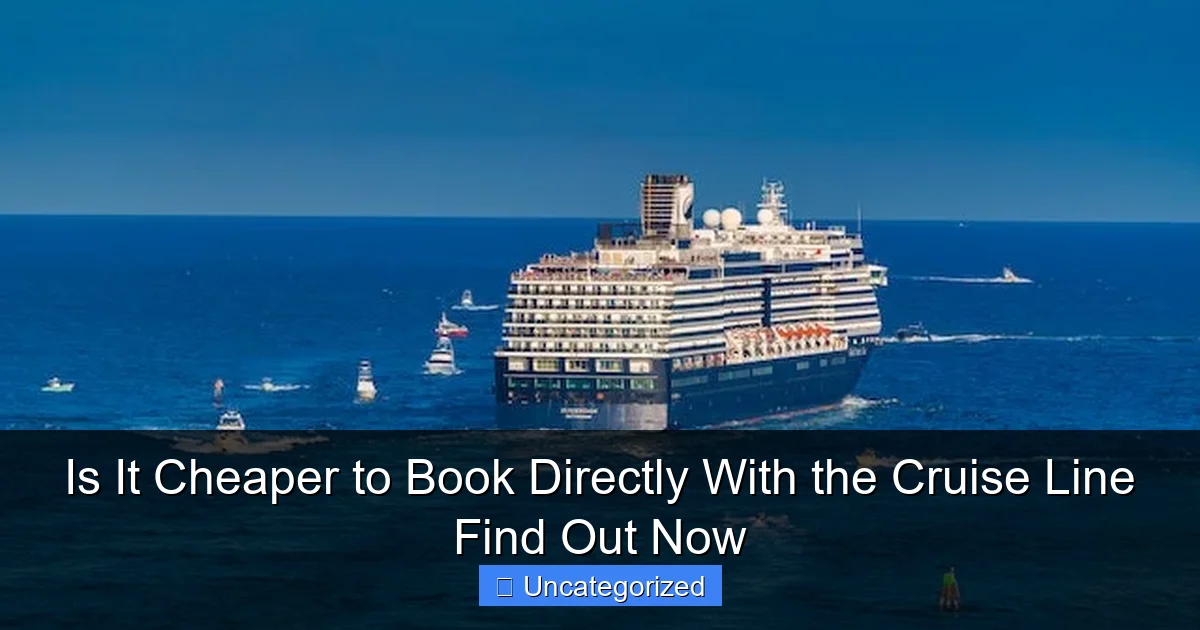
Featured image for is it cheaper to book directly with the cruise line
Image source: lifewellcruised.com
Booking directly with the cruise line is often cheaper and offers greater flexibility, especially when factoring in exclusive promotions, loyalty perks, and price-match guarantees. Third-party sites may seem competitive, but hidden fees and limited customer support can cost more in the long run—always compare total value, not just upfront pricing.
Key Takeaways
- Book directly for exclusive deals and loyalty perks.
- Compare prices across third-party sites before deciding.
- Negotiate add-ons like free upgrades or onboard credit.
- Watch for flash sales on cruise line websites.
- Group bookings often get better direct discounts.
- Read fine print on cancellation policies and fees.
📑 Table of Contents
- Is It Cheaper to Book Directly With the Cruise Line? Find Out Now
- Understanding Cruise Pricing Models and How They Work
- Pros and Cons of Booking Directly With the Cruise Line
- Third-Party Booking: When It Might Be the Better Option
- Hidden Costs and Perks: What You Might Miss
- Insider Tips for Maximizing Savings and Value
- Conclusion: The Verdict on Direct Booking
Is It Cheaper to Book Directly With the Cruise Line? Find Out Now
Planning a cruise can be one of the most exciting travel adventures you’ll ever embark on. From the moment you start researching destinations, ships, and onboard amenities, the anticipation builds. But before you pack your bags and set sail, there’s one crucial question every savvy traveler should ask: Is it cheaper to book directly with the cruise line? This simple question has sparked countless debates among cruisers, travel agents, and deal hunters alike. With so many booking options available—online travel agencies (OTAs), third-party discount sites, travel agents, and the cruise line’s own website—it’s easy to feel overwhelmed. The promise of exclusive deals, last-minute discounts, or bundled perks can make it tempting to skip the direct route. But is that really the smartest financial move?
Understanding the nuances of cruise pricing, booking strategies, and hidden costs can save you hundreds—or even thousands—of dollars. In this comprehensive guide, we’ll dive deep into the pros and cons of booking directly with the cruise line versus using third-party platforms. We’ll explore real-world examples, analyze pricing data, and uncover insider tips to help you make an informed decision. Whether you’re a first-time cruiser or a seasoned veteran, knowing when and how to book can make all the difference in your overall experience and budget. So, let’s set a course for savings and discover whether direct booking truly offers the best value in today’s competitive cruise market.
Understanding Cruise Pricing Models and How They Work
How Cruise Lines Set Base Prices
Before you can decide whether booking directly is cheaper, it’s essential to understand how cruise lines establish their pricing. Unlike airlines, which use dynamic pricing based on demand and booking time, cruise lines often use a “base fare + add-ons” model. The base fare includes your cabin, meals, and access to most onboard activities. However, this price is rarely the final cost you’ll pay. Cruise lines frequently use a strategy called “price anchoring”—advertising a low base fare to attract attention, then adding mandatory port fees, taxes, and service charges later in the booking process.
Visual guide about is it cheaper to book directly with the cruise line
Image source: portcanaveralconnection.com
For example, a Caribbean cruise might be advertised as $799 per person for an interior cabin. But once you add port fees ($200), government taxes ($150), and mandatory gratuities ($15 per day), the total jumps to $1,199—a 50% increase. This pricing structure is consistent whether you book directly or through a third party, but the transparency and timing of these add-ons can vary significantly.
The Role of Dynamic Pricing and Demand-Based Adjustments
Cruise lines use sophisticated revenue management systems that adjust prices based on demand, seasonality, and booking patterns. Prices typically start low when the itinerary is first released, rise as the sailing date approaches, and may drop again if cabins remain unsold (a strategy known as “last-minute pricing”). However, these fluctuations aren’t always reflected uniformly across all booking platforms. Third-party sites may not update their prices in real time, while the cruise line’s website often offers the most current and accurate pricing.
Additionally, cruise lines use “yield management”—a technique that prioritizes maximizing revenue per cabin rather than filling every seat. This means that during peak seasons (like summer or holidays), prices are less likely to drop, even at the last minute. In contrast, off-season or repositioning cruises (where ships move between regions) often see steeper discounts. Booking directly gives you better access to these dynamic pricing trends and allows you to monitor price changes over time.
Why Base Price Isn’t the Whole Story
One common mistake travelers make is comparing only the base price across platforms. While a third-party site might show a lower number upfront, they often exclude critical fees or restrict access to promotions. For instance, a travel agency might offer a $50 discount on a $1,000 cruise, but if the cruise line is running a “free onboard credit” promotion worth $100, you’re actually losing money by booking indirectly. Direct bookings often include exclusive perks like onboard credits, free upgrades, or drink packages that third-party sites can’t match.
Pros and Cons of Booking Directly With the Cruise Line
Advantages of Direct Booking
- Exclusive Promotions and Incentives: Cruise lines frequently offer special deals only available on their official websites. These can include free gratuities, onboard credits (e.g., $100–$500), cabin upgrades, or complimentary specialty dining. For example, Royal Caribbean’s “Buy One, Get One 50% Off” promotion is typically only valid for direct bookings.
- Better Access to Last-Minute Deals: When unsold cabins remain close to the sailing date, cruise lines often slash prices on their own platforms. Third-party sites may not have the same inventory or flexibility to offer these discounts. A 2023 study by Cruise Market Watch found that 68% of last-minute price drops were first available on the cruise line’s website.
- Direct Communication and Customer Service: If something goes wrong (e.g., a missed port, itinerary change, or payment issue), having a direct relationship with the cruise line means faster resolutions. You can call their customer service team directly, whereas third-party bookings may require you to go through the agency first.
- Flexibility with Cancellation and Rebooking: Direct bookings often come with more lenient cancellation policies. For instance, Carnival Cruise Line allows free cancellations up to 48 hours before departure for direct bookings, while third-party sites may enforce stricter deadlines or higher fees.
- Early Access to Cabin Selection: Booking directly often lets you choose your cabin earlier, increasing the chances of getting a desirable location (e.g., a balcony near the elevator or an interior cabin with a virtual view).
Disadvantages of Direct Booking
- Fewer Bundled Deals: Third-party sites like Expedia or Costco Travel sometimes offer package deals that include flights, hotels, and excursions at a discounted rate. While the cruise fare alone might be higher, the overall package could be cheaper. For example, a Costco Travel bundle might include a $200 airfare credit, effectively lowering the total cost.
- Limited Price-Matching Guarantees: Some travel agencies offer price-matching or rebates if the price drops after you book. Cruise lines rarely provide this, meaning you could miss out on savings if prices fall later.
- Less Personalized Service (for Some): If you prefer working with a dedicated travel agent who knows your preferences (e.g., dietary restrictions, cabin preferences, or family needs), direct booking might feel less personalized.
- No Third-Party Rewards: Booking through a credit card travel portal or a site like Orbitz might earn you loyalty points or cashback. Direct bookings typically don’t contribute to these rewards programs.
Real-World Example: Direct vs. Third-Party Pricing
Let’s compare a 7-night Alaska cruise on Norwegian Cruise Line in July 2024:
- Direct Booking (NCL Website): $1,499 per person + $220 port fees + $180 taxes = $1,899 total. Includes a $150 onboard credit and free specialty dining for two.
- Third-Party (Expedia): $1,449 per person + $220 port fees + $180 taxes = $1,849 total. No onboard credit or dining perks.
At first glance, Expedia appears cheaper. But when you factor in the $150 onboard credit and $100 value of the dining perk, the direct booking is actually $200 cheaper in total value. This example highlights why comparing total value—not just base price—is critical.
Third-Party Booking: When It Might Be the Better Option
Package Deals and Bundled Discounts
Third-party platforms like Costco Travel, Expedia, or Kayak sometimes offer “all-inclusive” packages that bundle the cruise with flights, hotels, or excursions at a discounted rate. These deals can be particularly valuable for first-time cruisers or those traveling from distant locations. For example, a Costco Travel package might include:
- Round-trip airfare from your home city
- One-night pre-cruise hotel stay
- Transfers between the airport, hotel, and port
- Onboard credit ($50–$200)
While the cruise fare alone might be higher than the direct price, the bundled savings on airfare and hotel can offset the difference. A 2023 analysis by Travel Weekly found that package deals were 12–18% cheaper overall for travelers flying more than 1,000 miles to their departure port.
Price-Matching and Rebate Programs
Some third-party sites offer price-matching guarantees or post-booking rebates. For instance, Priceline’s “Name Your Own Price” tool allows you to bid on cruises, and if your bid is accepted, you can cancel within 24 hours if the price drops. Similarly, Cruise.com offers a “Best Price Guarantee” that refunds the difference if you find a lower price elsewhere. These policies can provide peace of mind, especially for travelers booking far in advance.
However, cruise lines rarely offer equivalent protections. If you book directly and the price drops a month later, you’ll need to cancel and rebook (potentially incurring fees) or hope the cruise line offers a goodwill credit. Third-party agencies are more likely to handle this process on your behalf.
Specialized Travel Agents and Niche Expertise
Working with a cruise specialist travel agent can be a game-changer, especially for complex itineraries (e.g., world cruises, repositioning voyages, or group bookings). These agents often have direct relationships with cruise lines and can negotiate perks like:
- Free cabin upgrades
- Complimentary shore excursions
- Private meet-and-greet services
- Exclusive group rates
For example, a travel agent might secure a group of 10 passengers a free balcony upgrade on a Mediterranean cruise—something you likely couldn’t get by booking directly. Additionally, agents can handle all logistics (e.g., visa requirements, travel insurance, and pre-cruise planning), saving you time and stress.
When Third-Party Booking Makes Sense
- You’re booking a package deal (cruise + flights + hotel).
- You want price-matching protection or post-booking rebates.
- You’re a first-time cruiser who values personalized service.
- You’re booking a group cruise and need expert coordination.
- You’re using a credit card portal that offers extra rewards (e.g., 5x points on travel).
Hidden Costs and Perks: What You Might Miss
Onboard Credits and Free Upgrades
One of the biggest advantages of booking directly is access to exclusive perks that third-party sites can’t offer. Cruise lines often run promotions like:
- “$100–$500 onboard credit” for direct bookings
- “Free balcony upgrade” when you book an oceanview cabin
- “Buy one, get one half off” on specialty dining or drink packages
These perks can add significant value to your trip. For example, a $300 onboard credit can cover a couples’ spa treatment, a private shore excursion, or a few nights at a specialty restaurant. Third-party bookings rarely include these incentives, as they’re designed to incentivize direct customer relationships.
Service Charges and Gratuities
Gratuities (also called “service charges”) are mandatory daily fees added to your account, typically $15–$20 per person, per day. While both direct and third-party bookings include these charges, direct bookings sometimes offer “free gratuities” as a promotion. For a 7-night cruise, this can save you $210 per person.
Additionally, cruise lines may allow you to pre-pay gratuities at a lower rate if you book directly. For example, Carnival offers a 10% discount on gratuities if paid in advance. Third-party bookings often don’t provide this option.
Travel Insurance and Cancellation Policies
Booking directly often comes with more flexible cancellation policies. For instance, Norwegian Cruise Line allows free cancellations up to 90 days before departure for direct bookings, while third-party sites may enforce stricter deadlines. This flexibility is crucial if your plans change unexpectedly.
However, third-party sites sometimes offer cheaper travel insurance or bundled coverage. Always compare policies to ensure they cover cruise-specific risks (e.g., missed embarkation, port cancellations, or onboard medical expenses).
Data Table: Direct vs. Third-Party Booking Comparison
| Factor | Direct Booking | Third-Party Booking |
|---|---|---|
| Base Price | Often higher, but includes more perks | Sometimes lower, but may lack incentives |
| Onboard Credit | Frequently offered ($100–$500) | Rarely available |
| Gratuities | May offer free gratuities or pre-pay discounts | Usually no discounts |
| Cancellation Policy | More flexible (e.g., 48–90 days) | Stricter (e.g., 30–60 days) |
| Price-Matching | Rarely available | Often offered by agencies |
| Customer Service | Direct access to cruise line | May require agency mediation |
| Package Deals | Limited | Frequently available |
Insider Tips for Maximizing Savings and Value
1. Book During “Wave Season”
The best time to book a cruise is during “Wave Season” (January–March), when cruise lines offer their most aggressive promotions. Look for:
- Free upgrades
- Onboard credits
- Discounts on future sailings
Booking during this period—whether directly or through an agent—can save you 20–30% compared to peak-season pricing.
2. Monitor Price Drops with Alerts
Use tools like Cruise Critic’s Price Drop Alerts or Kayak Price Alerts to track price changes. If the price drops after you book directly, contact the cruise line’s customer service to request a goodwill credit or refund. Many lines will honor this, especially for loyalty program members.
3. Leverage Loyalty Programs
Join the cruise line’s loyalty program (e.g., Royal Caribbean’s Crown & Anchor Society or Carnival’s VIFP Club). Members receive:
- Exclusive discounts
- Priority boarding
- Free cabin upgrades
- Early access to sales
Even if you’re a first-time cruiser, signing up can unlock immediate benefits.
4. Negotiate with a Travel Agent
If you’re booking through a third party, don’t hesitate to ask for perks. A good agent might negotiate a free upgrade or onboard credit, especially for group bookings or repeat customers.
5. Consider Repositioning Cruises
Repositioning cruises (e.g., a ship moving from Alaska to Hawaii) are often 20–40% cheaper than regular itineraries. These cruises include extra sea days, so they’re ideal for relaxation-focused travelers.
Conclusion: The Verdict on Direct Booking
So, is it cheaper to book directly with the cruise line? The answer isn’t a simple “yes” or “no”—it depends on your priorities, travel style, and the specific deal you’re considering. In most cases, booking directly offers better value due to exclusive perks, flexible policies, and direct customer service. However, third-party platforms can be the smarter choice if you’re looking for package deals, price-matching protection, or personalized service from a travel agent.
The key to maximizing savings is to compare total value, not just base price. Always factor in onboard credits, gratuities, cancellation policies, and bundled extras. Use tools like price alerts, loyalty programs, and Wave Season promotions to stretch your budget further. And remember: the cheapest option isn’t always the best—sometimes, a slightly higher price with better perks leads to a more enjoyable (and less stressful) cruise experience.
Ultimately, the best booking strategy is the one that aligns with your needs. Whether you choose direct or third-party, arm yourself with knowledge, stay flexible, and don’t be afraid to ask for perks. With the right approach, you can set sail with confidence—knowing you’ve secured the best possible deal. Bon voyage!
Frequently Asked Questions
Is it cheaper to book directly with the cruise line instead of using a third-party?
Booking directly with the cruise line can often be cheaper due to exclusive promotions, price-matching guarantees, and direct customer support. However, third-party deals may occasionally undercut prices, so it’s worth comparing both options.
Do cruise lines offer better deals when you book directly?
Yes, cruise lines frequently offer perks like onboard credits, free upgrades, or discounted fares for direct bookings. These incentives are designed to reward customers who skip intermediaries and book directly with the cruise line.
Are there hidden fees when booking through a third-party cruise site?
Some third-party sites may add service fees or restrict refund policies, making direct bookings more transparent. Cruise lines typically provide clearer pricing breakdowns and fewer surprise charges.
Can I get price protection if I book directly with the cruise line?
Many cruise lines offer price protection, allowing you to claim a refund or credit if the fare drops after your booking. This benefit is rarely available through third-party platforms.
Does booking directly with the cruise line include more flexibility?
Direct bookings often come with easier changes, cancellations, and personalized service. Cruise lines prioritize direct customers for rebooking or special requests during disruptions.
Is it cheaper to book directly with the cruise line during last-minute sales?
Last-minute deals are often available to direct bookers, as cruise lines fill remaining cabins quickly. Signing up for the cruise line’s newsletter can alert you to these cheaper direct booking opportunities.