Featured image for is holland cruise line owned by carnival
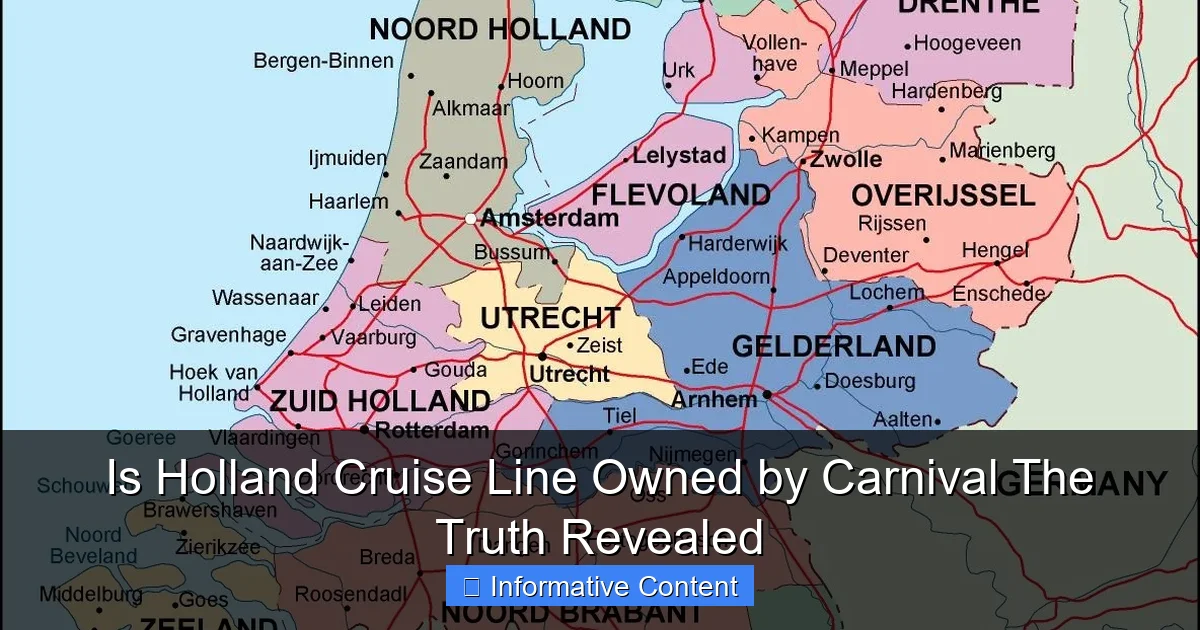
Image source: netmaps.net
Yes, Holland America Line is owned by Carnival Corporation & plc, making it one of the nine major cruise brands under the Carnival umbrella. This ownership structure allows Holland America to maintain its premium, heritage-focused experience while benefiting from Carnival’s global scale and operational support. The truth is clear: while Holland America operates independently with its own identity, it’s undeniably part of the Carnival family.
Key Takeaways
- Holland America Line is owned by Carnival: Confirmed under Carnival Corporation & plc since 1989.
- Operates as a standalone brand: Maintains unique identity despite parent company ownership.
- Shares Carnival’s financial backing: Benefits from Carnival’s resources and global reach.
- No direct booking integration: Cruise lines remain separate for reservations and loyalty programs.
- Diverse fleet within Carnival: Complements Carnival’s portfolio with premium mid-sized ships.
📑 Table of Contents
- The Big Cruise Family: Who Owns Who?
- Who Really Owns Holland America Line?
- How Carnival’s Ownership Affects Your Cruise Experience
- A Closer Look at Carnival’s Cruise Empire
- What Makes Holland America Different (Despite the Ownership)
- Tips for Travelers: How to Use This Knowledge
- The Final Verdict: Ownership Doesn’t Define the Experience
The Big Cruise Family: Who Owns Who?
Imagine you’re at a family reunion. There’s Uncle Bob who owns a chain of pizza places, Cousin Lisa who runs a luxury spa, and your cousin Mike who manages a fleet of delivery trucks. They all operate independently, but guess what? They’re all under the same parent company, Carnival Corporation & plc. That’s kind of how the cruise industry works — and it’s a big reason why so many travelers ask: Is Holland Cruise Line owned by Carnival?
You’ve probably heard of Holland America Line — the elegant ships with Dutch heritage, classic interiors, and a reputation for refined cruising. Maybe you’ve even sailed with them or are considering it for your next vacation. But behind the scenes, the cruise world is a complex web of brands, ownership, and shared resources. It’s easy to get confused. One minute you’re sipping a cocktail on a HAL ship, the next you’re wondering if that same parent company also runs Carnival Cruise Line, the one with the water slides and deck parties. So, is there a connection? And if so, what does it mean for your cruise experience?
Let’s clear the fog. In this post, we’re diving deep into the ownership structure of Holland America Line, uncovering its relationship with Carnival, and exploring what that means for travelers like you. Whether you’re a first-time cruiser or a seasoned sea-goer, understanding who owns what can help you make smarter choices — and even spot perks you didn’t know existed.
Who Really Owns Holland America Line?
The Short Answer: Yes, It’s Carnival
Let’s cut to the chase: Yes, Holland America Line is owned by Carnival Corporation & plc. That might sound surprising if you’ve always associated Carnival with loud, fun-filled, family-friendly ships and Holland America with quiet, traditional, and upscale voyages. But in the corporate world, brands don’t have to be similar to be siblings.
Visual guide about is holland cruise line owned by carnival
Image source: lelongweekend.com
Think of it like this: Apple makes both the iPhone and the Mac, but they’re very different products. Same parent, different vibes. Holland America and Carnival Cruise Line are like that — two distinct personalities under one corporate roof.
A Brief History of the Takeover
The story starts in 1989. At the time, Carnival Cruise Line (founded in 1972) was growing fast and looking to expand its reach beyond the budget and mid-range market. Enter Holland America Line, a Dutch-founded company with roots dating back to 1873. It had built a loyal following among older travelers and those who preferred a more relaxed, refined experience.
In 1989, Carnival Corporation acquired Holland America Line for $635 million. This wasn’t just a random purchase — it was a strategic move to diversify the company’s portfolio. Carnival now had a premium brand to complement its more casual, fun-focused offerings.
Fun fact: The acquisition included not just the cruise line, but also a 49% stake in Windstar Cruises (later sold). It also brought in the iconic Rotterdam, then the largest passenger ship in the world, which was renamed the *Rotterdam VI* for HAL.
Ownership Today: Carnival Corporation & plc
Today, Carnival Corporation & plc is the world’s largest cruise company. It operates **nine** major cruise brands globally, and Holland America Line is one of them. The parent company is a dual-listed entity, meaning it’s publicly traded on both the New York Stock Exchange (as CCL) and the London Stock Exchange (as CCL.L).
Here’s a quick breakdown of how it works:
- Holland America Line operates as a semi-autonomous brand. It has its own management, marketing, and operations teams.
- But it reports to and is ultimately controlled by Carnival Corporation’s executive leadership.
- Shared services like IT, finance, procurement, and even some crew training are centralized to save costs and improve efficiency.
- Each brand maintains its own identity, pricing, and target audience.
So while Carnival owns the keys to the kingdom, Holland America still gets to design its own castles — and that’s a good thing for travelers.
How Carnival’s Ownership Affects Your Cruise Experience
Shared Resources, Not Shared Vibes
One of the biggest concerns people have is: “If Carnival owns Holland America, will my cruise start to feel like a Carnival cruise?” The short answer: No. Carnival has been very careful to preserve the unique character of each brand. You won’t see a HAL ship suddenly add a giant water slide or a “fun squad” dancing in the lobby.
But there are behind-the-scenes benefits from being part of a larger organization:
- Better purchasing power: Carnival can negotiate lower prices for fuel, food, and supplies, which helps keep HAL’s prices competitive.
- Advanced technology: HAL ships use Carnival’s reservation systems, safety protocols, and digital platforms (like the Navigator app).
- Global support network: If a ship needs emergency repairs or medical supplies, Carnival can mobilize support from other parts of its fleet.
- Environmental initiatives: Carnival’s “Green Cruising” program benefits all brands, including HAL’s investments in cleaner engines and waste reduction.
Onboard Perks You Might Not Know About
Because HAL is part of Carnival, there are some hidden perks you can take advantage of:
- Cross-brand loyalty recognition: While HAL has its own loyalty program (Club HAL), Carnival’s loyalty tiers (like Platinum or Diamond on Carnival) do not directly transfer. However, frequent cruisers can sometimes get special offers or onboard credits when booking across brands.
- Shared shore excursions: In some ports, HAL and other Carnival-owned brands (like Princess or Costa) offer the same excursions, but with different branding and service levels. HAL’s tend to be more curated and less crowded.
- Medical and safety standards: All Carnival-owned ships follow the same strict health and safety protocols, especially after the pandemic. HAL benefits from Carnival’s investment in medical facilities and sanitation tech.
Pro tip: If you’re a frequent cruiser, ask about “cross-brand” promotions. Sometimes Carnival runs deals where booking a HAL cruise after a Carnival cruise gives you a discount or onboard credit. It’s not advertised widely, but it’s worth asking your travel agent or calling the cruise line directly.
Potential Downsides: When Bigness Becomes a Drawback
No ownership model is perfect. Being part of a giant corporation can have downsides:
- Less flexibility in crisis: During the pandemic, Carnival’s centralized decision-making led to uniform policies across brands. Some travelers felt HAL should have been treated differently due to its older demographic, but the rules applied to all.
- Shared ports and itineraries: In popular destinations like Alaska or the Caribbean, HAL ships sometimes dock near other Carnival-owned vessels (like Princess or Carnival). This can lead to crowded ports and longer lines for excursions.
- Standardized training: While crew are trained to HAL’s standards, some training modules are shared across Carnival brands. A few passengers have noted that service feels more “corporate” than “personal” compared to smaller, independent lines.
That said, HAL still maintains a strong reputation for personalized service. The brand invests heavily in crew training and guest satisfaction, so the Carnival connection doesn’t override the HAL experience — it just supports it.
A Closer Look at Carnival’s Cruise Empire
The Full Family Tree: 9 Brands, One Parent
To understand where Holland America fits, let’s meet the rest of the Carnival family. Here’s a snapshot of the nine major cruise brands under Carnival Corporation:
| Brand | Founded | Target Audience | Notable Ships |
|---|---|---|---|
| Carnival Cruise Line | 1972 | Families, budget travelers | Carnival Celebration, Mardi Gras |
| Holland America Line | 1873 | Mid-to-upscale, older travelers | Rotterdam, Nieuw Statendam |
| Princess Cruises | 1965 | Mid-range, couples, retirees | Discovery Princess, Enchanted Princess |
| Costa Cruises | 1854 | European travelers, families | Costa Toscana, Costa Smeralda |
| AIDA Cruises | 1960 | German market, younger travelers | AIDAcosma, AIDAnova |
| Seabourn | 1987 | Luxury, all-inclusive | Seabourn Encore, Seabourn Venture |
| Cunard Line | 1839 | Classic, transatlantic, upscale | Queen Mary 2, Queen Elizabeth |
| P&O Cruises (UK) | 1837 | British market, retirees | Arvia, Iona |
| P&O Cruises Australia | 1932 | Australasian travelers | Pacific Encounter, Pacific Adventure |
As you can see, Carnival owns a wide range of brands — from budget-friendly (Carnival) to ultra-luxury (Seabourn). Holland America sits comfortably in the middle, appealing to travelers who want comfort, tradition, and a touch of elegance without the high price tag of Seabourn or the formality of Cunard.
Why Carnival Owns So Many Brands
Carnival’s strategy is simple: diversify to dominate. By owning brands that cater to different demographics, regions, and price points, Carnival can capture more of the cruise market. It’s like a restaurant chain owning a fast-food joint, a mid-range bistro, and a fine-dining restaurant — all under one umbrella.
For example:
- If you’re a young family looking for fun and affordability, you might book Carnival.
- If you’re a couple celebrating an anniversary and want a more relaxed vibe, Princess or HAL might be perfect.
- If you’re a luxury traveler seeking all-inclusive perks, Seabourn is the choice.
This strategy also helps Carnival weather economic downturns. When one market slows (like luxury travel during a recession), others (like budget cruising) might pick up the slack.
Regional Focus: Not All Brands Are Global
Another key point: not all Carnival-owned brands operate everywhere. For example:
- Costa Cruises primarily serves the European market, especially Italy and Spain.
- AIDA is Germany-focused, with ships designed for German-speaking guests.
- P&O Cruises caters to British travelers, with British-style dining and entertainment.
Holland America, on the other hand, has a global presence. It sails to Alaska, the Caribbean, Europe, Asia, and even Antarctica. This global reach is partly due to Carnival’s investment in expanding HAL’s itineraries and modernizing its fleet.
What Makes Holland America Different (Despite the Ownership)
Brand Identity: Tradition Meets Modernity
Even though HAL is owned by Carnival, it has worked hard to maintain its unique identity. Here’s what sets it apart:
- Dutch heritage: You’ll still find Delftware pottery, wooden clogs, and a formal Captain’s Night with a Dutch-inspired menu.
- Smaller ships: HAL’s vessels are generally smaller than Carnival’s megaships, offering a more intimate experience.
- Focus on enrichment: HAL offers more lectures, cooking demos, and cultural activities than Carnival.
- Service style: Crew are trained to be attentive but not intrusive. Think white-glove service with a smile, not a dance party.
One traveler I spoke with put it perfectly: “I love HAL because it feels like a cruise, not a theme park. I can read a book on deck without being asked to join a scavenger hunt.”
Modernization Without Losing the Soul
In recent years, HAL has introduced new ships like the Nieuw Statendam and Rotterdam (the newest, launched in 2021). These ships have modern features — LED lighting, smart staterooms, and high-tech navigation — but still keep the classic HAL charm.
For example, the Rotterdam has a stunning atrium with a glass staircase and a grand piano, but also a state-of-the-art fitness center and a digital art gallery. It’s a balance that Carnival encourages — innovation without losing the brand’s soul.
Passenger Demographics: Who Chooses HAL?
HAL’s typical passenger is:
- Age 50+ (though younger travelers are increasing)
- Well-traveled and values comfort over excitement
- Prefers quiet decks, fine dining, and scenic cruising
- Often on a longer voyage (7+ days)
This demographic is very different from Carnival’s core audience, which tends to be younger, families, and first-time cruisers. Carnival knows this — and that’s why it lets HAL be HAL.
Tips for Travelers: How to Use This Knowledge
Booking Smart: Leverage Carnival’s Network
Since HAL is part of Carnival, you can use that to your advantage:
- Check for cross-brand deals: Sometimes booking a Carnival cruise first gives you a discount on a future HAL cruise.
- Use Carnival’s loyalty benefits: While tiers don’t transfer, frequent cruisers can sometimes get priority boarding or cabin upgrades across brands.
- Compare itineraries: If you’re flexible, look at similar routes across brands. A 7-day Alaska cruise on HAL might cost more than on Princess, but HAL might offer more scenic stops or better dining.
Onboard: Know What’s Shared — and What’s Not
While the ships are different, some systems are shared. For example:
- The Carnival Navigator app works on HAL ships for schedules, dining reservations, and onboard purchases.
- Medical facilities follow Carnival’s standards — which are excellent, but not as extensive as a hospital.
- Shore excursions might be operated by the same third-party company, but HAL’s are often more curated.
Tip: Download the Navigator app before your cruise. It’s a lifesaver for managing your schedule and avoiding lines.
When to Choose HAL Over Other Carnival Brands
Ask yourself:
- Do I want a quiet, relaxing cruise?
- Do I enjoy fine dining and cultural activities?
- Am I okay with fewer kids onboard?
If you answered yes, HAL is a great choice. If you want non-stop entertainment, water slides, and a party atmosphere, Carnival or AIDA might be better.
The Final Verdict: Ownership Doesn’t Define the Experience
So, is Holland Cruise Line owned by Carnival? Yes — and that’s not a bad thing. Ownership by Carnival brings stability, resources, and global reach. It doesn’t mean HAL has lost its soul or become a “Carnival clone.”
In fact, the relationship is a win-win. Carnival gets a premium brand that attracts a different kind of traveler. HAL gets the financial backing and operational support to thrive in a competitive industry. And you, the traveler, get the best of both worlds: the elegance and tradition of Holland America, backed by the strength of a global cruise leader.
Next time you’re on a HAL ship, take a moment to appreciate the details — the Dutch decor, the attentive crew, the quiet deck. That’s the real HAL experience. And behind the scenes, Carnival is helping make it possible.
So go ahead, book that Alaska cruise or European voyage. Whether you’re a Carnival loyalist or a HAL newbie, knowing the truth behind the ownership just might make your next cruise even better.
Frequently Asked Questions
Is Holland Cruise Line owned by Carnival Corporation?
Yes, Holland America Line is a subsidiary of Carnival Corporation & plc, the world’s largest cruise company. It was acquired in 1989 and operates as one of Carnival’s nine cruise line brands.
What cruise lines does Carnival Corporation own?
Carnival Corporation owns several major cruise lines, including Holland America Line, Princess Cruises, Carnival Cruise Line, and Seabourn. Each brand maintains its unique identity while benefiting from Carnival’s global infrastructure.
Does Carnival control Holland America Line’s operations?
While Carnival owns Holland America Line, the brand operates independently with its own management, ships, and guest experience. Carnival provides financial and strategic support but preserves Holland America’s premium positioning.
Why did Carnival acquire Holland America Line?
Carnival purchased Holland America Line in 1989 to expand its portfolio into the premium cruise segment. The acquisition strengthened Carnival’s presence in Europe and added mid-sized, destination-focused ships to its fleet.
Is Holland America Line the same as Carnival Cruise Line?
No, Holland America Line and Carnival Cruise Line are distinct brands under the Carnival Corporation umbrella. Holland America focuses on premium cruising with longer itineraries, while Carnival offers mainstream, family-friendly vacations.
Does the ownership affect Holland America Line’s onboard experience?
Holland America Line retains its classic Dutch heritage, fine dining, and enrichment programs despite Carnival’s ownership. The brand’s focus on refined service and global exploration remains unchanged since the acquisition.