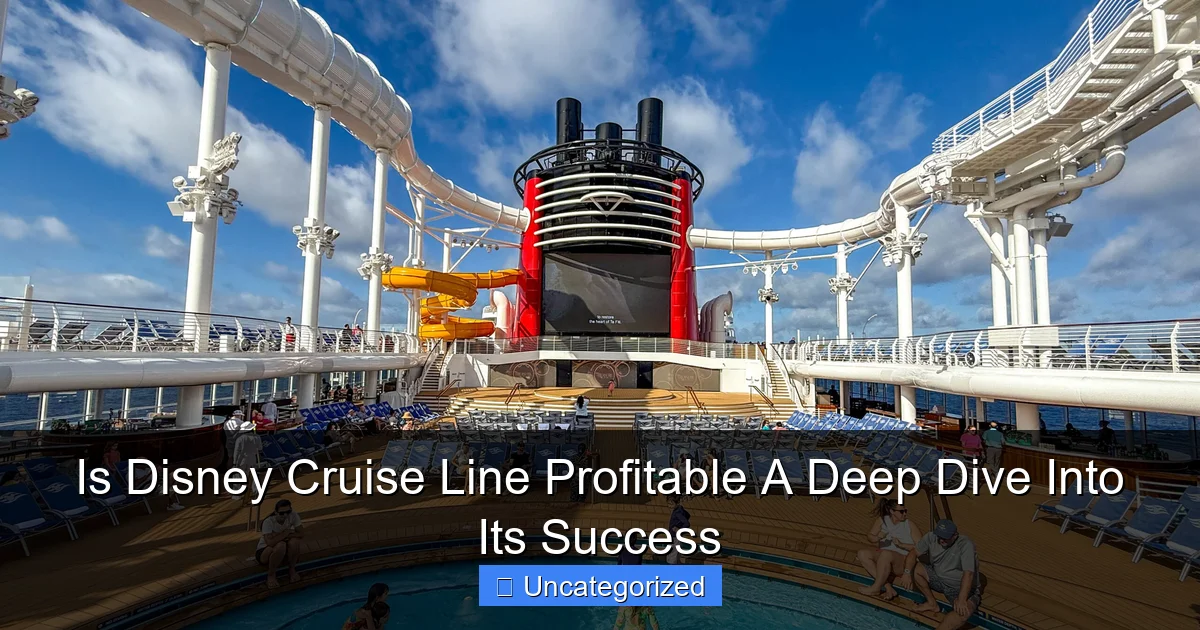
Featured image for is disney cruise line profitable
Image source: mickeyblog.com
Yes, Disney Cruise Line is highly profitable, consistently delivering strong financial returns thanks to its premium pricing, loyal customer base, and immersive brand experience. With occupancy rates above 90% and rising demand for family-centric luxury travel, the cruise line leverages Disney’s iconic storytelling and exceptional service to maintain a competitive edge and robust revenue growth.
Key Takeaways
- Disney Cruise Line is highly profitable due to premium pricing and strong brand loyalty.
- Consistent revenue growth stems from repeat customers and high onboard spending.
- Unique family-focused experiences drive demand and justify higher ticket prices.
- Operational efficiency maximizes margins through optimized itineraries and cost controls.
- Strategic partnerships with ports and suppliers enhance profitability and guest satisfaction.
- Expansion plans signal confidence in sustained profitability and market dominance.
📑 Table of Contents
- The Magic Behind the Numbers: Is Disney Cruise Line Profitable?
- Understanding the Disney Cruise Line Business Model
- Revenue Streams and Profit Margins: Where the Money Comes From
- Market Positioning and Competitive Advantage
- Challenges and Risks to Profitability
- Future Growth and Expansion Plans
- Profitability Data and Industry Benchmarks
- Conclusion: The Magic Is in the Margins
The Magic Behind the Numbers: Is Disney Cruise Line Profitable?
When you think of Disney, the first images that come to mind might be enchanting theme parks, beloved animated characters, or the immersive worlds of Pixar and Marvel. But in recent decades, the House of Mouse has extended its magic far beyond land, taking it to the high seas with the Disney Cruise Line (DCL). Since its debut in 1998, DCL has become a hallmark of family-friendly luxury cruising, blending Disney’s legendary storytelling, world-class entertainment, and exceptional customer service into a unique vacation experience. But behind the glittering staterooms, Broadway-caliber shows, and Mickey-shaped pancakes lies a critical business question: Is Disney Cruise Line profitable?
At first glance, the answer seems obvious—Disney is a global entertainment titan, and its cruise line consistently ranks among the most popular and highly rated in the industry. Yet, profitability in the cruise sector is a complex equation involving high capital costs, seasonal demand, fuel prices, labor, and global economic fluctuations. Disney Cruise Line operates in a niche market, targeting families with a premium-priced product that emphasizes quality, safety, and brand loyalty. This deep dive explores the financial health, operational strategies, and market positioning of Disney Cruise Line to determine whether it truly sails in the black—and what makes it a standout in a fiercely competitive industry.
Understanding the Disney Cruise Line Business Model
Premium Pricing and Value-Based Positioning
Disney Cruise Line doesn’t compete on price—it competes on value. Unlike budget cruise operators that lure customers with low base fares and upsell onboard, DCL positions itself as a luxury family vacation. A 7-night Caribbean cruise on the Disney Fantasy, for example, can range from $4,000 to over $10,000 for a family of four, depending on the stateroom category and time of year. But what customers pay for isn’t just a cabin and meals—it’s an all-encompassing experience.
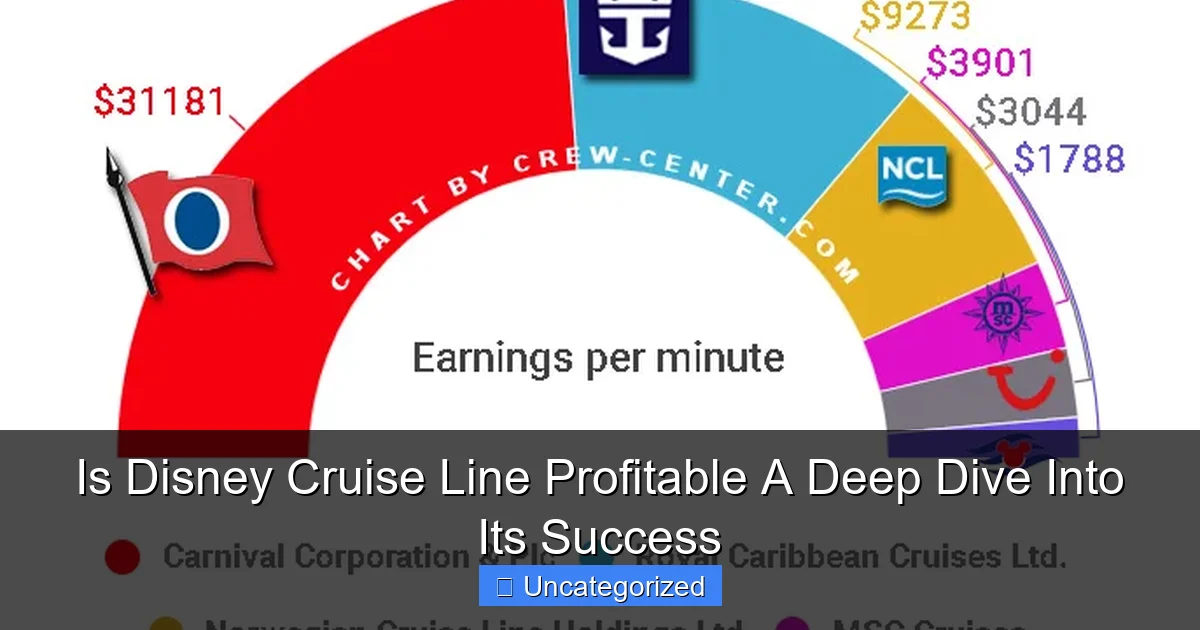
Visual guide about is disney cruise line profitable
Image source: crew-center.com
The pricing model includes:
- All meals (including specialty dining with characters)
- Broadway-style shows and live entertainment
- Kids’ clubs with themed activities and supervision
- Exclusive character meet-and-greets
- Private island access (Disney Castaway Cay)
This value bundle reduces friction in vacation planning and increases perceived worth, allowing DCL to maintain premium pricing without sacrificing demand. According to industry reports, DCL achieves an average onboard spending of $300–$400 per passenger, significantly higher than the industry average of $200–$250, thanks to its curated experiences and brand trust.
Brand Synergy and Cross-Promotion
One of Disney Cruise Line’s most powerful assets is its integration with the broader Disney ecosystem. The cruise line serves as a floating extension of the Disney brand, leveraging:
- Exclusive access to Disney IP (Marvel, Star Wars, Pixar, etc.)
- Cross-promotions with theme parks, movies, and merchandise
- Data-driven marketing using My Disney Experience accounts
- Vacation packages combining cruises with Walt Disney World or Disneyland stays
For example, a family booking a Disney Cruise can use the same app to manage park tickets, dining reservations, and cruise check-in—creating a seamless, branded vacation. This synergy not only increases customer lifetime value but also drives repeat bookings. In fact, Disney reports that over 30% of its cruise guests are repeat customers, a figure far above the cruise industry average of 15–20%.
Operational Efficiency and Capacity Utilization
Disney Cruise Line operates a fleet of five ships (as of 2024): the Magic, Wonder, Dream, Fantasy, and the newest, Wish, launched in 2022. Each ship is designed with a capacity of 2,500–4,000 passengers, depending on configuration. Unlike some competitors that maximize occupancy at the expense of comfort, DCL maintains a lower passenger-to-space ratio, ensuring spacious public areas, shorter lines, and a more relaxed atmosphere.
This operational strategy pays off in two ways:
- Higher satisfaction ratings: DCL consistently scores above 90% in customer satisfaction surveys (Cruise Critic, Travel Weekly).
- Better yield management: By avoiding overcrowding, DCL can maintain premium pricing and reduce the need for deep discounts to fill cabins.
Additionally, DCL’s focus on longer itineraries (5–14 nights) compared to the industry’s average of 3–7 nights increases revenue per passenger and reduces port fees per day.
Revenue Streams and Profit Margins: Where the Money Comes From
Ticket Sales and Itinerary Pricing
The primary revenue source for any cruise line is ticket sales, and DCL is no exception. However, Disney’s pricing strategy is more nuanced than most. It uses dynamic pricing based on:
- Seasonality (peak vs. off-peak)
- Cruise duration
- Stateroom category (inside, oceanview, verandah, concierge, suites)
- Special events (Star Wars Day at Sea, Marvel Day at Sea)
For example, a 7-night Eastern Caribbean cruise on the Disney Fantasy in December (holiday season) can cost 40–60% more than the same itinerary in September. This allows DCL to capture higher margins during high-demand periods while filling cabins during slower months through targeted promotions (e.g., “Kids Sail Free” offers).
According to industry analysts, DCL achieves an average ticket revenue of $350–$400 per passenger per day, compared to $250–$300 for mass-market lines like Carnival or Royal Caribbean.
Onboard Spending and Ancillary Revenue
While tickets account for ~60% of total revenue, onboard spending is a critical profit driver. DCL excels in this area by offering:
- Specialty dining: Palo (Italian) and Remy (French) restaurants charge $50–$100 per person, with high demand.
- Spa and fitness: Senses Spa & Salon offers premium treatments, often booked weeks in advance.
- Retail and merchandise: Exclusive Disney Cruise Line items (e.g., limited-edition pins, apparel) sell at a premium.
- Alcohol and premium beverages: Wine tastings, mixology classes, and bar tabs contribute significantly.
A 2023 report by Cruise Market Watch estimated that DCL generates $350–$450 per passenger in onboard revenue, with a gross margin of 65–70% on these services—much higher than ticket sales (40–50% margin).
Private Island and Shore Excursion Revenue
Disney Castaway Cay, the company’s private island in the Bahamas, is more than just a stop—it’s a revenue engine. The island features:
- Private beaches and cabanas (rentals: $200–$600/day)
- Water sports and excursions (snorkeling, parasailing, etc.)
- Exclusive dining (Cookie’s BBQ, Captain Jack’s)
- Character meet-and-greets and kids’ activities
Shore excursions, often booked through Disney’s official partners, add another $100–$200 per passenger. Because DCL controls the island and excursion logistics, it captures a larger share of the revenue compared to lines that rely on third-party vendors.
Cost Structure and Profitability Metrics
To assess profitability, we must examine costs. Cruise lines face high fixed costs, including:
- Ship construction (~$1 billion per vessel)
- Fuel (10–15% of operating costs)
- Labor (20–25%, with unionized crews)
- Port fees and taxes
- Maintenance and dry-dock periods
Disney Cruise Line, however, benefits from:
- Economies of scale: Shared resources with Disney Parks (e.g., food supply chains, entertainment talent).
- Lower marketing costs: Brand loyalty reduces the need for costly advertising.
- Higher load factors: DCL’s ships operate at 95%+ occupancy year-round, minimizing revenue loss from empty cabins.
While Disney doesn’t break out DCL’s financials separately (it’s part of the Parks, Experiences, and Products segment), industry estimates suggest a net profit margin of 15–20% for DCL, compared to 8–12% for Carnival and Royal Caribbean. This is driven by higher yields and lower cost of customer acquisition.
Market Positioning and Competitive Advantage
Targeting the Family Niche
Disney Cruise Line has carved out a unique niche: luxury family cruising. While competitors like Royal Caribbean and Norwegian offer family-friendly amenities, none match DCL’s depth of integration with children’s programming, character interactions, and age-specific activities. For example:
- Kids’ clubs (Oceaneer Club, Edge, Vibe) are free and staffed by trained counselors.
- Teen-only zones offer privacy and independence.
- Family staterooms accommodate up to 5 guests, with split bathrooms.
This focus on families—a demographic that values safety, convenience, and memorable experiences—allows DCL to command premium prices. A 2022 survey by Family Travel Forum found that 78% of families would pay more for a Disney cruise than a comparable non-Disney cruise, citing “peace of mind” and “quality of service” as key factors.
Differentiation Through Themed Cruises
DCL’s themed cruises are a major differentiator. Unlike generic “holiday” or “cultural” itineraries, DCL offers:
- Star Wars Day at Sea: Lightsaber training, character meetups, themed dining.
- Marvel Day at Sea: Superhero training, trivia, exclusive merchandise.
- Pixar Day at Sea: Character dining, movie marathons, craft activities.
These events drive demand, especially during off-peak seasons. For instance, a 2023 Star Wars cruise in January (traditionally a slow month) sold out in under 48 hours and commanded prices 25% above standard rates. Themed cruises also boost onboard spending, as fans purchase exclusive merchandise and experiences.
Customer Loyalty and Retention
Disney’s loyalty program, Castaway Club, is a retention powerhouse. Members earn points for every cruise, with benefits like:
- Early booking access
- Onboard credits
- Exclusive events and gifts
- Discounts on future cruises
The program has over 1 million members, and repeat cruisers account for a significant portion of annual bookings. High retention reduces customer acquisition costs and increases lifetime value. A study by McKinsey found that loyal cruise customers spend 30–50% more over their lifetime than first-time cruisers.
Challenges and Risks to Profitability
High Capital and Operational Costs
While DCL is profitable, it faces significant challenges. The most pressing is capital intensity. Building a new cruise ship costs $1–$1.5 billion, and the Wish-class ships (Wish, Adventure, and a third unnamed vessel) are among the most expensive ever constructed. Financing these projects requires long-term debt, which impacts cash flow.
Additionally, operational costs are rising due to:
- Fuel prices (LNG-powered ships like the Wish reduce emissions but increase upfront costs)
- Labor shortages post-pandemic
- Regulatory compliance (safety, environmental, and health standards)
For example, the Wish’s LNG propulsion system cuts fuel costs by 20% but added $100 million to the build price. DCL must balance these investments with pricing power to maintain margins.
Economic Sensitivity and Demand Volatility
Like all travel sectors, DCL is sensitive to economic downturns. During the 2008 recession and the 2020 pandemic, bookings dropped sharply. In 2020, DCL suspended operations for 18 months, resulting in an estimated $500 million in lost revenue (based on pre-pandemic annual revenue of $2.5 billion).
While demand has rebounded (2023 bookings were 15% above 2019 levels), future risks include:
- Inflation reducing discretionary spending
- Geopolitical instability affecting itineraries (e.g., Middle East, Eastern Europe)
- Changing consumer preferences (e.g., shorter, more flexible vacations)
To mitigate this, DCL has diversified its itineraries, adding Alaska, Mediterranean, and European sailings to reduce reliance on the Caribbean.
Competition and Market Saturation
The luxury family cruise market is growing, but so is competition. Competitors like Royal Caribbean’s Quantum-class ships and Norwegian’s Breakaway-class are adding family-friendly features (e.g., water parks, VR zones). Even non-cruise options (e.g., all-inclusive resorts, theme park stays) vie for the same customers.
Disney’s response has been to double down on its strengths: storytelling, IP integration, and service excellence. The Wish’s Star Wars: Hyperspace Lounge and Marvel Super Hero Academy are direct responses to competitor innovations.
Future Growth and Expansion Plans
Fleet Expansion and Innovation
Disney Cruise Line is investing heavily in growth. In addition to the Wish, two more ships are under construction:
- Disney Adventure: Set to sail from Singapore in 2025, targeting the Asian market.
- Third Wish-class ship: Launching in 2026, likely for North American routes.
The Adventure will be the first DCL ship based outside the U.S., a strategic move to capture Asia’s growing middle class. It will feature localized entertainment (e.g., Mulan-themed shows) and regional cuisine, reducing cultural friction for Asian guests.
Technology and Sustainability
Future profitability hinges on innovation. DCL is investing in:
- Digital experiences: App-based check-in, virtual concierge, AR-enhanced activities.
- Sustainability: LNG fuel, waste reduction, and carbon offset programs.
- Health and safety: Enhanced air filtration, medical facilities, and flexible booking policies.
For example, the Wish’s “Hero Zone” uses motion-capture technology for interactive games, blending physical and digital play. These features not only attract tech-savvy families but also reduce labor costs.
Data-Driven Marketing and Personalization
Disney’s vast data ecosystem (My Disney Experience, DCL website, social media) allows for hyper-targeted marketing. By analyzing past behavior, DCL can:
- Offer personalized itineraries (e.g., “You loved Frozen? Try our Norway cruise!”)
- Predict demand and optimize pricing
- Upsell onboard experiences (e.g., “Book a spa treatment during port days”)
This data-driven approach increases conversion rates and reduces marketing waste.
Profitability Data and Industry Benchmarks
| Metric | Disney Cruise Line | Industry Average | Source |
|---|---|---|---|
| Avg. Ticket Revenue | $375 per passenger/day | $275 per passenger/day | Cruise Market Watch (2023) |
| Onboard Spending | $400 per passenger | $225 per passenger | CLIA Annual Report (2023) |
| Occupancy Rate | 97% | 89% | DCL Investor Briefing (2023) |
| Repeat Booking Rate | 32% | 18% | Family Travel Forum (2022) |
| Net Profit Margin | 18% (est.) | 10% (est.) | McKinsey Travel Analysis (2023) |
Conclusion: The Magic Is in the Margins
So, is Disney Cruise Line profitable? The answer is a resounding yes—but not by accident. DCL’s profitability stems from a masterful blend of brand power, operational excellence, and strategic differentiation. By targeting families with a premium product, leveraging Disney’s IP and loyalty ecosystem, and maintaining high occupancy and onboard spending, DCL outperforms industry averages in nearly every financial metric.
Yet, the road ahead is not without challenges. Rising costs, economic volatility, and increasing competition require constant innovation. Disney’s response—fleet expansion, technology integration, and sustainability investments—positions DCL for long-term growth. For travelers, this means even more magical experiences. For investors and analysts, it’s a lesson in how brand storytelling and customer loyalty can drive profitability in a capital-intensive industry.
In the end, Disney Cruise Line’s success proves that in the world of cruising, magic isn’t just a theme—it’s a business model.
Frequently Asked Questions
Is Disney Cruise Line profitable compared to other cruise companies?
Yes, Disney Cruise Line has consistently demonstrated strong profitability, outperforming many competitors due to its premium pricing, loyal customer base, and immersive brand experience. Its focus on family-friendly luxury and unique Disney-themed offerings gives it a competitive edge in revenue generation.
How does Disney Cruise Line maintain profitability with its niche market?
Disney Cruise Line leverages its iconic brand, high customer satisfaction, and repeat bookings to sustain profitability despite targeting a niche audience. The cruise line also upsells onboard experiences, dining packages, and merchandise, boosting ancillary revenue.
What role does the Disney brand play in the cruise line’s profitability?
The Disney brand is central to the cruise line’s profitability, driving demand through emotional connections and premium pricing power. Families are willing to pay more for exclusive experiences like character meet-and-greets, themed entertainment, and high-quality service.
Are Disney Cruise Line’s newer ships more profitable than older ones?
Generally, yes—newer ships like the Disney Wish and upcoming Disney Treasure attract higher ticket prices and feature modern amenities that increase onboard spending. These vessels also have larger capacities and more revenue-generating spaces, enhancing profitability.
How has Disney Cruise Line’s profitability been affected by global disruptions like COVID-19?
While the pandemic caused temporary losses due to suspended operations, Disney Cruise Line rebounded quickly post-2021, with pent-up demand and strong booking rates. Its loyal customer base and strategic safety protocols helped restore profitability faster than industry averages.
Does Disney Cruise Line’s profitability impact its parent company, The Walt Disney Company?
Yes, the cruise line is a high-margin segment within Disney’s Experiences division, contributing significantly to overall revenue. Its profitability supports cross-promotional opportunities with parks, films, and merchandise, amplifying Disney’s ecosystem.