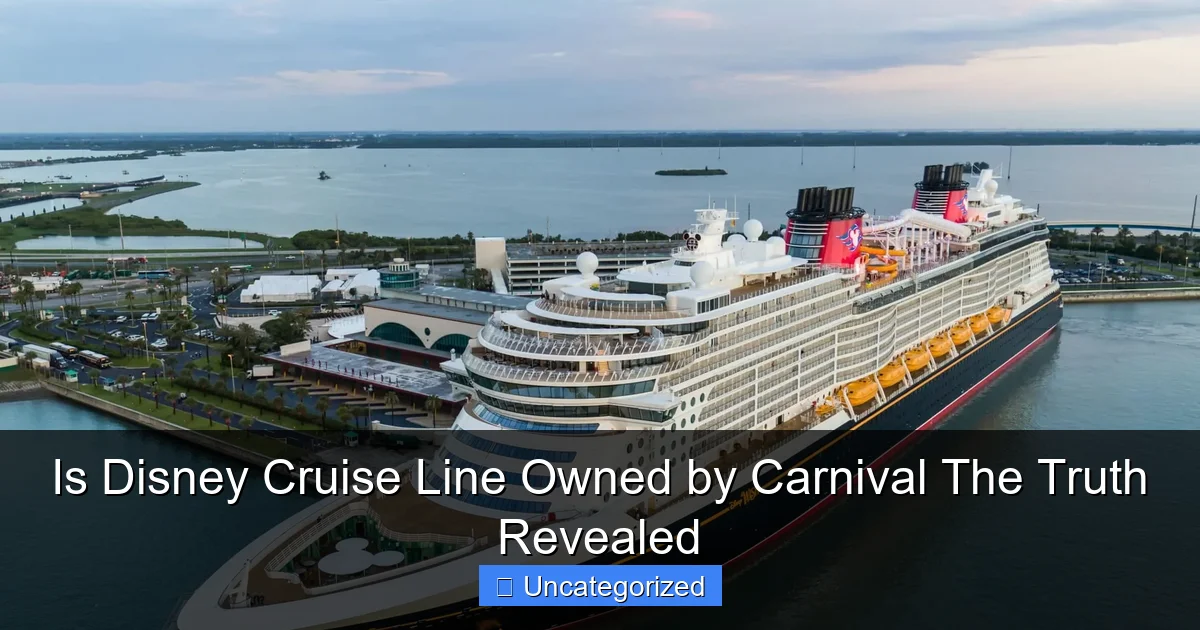
Featured image for is disney cruise line owned by carnival
Image source: highseascruising.com
No, Disney Cruise Line is not owned by Carnival—it is a fully owned subsidiary of The Walt Disney Company, operating independently with its own management, branding, and fleet. Despite both being major players in the cruise industry, Carnival Corporation and Disney Cruise Line are completely separate entities, each with distinct ownership, target audiences, and onboard experiences.
Key Takeaways
- Disney Cruise Line is independent: Not owned by Carnival Corporation or any competitor.
- Operated by The Walt Disney Company: Fully owned subsidiary ensuring brand alignment.
- Unique family-focused experience: Disney’s exclusive theme sets it apart from Carnival.
- No shared ownership: Disney and Carnival are direct competitors, not partners.
- Premium pricing reflects ownership: Disney’s control ensures high-quality, immersive onboard experiences.
📑 Table of Contents
- The Magical Misconception: Debunking the Ownership of Disney Cruise Line
- Understanding the Cruise Industry Landscape
- Disney Cruise Line: A True Disney Experience
- Carnival Corporation: The World’s Largest Cruise Company
- The Truth About Shared Infrastructure and Partnerships
- Data Table: Disney Cruise Line vs. Carnival Cruise Line
- Conclusion: The Magic Is All Disney’s
The Magical Misconception: Debunking the Ownership of Disney Cruise Line
When you think of a Disney Cruise Line vacation, what comes to mind? Is it the sight of Mickey Mouse welcoming you aboard, the smell of fresh funnel cakes, or the excitement of a Broadway-style show? Perhaps it’s the promise of family-friendly fun, where even the grumpiest teenager can’t help but smile. But amidst the magic and the memories, a persistent question often pops up: “Is Disney Cruise Line owned by Carnival?” This question has floated around the cruise industry for years, fueled by confusion between two of the most recognizable names in vacation travel. The short answer? No. But the long answer is far more interesting—and reveals a fascinating tale of corporate strategy, brand identity, and the power of perception in the travel world.
At first glance, it’s easy to understand why the confusion exists. Both Disney Cruise Line and Carnival Cruise Line dominate the cruise market, offering similar services: ocean voyages, themed entertainment, and family-centric experiences. They both sail the Caribbean, Alaska, and Europe, and they both cater to a wide demographic. Add in the fact that both companies have massive fleets, global operations, and are household names, and it’s no wonder travelers sometimes conflate them. But beneath the surface, their ownership, business models, and philosophies couldn’t be more different. In this deep dive, we’ll explore the truth behind Disney Cruise Line’s ownership, clarify its relationship (or lack thereof) with Carnival Corporation, and uncover what truly sets this beloved brand apart from its peers. Whether you’re a first-time cruiser or a seasoned traveler, understanding this distinction can help you make smarter, more informed choices for your next vacation.
Understanding the Cruise Industry Landscape
How the Modern Cruise Industry Is Structured
The cruise industry is a complex ecosystem of parent companies, subsidiaries, joint ventures, and independent operators. At the top are a handful of mega-corporations that own multiple cruise brands, each targeting a different segment of the market. For example, Carnival Corporation & plc is the world’s largest cruise company, but it doesn’t own Disney Cruise Line. Instead, it operates a portfolio of well-known brands, including Carnival Cruise Line, Princess Cruises, Holland America Line, Seabourn, and Costa Cruises. Each brand under Carnival’s umbrella has its own identity, target audience, and operational style—ranging from budget-friendly to ultra-luxury.
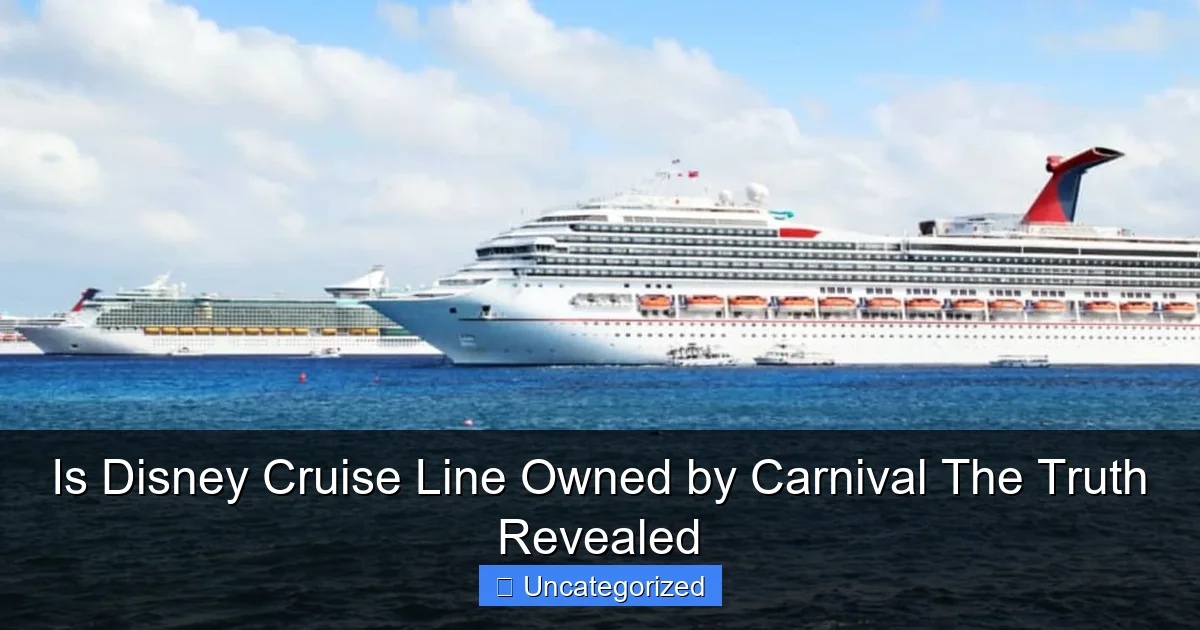
Visual guide about is disney cruise line owned by carnival
Image source: scottsdaleluxurycruises.com
Meanwhile, Royal Caribbean Group is another giant, owning Royal Caribbean International, Celebrity Cruises, Silversea Cruises, and a partial stake in TUI Cruises and Hapag-Lloyd Cruises. This multi-brand strategy allows parent companies to capture diverse market segments without diluting their core brands. For instance, Carnival Cruise Line is known for its fun, casual, and energetic vibe, while Seabourn offers all-inclusive luxury. This segmentation is critical because it helps companies avoid direct competition with their own brands and instead compete externally with other parent companies.
Why Ownership Matters in the Cruise World
Understanding ownership is essential for travelers because it impacts everything from service quality to onboard experiences. A brand like Disney Cruise Line operates under a completely different corporate structure than Carnival Cruise Line. Disney Cruise Line is a wholly owned subsidiary of The Walt Disney Company, a global entertainment conglomerate with divisions in film, television, theme parks, and consumer products. This means Disney Cruise Line benefits from the vast resources, creative talent, and marketing power of Disney—elements that Carnival simply doesn’t have access to, even though it’s a larger cruise operator in terms of fleet size.
For example, Disney Cruise Line ships feature exclusive Disney characters, original theatrical productions, and themed dining experiences that are directly tied to Disney’s intellectual property. These aren’t just add-ons; they’re core to the brand’s identity. In contrast, Carnival Cruise Line relies on its own entertainment team to create shows and activities, which, while fun and energetic, don’t have the same level of narrative depth or brand integration. This distinction in ownership directly shapes the guest experience—and explains why families with young children often prefer Disney over other lines.
Common Misconceptions and Why They Persist
Despite the clear differences in ownership, the myth that Disney Cruise Line is owned by Carnival persists for several reasons. First, both companies are headquartered in the United States (Disney in Burbank, California; Carnival in Miami, Florida) and operate in similar markets. Second, both have strong brand recognition, making it easy for consumers to lump them together. Third, some travel agents or third-party websites may use generic terms like “major cruise lines” without clarifying the corporate structures, leading to confusion.
Another factor is the physical similarity of modern cruise ships. Many vessels across different brands look alike—massive, colorful, and packed with amenities. Without knowing the logo or brand name, it’s easy to assume they’re all part of the same company. But just as a Ford and a Chevrolet may both be American cars, they’re made by entirely different manufacturers with different philosophies. The same applies to Disney and Carnival: same industry, different ownership, different DNA.
Disney Cruise Line: A True Disney Experience
The Birth and Evolution of Disney Cruise Line
Disney Cruise Line was launched in 1998 with the maiden voyage of the Disney Magic, marking Disney’s first foray into the cruise industry. The idea wasn’t just to create another cruise line—it was to extend the Disney theme park experience onto the high seas. From the start, the company invested heavily in design, storytelling, and guest experience, ensuring that every detail—from the ship’s architecture to the crew’s uniforms—reflected Disney’s signature charm.
Over the years, Disney has expanded its fleet to include the Disney Wonder, Disney Dream, Disney Fantasy, and most recently, the Disney Wish, launched in 2022. The Disney Wish is particularly notable for its innovative design, including the first-ever Marvel superhero training academy at sea, a Star Wars hyperspace lounge, and an adults-only area called Starlight Lounge with a celestial theme. These features are not just gimmicks—they’re deeply integrated into Disney’s brand storytelling, something that wouldn’t be possible without full corporate control.
Disney’s Unique Business Model and Brand Integration
One of the key reasons Disney Cruise Line is not owned by Carnival is because of its vertically integrated business model. Unlike most cruise lines, which are part of larger travel or hospitality groups, Disney Cruise Line operates as a direct extension of The Walt Disney Company. This means that every aspect of the cruise experience is designed, produced, and managed in-house using Disney’s own creative teams, intellectual property, and marketing strategies.
For example:
- Characters and Shows: Disney characters like Mickey, Minnie, Elsa, and Moana appear in daily meet-and-greets, parades, and original stage productions. These shows are created by Disney Theatrical Productions, the same team behind Broadway hits like The Lion King and Aladdin.
- Themed Dining: Restaurants like Animator’s Palate and Palo are designed with immersive storytelling, using projection mapping and interactive elements to transport guests into Disney films.
- Exclusive Ports: Disney owns and operates Castaway Cay in the Bahamas, a private island that offers a uniquely Disney experience with character meetups, themed kids’ clubs, and even a family-friendly water park.
This level of integration is impossible for a third-party owner like Carnival to replicate. It’s not just about adding Disney characters to a Carnival ship—it’s about building a holistic experience that feels authentic to the Disney brand. And that requires full creative and financial control, which only Disney itself can provide.
Disney’s Commitment to Family and Inclusivity
Another factor that sets Disney Cruise Line apart is its unwavering focus on family travel. While Carnival also caters to families, its brand is more broadly focused on fun, affordability, and adult entertainment (think comedy clubs, casinos, and late-night parties). Disney, on the other hand, prioritizes safety, inclusivity, and age-appropriate content for all guests, from toddlers to grandparents.
Practical example: On a Disney cruise, you won’t find casinos or adult-only nightclubs. Instead, you’ll find:
- Dedicated kids’ clubs with themed activities (e.g., Jedi Training for Star Wars fans).
- Family staterooms with split bathrooms and kid-friendly amenities.
- Parent relaxation zones like the Quiet Cove pool and Senses Spa.
- Special events like pirate-themed deck parties and character breakfasts.
This family-first approach is a direct reflection of Disney’s broader brand values and wouldn’t be feasible under a different owner. Carnival, for instance, has experimented with family-friendly initiatives, but they’re often secondary to its core focus on mass-market appeal.
Carnival Corporation: The World’s Largest Cruise Company
The Rise of Carnival and Its Brand Portfolio
Founded in 1972 by Ted Arison, Carnival Corporation & plc is the world’s largest cruise operator, with over 90 ships across 10 brands and more than 250,000 employees. The company’s success lies in its ability to scale operations, optimize costs, and target diverse customer segments through its multi-brand strategy. Carnival Cruise Line, the company’s flagship brand, is known for its “Fun Ships” concept—lively, affordable, and packed with activities for all ages.
But Carnival doesn’t stop at its namesake brand. It also owns:
- Princess Cruises – Premium, destination-focused itineraries.
- Holland America Line – Traditional, elegant cruising with a focus on culture and enrichment.
- Seabourn – Ultra-luxury, all-inclusive small ships.
- Costa Cruises – Italian-style cruising, popular in Europe.
- P&O Cruises – British and Australian markets.
This portfolio allows Carnival to compete across price points and demographics, from budget travelers to luxury seekers. However, none of these brands are designed to replicate the Disney experience. In fact, Carnival has never acquired or partnered with Disney in any way—despite occasional rumors to the contrary.
Carnival’s Business Strategy vs. Disney’s Approach
While Disney focuses on storytelling, brand consistency, and emotional connection, Carnival’s strategy is rooted in operational efficiency and volume. Carnival ships are often larger than Disney’s, carrying upwards of 5,000 passengers (e.g., the Mardi Gras and Carnival Celebration), compared to Disney’s average of 2,500–4,000. This allows Carnival to offer lower per-passenger costs and more competitive pricing.
However, this scale comes with trade-offs. Carnival ships have more generic entertainment, fewer character appearances, and less personalized service. For example:
- Carnival’s shows are typically revues or tribute acts, not original productions.
- There are no exclusive theme parks or private islands (though Carnival does offer private beach excursions).
- Onboard dining is more casual, with fewer themed experiences.
This isn’t to say Carnival is inferior—just different. Its strength lies in affordability, variety, and a party atmosphere, which appeals to a different kind of traveler. But it’s fundamentally incompatible with Disney’s high-touch, story-driven model.
Why Carnival Would Never Own Disney Cruise Line
Even if Carnival wanted to acquire Disney Cruise Line, it’s highly unlikely for several reasons:
- Brand Conflict: Disney’s brand is built on wholesome, family-friendly values. Carnival’s brand, while family-inclusive, leans more toward adult entertainment and nightlife. Merging the two would create a branding nightmare.
- Creative Control: Disney would never allow a third party to dictate how its characters and stories are used. The company fiercely protects its IP, as seen in its legal battles over merchandise and fan content.
- Regulatory and Cultural Barriers: A merger between a cruise company and a media empire would face intense scrutiny from regulators and shareholders. Disney’s culture is rooted in creativity and storytelling, while Carnival’s is rooted in logistics and operations.
The Truth About Shared Infrastructure and Partnerships
Do Disney and Carnival Share Any Resources?
While Disney Cruise Line and Carnival Corporation are entirely separate, they do operate in the same industry and sometimes use shared infrastructure. For example:
- Both companies use Port Canaveral in Florida as a home port.
- They may share third-party service providers for maintenance, catering, or logistics.
- Both participate in industry groups like the Cruise Lines International Association (CLIA).
However, these overlaps are logistical, not ownership-based. Think of it like two rival airlines using the same airport—they share the runway, but they’re still competitors. Disney and Carnival even compete directly for passengers in popular markets like the Caribbean and Alaska.
Misleading Partnerships and Third-Party Confusion
Another source of confusion is third-party booking platforms. Websites like Expedia, Kayak, or Cruise Critic may list Disney and Carnival side-by-side, making it seem like they’re part of the same company. Some travel agents might also refer to “Carnival’s Disney ships” due to a lack of detailed knowledge.
Tip: Always verify ownership by checking the cruise line’s official website. Disney Cruise Line’s site (disneycruise.com) clearly states it’s a division of The Walt Disney Company. Carnival’s site (carnival.com) lists its own portfolio of brands.
Case Study: The “Disney on Carnival” Rumor
In 2015, a viral rumor claimed that Carnival had “acquired” Disney Cruise Line. The rumor stemmed from a misinterpreted press release about a new ship design. In reality, Carnival was unveiling its Vista-class ships, which happened to include some family-friendly features. But the rumor spread quickly on social media, highlighting how easily misinformation can take hold.
Disney quickly debunked the claim, and no credible news source ever reported it as fact. This incident underscores the importance of relying on official sources and understanding the cruise industry’s corporate structure.
Data Table: Disney Cruise Line vs. Carnival Cruise Line
| Feature | Disney Cruise Line | Carnival Cruise Line |
|---|---|---|
| Parent Company | The Walt Disney Company | Carnival Corporation & plc |
| Founded | 1998 | 1972 |
| Fleet Size | 5 ships (expanding to 6+ by 2025) | 24 ships |
| Target Audience | Families, multigenerational travelers, Disney fans | Families, couples, solo travelers, budget seekers |
| Key Differentiator | Exclusive Disney characters, themed experiences, Broadway-quality shows | Affordable pricing, “Fun Ships” concept, diverse entertainment |
| Private Island | Castaway Cay (Bahamas) | No private island (offers beach excursions) |
| Onboard Dining | Themed restaurants, rotational dining, character breakfasts | Casual buffets, specialty dining (extra cost) |
Conclusion: The Magic Is All Disney’s
So, is Disney Cruise Line owned by Carnival? The answer is a definitive no. Disney Cruise Line is a wholly owned subsidiary of The Walt Disney Company, operating under a unique business model that prioritizes storytelling, brand integration, and family-friendly experiences. Carnival Corporation, while a major player in the cruise industry, has no ownership stake, partnership, or influence over Disney’s ships or operations.
Understanding this distinction is more than just trivia—it helps you choose the right cruise for your needs. If you’re looking for a magical, immersive vacation with beloved characters, themed entertainment, and a focus on family togetherness, Disney Cruise Line is unmatched. If you prefer affordability, variety, and a more casual, party-oriented atmosphere, Carnival might be the better fit. But never confuse the two—because when it comes to ownership, branding, and guest experience, they’re worlds apart.
As you plan your next cruise, remember: the magic of Disney doesn’t come from a cruise conglomerate. It comes from the same creative genius that brought you Frozen, The Little Mermaid, and Star Wars. And that magic is all Disney’s—on land, at sea, and beyond.
Frequently Asked Questions
Is Disney Cruise Line owned by Carnival?
No, Disney Cruise Line is not owned by Carnival. It is a subsidiary of Disney Parks, Experiences and Products, which operates under The Walt Disney Company.
Who actually owns Disney Cruise Line?
Disney Cruise Line is fully owned by The Walt Disney Company, specifically through its Disney Parks, Experiences and Products division. The cruise line operates independently from Carnival Corporation.
Are Disney Cruise Line and Carnival Corporation competitors?
Yes, Disney Cruise Line and Carnival Corporation are direct competitors in the cruise industry. Both companies operate their own fleets, with Disney focusing on family-friendly experiences and Carnival offering a broader range of budget and theme-based cruises.
Does Carnival Corporation have any stake in Disney Cruise Line?
No, Carnival Corporation has no ownership stake in Disney Cruise Line. The two companies are separate entities with distinct corporate structures, branding, and cruise operations.
Why do people think Disney Cruise Line is owned by Carnival?
This misconception likely arises because both are major players in the cruise industry. However, Disney Cruise Line is a standalone brand under The Walt Disney Company, with no ties to Carnival’s corporate ownership.
Is Disney Cruise Line part of the Carnival fleet?
No, Disney Cruise Line operates its own fleet of ships, including the Disney Magic, Wonder, Dream, and Fantasy. These vessels are managed and staffed exclusively by Disney, separate from Carnival’s fleet.