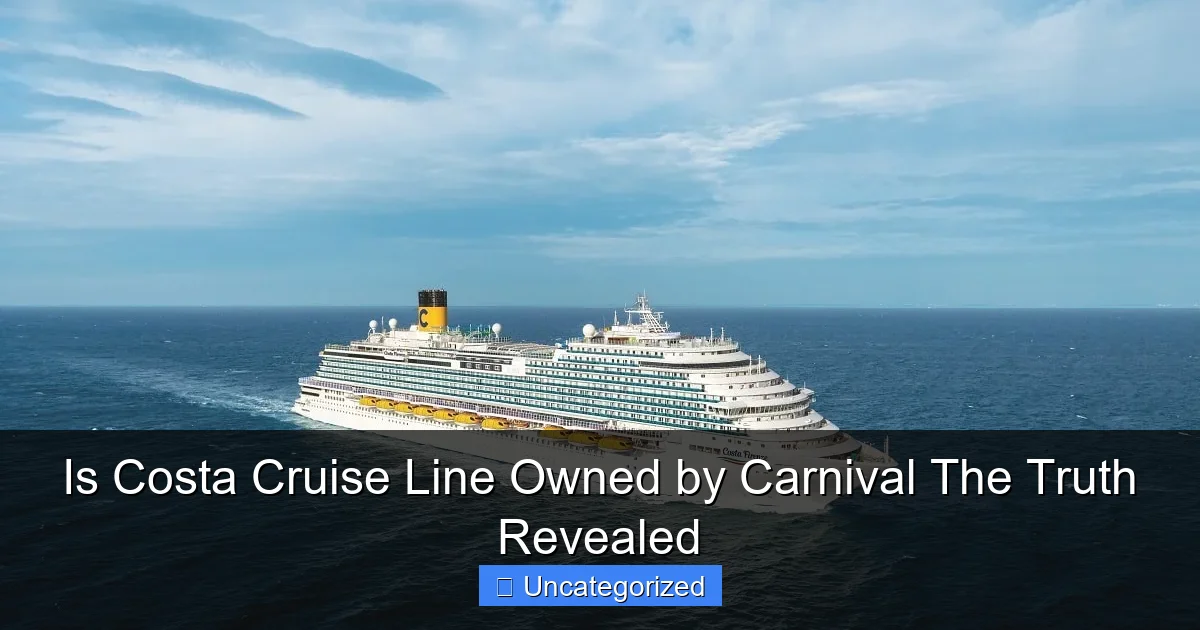
Featured image for is costa cruise line owned by carnival
Image source: cruisefever.net
Yes, Costa Cruise Line is owned by Carnival Corporation & plc, the world’s largest cruise company. This strategic acquisition allows Carnival to leverage Costa’s strong European presence and premium Italian brand appeal while maintaining its distinct identity. Despite shared ownership, Costa operates independently with unique itineraries, ships, and cultural experiences.
Key Takeaways
- Costa is owned by Carnival: A subsidiary under Carnival Corporation since 2000.
- Shared resources: Costa leverages Carnival’s global infrastructure and purchasing power.
- Distinct branding: Costa retains its Italian identity despite corporate ownership.
- Market positioning: Targets Europe but aligns with Carnival’s global strategy.
- Fleet integration: Costa ships operate under Carnival’s operational standards.
- Financial transparency: Costa’s performance impacts Carnival’s overall earnings reports.
📑 Table of Contents
- Is Costa Cruise Line Owned by Carnival? The Truth Revealed
- The Corporate Ownership Structure: Who Owns Whom?
- Brand Identity and Market Positioning: How Costa Stands Out
- Fleet and Operations: Shared Infrastructure, Distinct Ships
- Financial and Strategic Integration: The Carnival Advantage
- Sustainability and Future Outlook: A Shared Vision
- Conclusion: The Best of Both Worlds
Is Costa Cruise Line Owned by Carnival? The Truth Revealed
When it comes to the world of cruising, few names are as instantly recognizable as Carnival Corporation and Costa Cruises. For travelers planning their next vacation at sea, understanding the relationship between these two giants can be crucial—especially when it comes to choosing the right cruise line for your needs. You might have heard whispers at travel agencies, seen overlapping branding on cruise ships, or noticed similar itineraries and wondered: Is Costa Cruise Line owned by Carnival?
The short answer is yes—but the full story is far more nuanced and fascinating. In the complex ecosystem of global cruise operations, ownership structures, brand identities, and market strategies intertwine in ways that can confuse even seasoned cruisers. This article dives deep into the corporate history, operational dynamics, branding strategies, and future outlook of Costa Cruises within the Carnival Corporation umbrella. Whether you’re a first-time cruiser, a loyal Costa fan, or a Carnival cruiser curious about the European counterpart, this comprehensive guide will clarify the relationship once and for all. From corporate ownership to ship management, cultural branding, and sustainability efforts, we’ll explore every angle to give you the full picture.
The Corporate Ownership Structure: Who Owns Whom?
The Birth of Carnival Corporation & plc
Carnival Corporation, founded in 1972 by Ted Arison, began as a single cruise line but quickly evolved into a global powerhouse. In 2003, it merged with P&O Princess Cruises to form Carnival Corporation & plc, creating the world’s largest cruise company. This dual-listed structure—trading on both the New York Stock Exchange (CCL) and the London Stock Exchange (CCL.L)—allows the company to operate with financial and strategic flexibility across two major markets. Today, Carnival Corporation & plc owns and operates 10 cruise brands, including Carnival Cruise Line, Princess Cruises, Holland America Line, Seabourn, AIDA Cruises, P&O Cruises, and Costa Cruises.
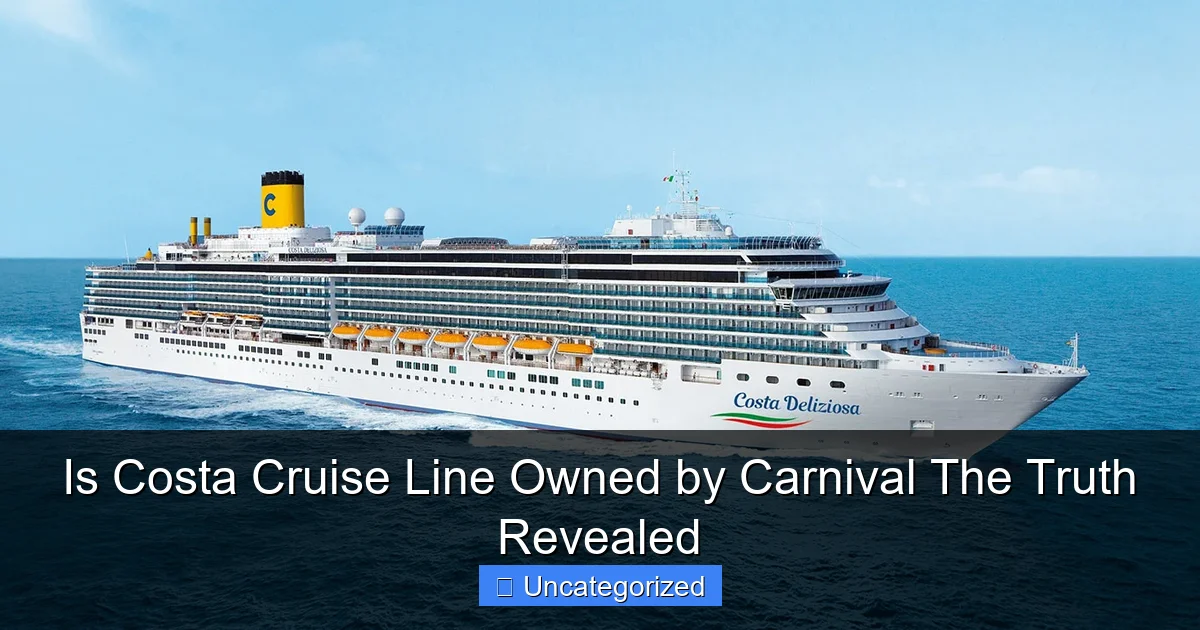
Visual guide about is costa cruise line owned by carnival
Image source: cruisetradenews.com
Costa Cruises: From Italian Pioneer to Carnival Subsidiary
Costa Cruises, founded in 1854 as a cargo shipping company, entered the passenger cruise industry in 1947. Based in Genoa, Italy, Costa became a dominant force in the Mediterranean and European cruise markets, known for its Italian flair, family-friendly atmosphere, and vibrant onboard entertainment. In 2000, Carnival Corporation acquired Costa Crociere S.p.A. for approximately $1.2 billion, marking a pivotal moment in cruise industry consolidation. This acquisition was not just a financial transaction—it was a strategic move to strengthen Carnival’s presence in the European market, where Costa had deep cultural roots and brand loyalty.
The acquisition allowed Carnival to:
- Expand its European footprint with a well-established brand
- Leverage Costa’s expertise in the Mediterranean and Asian markets
- Integrate Costa’s fleet into its global network of ports and supply chains
- Benefit from Costa’s strong relationships with European travel agencies and tour operators
Ownership Today: A Fully Integrated Subsidiary
Today, Costa Cruises operates as a wholly owned subsidiary of Carnival Corporation & plc. While it maintains its own headquarters in Genoa and retains Italian leadership in key positions, all strategic decisions—including fleet expansion, marketing budgets, and global itineraries—are coordinated through Carnival’s corporate structure. Costa’s CEO reports to the broader Carnival leadership team, and its financial performance is consolidated into Carnival’s annual reports. However, Costa retains its distinct brand identity, which is critical to its appeal in European and Asian markets.
Example: When Costa launched the Costa Toscana in 2021—a liquefied natural gas (LNG)-powered ship—the vessel was developed with Carnival’s global sustainability goals in mind, but marketed with Italian design, cuisine, and entertainment to appeal to European sensibilities.
Brand Identity and Market Positioning: How Costa Stands Out
Maintaining Cultural Authenticity
One of the most impressive aspects of Costa’s integration into Carnival is how it has preserved its Italian identity. Unlike some subsidiaries that adopt more Americanized branding, Costa remains proudly Italian. This authenticity is evident in:
- Onboard language: Italian is widely spoken, especially in crew interactions and announcements
- Cuisine: Menus feature regional Italian dishes, fresh pasta, and authentic espresso
- Entertainment: Italian music, dance shows, and cultural events are central to the experience
- Design: Ships like Costa Smeralda and Costa Toscana incorporate Italian art, architecture, and materials
This cultural preservation is not accidental—it’s a deliberate strategy. Carnival understands that Costa’s brand equity in Europe and Asia is tied to its Italian roots. By allowing Costa to operate with a high degree of autonomy in branding and guest experience, Carnival maximizes customer loyalty and differentiates Costa from its American sister brands.
Target Markets and Itineraries
Costa Cruises primarily targets:
- European families and couples (especially in Italy, Germany, Spain, and France)
- Asian markets (particularly China, where Costa has operated dedicated Chinese-language cruises)
- Multinational groups seeking a European-style cruise experience
Its itineraries focus on:
- Mediterranean cruises (Barcelona, Rome, Athens, Istanbul)
- Northern Europe (Norway, Baltic Sea, Iceland)
- Asia (China, Japan, Southeast Asia)
- Exotic destinations (Caribbean, South America, Indian Ocean)
While Carnival Cruise Line dominates the U.S. market with short, fun-focused Caribbean cruises, Costa offers longer, more culturally immersive voyages—often 7 to 14 days—with an emphasis on port-rich itineraries.
Unique Onboard Experiences
Costa differentiates itself through:
- Italian dining experiences: Multiple specialty restaurants with authentic regional cuisine (e.g., Trattoria, Ristorante Italia)
- Family-friendly amenities: Dedicated kids’ clubs, family staterooms, and multilingual activities
- Entertainment: Live Italian music, cabaret shows, and themed parties (e.g., Carnival of Venice)
- Wellness: Spa by Sothys (French skincare brand) with Italian-inspired treatments
Tip: If you’re a foodie or culture enthusiast, Costa offers a more refined and authentic European cruise experience compared to the more casual, entertainment-heavy vibe of Carnival Cruise Line.
Fleet and Operations: Shared Infrastructure, Distinct Ships
Shared Shipbuilding and Technology
One of the biggest advantages of being part of Carnival Corporation is access to shared infrastructure. Costa benefits from:
- Joint shipbuilding contracts: Costa’s LNG-powered ships were built at Meyer Turku (Finland) and Meyer Werft (Germany), the same yards that build Carnival’s AIDA and Carnival Cruise Line vessels
- Shared technology platforms: Costa uses Carnival’s MedallionNet (high-speed Wi-Fi), mobile check-in systems, and reservation platforms
- Unified safety and training standards: Crew training, emergency procedures, and safety drills follow Carnival’s global protocols
This shared infrastructure reduces costs and ensures consistency in operations. For example, Costa’s Costa Toscana uses the same LNG propulsion system as Carnival’s Mardi Gras, allowing both companies to benefit from economies of scale in fuel procurement and maintenance.
Distinct Ship Design and Theming
Despite shared technology, Costa’s ships are uniquely designed. The Costa Smeralda and Costa Toscana (part of the “Helios” class) feature:
- Italian regional themes (Toscana = Tuscany; Smeralda = Sardinia)
- Art collections from Italian museums and artists
- Architectural details like marble, wood, and Murano glass
- Dedicated “Costa Lounge” spaces for Italian aperitivo and espresso
Compare this to Carnival Cruise Line’s ships, which emphasize American pop culture, vibrant colors, and casual dining. While both brands use similar underlying technology, the guest experience is tailored to their respective markets.
Operational Synergies
Costa and Carnival share:
- Port operations: In major hubs like Barcelona, Civitavecchia, and Miami, Carnival manages port logistics for all its brands
- Supply chain: Food, linens, and amenities are sourced through Carnival’s global procurement network
- Customer service systems: Reservation platforms, loyalty programs, and feedback systems are integrated
However, Costa manages its own:
- Crew recruitment (with a strong emphasis on Italian and European staff)
- Marketing campaigns (targeted to European and Asian audiences)
- Onboard language and cultural programming
Financial and Strategic Integration: The Carnival Advantage
Revenue and Market Share
Costa Cruises is a significant contributor to Carnival’s revenue. In 2023, Costa generated approximately $2.3 billion in revenue, accounting for about 12% of Carnival’s total cruise revenue. This makes Costa the third-largest brand in the Carnival portfolio, behind Carnival Cruise Line and Princess Cruises.
Strategic Investments and Fleet Expansion
Carnival has invested heavily in Costa’s future:
- LNG-powered fleet: Costa was the first Carnival brand to launch LNG-powered ships (Smeralda in 2019, Toscana in 2021), aligning with Carnival’s 2030 carbon reduction goals
- Asia expansion: Costa has operated dedicated Chinese cruises since 2015, with ships like Costa Victoria and Costa Serena based in Shanghai and Tianjin
- Newbuild pipeline: Costa has ordered two additional LNG-powered ships (delivery 2025 and 2027), funded through Carnival’s capital allocation strategy
Data Table: Costa’s Fleet and Carnival’s Investment (2019–2025)
| Ship Name | Year Built | Passenger Capacity | Propulsion | Carnival Investment (USD) |
|---|---|---|---|---|
| Costa Smeralda | 2019 | 6,554 | LNG | $1.2 billion |
| Costa Toscana | 2021 | 6,554 | LNG | $1.2 billion |
| Costa Venezia | 2019 (refurbished 2023) | 5,260 | Marine Gas Oil | $350 million (refurb) |
| Costa Firenze | 2020 (refurbished 2023) | 5,260 | Marine Gas Oil | $350 million (refurb) |
| Costa Deliziosa (LNG conversion) | 2025 (planned) | 2,260 | LNG (retrofit) | $150 million |
| Costa Newbuild #1 | 2025 | 6,600 | LNG | $1.3 billion |
| Costa Newbuild #2 | 2027 | 6,600 | LNG | $1.3 billion |
Note: All investments are funded through Carnival Corporation’s capital budget and reflect shared technology and design efficiencies.
Cost-Saving Synergies
Carnival’s ownership enables Costa to:
- Negotiate lower fuel prices through bulk purchasing
- Reduce IT and administrative costs via shared platforms
- Optimize port fees and docking schedules across the fleet
- Leverage Carnival’s global marketing reach
Sustainability and Future Outlook: A Shared Vision
Environmental Commitment
As part of Carnival, Costa is committed to the company’s 2030 sustainability goals:
- Reduce carbon intensity by 40% (vs. 2008 levels)
- Eliminate single-use plastics by 2025
- Increase LNG-powered fleet to 20+ ships by 2030
- Invest in shore power and battery technology
Costa is a leader in this effort. The Smeralda and Toscana reduce CO2 emissions by up to 20% compared to traditional ships. Costa also partners with Italian environmental groups for coastal cleanups and marine conservation.
Innovation and Technology
Costa pilots new technologies for Carnival:
- MedallionNet: High-speed Wi-Fi (tested on Costa ships before rolling out to other brands)
- Smart cabins: Voice-controlled lighting, temperature, and entertainment (introduced on Costa Toscana)
- AI-powered dining: Personalized menu recommendations based on guest preferences
Post-Pandemic Recovery and Growth
After the 2020–2021 pause, Costa has rebounded strongly:
- 2023 occupancy: 98% (vs. 85% in 2019)
- Asia market recovery: 70% of pre-pandemic capacity
- New itineraries: Added cruises to the Middle East and Indian Ocean
Carnival’s support has been critical—providing financial stability, shared health protocols, and global marketing campaigns to rebuild consumer confidence.
Conclusion: The Best of Both Worlds
So, is Costa Cruise Line owned by Carnival? Absolutely—but that’s a good thing. The relationship is not a takeover but a strategic partnership that leverages Carnival’s global scale while preserving Costa’s unique identity. For travelers, this means:
- More choices: Costa offers a distinct European cruise experience within a trusted, financially stable corporation
- Higher standards: Shared safety, technology, and sustainability initiatives ensure a premium experience
- Greater value: Cost savings from shared operations translate into competitive pricing and onboard amenities
Whether you’re drawn to Costa’s Italian charm, Carnival’s American fun, or the idea of a culturally rich, globally supported cruise vacation, understanding this relationship empowers you to make informed choices. The truth is, Costa Cruises is not just a subsidiary—it’s a vital part of Carnival’s global strategy, bringing the best of Italy to the world’s oceans. So the next time you board a Costa ship, know that you’re sailing with a legacy of Italian hospitality, powered by the strength of the world’s largest cruise company. And that’s a winning combination.
Frequently Asked Questions
Is Costa Cruise Line owned by Carnival Corporation?
Yes, Costa Cruises is a subsidiary of Carnival Corporation & plc, the world’s largest cruise company. It was acquired in 2000 and operates as one of Carnival’s nine global brands.
What is the relationship between Costa and Carnival cruise lines?
Costa Cruises is fully owned by Carnival Corporation but maintains its Italian heritage and distinct branding. While they share corporate ownership, each brand has unique itineraries, ships, and onboard experiences.
Does Carnival Corporation control Costa Cruise Line’s operations?
While Carnival provides financial backing and corporate oversight, Costa Cruises manages its own day-to-day operations, marketing, and European-focused itineraries. The brand retains its Italian identity under Carnival’s multi-brand strategy.
Are Costa ships part of the Carnival Cruise fleet?
Though Costa and Carnival Cruise Line are separate brands under Carnival Corporation, some ships have transferred between brands. For example, the Costa Luminosa briefly sailed for Carnival before returning to Costa.
Why did Carnival Corporation acquire Costa Cruise Line?
Carnival acquired Costa Cruises in 2000 to strengthen its presence in the European market and diversify its portfolio. The acquisition added Costa’s strong Mediterranean and Asian itineraries to Carnival’s global offerings.
Do Costa and Carnival share loyalty programs?
No, Costa Cruises operates its own loyalty program, “CostaClub,” separate from Carnival’s “VIFP Club.” However, both programs offer tiered rewards for frequent cruisers within their respective brands.