
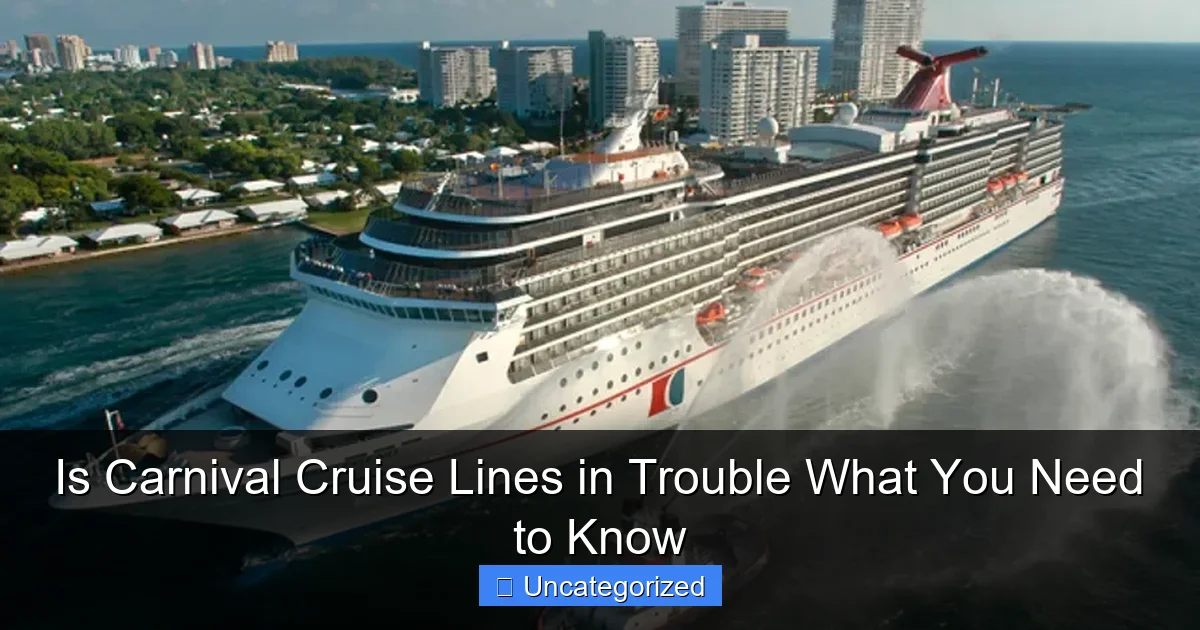
Featured image for is carnival cruise lines in trouble
Image source: cruisefever.net
Carnival Cruise Lines is not in immediate financial trouble, but it faces significant challenges from mounting debt, operational costs, and shifting travel trends post-pandemic. While bookings remain strong and recovery efforts are underway, ongoing economic pressures and sustainability concerns could impact long-term stability.
Key Takeaways
- Carnival is profitable again after pandemic losses, showing strong recovery signs.
- Book early for best deals as demand surges and prices rise.
- Monitor financial health closely—debt remains high despite improved earnings.
- New ships boost experience with modern amenities and sustainability upgrades.
- Watch for itinerary changes due to geopolitical issues and port congestion.
- Loyalty members get perks like priority boarding and exclusive discounts.
📑 Table of Contents
- Is Carnival Cruise Lines in Trouble? What You Need to Know
- Financial Health: Analyzing Carnival’s Post-Pandemic Recovery
- Operational Challenges: Crew Shortages, Delays, and Fleet Modernization
- Customer Experience: Are Guests Satisfied?
- Environmental and Regulatory Pressures
- Competitive Landscape: How Carnival Stacks Up
- Future Outlook: Is Carnival Poised for Growth?
Is Carnival Cruise Lines in Trouble? What You Need to Know
Over the past few years, the cruise industry has weathered unprecedented challenges, from global pandemics to supply chain disruptions and shifting consumer preferences. Among the most prominent names in the industry, Carnival Cruise Lines has found itself under the microscope, with travelers, investors, and industry analysts asking the same pressing question: Is Carnival Cruise Lines in trouble? The short answer? It’s complicated. While the company has faced significant headwinds, it has also shown remarkable resilience, innovation, and strategic foresight in navigating turbulent waters.
Carnival Corporation & plc, the parent company of Carnival Cruise Lines, is the largest cruise company in the world, operating nine major brands across more than 100 ships and serving over 13 million passengers annually. With such a vast footprint, any disruption—be it financial, operational, or reputational—can have ripple effects across the entire travel sector. From massive pandemic-related losses to rising operational costs and environmental scrutiny, Carnival’s journey has been anything but smooth. Yet, recent financial reports, fleet modernization efforts, and customer satisfaction metrics suggest a company in recovery, not decline. This comprehensive guide dives into the key factors shaping Carnival’s current and future outlook, offering travelers and stakeholders a clear picture of what’s really happening behind the scenes.
Financial Health: Analyzing Carnival’s Post-Pandemic Recovery
Debt and Liquidity Concerns
One of the most cited concerns about Carnival Cruise Lines is its staggering debt load, which ballooned during the pandemic. In 2020 and 2021, the company was forced to suspend operations for over 18 months, resulting in zero revenue while fixed costs—crew salaries, maintenance, and port fees—continued to accumulate. To survive, Carnival raised over $25 billion through debt and equity offerings, pushing its total debt to more than $30 billion by 2022. This raised red flags among investors and analysts, with many questioning the company’s ability to service such a massive debt burden.
Visual guide about is carnival cruise lines in trouble
Image source: a57.foxnews.com
However, the tide has begun to turn. According to Carnival’s Q3 2023 earnings report, the company generated $6.9 billion in revenue, a 59% increase year-over-year, with net income turning positive for the first time since 2019. More importantly, Carnival has reduced its net debt by $1.2 billion since the beginning of 2023, thanks to improved cash flow and asset sales. The company has also extended debt maturities, giving it breathing room to refinance at more favorable rates as interest conditions stabilize.
Revenue Streams and Profitability
Carnival’s revenue model relies heavily on ticket sales, onboard spending (drinks, excursions, spa services), and third-party partnerships. The good news? Onboard spending has surged, with per-passenger revenue up 20% compared to 2019 levels. This is partly due to dynamic pricing models and enhanced digital experiences that encourage guests to book premium services before and during their cruise.
Moreover, Carnival has diversified its offerings with new revenue streams, such as Carnival Adventures, a premium excursion platform, and MedallionClass technology, which personalizes the guest experience and increases upsell opportunities. These innovations are not just marketing gimmicks—they’re proven profit drivers. For example, the Medallion wearable device has boosted onboard spending by 10–15% on participating ships.
Investor Sentiment and Stock Performance
Investor confidence remains cautious but improving. Carnival’s stock (CCL) has rebounded from its 2020 lows of under $8 to around $15–$18 in late 2023, reflecting growing optimism. Analysts at JPMorgan and Morgan Stanley have upgraded their ratings, citing improved booking trends and cost discipline. However, the stock remains volatile, sensitive to macroeconomic factors like inflation, fuel prices, and geopolitical instability. Long-term investors are advised to monitor Carnival’s free cash flow and debt-to-EBITDA ratio, which are key indicators of financial health.
Operational Challenges: Crew Shortages, Delays, and Fleet Modernization
Post-Pandemic Crew Retention and Training
One of the most pressing operational issues facing Carnival is crew availability. During the pandemic, thousands of crew members left the industry due to prolonged layoffs, health concerns, or career shifts. Rebuilding the workforce has been slow and costly. In 2022, Carnival reported a 30% crew vacancy rate across its fleet, leading to service delays, reduced itineraries, and guest dissatisfaction.
To address this, Carnival has launched aggressive recruitment campaigns in the Philippines, India, and Eastern Europe, offering signing bonuses, career advancement programs, and improved living conditions. The company has also invested in digital training platforms to upskill existing staff faster. For example, the Carnival Academy provides virtual courses in hospitality, safety, and guest experience, reducing onboarding time by 40%.
Ship Delays and Itinerary Changes
Another challenge is ship readiness. Several newbuilds, including the Carnival Celebration and Mardi Gras, experienced delays due to supply chain bottlenecks and labor shortages. While these ships are now in service, their delayed launch impacted marketing plans and revenue forecasts.
Travelers should be aware that itinerary changes are still more common than pre-pandemic. Carnival has implemented a Flexible Itinerary Policy, allowing passengers to rebook or receive credits if ports are skipped due to weather, mechanical issues, or geopolitical risks. Tip: Always purchase travel insurance that covers itinerary changes and missed connections to protect your investment.
Fleet Modernization and Sustainability Goals
Carnival is investing heavily in fleet modernization. The company has retired 19 older, less efficient ships since 2020, reducing fuel consumption by 5% per passenger. It’s also retrofitting existing ships with advanced exhaust scrubbers (to reduce sulfur emissions) and LNG (liquefied natural gas) propulsion systems. The Carnival Jubilee, set to launch in 2024, will be the company’s second LNG-powered ship, cutting CO2 emissions by 20% compared to conventional vessels.
These efforts align with Carnival’s Green Cruising initiative, which aims for net-zero emissions by 2050. While critics argue that LNG is still a fossil fuel, the company maintains that it’s a transitional step toward cleaner alternatives like hydrogen and ammonia-powered engines.
Customer Experience: Are Guests Satisfied?
Onboard Service and Guest Satisfaction
Customer satisfaction is a critical metric for any cruise line. Carnival’s Net Promoter Score (NPS) has steadily improved, rising from 35 in 2021 to 52 in 2023—above the industry average of 48. Guests praise the company’s value proposition, family-friendly amenities, and diverse dining options. However, complaints persist around long embarkation lines, crowded pools, and inconsistent service quality, particularly on older ships.
To enhance the guest experience, Carnival has introduced Smart Check-In, a mobile app that allows passengers to complete check-in, upload documents, and receive boarding notifications up to 24 hours before departure. This has reduced embarkation wait times by 30%. The company has also expanded its suite offerings, with 15% of new cabins on the Mardi Gras class designed as premium suites with private access to exclusive lounges and pools.
Digital Innovation and Personalization
Carnival’s MedallionClass technology is a game-changer. The wearable device acts as a room key, payment method, and personal concierge. Using AI and data analytics, it anticipates guest needs—like delivering a favorite drink to a poolside chair or suggesting excursions based on past preferences. Early adopters report a 25% increase in satisfaction scores.
Tip: Download the Carnival Hub app before your trip and enable push notifications for real-time updates on activities, dining reservations, and port arrivals.
Addressing Past Controversies
Carnival has faced criticism for incidents like the 2019 Carnival Vista power outage and the 2022 Carnival Horizon norovirus outbreak. The company has since overhauled its emergency protocols and sanitation standards, partnering with the CDC and independent auditors to ensure compliance. Transparency has also improved, with real-time incident reporting on its website and social media channels.
Environmental and Regulatory Pressures
Emissions and Waste Management
Environmental groups have long criticized Carnival for its carbon footprint and waste practices. In 2022, the company was fined $500,000 by the U.S. Department of Justice for illegally discharging plastic waste and falsifying records. This was part of a broader $20 million settlement related to the Carnival Fantasy case, which revealed systemic violations across multiple ships.
In response, Carnival has implemented stricter waste management protocols, including advanced wastewater treatment systems and zero-discharge policies for plastics and food waste. It’s also testing new technologies like Ocean Plastic furniture made from recycled materials, which will be rolled out fleet-wide by 2025.
Port Restrictions and Local Opposition
Some destinations are pushing back against mass tourism. In 2023, Venice banned large cruise ships from its historic center, and Amsterdam limited Carnival’s port calls due to environmental concerns. These restrictions force Carnival to reroute itineraries, often at a cost to passengers.
The company is adapting by partnering with smaller ports and promoting “slow cruising” itineraries that emphasize cultural immersion over port density. For example, the Carnival Luminosa now offers 10-day Mediterranean voyages with extended stays in lesser-known towns like Kotor, Montenegro, and Split, Croatia.
Regulatory Compliance and Transparency
Carnival has strengthened its compliance team, hiring former EPA and Coast Guard officials to oversee environmental and safety operations. It also publishes an annual Sustainability Report detailing progress on emissions, waste, and community engagement. While critics say more action is needed, the company has reduced its carbon intensity by 12% since 2015.
Competitive Landscape: How Carnival Stacks Up
Market Share and Brand Positioning
Carnival controls about 30% of the global cruise market, followed by Royal Caribbean (25%) and Norwegian Cruise Line (15%). Its brand positioning as a “fun, affordable, and family-friendly” option remains strong, especially in the North American market. However, competitors are gaining ground with premium offerings and innovative ships like Royal Caribbean’s Icon of the Seas and Norwegian’s Prima class.
To compete, Carnival is focusing on niche markets. Its Fathom brand (currently paused) targeted social impact travel, while the Carnival Venezia and Carnival Firenze cater to European-style cruising with Italian-themed dining and entertainment.
Innovation and Technology
While Carnival was an early adopter of wearable tech, competitors are catching up. Royal Caribbean’s Royal Genie AI concierge and Norwegian’s Haven private retreat offer similar personalization. Carnival’s edge lies in its scale and data—its 13 million annual guests provide a vast dataset for refining AI algorithms and predicting trends.
Value Proposition and Pricing Strategy
Carnival remains the most affordable major cruise line, with average fares 15–20% lower than Royal Caribbean and 25% below luxury lines like Regent Seven Seas. This value focus appeals to budget-conscious travelers, but it also pressures margins. Carnival counters this with dynamic pricing, loyalty rewards (the FunPoints program has over 10 million members), and bundled packages (e.g., “All-Inclusive” deals with drinks, Wi-Fi, and gratuities).
Future Outlook: Is Carnival Poised for Growth?
Booking Trends and Demand
Demand for cruises is surging. Carnival reported record bookings in 2023, with 2024 sailings 50% sold out—a sign of strong consumer confidence. The company attributes this to pent-up demand, improved safety protocols, and the rise of “workations” (remote work while cruising). Carnival’s Work & Play package, which includes high-speed internet and co-working spaces, has been particularly popular.
Fleet Expansion and New Markets
Carnival has 13 new ships on order through 2028, including the Carnival Jubilee and Carnival Firenze. It’s also expanding in Asia, with new homeports in Singapore and Shanghai. These moves target the growing middle class in emerging markets, where cruise penetration is still low compared to North America and Europe.
Risks and Opportunities
Key risks include economic downturns, rising fuel prices, and climate change impacts (e.g., more frequent hurricanes affecting Caribbean routes). Opportunities lie in sustainability leadership, digital transformation, and strategic partnerships. For example, Carnival’s alliance with the World Wildlife Fund aims to protect marine ecosystems in key destinations.
Data Snapshot: Carnival’s Performance Metrics (2020–2023)
| Metric | 2020 | 2021 | 2022 | 2023 |
|---|---|---|---|---|
| Total Revenue (Billions) | $1.9 | $3.1 | $12.2 | $21.5 |
| Net Income (Loss) | ($10.2B) | ($9.5B) | ($6.2B) | $1.1B |
| Fleet Size (Ships) | 89 | 86 | 84 | 85 |
| Passenger Capacity (Millions) | 2.5 | 3.1 | 10.8 | 13.2 |
| Carbon Intensity (g CO2/ALB) | 128 | 125 | 120 | 113 |
So, is Carnival Cruise Lines in trouble? The evidence suggests a company in transition, not crisis. It has weathered the worst of the pandemic, reduced its debt, improved guest satisfaction, and invested in sustainability and innovation. While challenges remain—from crew shortages to environmental scrutiny—Carnival’s scale, brand loyalty, and strategic agility position it for long-term recovery. For travelers, this means more choices, better technology, and greater value. For investors, it’s a high-risk, high-reward bet on the future of leisure travel. One thing is certain: Carnival isn’t sailing away anytime soon. Instead, it’s charting a course toward a more resilient, responsible, and guest-centric future. Whether you’re a first-time cruiser or a seasoned sailor, keeping an eye on Carnival’s evolution will be key to understanding the broader cruise industry’s next chapter.
Frequently Asked Questions
Is Carnival Cruise Lines in financial trouble?
While Carnival faced significant financial challenges during the pandemic, the company has shown steady recovery with increased bookings and revenue in recent years. As of 2023, Carnival Cruise Lines is operating profitably and continues to strengthen its financial position.
Why are there so many complaints about Carnival Cruise Lines?
Like many large cruise operators, Carnival receives mixed reviews due to the high volume of passengers and occasional service hiccups. While some travelers report issues with dining or onboard activities, many others praise the value and entertainment options, suggesting experiences vary by sailing.
Has Carnival Cruise Lines reduced its fleet or canceled ships?
Yes, Carnival temporarily paused operations during the pandemic and retired several older vessels to streamline costs. However, the cruise line has since resumed full operations and introduced new ships to modernize its fleet and improve efficiency.
Is Carnival Cruise Lines safe to sail with amid health concerns?
Carnival adheres to strict health and safety protocols, including enhanced sanitation, air filtration, and medical facilities. The cruise line works with global health authorities to ensure passenger safety, making it a reliable choice post-pandemic.
Are Carnival Cruise Lines’ ticket prices increasing due to financial issues?
Ticket prices fluctuate based on demand and fuel costs, not direct financial trouble. Carnival occasionally offers deals to attract bookings, but pricing trends reflect normal market dynamics rather than instability.
What is Carnival Cruise Lines doing to improve its reputation?
Carnival has invested in ship upgrades, expanded premium experiences, and improved customer service training to address feedback. These efforts, combined with strong booking trends, signal the brand’s commitment to long-term growth and customer satisfaction.