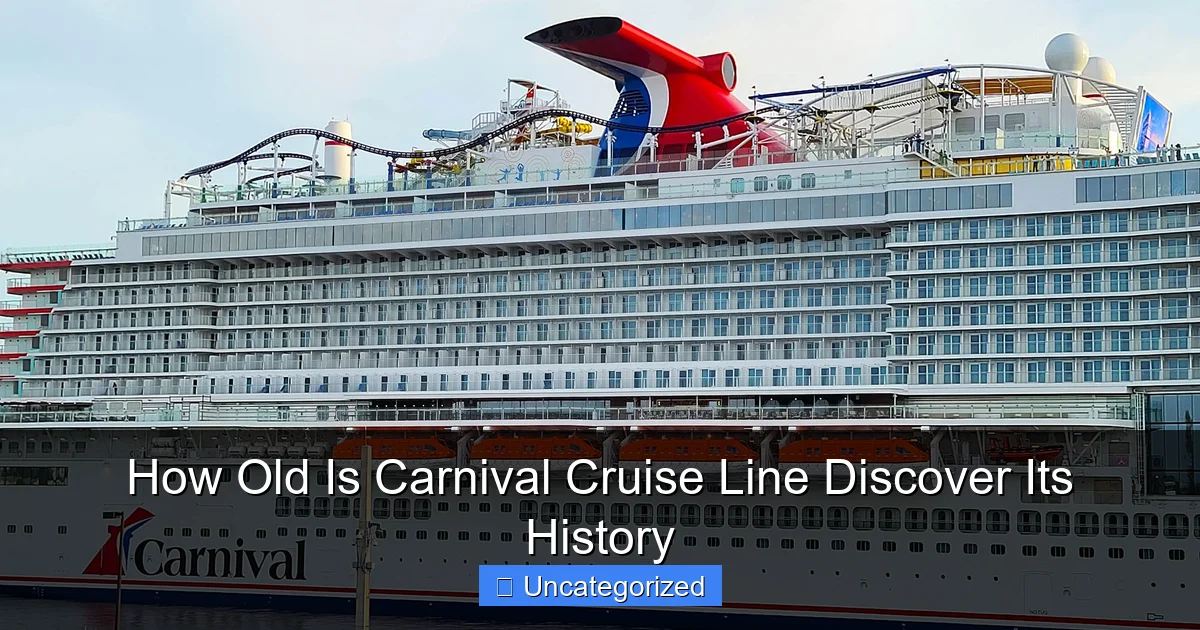
Featured image for how old is carnival cruise line
Image source: cruisefever.net
Carnival Cruise Line was founded in 1972, making it over 50 years old and a pioneer in affordable, fun-focused cruising. Born from a single ship and a bold vision, it grew into the world’s largest cruise brand by revolutionizing the industry with casual luxury and unforgettable onboard experiences.
Key Takeaways
- Carnival Cruise Line launched in 1972 with one ship, pioneering affordable cruising.
- It’s over 50 years old, making it a leader in modern cruise innovation.
- First to introduce onboard fun with waterslides, comedy clubs, and casual dining.
- Expanded to 25+ ships by acquiring and building iconic vessels globally.
- Survived early financial struggles to become the “Fun Ships” industry giant.
- Launched sustainability initiatives like LNG-powered ships for eco-friendly cruising.
📑 Table of Contents
- How Old Is Carnival Cruise Line? Discover Its History
- The Founding and Early Years (1972–1980)
- Expansion and the Rise of the “Fun Ship” Era (1980–1990)
- Global Dominance and Carnival Corporation (1990–2010)
- Modernization and the “New Carnival” (2010–2020)
- Pandemic Response and the Road to Recovery (2020–2023)
- Conclusion: The Enduring Legacy of Carnival Cruise Line
How Old Is Carnival Cruise Line? Discover Its History
When you think of vibrant entertainment, endless buffets, and unforgettable sea voyages, one name likely comes to mind: Carnival Cruise Line. Known for its festive atmosphere and “Fun Ships,” Carnival has become a household name in the cruise industry. But just how old is Carnival Cruise Line, and how did it evolve into the global powerhouse it is today? The answer isn’t just a number—it’s a story of innovation, resilience, and a relentless focus on fun.
Founded in 1972, Carnival Cruise Line is now over 50 years old, marking its golden anniversary in 2022. From its humble beginnings with a single secondhand ship to a fleet of more than 25 vessels, Carnival’s journey reflects a transformation in how people vacation at sea. This blog post dives deep into the history of Carnival Cruise Line, exploring its origins, milestones, challenges, and what makes it a unique player in the competitive cruise market. Whether you’re a first-time cruiser or a seasoned traveler, understanding Carnival’s legacy adds a new layer of appreciation to your next voyage.
The Founding and Early Years (1972–1980)
Birth of a Vision: Ted Arison’s Dream
Carnival Cruise Line was founded by Ted Arison, an Israeli-American entrepreneur with a bold vision: to make cruising affordable and accessible to the average American family. At the time, cruising was seen as a luxury reserved for the wealthy, with high prices and formal dress codes. Arison, who had previously worked in the shipping industry, saw an opportunity to disrupt the status quo. In 1972, he partnered with Meshulam Riklis, a financier, to launch Carnival with the purchase of the SS Mardi Gras, a former ocean liner built in 1961.
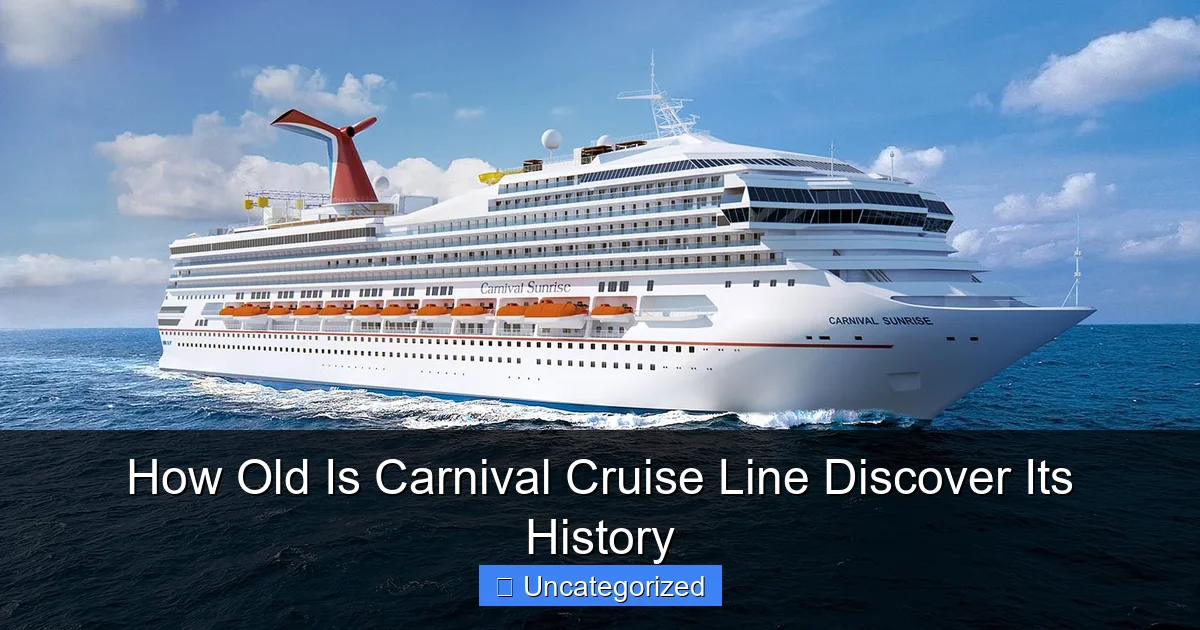
Visual guide about how old is carnival cruise line
Image source: cruisefever.net
The SS Mardi Gras was a 1,300-passenger vessel that had previously served with the Holland America Line. Arison and his team rebranded it with a New Orleans-inspired theme, complete with jazz music, colorful décor, and a casual atmosphere. This marked the beginning of Carnival’s “Fun Ship” concept—a radical departure from traditional cruise culture.
Early Challenges and Survival
The first years were rocky. The SS Mardi Gras suffered a fire in 1972, forcing it to return to port for repairs. Despite this, Arison pressed on, offering low-cost 3- and 4-day cruises from Miami to the Bahamas. The strategy worked: by 1975, Carnival had turned a profit, and the fleet expanded with the addition of the SS Carnivale (formerly the SS Franca C).
Key to Carnival’s early success was its marketing. Arison hired advertising executive Bill Harlan to craft campaigns that emphasized fun, relaxation, and affordability. Slogans like “The Fun Ship” and “Cruising Has Never Been This Much Fun” resonated with middle-class travelers. By the end of the 1970s, Carnival had established itself as a leader in budget-friendly cruising, laying the foundation for future growth.
Lessons from the Early Days
- Embrace innovation: Carnival’s casual, festive approach broke industry norms and attracted new customers.
- Market to the masses: Affordable pricing and relatable advertising made cruising accessible.
- Resilience pays: Overcoming setbacks like the 1972 fire proved the company’s determination.
Tip: When researching cruise lines, look for those that prioritize accessibility and inclusivity—traits Carnival pioneered.
Expansion and the Rise of the “Fun Ship” Era (1980–1990)
Fleet Growth and New Markets
The 1980s were a period of rapid expansion for Carnival. The company launched the Holiday (1985) and Fantasy (1988) classes, introducing larger, purpose-built ships with more amenities. The Fantasy-class vessels, in particular, set new standards with features like multiple dining options, onboard casinos, and family-friendly activities.
Carnival also expanded its itineraries beyond the Bahamas, adding ports in the Eastern and Western Caribbean. This diversification attracted a broader audience, including families, couples, and solo travelers. By 1989, Carnival had grown to a fleet of 10 ships, carrying over 400,000 passengers annually—a 10-fold increase from its early years.
Marketing and Brand Identity
Carnival’s marketing during this era was groundbreaking. The company partnered with TV networks to create infomercials and even produced a short-lived reality show, The Love Cruise, in 1988. These efforts cemented Carnival’s image as the go-to line for fun, relaxation, and entertainment.
The “Fun Ship” brand was further reinforced by onboard experiences: water slides, poolside games, live music, and themed parties. Unlike competitors that focused on formality, Carnival embraced a party atmosphere, appealing to younger demographics and those seeking a carefree vacation.
Financial Milestones
In 1987, Carnival went public on the New York Stock Exchange (ticker: CCL), raising $400 million. This capital fueled further expansion, including the construction of the Ecstasy (1991) and Elation (1998). The IPO also marked Carnival’s emergence as a major player in the global cruise industry, setting the stage for future acquisitions and partnerships.
Key Takeaways for Cruisers
- Look for purpose-built ships: These often have better layouts and more modern amenities than converted vessels.
- Consider itinerary diversity: Carnival’s expansion to new regions means more options for unique destinations.
- Check onboard activities: Carnival’s “Fun Ship” concept includes everything from trivia to dance classes.
Global Dominance and Carnival Corporation (1990–2010)
The Birth of Carnival Corporation
In 1993, Carnival Cruise Line became the cornerstone of Carnival Corporation & plc, a holding company that acquired other cruise brands to create the world’s largest cruise operator. Key acquisitions included:
- Holland America Line (1989): Added premium, traditional cruising options.
- Windstar Cruises (1988, later sold and reacquired): Focused on small-ship luxury.
- Cunard Line (1998): Brought the iconic Queen Elizabeth 2 and transatlantic routes.
- Princess Cruises (2003): Expanded into the Alaska and European markets.
This strategy allowed Carnival to cater to diverse traveler preferences, from budget-friendly to luxury, while maintaining its core “Fun Ship” identity.
Technological and Design Innovations
The 1990s and 2000s saw Carnival introduce groundbreaking features:
- WaterWorks water parks: First launched on the Carnival Liberty (2005).
- Serenity adult-only areas: A response to passenger demand for quiet spaces.
- Dynamic dining: Flexible dining options replaced traditional fixed seating.
The Conquest-class ships (2002–2004) and Dream-class (2009–2012) introduced larger capacities (up to 3,600 passengers) and more entertainment options, including Broadway-style shows and 24-hour dining.
Navigating Challenges
The 2000s weren’t without hurdles. The 2008 financial crisis reduced consumer spending, and the 2010 Costa Concordia disaster (owned by Carnival’s Costa brand) impacted the entire industry. However, Carnival adapted by:
- Offering shorter, more affordable cruises.
- Investing in safety protocols and crew training.
- Enhancing environmental initiatives, like advanced wastewater treatment systems.
Data Table: Carnival Fleet Growth (1990–2010)
| Year | Fleet Size | Key Ships Added | Passengers (Annual) |
|---|---|---|---|
| 1990 | 10 | Ecstasy | 500,000 |
| 1995 | 14 | Imagination, Inspiration | 1.2 million |
| 2000 | 18 | Destiny | 2.5 million |
| 2005 | 22 | Liberty, Freedom | 3.8 million |
| 2010 | 24 | Dream | 5.1 million |
Modernization and the “New Carnival” (2010–2020)
Fleet Renewal and Sustainability
Entering the 2010s, Carnival focused on modernization and sustainability. The company introduced:
- Liquid natural gas (LNG)-powered ships: The Mardi Gras (2021) and Carnival Celebration (2022) are the first in the fleet to use LNG, reducing emissions by 20%.
- Advanced air lubrication systems: Reduce fuel consumption by 5–10%.
- Zero-discharge policies: No plastic straws, onboard recycling, and shore power connections.
The Vista-class ships (2016–2018) featured the first IMAX theaters at sea, outdoor fitness zones, and expanded family accommodations.
Enhanced Onboard Experiences
Carnival’s “Fun Ship 2.0” initiative (2011) upgraded amenities across the fleet:
- Guy’s Burger Joint: A partnership with celebrity chef Guy Fieri.
- BlueIguana Cantina: Mexican street food and tequila bar.
- Camp Ocean: Expanded kids’ programs with STEM activities.
- RedFrog Pub: Caribbean-themed bar with rum tastings.
The Carnival Horizon (2018) introduced the first roller coaster at sea, the Bolt: Ultimate Sea Coaster, adding a new thrill factor to the “Fun Ship” experience.
Digital Innovation
Carnival embraced technology with:
- OceanMedallion: A wearable device (introduced on Princess Cruises, adopted by Carnival) for contactless payments, room access, and personalized service.
- HUB app: Real-time updates on dining, activities, and ship navigation.
- Virtual reality experiences: Available on select ships for immersive entertainment.
Tips for Modern Cruisers
- Download the HUB app: It’s essential for navigating large ships and booking activities.
- Book specialty dining early: Popular venues like Guy’s Burger Joint fill up fast.
- Pack reusable items: Carnival’s sustainability efforts mean fewer single-use plastics.
Pandemic Response and the Road to Recovery (2020–2023)
Navigating COVID-19
The pandemic brought unprecedented challenges. Carnival paused operations in March 2020, resulting in a $10 billion loss. The company responded with:
- Enhanced health protocols: Vaccination mandates, advanced air filtration, and rapid testing.
- Financial restructuring: Raised $6.5 billion in debt and equity to stay afloat.
- Flexible booking policies: Free cancellations and future cruise credits.
By 2021, Carnival resumed operations with reduced capacity and strict safety measures. The Carnival Horizon became the first U.S. ship to restart, sailing from Miami in July 2021.
Post-Pandemic Innovations
Recovery efforts included:
- Shorter itineraries: Focus on 3- and 4-day cruises to rebuild confidence.
- New destinations: Expanded to the Pacific Coast and Europe.
- Digital health passports: Streamlined check-ins via the HUB app.
In 2023, Carnival reported record bookings, with 2024 sailings selling out months in advance—a testament to pent-up demand and effective marketing.
Golden Anniversary and Future Outlook
Carnival celebrated its 50th anniversary in 2022 with:
- Anniversary sailings: Special itineraries with retro décor and entertainment.
- Community initiatives: Donations to hurricane relief and environmental causes.
- New ship launches: The Carnival Jubilee (2023) and Carnival Firenze (2024) join the fleet.
Conclusion: The Enduring Legacy of Carnival Cruise Line
So, how old is Carnival Cruise Line? At over 50 years, it’s a testament to adaptability, innovation, and a relentless focus on fun. From Ted Arison’s vision to its current status as a global leader, Carnival has redefined cruising for generations. Its journey—marked by rapid growth, technological leaps, and pandemic resilience—offers valuable lessons for travelers and businesses alike.
For cruisers, Carnival’s legacy means more than just a vacation; it’s an experience rooted in accessibility, entertainment, and community. Whether you’re drawn to the thrill of a sea coaster, the taste of a Guy Fieri burger, or the simplicity of a Bahamian getaway, Carnival’s 50-year history ensures there’s something for everyone. As the company looks to the future with LNG-powered ships and digital innovations, one thing remains clear: the “Fun Ship” era is far from over. Ready to set sail? Your next adventure awaits.
Frequently Asked Questions
How old is Carnival Cruise Line?
Carnival Cruise Line was founded in 1972, making it 52 years old as of 2024. It began with a single ship, the TSS Carnival, and has since grown into one of the world’s largest cruise brands.
When did Carnival Cruise Line start operating?
The company officially launched its first voyage in 1972 under the name Carnival Cruise Line, Inc. Its inaugural cruise set sail from Miami to the Caribbean, marking the start of its “Fun Ship” era.
How old is Carnival Cruise Line compared to other major cruise lines?
At 52 years old, Carnival is younger than competitors like Holland America (1873) but older than Royal Caribbean (1968). It quickly became a leader in affordable, mass-market cruising since its founding in 1972.
What was Carnival Cruise Line’s original name?
When founded in 1972, the company was incorporated as Carnival Cruise Line, Inc. It kept this name but popularized the slogan “The Fun Ships,” which became central to its brand identity.
How has Carnival Cruise Line changed since its founding?
From one secondhand ship in 1972, Carnival now operates over 25 modern vessels with innovative amenities. Its focus on casual, value-driven vacations helped shape the cruise industry’s growth over five decades.
Why is Carnival Cruise Line’s age significant in the cruise industry?
As a 52-year-old brand, Carnival pioneered the concept of affordable, entertainment-focused cruising. Its longevity and expansion reflect its influence on mainstream cruise travel since the 1970s.