Featured image for how much does a cruise liner cost
Image source: cruisesolutioner.com
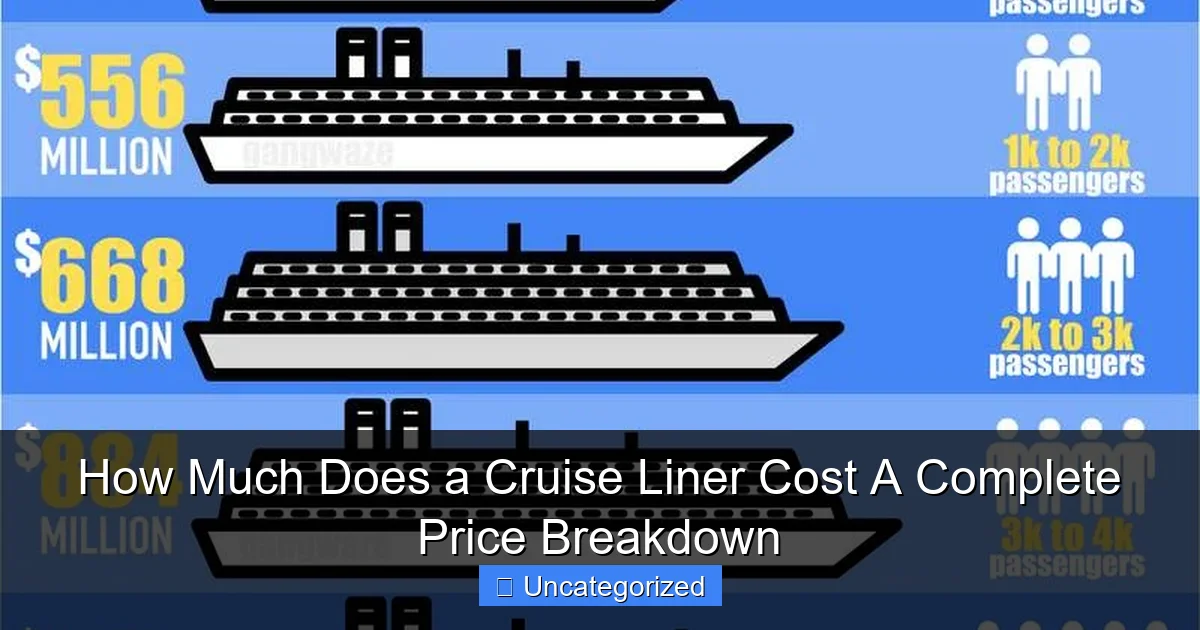
Average cruise liner costs range from $50 million to over $1.5 billion, depending on size, luxury level, and onboard amenities. New mega-ships with advanced tech and premium features command the highest prices, while smaller or older vessels offer more budget-friendly options for operators and passengers alike.
Key Takeaways
- New cruise liners cost $500M–$1B+: Size, luxury, and tech drive prices to over a billion dollars.
- Refurbishments add $100M+: Modernizing older ships rivals new builds in cost for major upgrades.
- Operating costs hit $1M/day: Fuel, crew, and maintenance make daily expenses skyrocket quickly.
- Smaller ships offer better value: Niche and expedition cruises cost less per passenger overall.
- Financing spans 10–20 years: Most lines use long-term loans to manage massive upfront investments.
📑 Table of Contents
- How Much Does a Cruise Liner Cost? A Complete Price Breakdown
- 1. New Cruise Liner Construction Costs
- 2. Secondhand Cruise Liner Market Prices
- 3. Operational and Running Costs of a Cruise Liner
- 4. Chartering a Cruise Liner: A Cost-Effective Alternative
- 5. Additional Costs and Hidden Expenses
- 6. Data Table: Cruise Liner Cost Comparison
- Conclusion
How Much Does a Cruise Liner Cost? A Complete Price Breakdown
Imagine standing on the deck of a massive floating city, the ocean breeze in your hair, as you glide across turquoise waters toward a tropical paradise. Cruise liners offer unforgettable experiences—luxurious accommodations, gourmet dining, world-class entertainment, and access to remote destinations—all while you relax and unwind. But behind the glamour and allure lies a staggering price tag. Whether you’re a curious traveler, an aspiring entrepreneur, or simply fascinated by maritime engineering, you’ve probably asked yourself: how much does a cruise liner cost? The answer isn’t as straightforward as you might think. Prices vary dramatically based on size, age, technology, and purpose—ranging from a few hundred million dollars to well over $1 billion for the most advanced vessels.
Understanding the cost of a cruise liner requires peeling back layers of complexity. It’s not just about the initial purchase price; it’s about the full lifecycle cost—construction, operation, maintenance, crew, fuel, insurance, and more. From mega-ships carrying over 6,000 passengers to boutique luxury liners with fewer than 100 suites, the financial landscape of cruise liners is as vast as the oceans they sail. In this comprehensive guide, we’ll break down every aspect of cruise liner pricing, from newbuild construction to secondhand market values, operational expenses, and even chartering options. Whether you’re evaluating a business investment or dreaming of your next vacation, this breakdown will equip you with the knowledge to understand what goes into the cost of these floating marvels.
1. New Cruise Liner Construction Costs
Building a brand-new cruise liner is one of the most expensive ventures in the maritime industry. Modern cruise ships are engineering masterpieces, integrating advanced propulsion systems, smart technology, luxury amenities, and stringent safety standards. The cost of constructing a new cruise liner depends on several key factors: size (measured in gross tonnage or passenger capacity), design complexity, shipyard location, and the level of luxury and technology incorporated.
Visual guide about how much does a cruise liner cost
Image source: gangwaze.supabase.co
Factors Influencing Newbuild Costs
Several variables drive the price of a new cruise liner:
- Size and Capacity: Larger ships cost significantly more due to increased materials, labor, and systems. A 150,000-gross-ton ship will cost less than a 200,000-gross-ton vessel, even if both carry similar passenger numbers.
- Design and Amenities: Luxury features like private balconies, infinity pools, onboard spas, theaters, and specialty restaurants add millions to the budget. Custom interiors, high-end finishes, and bespoke furniture are major cost drivers.
- Technology and Systems: Advanced propulsion (e.g., LNG-powered or hybrid engines), dynamic positioning, wastewater treatment, and energy-efficient HVAC systems increase upfront costs but reduce long-term operating expenses.
- Shipyard and Labor Costs: European shipyards (e.g., Meyer Werft in Germany, Chantiers de l’Atlantique in France) charge premium rates due to high labor costs and stringent regulations. Asian yards (e.g., in China or South Korea) may offer lower prices but with different quality standards.
- Regulatory Compliance: Meeting SOLAS (Safety of Life at Sea), IMO emissions standards, and port state requirements adds complexity and cost.
Real-World Examples of Newbuild Prices
Here are some recent examples to illustrate the range:
- Royal Caribbean’s Icon of the Seas (2023): At 250,800 gross tons and 5,610 passengers, this is the world’s largest cruise ship. Its construction cost was reported at $2 billion, making it the most expensive cruise liner ever built.
- Carnival Cruise Line’s Mardi Gras (2020): 180,000 gross tons, 5,200 passengers, powered by LNG. Cost: $1.1 billion.
- MSC World Europa (2022): 215,863 gross tons, 6,762 passengers, LNG-powered. Cost: $1.3 billion.
- Smaller Luxury Vessel (e.g., Scenic Eclipse II, 2023): 17,000 gross tons, 228 passengers, expedition-focused. Cost: $300 million.
Tip: For a mid-sized cruise liner (150,000–180,000 gross tons) with standard amenities, expect a price range of $800 million to $1.2 billion. For ultra-luxury or expedition ships with fewer passengers but higher per-passenger costs, prices can reach $1.5 million per cabin.
2. Secondhand Cruise Liner Market Prices
Not everyone needs—or can afford—a brand-new cruise liner. The secondhand market offers a more accessible entry point, with prices varying widely based on age, condition, class, and operational history. Buying a used cruise liner can save tens or even hundreds of millions compared to new construction, but it comes with unique challenges and hidden costs.
Factors Affecting Used Ship Prices
- Age and Refurbishment: A ship built in 2000 will cost significantly less than one built in 2015. However, a well-maintained 20-year-old ship with recent refits (e.g., new HVAC, updated interiors) can still fetch a high price.
- Class and Certification: Ships certified by major classification societies (e.g., Lloyd’s Register, DNV) and compliant with current SOLAS standards are more valuable.
- Passenger Capacity and Layout: Older ships may have outdated cabin configurations (e.g., fewer balconies, smaller public spaces), reducing their appeal to modern travelers.
- Engine and Fuel Type: Diesel-powered ships are common, but those with LNG or hybrid systems command higher prices due to lower emissions and fuel costs.
- Market Demand: During periods of high demand (e.g., post-pandemic), used ships can sell at or near newbuild prices. In downturns, prices may drop 30–50%.
Recent Secondhand Sales and Price Ranges
Here’s a snapshot of recent used cruise liner transactions:
- 2010-built, 140,000 gross tons, 3,000 passengers (refurbished 2018): Sold for $250 million (approx. $83,000 per passenger).
- 1998-built, 77,000 gross tons, 2,000 passengers (minimal refits): Sold for $60 million (approx. $30,000 per passenger).
- 2004-built luxury vessel, 30,000 gross tons, 700 passengers (recent refit, LNG-ready): Sold for $180 million (approx. $257,000 per passenger).
Tip: Always conduct a thorough dry-dock inspection and hire a maritime surveyor before purchasing. Hidden issues like hull corrosion, engine wear, or outdated IT systems can cost millions to fix. Also, consider the cost of class recertification, which may require significant upgrades to meet current safety and environmental standards.
3. Operational and Running Costs of a Cruise Liner
Buying a cruise liner is just the beginning. The real financial challenge lies in operating it. Annual running costs can exceed 20–30% of the ship’s initial purchase price, depending on size, age, route, and management efficiency. Let’s break down the major operational expenses.
Fuel and Energy Costs
Fuel is the largest variable cost. A large cruise liner can burn 150–250 tons of fuel per day at cruising speed. At $600 per ton (average for heavy fuel oil), that’s $90,000 to $150,000 daily—or over $30 million per year for a 200-day sailing season. LNG-powered ships reduce fuel costs by 20–30% but require costly infrastructure and specialized engines.
Crew and Personnel Expenses
Staffing a cruise liner is a massive undertaking. A 3,000-passenger ship may carry 1,200–1,500 crew members. Salaries, benefits, training, and onboard housing add up:
- Annual crew cost: $50–80 million (varies by nationality and union agreements).
- Training and certification: $2–5 million annually.
- Food and provisions for crew: $10–15 million/year.
Port Fees, Taxes, and Insurance
- Port Fees: Vary by location. Major ports like Miami or Barcelona charge $200,000–$500,000 per call. Smaller or remote ports may charge less but lack infrastructure.
- Insurance: Hull and machinery insurance can cost 1–2% of the ship’s value annually (e.g., $10–20 million for a $1 billion ship). Additional liability, pollution, and crew insurance add $5–10 million/year.
- Taxes and Dues: Includes tonnage taxes, environmental levies, and local fees. Can total $5–15 million/year.
Maintenance, Repairs, and Dry Docking
Regular maintenance is critical for safety and efficiency:
- Annual Maintenance: $10–20 million (painting, engine checks, HVAC servicing).
- Dry Docking (every 5 years): $50–100 million, including hull cleaning, propeller polishing, system upgrades, and regulatory inspections.
- Unplanned Repairs: Can cost millions (e.g., engine failure, hull damage).
Tip: Implement a predictive maintenance system using IoT sensors to reduce downtime and repair costs. Also, consider energy-saving retrofits (e.g., LED lighting, heat recovery systems) to cut fuel and electricity bills.
4. Chartering a Cruise Liner: A Cost-Effective Alternative
For organizations, events, or private groups, chartering a cruise liner can be a more flexible and cost-effective option than ownership. Chartering allows you to rent an entire ship for a specific voyage, event, or season, without the long-term financial burden of purchase and operation.
Types of Charter Agreements
- Full Ship Charter: Rent the entire vessel for a set period (e.g., 7-day cruise, 3-month charter). Includes crew, fuel, and basic amenities.
- Bareboat Charter: Rent the ship without crew or provisions. You provide your own staff and supplies. Rare for cruise liners due to complexity.
- Time Charter: Rent the ship for a fixed duration (e.g., 1 year) with operational control. Common for repositioning or seasonal operations.
Charter Costs and Pricing Models
Charter prices depend on:
- Ship Size and Class: A luxury expedition ship costs more than a mid-tier mainstream liner.
- Duration and Itinerary: Longer charters or remote routes (e.g., Antarctica) increase costs.
- Inclusions: Basic charters cover crew and fuel. Premium charters include catering, entertainment, and event planning.
- Market Conditions: High-demand seasons (e.g., summer, holidays) command higher rates.
Example Pricing (7-day full ship charter):
- Mainstream Liner (3,000 passengers): $3–5 million (approx. $1,000–$1,670 per passenger).
- Luxury Liner (500 passengers): $4–7 million (approx. $8,000–$14,000 per passenger).
- Expedition Ship (200 passengers): $2–3 million (approx. $10,000–$15,000 per passenger).
Tip: Negotiate all-inclusive packages to avoid hidden fees. Also, book early—popular ships and routes can sell out 12–18 months in advance.
5. Additional Costs and Hidden Expenses
Beyond the obvious costs, there are several hidden or often-overlooked expenses that can significantly impact the total cost of owning or operating a cruise liner. Failing to account for these can lead to budget overruns and operational challenges.
Regulatory and Compliance Costs
- Environmental Compliance: Meeting IMO 2020 sulfur limits may require scrubbers (cost: $10–30 million) or switching to low-sulfur fuel (20–30% cost increase).
- Emissions Trading (EU ETS): Starting in 2024, cruise ships in EU waters must pay for carbon emissions—adding $5–10 million/year for large fleets.
- Safety Audits and Inspections: Regular drills, certifications, and audits cost $1–3 million/year.
Technology and IT Systems
Modern cruise liners rely heavily on digital systems:
- Guest Wi-Fi and Connectivity: $2–5 million for installation, plus $1–2 million/year in bandwidth costs.
- Onboard Software: Reservation systems, POS, entertainment platforms—$3–8 million in setup and licensing.
- Cybersecurity: Protecting guest data and ship systems—$1–3 million/year.
Marketing and Revenue Management
- Branding and Design: Interior design, livery, and marketing materials—$5–15 million for a new ship.
- Sales and Distribution: Commissions to travel agents, online platforms, and tour operators—10–20% of revenue.
- Revenue Management Systems: Dynamic pricing tools to maximize occupancy and yield—$1–3 million/year.
Tip: Allocate a contingency budget of 10–15% of the total project cost to cover unforeseen expenses. Also, consider partnerships or joint ventures to share risks and costs, especially for newbuilds or niche markets.
6. Data Table: Cruise Liner Cost Comparison
| Type | Size (Gross Tons) | Passenger Capacity | Newbuild Cost | Used Market Price (Avg.) | Annual Operating Cost | Charter Cost (7-day) |
|---|---|---|---|---|---|---|
| Mainstream Mega-Ship | 200,000+ | 5,000–6,000 | $1.5–2.0 billion | $300–500 million | $120–180 million | $4–7 million |
| Mid-Sized Mainstream | 120,000–180,000 | 3,000–4,500 | $800 million–$1.2 billion | $150–300 million | $70–110 million | $2.5–4.5 million |
| Luxury/Expedition | 15,000–50,000 | 100–800 | $200–500 million | $80–200 million | $25–60 million | $1.5–3.5 million |
| Small Cruise Ship | 5,000–15,000 | 50–200 | $50–150 million | $15–50 million | $8–20 million | $500,000–$1.5 million |
Note: Prices are approximate and based on 2023–2024 data. Operating costs include fuel, crew, maintenance, insurance, and port fees.
Conclusion
So, how much does a cruise liner cost? The answer spans from $50 million for a small used vessel to over $2 billion for a state-of-the-art mega-ship. But the true cost isn’t just the price tag—it’s the entire ecosystem of construction, operation, compliance, and management that keeps these floating cities running smoothly. Whether you’re considering a newbuild, exploring the secondhand market, or chartering for a special event, understanding the full financial picture is essential.
For investors and entrepreneurs, the cruise liner industry offers both immense opportunities and significant challenges. High upfront costs, volatile fuel prices, and evolving regulations require careful planning and deep expertise. For travelers, knowing the breakdown of cruise liner costs can help you appreciate the value behind your vacation—and even inspire you to explore charter options for a truly unique experience.
Ultimately, cruise liners are more than just ships; they’re floating destinations, engineering marvels, and economic engines. By understanding the costs involved, you gain insight into one of the most fascinating and complex industries on the planet. Whether you’re dreaming of sailing the high seas or building the next generation of ocean travel, the journey starts with a single question—and now, you have the answer.
Frequently Asked Questions
How much does a cruise liner cost to build from scratch?
The cost to build a new cruise liner typically ranges from $500 million to over $1.4 billion, depending on size, luxury level, and onboard amenities. Larger ships with advanced features like water parks or theaters command higher prices due to increased materials and technology.
What factors influence the price of a cruise liner?
Key factors include ship capacity (2,000–7,000 passengers), onboard attractions (pools, spas, VR zones), fuel efficiency, and customization. Luxury vessels with bespoke designs or eco-friendly systems often cost 20–30% more than standard models.
How much does a cruise liner cost per passenger capacity?
On average, cruise liners cost $250,000–$500,000 per lower berth (passenger space). For example, a 3,000-passenger ship may cost $750 million to $1.5 billion, excluding operational expenses like crew and fuel.
Can you buy a used cruise liner, and how much does it cost?
Yes, pre-owned cruise liners range from $50 million for older mid-sized ships to $400+ million for modern, well-maintained vessels. Prices drop significantly for ships needing refurbishment or with outdated technology.
How do cruise liner operating costs compare to upfront prices?
Annual operating costs (fuel, crew, maintenance) can reach $100–$300 million, roughly 10–20% of the ship’s initial build cost. Larger ships have higher fuel and staffing expenses, impacting long-term profitability.
Why does the cruise liner cost vary so much between companies?
Premium brands (e.g., Regent, Seabourn) invest in high-end materials and exclusive experiences, while mass-market lines (e.g., Carnival) prioritize capacity over luxury. Customization and regulatory compliance (e.g., emissions standards) also create price differences.