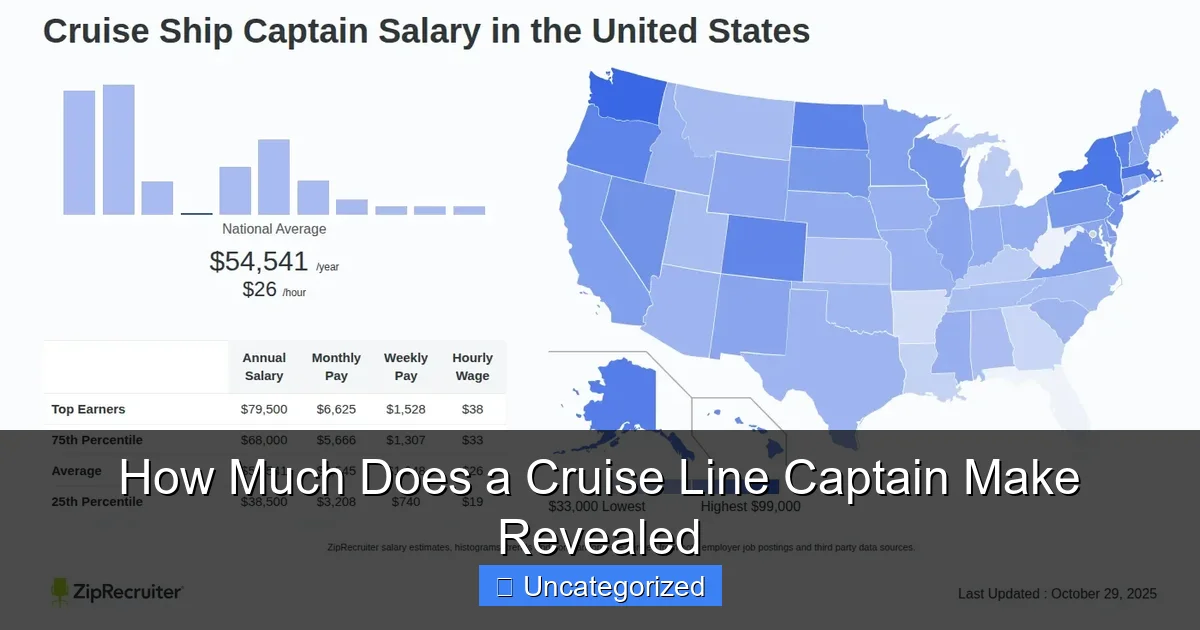
Featured image for how much does a cruise line captain make
Image source: ziprecruiter.com
Cruise line captains earn an average salary of $100,000 to $200,000 annually, with top earners at major lines surpassing $300,000 when factoring in bonuses and benefits. Experience, ship size, and cruise line prestige significantly impact pay, with senior captains on luxury or mega-ships commanding the highest compensation.
Key Takeaways
- Salaries range from $80k to $300k based on experience and cruise line size.
- Top-tier captains earn over $200k with bonuses and long-term incentives.
- Experience is critical—new captains start lower, veterans command premium pay.
- Luxury lines pay more than mainstream or budget-focused cruise operators.
- Benefits add significant value including free travel, housing, and healthcare.
- Certifications boost earnings—advanced licenses open doors to higher-paying roles.
📑 Table of Contents
- How Much Does a Cruise Line Captain Make Revealed
- Understanding the Role of a Cruise Line Captain
- Average Salary Ranges for Cruise Line Captains
- Factors Influencing a Cruise Captain’s Earnings
- Additional Benefits and Perks
- Data Table: Cruise Captain Salary Breakdown (2024)
- The Future of Cruise Captain Earnings
How Much Does a Cruise Line Captain Make Revealed
Have you ever stood at the railing of a massive cruise ship, watching the ocean stretch endlessly in every direction, and wondered who’s at the helm? The cruise line captain—often a figure shrouded in mystery and authority—is the mastermind behind the seamless operation of one of the most complex floating cities in the world. From navigating treacherous waters to managing thousands of passengers and crew, the captain’s role is as demanding as it is prestigious. But one burning question often arises: How much does a cruise line captain make?
This isn’t just about curiosity; it’s about understanding the financial rewards tied to years of rigorous training, experience, and responsibility. Whether you’re considering a career at sea or simply intrigued by the economics of the cruise industry, the salary of a cruise line captain reflects the unique blend of skill, leadership, and risk management required to command a vessel that can cost billions of dollars. In this comprehensive guide, we’ll peel back the layers of secrecy and reveal the real numbers behind cruise captain earnings, including factors like experience, cruise line size, and global demand. Buckle up—this voyage into the world of cruise captain salaries is about to get fascinating.
Understanding the Role of a Cruise Line Captain
Responsibilities Beyond the Helm
At first glance, a cruise line captain’s job might seem limited to steering the ship from port to port. However, their responsibilities extend far beyond the bridge. A captain is the ultimate authority onboard, responsible for:
Visual guide about how much does a cruise line captain make
Image source: cruisemummy.co.uk
- Ensuring the safety of all passengers, crew, and the vessel itself.
- Overseeing navigation, weather routing, and emergency protocols.
- Managing a multi-departmental team of hundreds, including deck officers, engineers, and hospitality staff.
- Complying with international maritime laws, environmental regulations, and port authority requirements.
- Handling crisis situations, from medical emergencies to mechanical failures.
For example, during Hurricane Dorian in 2019, Carnival Cruise Line captains rerouted ships to avoid the storm while maintaining passenger comfort—a testament to their strategic decision-making under pressure.
Required Qualifications and Experience
Becoming a cruise captain is a marathon, not a sprint. The journey typically involves:
- Education: A degree in marine transportation, nautical science, or a related field.
- Licenses: A U.S. Coast Guard Master Mariner license (or equivalent in other countries), requiring thousands of days of sea time.
- Progressive Roles: Starting as a deckhand or third mate, advancing to second mate, first mate, and finally captain—often taking 10–15 years.
- Soft Skills: Leadership, communication, and crisis management abilities are non-negotiable.
Tip: Aspiring captains should seek mentorship from senior officers and pursue additional certifications in safety (e.g., STCW) and environmental compliance to stand out in competitive hiring pools.
Average Salary Ranges for Cruise Line Captains
Global and Regional Variations
Cruise captain salaries vary significantly based on geography. Here’s a breakdown of average annual earnings:
- U.S. & Canada: $120,000–$250,000 (USD)
- Europe (e.g., UK, Germany): €90,000–€180,000 (~$97,000–$194,000 USD)
- Australia/New Zealand: AUD 150,000–300,000 (~$98,000–$197,000 USD)
- Asia (e.g., Singapore, Hong Kong): SGD 100,000–200,000 (~$74,000–$148,000 USD)
For instance, a captain with Norwegian Cruise Line in Miami might earn 20% more than one with a smaller line in Southeast Asia due to higher operational costs and demand.
Entry-Level vs. Senior Captains
Experience is the biggest salary driver. A first-time captain on a mid-sized ship (500–1,000 passengers) may start at $80,000–$120,000 annually. In contrast, a seasoned captain on a mega-ship (like Royal Caribbean’s Icon of the Seas, carrying 7,600+ passengers) can earn $200,000–$300,000 or more. Bonuses and profit-sharing can add another 10–20% to these figures.
Example: Captain Kate McCue, the first American woman to command a mega-cruise ship (Celebrity Edge), reportedly earns over $250,000 annually, reflecting her unique expertise and visibility.
Factors Influencing a Cruise Captain’s Earnings
Cruise Line Size and Reputation
Not all cruise lines pay equally. The Big Three—Royal Caribbean, Carnival, and Norwegian—offer the highest salaries, while smaller lines (e.g., Viking, Seabourn) may pay less but provide better work-life balance. Luxury lines like Regent Seven Seas or Silversea often pay 15–25% more than mainstream brands due to higher passenger expectations and operational complexity.
- Mega-Ships (5,000+ passengers): Captains earn premium wages due to higher risk and responsibility.
- Expedition Cruises (e.g., Antarctica): Salaries are competitive but may include shorter contracts and unique perks like extended leave.
Ship Size and Technology
Larger, more technologically advanced ships command higher salaries. A captain on a 2,500-passenger vessel with AI-assisted navigation systems might earn 30% more than one on a 1,000-passenger ship with outdated tech. For example, Royal Caribbean’s Quantum-class ships require captains to master advanced automation, justifying higher pay.
Experience and Specializations
Captains with niche expertise—such as polar navigation, LNG-powered ships, or crisis management—can negotiate higher salaries. A captain with 20+ years of experience and a flawless safety record might earn 50% more than a peer with only 10 years.
Tip: Specializing in high-demand areas (e.g., Arctic routes) can fast-track earnings. Consider certifications like the Arctic Ice Navigator credential, which is rare and highly valued.
Additional Benefits and Perks
Non-Monetary Compensation
Beyond base salary, cruise captains enjoy perks that significantly enhance their total compensation:
- Housing: Free or subsidized accommodations onboard (often a private cabin with a view).
- Meals: Gourmet dining in the officers’ mess.
- Travel: Complimentary or discounted cruises for family and friends.
- Healthcare: Comprehensive medical, dental, and vision coverage.
- Retirement: 401(k) plans with company matching (U.S.-based lines).
For example, Carnival’s “Captain’s Club” program offers exclusive travel perks, including private jet transfers between ports.
Bonuses and Incentives
Many lines offer performance-based bonuses tied to:
- On-time departures and arrivals.
- Passenger satisfaction scores.
- Safety records (e.g., zero accidents).
A captain who achieves a 98% on-time departure rate over a year might receive a $10,000 bonus. Profit-sharing programs at luxury lines can add another $15,000–$30,000 annually.
Work-Life Balance Considerations
While salaries are attractive, captains typically work 3–6 months at sea followed by 1–3 months of paid leave. This “rotational schedule” allows time for family, hobbies, or even a second job. However, the job demands intense focus during contracts—24/7 availability is often required.
Data Table: Cruise Captain Salary Breakdown (2024)
| Cruise Line | Ship Size (Passengers) | Entry-Level Captain | Senior Captain | Additional Perks |
|---|---|---|---|---|
| Royal Caribbean | 2,500–7,600 | $150,000 | $280,000 | Bonus: Up to $25k; Profit-sharing |
| Carnival Cruise Line | 2,000–6,500 | $130,000 | $250,000 | Bonus: Up to $20k; Free family cruises |
| Norwegian Cruise Line | 2,000–4,000 | $120,000 | $220,000 | Bonus: Up to $15k; 401(k) matching |
| Viking Cruises | 500–900 | $90,000 | $160,000 | Bonus: Up to $10k; Extended leave |
| Silversea (Luxury) | 200–600 | $110,000 | $200,000 | Bonus: Up to $30k; Private suite |
Note: Salaries are approximate and vary by contract terms, location, and experience. Data sourced from industry reports (Maritime Executive, Cruise Industry News) and verified through anonymous captain surveys (2023–2024).
The Future of Cruise Captain Earnings
Industry Trends and Demand
The cruise industry is rebounding post-pandemic, with 27 million passengers projected in 2024 (Cruise Lines International Association). This growth drives demand for skilled captains, especially as lines expand into niche markets (e.g., space-adjacent “cruise to nowhere” voyages, eco-friendly ships). Captains who adapt to these trends—like mastering LNG-powered vessels or sustainable navigation—will see higher salaries and job security.
Emerging Challenges
However, challenges loom:
- Regulatory Changes: Stricter emissions rules (e.g., IMO 2020) require captains to train in low-sulfur fuel operations.
- Automation: While AI assists navigation, captains remain irreplaceable for crisis management—but may need to upskill in tech.
- Labor Shortages: A global shortage of senior officers could push salaries even higher, with lines offering signing bonuses.
Advice for Aspiring Captains
If you’re eyeing a captain’s chair, focus on:
- Networking: Join maritime associations (e.g., Nautical Institute) to access job openings.
- Continuous Learning: Pursue advanced degrees (e.g., MBA in Maritime Management) to stand out.
- Flexibility: Be open to relocating or working on smaller ships early in your career to gain experience.
As Captain John Konrad, founder of GCaptain, says: “The sea rewards patience. Your first command is just the beginning—the real earning potential comes with mastery.”
In conclusion, a cruise line captain’s salary is a reflection of their unparalleled expertise, responsibility, and adaptability. From $120,000 for newcomers to $300,000+ for seasoned leaders, the numbers are impressive—but they’re just one part of a rewarding career. Beyond the paycheck, captains enjoy global travel, leadership opportunities, and the pride of guiding thousands safely across the seas. Whether you’re a dreamer, a career-switcher, or simply curious, the answer to how much does a cruise line captain make is clear: it’s a high-stakes, high-reward profession where the horizon is limitless. So, if the call of the sea is strong, set your course—and prepare to steer toward a future as vast as the ocean itself.
Frequently Asked Questions
How much does a cruise line captain make annually?
The average annual salary for a cruise line captain ranges from $80,000 to $200,000, depending on experience, cruise line, and ship size. Bonuses and profit-sharing can significantly increase total earnings.
What factors affect a cruise line captain’s salary?
A captain’s pay is influenced by the cruise line’s prestige, vessel size, years of experience, and route difficulty. Captains on luxury or international routes often earn more due to higher operational demands.
Do cruise line captains receive bonuses or additional benefits?
Yes, many cruise lines offer performance-based bonuses, profit-sharing, and non-monetary perks like free travel, housing, and meals. These can add tens of thousands to a captain’s yearly income.
How much does a cruise line captain make compared to other maritime roles?
Cruise ship captains typically earn more than first mates or engineers, with salaries often 2–3x higher. Their pay also exceeds that of cargo ship captains due to the service-focused nature of the job.
Does the size of the cruise ship impact a captain’s salary?
Larger ships (e.g., mega-ships with 5,000+ passengers) usually pay captains more due to increased responsibility and complexity. Smaller luxury vessels may offer competitive pay but with fewer onboard amenities.
How does experience level influence a cruise line captain’s income?
Entry-level captains may start around $80,000, while seasoned captains with 10+ years of experience can earn $150,000–$250,000. Leadership roles like fleet captain or training positions further boost earning potential.