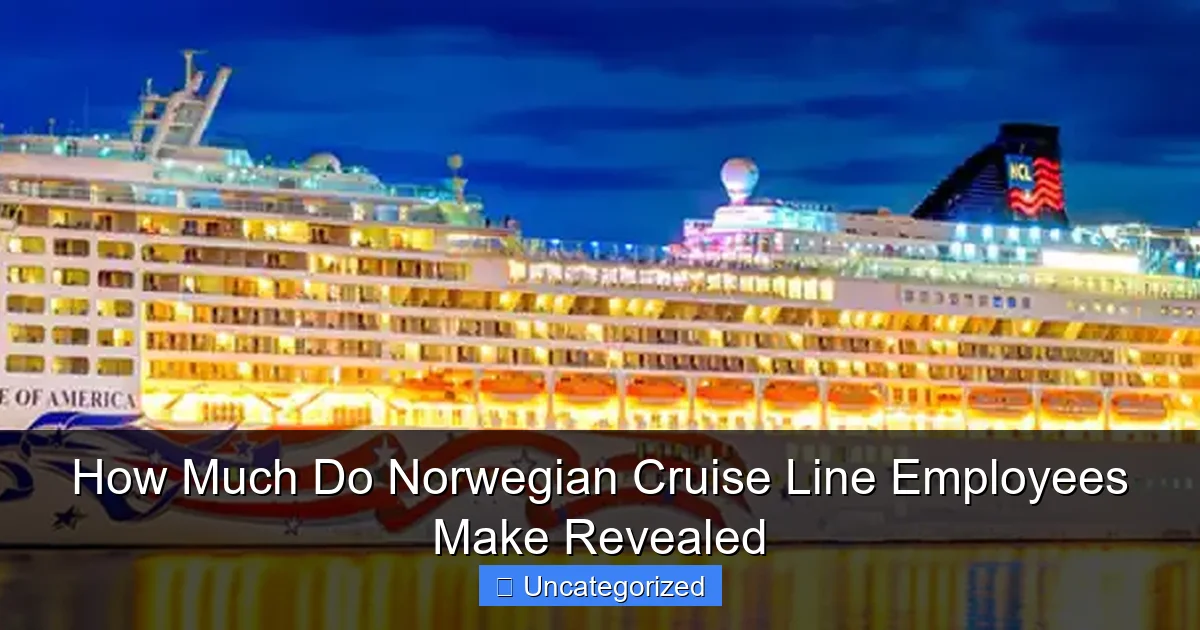
Featured image for how much do norwegian cruise line employees make
Image source: ncl.com
Norwegian Cruise Line employees earn an average of $35,000–$60,000 annually, with pay varying by role, experience, and location—from entry-level crew to officers and shoreside staff. Top earners, like senior captains and management, can make over $100,000, while onboard service staff often rely on tips and benefits to boost income. Discover the key factors influencing salaries and how NCL compares to industry standards.
Key Takeaways
- Salaries vary widely: Roles like captains earn significantly more than entry-level staff.
- Tips boost earnings: Gratuities can increase pay for service staff by 30–50%.
- Experience matters: Senior employees earn 20–40% more than new hires in similar roles.
- Location impacts pay: U.S.-based roles often pay more than international postings.
- Benefits add value: Free lodging, meals, and travel perks enhance total compensation.
📑 Table of Contents
- How Much Do Norwegian Cruise Line Employees Make Revealed
- Understanding the Norwegian Cruise Line Pay Structure
- Salaries by Department: A Detailed Breakdown
- Factors That Influence Salary at Norwegian Cruise Line
- Benefits and Perks Beyond Salary
- How NCL Compares to Other Cruise Lines
- Conclusion: Is a Career at Norwegian Cruise Line Right for You?
How Much Do Norwegian Cruise Line Employees Make Revealed
Working on a cruise ship is a dream for many—imagine traveling to exotic destinations, meeting people from around the world, and enjoying a unique lifestyle that blends work and adventure. Among the leading cruise lines, Norwegian Cruise Line (NCL) stands out as a popular employer in the maritime tourism industry. With its innovative “Freestyle Cruising” concept, diverse fleet, and global itineraries, NCL attracts thousands of job seekers every year. But one of the most common questions prospective employees have is: How much do Norwegian Cruise Line employees make?
The answer isn’t as straightforward as a single number. Compensation varies widely depending on the employee’s role, experience, department, ship location, and even the season. From deckhands and stewards to chefs and entertainment directors, NCL offers a broad spectrum of positions, each with its own pay structure, benefits, and perks. In this comprehensive guide, we’ll break down the salary landscape across departments, explore factors that influence pay, compare NCL to other major cruise lines, and provide real-world insights to help you understand what to expect if you’re considering a career with Norwegian Cruise Line. Whether you’re a seasoned professional or a first-time cruiser, this article will give you the clarity you need to make informed decisions about your maritime career.
Understanding the Norwegian Cruise Line Pay Structure
Base Salary vs. Total Compensation
When evaluating Norwegian Cruise Line employee salaries, it’s essential to distinguish between base salary and total compensation. The base salary is the fixed amount paid monthly or biweekly, but total compensation includes additional benefits such as housing, meals, tips, bonuses, and onboard perks. Unlike land-based jobs, cruise ship employees don’t pay for rent or groceries—these are provided free of charge by the company. This means that even if a base salary seems modest, the overall value of the compensation package can be significantly higher.
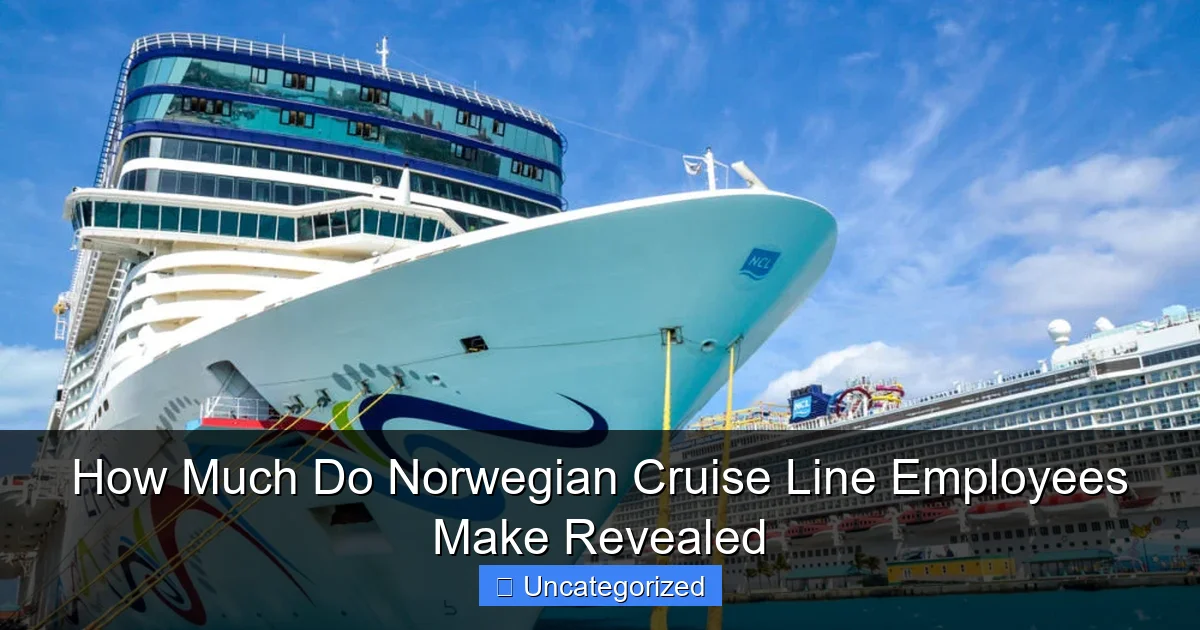
Visual guide about how much do norwegian cruise line employees make
Image source: cruisefever.net
For example, a cabin steward earning a base salary of $1,800 per month might receive free meals, a private cabin (or shared, depending on rank), laundry services, and access to crew recreation areas. When you factor in these non-monetary benefits—valued at $600–$800 per month—the effective compensation rises to $2,400–$2,600. This is a crucial point often overlooked by those comparing cruise salaries to traditional jobs.
Pay Frequency and Currency
NCL pays employees in U.S. dollars (USD), regardless of the ship’s location or itinerary. Most salaries are deposited monthly via direct deposit into an employee’s offshore bank account (often in the U.S. or a tax-friendly jurisdiction). Some positions, especially in entertainment or sales, may receive weekly or biweekly payments. It’s important to note that employees are responsible for managing their own finances, including taxes, which vary based on nationality and tax treaties.
Additionally, NCL uses a tiered pay system based on rank and experience. For instance, a newly hired bar server will earn less than a senior bartender with five years of cruise experience. The company also uses performance-based evaluations to determine promotions and salary increases, which typically occur every 12 to 18 months.
Departmental Pay Differences
Salaries at NCL are heavily influenced by the employee’s department. The Hotel Division (which includes housekeeping, dining, and guest services) tends to have lower base salaries but higher tip potential. The Marine & Technical Division (deck, engine, and navigation staff) often receives higher base pay due to the specialized skills and certifications required. Meanwhile, the Entertainment & Recreation Division offers variable pay, with some roles earning commissions or bonuses based on performance and guest satisfaction.
For example, a junior engineer might earn $3,500–$4,500 monthly, while a junior waiter earns $1,600–$2,000. However, the waiter could easily double or triple their earnings through tips, especially on luxury or high-traffic ships. This disparity highlights the importance of understanding not just the base salary, but the full earning potential in each role.
Salaries by Department: A Detailed Breakdown
Hotel Department (Front-of-House Roles)
The Hotel Department is the backbone of guest experience, and it includes positions like waiters, bartenders, cabin stewards, guest services agents, and chefs. These roles typically have lower base salaries but high tip potential, especially on ships with strong tipping cultures (e.g., U.S.-based itineraries).
- Cabin Steward/Stewardess: $1,600–$2,400/month + tips. Senior stewards with supervisory roles earn $2,600–$3,200.
- Waiter/Waitress: $1,500–$2,200/month + tips. On average, waiters earn $800–$1,500 in tips monthly, depending on ship and service level.
- Bar Server/Bartender: $1,800–$2,600/month + tips. Bartenders on premium ships (e.g., Norwegian Encore) can earn $3,000+ monthly with tips.
- Guest Services Agent: $2,000–$2,800/month. Higher pay for multilingual agents or those with customer service experience.
- Chef (Entry-Level): $2,200–$3,000/month. Sous chefs earn $3,500–$5,000; executive chefs can earn $6,000–$8,000.
Tip: Employees in the Hotel Department are encouraged to provide excellent service to maximize tip earnings. NCL uses a “tip pool” system on some ships, where tips are shared among staff, while others allow individual tipping. Always clarify the tipping policy during onboarding.
Marine & Technical Department (Back-of-House Roles)
This division includes deck officers, engineers, electricians, and safety personnel. These roles require formal certifications (e.g., STCW, MCA, or U.S. Coast Guard licenses) and often pay higher base salaries due to the technical nature of the work.
- Ordinary Seaman (Deckhand): $2,000–$2,600/month.
- Able Seaman (AB): $2,800–$3,600/month.
- Junior Engineer: $3,200–$4,200/month.
- Second Engineer: $4,500–$6,000/month.
- Chief Engineer: $7,000–$10,000/month.
- Electrician: $3,000–$4,000/month.
Marine staff often work longer hours (10–12 hour shifts) and have less guest interaction, but their roles are critical to the ship’s operation. Promotions in this department are based on experience, certifications, and performance reviews. For example, an AB with a GMDSS license may receive a $200–$300 monthly bonus.
Entertainment & Recreation Department
This department includes performers, fitness instructors, kids’ counselors, and activity coordinators. Pay varies widely based on skill, popularity, and contract terms.
- Entertainment Host/Coordinator: $2,200–$3,200/month.
- Fitness Instructor: $2,000–$3,000/month + commission on personal training sessions.
- Kids’ Club Counselor: $1,800–$2,500/month.
- Performer (Singer, Dancer, Musician): $2,500–$4,500/month. Lead performers on Broadway-style shows can earn $5,000–$7,000.
- DJ/Entertainer: $2,000–$3,500/month + tips from guest events.
Entertainment staff often sign short-term contracts (3–6 months) and may receive bonuses for high guest satisfaction scores. Some performers also earn royalties from merchandise or photo sales.
Factors That Influence Salary at Norwegian Cruise Line
Experience and Rank
Experience is the single most significant factor in determining salary at NCL. Entry-level positions start at the lower end of the pay scale, but promotions can lead to substantial increases. For example, a cabin steward with two years of experience and a “Crew of the Month” award may be promoted to Senior Steward, earning $2,800–$3,200/month. Similarly, a junior waiter who completes training in wine service and upselling techniques can move to a “Fine Dining Server” role, increasing their base salary and tip potential.
Rank also determines living conditions. Higher-ranking officers often have private cabins with en-suite bathrooms, while junior staff may share cabins. This is another indirect financial benefit of career advancement.
Ship Size and Itinerary
Salaries can vary depending on the ship’s size, class, and itinerary. Larger ships (e.g., Norwegian Bliss, Norwegian Joy) with more passengers and amenities often offer higher pay and better tips. For example, a bartender on a 4,000-passenger ship in Alaska may earn more than one on a 2,500-passenger ship in the Mediterranean due to higher guest volume and spending.
Itineraries also play a role. Ships sailing in North America (especially the U.S. and Canada) have a stronger tipping culture, leading to higher tip earnings. In contrast, European or Asian itineraries may have lower tip rates but offer cultural immersion and unique destinations.
Nationality and Recruitment Source
NCL recruits globally, and pay can differ based on the employee’s country of origin and recruitment agency. For example, a Filipino cabin steward hired through a Manila-based agency may receive a slightly different pay structure than a Brazilian steward hired through a local NCL office. However, NCL standardizes pay to ensure fairness across regions. The company uses a “global pay matrix” to align salaries while accounting for cost-of-living differences in recruitment hubs.
Additionally, some nationalities may be eligible for tax benefits. For instance, U.S. citizens can use the IRS’s Foreign Earned Income Exclusion (FEIE) to exclude up to $120,000 (2023 limit) of cruise income from federal taxes. Other nationalities should consult local tax laws or a maritime tax specialist.
Seasonality and Demand
Salaries and contract availability fluctuate with the cruise season. Peak seasons (summer, holidays) see higher demand for staff, and NCL may offer signing bonuses or overtime pay. For example, during the summer Alaska season, demand for deckhands and engineers increases, and some employees receive a 10–15% seasonal bonus.
Conversely, during off-peak months (e.g., January–March), some ships undergo dry-dock maintenance, and staff may be reassigned or offered shorter contracts. Planning your contract timing can help you maximize earnings.
Benefits and Perks Beyond Salary
Free Accommodation and Meals
One of the most valuable benefits of working for NCL is free housing and meals. Employees live in crew cabins (ranging from shared to private, depending on rank) and eat in the crew mess hall or designated areas. The food is nutritious and often includes international options to cater to diverse staff. This saves employees hundreds of dollars per month compared to land-based jobs.
For example, a land-based hotel employee in Miami might spend $800 on rent and $300 on groceries—$1,100 in expenses eliminated by working on a cruise ship.
Travel and Destination Access
Employees receive free or discounted access to ports of call. While work schedules limit free time, most staff get 8–12 hours off per port day. This allows them to explore destinations like Santorini, Nassau, or Vancouver at little to no cost. Some employees even use their time off to take short excursions or visit friends and family in port cities.
Tip: Use your free time wisely—research ports in advance, pack essentials, and budget for local expenses. Many crew members save thousands on travel each year.
Healthcare and Insurance
NCL provides basic medical coverage for employees while on board. This includes access to the ship’s medical center for illnesses and minor injuries. For serious conditions, employees may be evacuated to a nearby hospital, with costs covered by the company.
However, long-term or pre-existing conditions may require private insurance. NCL recommends that employees purchase supplemental health and dental insurance, especially for extended contracts.
Training and Career Development
NCL invests in employee growth through training programs, leadership courses, and certification support. For example, the NCL Academy offers courses in customer service, safety procedures, and language skills. Employees who complete advanced training (e.g., in fire safety or emergency response) may receive salary increases or priority for promotions.
Additionally, NCL has a strong internal promotion policy. Many senior officers started as junior staff, showing that career advancement is achievable with dedication and performance.
How NCL Compares to Other Cruise Lines
Salary Comparison with Major Competitors
To understand where NCL stands in the industry, let’s compare average salaries with other leading cruise lines:
| Position | Norwegian Cruise Line | Carnival Cruise Line | Royal Caribbean | MSC Cruises |
|---|---|---|---|---|
| Cabin Steward | $1,800–$2,400 | $1,700–$2,300 | $1,900–$2,500 | $1,600–$2,200 |
| Waiter | $1,600–$2,200 + tips | $1,500–$2,100 + tips | $1,700–$2,300 + tips | $1,500–$2,000 + tips |
| Junior Engineer | $3,200–$4,200 | $3,000–$4,000 | $3,300–$4,300 | $2,800–$3,800 |
| Entertainment Host | $2,200–$3,200 | $2,000–$3,000 | $2,300–$3,300 | $2,100–$3,000 |
| Chief Engineer | $7,000–$10,000 | $6,500–$9,500 | $7,200–$10,500 | $6,000–$9,000 |
As shown, NCL offers competitive salaries, often on par with Royal Caribbean and slightly above Carnival and MSC. However, Royal Caribbean tends to have higher tip potential due to its larger ships and premium brands (e.g., Celebrity, Silversea).
Benefits and Culture
NCL is known for its employee-friendly policies, including shorter contract lengths (typically 6–9 months vs. 9–12 months at Carnival), more flexible scheduling, and a focus on work-life balance. The company also emphasizes diversity and inclusion, with staff from over 100 countries.
In contrast, some lines like Carnival have a more hierarchical structure, while MSC Cruises offers lower base salaries but strong European-style benefits (e.g., longer vacations). Ultimately, the best cruise line for you depends on your career goals, lifestyle preferences, and earning priorities.
Conclusion: Is a Career at Norwegian Cruise Line Right for You?
So, how much do Norwegian Cruise Line employees make? The answer is: it depends—on your role, experience, ship, and performance. While base salaries may seem modest compared to land-based jobs, the total compensation package—including free housing, meals, travel, and tips—can be highly attractive. From cabin stewards earning $2,500–$3,500 monthly (with tips) to chief engineers making $10,000+ per month, NCL offers diverse earning potential across departments.
Moreover, the non-monetary benefits are invaluable. The chance to travel the world, meet people from different cultures, and grow professionally in a dynamic environment is unmatched. For those seeking adventure, savings potential (many crew members save 70–90% of their income), and a unique lifestyle, NCL is an excellent choice.
To maximize your earnings and career growth, focus on performance, certifications, and guest satisfaction. Take advantage of NCL’s training programs, seek promotions, and consider specializing in high-demand areas like engineering, entertainment, or fine dining. With dedication, a career at Norwegian Cruise Line can be both financially rewarding and personally fulfilling.
Whether you’re drawn to the sea, the excitement of cruise life, or the opportunity to build a global career, NCL provides a platform where hard work is recognized, and adventure is part of the job description. Now that you know what to expect, the next step is to explore open positions, apply, and set sail on your maritime journey.
Frequently Asked Questions
What is the average salary for Norwegian Cruise Line employees?
The average salary for Norwegian Cruise Line employees varies by role, but most positions range from $25,000 to $60,000 annually, including tips and bonuses. Crew members in hospitality and service often earn more due to gratuities.
How much do Norwegian Cruise Line employees make in tips?
Tips can significantly boost earnings, especially for front-line staff like servers and cabin stewards, who may earn an extra $300–$1,000 per month. Total compensation, including tips, often exceeds base pay.
Do Norwegian Cruise Line employees get paid overtime?
Hourly employees may receive overtime pay, but most crew members work under contract terms that include long shifts without traditional overtime. Salaried roles typically follow fixed schedules.
How much do Norwegian Cruise Line employees make compared to other cruise lines?
NCL’s pay is competitive within the industry, with similar base salaries to Royal Caribbean or Carnival, but gratuities and bonuses can make NCL more lucrative for service roles.
Are there bonuses or incentives for Norwegian Cruise Line staff?
Yes, employees may receive performance-based bonuses, contract completion bonuses, or incentives for exceptional guest feedback. These can add thousands to annual earnings.
What benefits do Norwegian Cruise Line employees receive?
Beyond salary, NCL offers free room and board, health insurance, travel opportunities, and discounted cruises. These perks enhance the overall value of employment.