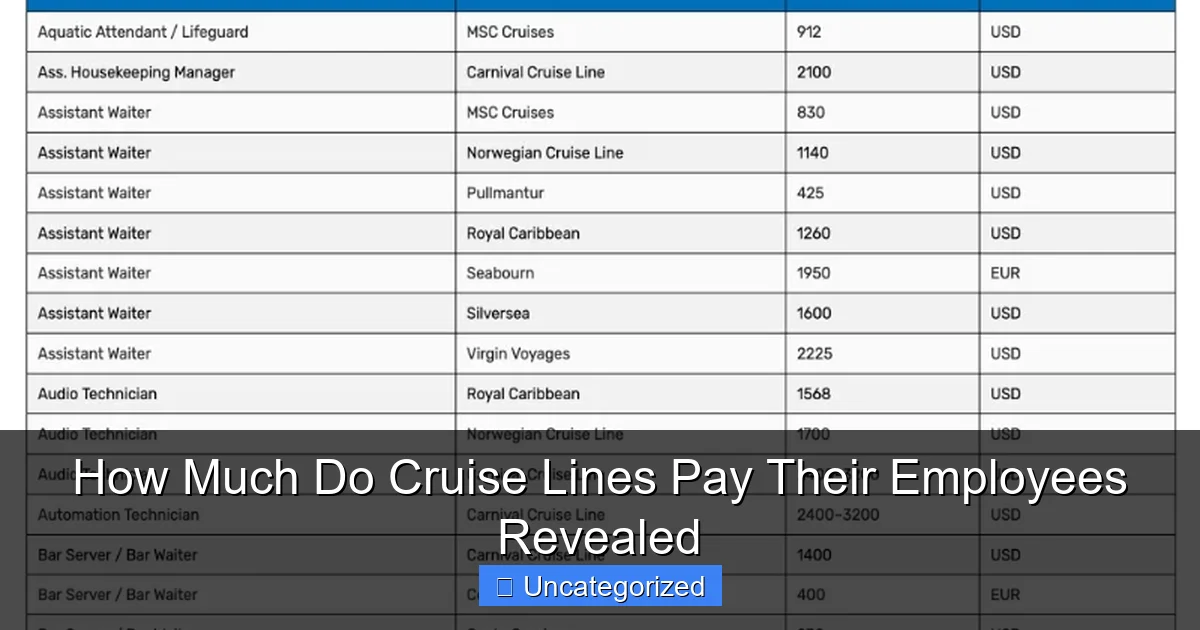
Featured image for how much do cruise lines pay their employees
Image source: shiplife.org
Cruise lines pay employees an average of $1,500 to $3,500 monthly, with wages varying by role, experience, and ship location. Entry-level staff like housekeepers and deckhands often earn less, while officers and hospitality managers can make significantly more, especially with tips and bonuses factored in. Discover the real numbers behind crew salaries, including hidden perks and regional pay differences, in this revealing breakdown.
Key Takeaways
- Salaries vary widely: Roles like captains earn significantly more than entry-level staff.
- Experience pays off: Senior crew members can double entry-level wages.
- Gratuities boost income: Service staff often earn more in tips than base pay.
- Contracts impact earnings: Lengthy contracts may include bonuses or tax benefits.
- Location matters: Wages adjust based on cruise line and itinerary regions.
- Benefits add value: Free lodging and meals reduce living costs for crew.
- Overtime is common: Long hours can increase pay but affect work-life balance.
📑 Table of Contents
- The Hidden World of Cruise Line Salaries: What You Need to Know
- Understanding the Cruise Line Pay Structure
- Salaries by Position: A Detailed Breakdown
- Nationality and Geographic Pay Disparities
- Benefits and Non-Monetary Compensation
- Maximizing Earnings: Strategies for Cruise Employees
- Data Table: Average Monthly Earnings by Position and Line
- The Bottom Line: Is a Cruise Career Worth It?
The Hidden World of Cruise Line Salaries: What You Need to Know
Have you ever stood on a cruise ship deck, admiring the vast ocean while a smiling crew member hands you a tropical drink? Behind that idyllic scene lies a complex, often misunderstood workforce that keeps these floating cities running. Cruise lines employ thousands of workers across hundreds of roles, from deckhands to chefs, entertainers to engineers. Yet, one of the most frequently asked questions remains shrouded in mystery: how much do cruise lines pay their employees?
The answer isn’t simple. Cruise line salaries vary dramatically based on role, experience, nationality, ship size, and even the time of year. While some positions offer competitive wages with benefits, others rely on tips, contracts, and tax advantages to compensate. In this comprehensive guide, we’ll peel back the curtain on cruise line pay structures, explore the realities of working at sea, and uncover what it truly means to earn a living on the high seas. Whether you’re considering a career in the cruise industry or simply curious about the economics behind your next vacation, this article will provide the insights you need.
Understanding the Cruise Line Pay Structure
The compensation system for cruise ship employees is unlike any traditional land-based job. It’s a unique blend of base salaries, tips, bonuses, and non-monetary benefits that can make direct comparisons challenging. Let’s break down the core components that shape how cruise lines pay their staff.

Visual guide about how much do cruise lines pay their employees
Image source: i.ytimg.com
Base Salaries and Wage Scales
Every cruise line maintains a formal wage scale for its employees, but these scales differ significantly between companies and positions. Entry-level roles like cabin stewards or utility workers might start at $700–$1,200 per month, while specialized roles like chefs or engineers can earn $3,000–$6,000 monthly. However, these figures are just the beginning. For example, Royal Caribbean’s entry-level food servers earn approximately $1,050/month, while senior chefs can reach $4,500–$5,500 monthly.
Key factors influencing base salaries include:
- Role specialization: Technical roles (engineers, electricians) and culinary positions typically pay higher than general service staff.
- Experience level: Senior staff often earn 20–50% more than entry-level counterparts in similar positions.
- Nationality: Many cruise lines hire internationally, with pay often reflecting the employee’s home country’s economic standards.
- Union membership: Unionized positions (common on European lines) may have standardized pay scales.
Tipping Culture and Gratuities
Tips are a critical—and often unexpected—component of cruise line pay. While base salaries may seem modest, many service positions rely heavily on gratuities. Cruise lines typically implement one of three tipping models:
- Pre-paid gratuities: Passengers pay a fixed daily tip (e.g., $14–$20/day) that’s distributed among staff. Norwegian Cruise Line uses this model.
- Suggested tipping: Passengers receive tipping guidelines (e.g., $14/day for room stewards), but pay voluntarily. Carnival and Royal Caribbean follow this approach.
- Discretionary tipping: No guidelines provided; tips are entirely at passenger discretion. Common on luxury lines like Regent Seven Seas.
Pro tip: Service staff on major lines can earn $500–$1,000/month in tips during peak season. Bartenders and dining room servers often receive the largest shares.
Contract Length and Seasonality
Most cruise line jobs operate on contracts lasting 4–10 months, with 2–3 months of paid vacation. This structure significantly impacts annual earnings. For example, a steward earning $1,200/month plus $800 in tips might make $12,000 over a 5-month contract, then receive partial pay during their 2-month vacation.
Seasonal fluctuations also play a role. Alaska cruises (summer-only) offer higher pay to attract staff for the short season, while Caribbean lines may reduce wages during hurricane season when ships reposition. Smart job seekers can maximize earnings by:
- Accepting back-to-back contracts
- Working peak seasons (summer, holidays)
- Choosing itineraries with higher passenger loads
Salaries by Position: A Detailed Breakdown
Now let’s examine specific roles across the cruise industry, from entry-level to management. These figures represent average monthly earnings (base salary + estimated tips) for major cruise lines like Carnival, Royal Caribbean, and Norwegian.
Deck and Engine Department
These technical roles maintain the ship’s mechanical and structural integrity:
- Ordinary Seaman: $1,000–$1,500/month (entry-level)
- Boatswain (Bosun): $2,500–$3,500/month
- Junior Engineer: $2,800–$4,000/month
- Chief Engineer: $6,000–$9,000/month (plus bonuses)
Insider insight: Engineering roles often receive additional hazard pay for working in confined spaces or extreme temperatures. Many lines provide free technical certifications that increase earning potential.
Hotel and Guest Services
The backbone of passenger experience, these roles blend hospitality with hard work:
- Cabin Steward: $900–$1,600/month + $300–$800 in tips
- Room Service Attendant: $1,200–$1,800/month + $500–$1,200 in tips
- Front Desk Agent: $1,500–$2,200/month
- Guest Services Manager: $3,000–$4,500/month
Key tip: Stewards on luxury lines (Crystal, Seabourn) can earn 30–50% more than those on mass-market ships due to higher passenger ratios and tips.
Food and Beverage Department
With 24/7 dining operations, this is the largest department:
- Utility Worker: $700–$1,000/month
- Buffet Server: $1,000–$1,400/month + $200–$500 in tips
- Restaurant Server: $1,100–$1,600/month + $600–$1,500 in tips
- Head Chef: $4,000–$6,000/month
- Executive Chef: $5,000–$7,500/month
Reality check: While tips can be substantial, food service staff work 10–12 hour days with minimal breaks. High turnover is common in this department.
Entertainment and Recreation
These roles require special skills but offer unique earning potential:
- Youth Counselor: $1,300–$1,800/month
- Entertainment Host: $1,500–$2,200/month
- Musician (band member): $2,000–$3,500/month
- Production Show Performer: $2,500–$4,500/month
- Fitness Instructor: $1,800–$2,500/month
Pro advice: Entertainers often receive additional pay for rehearsals and costume fittings. Some lines offer profit-sharing for popular shows.
Management and Executive Roles
Senior positions require extensive experience but offer better pay and conditions:
- Assistant Restaurant Manager: $3,000–$4,000/month
- Hotel Director: $6,000–$8,500/month
- Cruise Director: $4,500–$6,500/month
- Captain/Master: $8,000–$12,000/month + bonuses
Note: Management roles often include private cabins, better food, and additional vacation days. Many require prior cruise experience or maritime certifications.
Nationality and Geographic Pay Disparities
One of the most complex aspects of cruise line pay involves nationality-based compensation. Unlike most industries, cruise lines frequently pay employees differently based on their passport, not just their role or experience.
The Nationality Pay Scale
Many cruise lines maintain tiered pay structures based on employee nationality. For example:
- Tier 1 (Western countries): USA, Canada, UK, Australia, EU nations – highest pay
- Tier 2 (Developing nations): Philippines, India, Indonesia – moderate pay
- Tier 3 (Other countries): Eastern Europe, Latin America – lowest pay
Two cabin stewards doing identical work might earn:
- American: $1,600/month
- Filipino: $1,200/month
- Romanian: $900/month
Industry justification: Cruise lines claim this reflects cost of living differences and recruitment costs. Critics argue it’s discriminatory.
Regional Variations in Pay
Even within the same cruise line, pay can vary by:
- Home country economy: Filipino workers often earn more than Indonesian counterparts for the same role due to stronger maritime labor laws.
- Recruitment agency fees: Some countries charge high placement fees, which may be deducted from salaries.
- Language requirements: English proficiency can increase pay by 10–20% for non-native speakers.
Smart strategy: Workers from lower-paid countries can increase earnings by:
- Obtaining additional certifications (e.g., STCW safety training)
- Specializing in high-demand roles (e.g., sommelier, pastry chef)
- Working for premium/luxury lines that pay more
Tax Advantages and Financial Planning
Many cruise ship employees enjoy unique tax benefits:
- Foreign Earned Income Exclusion: U.S. citizens can exclude up to $120,000 (2023) from federal taxes if they meet residency requirements.
- Tax-free countries: Some lines hire through subsidiaries in tax-free zones like Bermuda or Panama.
- No local taxes: Employees typically don’t pay taxes in the countries they visit.
Example: A U.S. citizen earning $30,000 annually on a cruise ship might pay $0 in U.S. federal taxes, compared to $3,000+ if working shoreside.
Benefits and Non-Monetary Compensation
Beyond salaries and tips, cruise lines offer a range of benefits that significantly impact the overall employment package. These perks can make up 20–40% of total compensation for some positions.
Housing and Living Expenses
One of the most substantial benefits is free room and board:
- Accommodations: Shared cabins (2–4 people) with basic amenities. Senior staff get private cabins.
- Meals: Three daily meals in crew mess, often with special dietary options.
- Utilities: Free electricity, water, and internet (limited data).
- Laundry: Free uniform cleaning and basic laundry service.
Cost savings: This benefit is worth $500–$1,000/month for most employees.
Healthcare and Insurance
Medical coverage varies widely by line and role:
- Basic medical: Onboard clinics handle routine care and emergencies.
- Health insurance: Most lines provide basic coverage; premium plans may require employee contributions.
- Dental/vision: Often limited or not provided.
- Medevac insurance: Critical for serious injuries/illnesses requiring shore treatment.
Pro tip: Workers should purchase supplemental travel insurance for gaps in coverage.
Professional Development
Many lines invest in employee growth:
- Training programs: Free courses in safety, hospitality, and technical skills.
- Certifications: STCW, food safety, and language programs at no cost.
- Tuition assistance: Some lines offer college credit programs (e.g., Carnival’s partnership with Broward College).
- Career advancement: Internal promotions can increase pay by 30–100%.
Example: A cabin steward who completes a 2-year training program might advance to head steward ($1,800/month) or housekeeping manager ($3,000/month).
Additional Perks
Other valuable benefits include:
- Free travel: Discounted or free cruises for employees and family.
- Retirement plans: Some lines offer 401(k)-style plans (e.g., Norwegian’s Crew Retirement Plan).
- Bonus programs: Performance-based incentives, especially for sales roles (shore excursions, spa services).
- Vacation pay: 2–4 weeks of paid leave per contract.
Insider insight: The total value of benefits can make cruise line jobs competitive with shoreside positions that pay higher base salaries.
Maximizing Earnings: Strategies for Cruise Employees
For those considering a career at sea, strategic choices can dramatically increase earnings. Here’s how to make the most of cruise line employment opportunities.
Choosing the Right Cruise Line
Pay varies significantly between companies. Consider:
- Mass-market lines (Carnival, Royal Caribbean): Higher passenger loads = more tips but more demanding schedules.
- Premium lines (Princess, Holland America): Better base salaries, moderate tips, less passenger density.
- Luxury lines (Regent, Seabourn): Highest pay, generous tips, but longer contracts (8–10 months).
- River cruises: Smaller crews mean higher individual responsibility and pay (e.g., Viking River Cruises).
Data point: A server on a luxury line might earn $3,000/month total compensation vs. $1,800/month on a mass-market ship.
Optimizing Role Selection
Some positions offer better earning potential:
- High-tip roles: Sommeliers, concierge, specialty restaurant servers.
- Specialized skills: Spa therapists, dive instructors, sommeliers.
- Sales positions: Shore excursion hosts, gift shop managers (often commission-based).
- Technical roles: IT staff, electricians, HVAC technicians.
Smart move: Cross-train in multiple roles (e.g., server + bartender) to increase flexibility and earning potential.
Financial Strategies for Crew Members
Maximize take-home pay with these tactics:
- Tax planning: Consult a maritime tax specialist to optimize international tax benefits.
- Tip management: Track gratuities carefully; some lines offer tip pooling that can increase earnings.
- Contract timing: Schedule contracts during peak seasons (summer, holidays) for higher passenger counts.
- Currency exchange: Use international banks to avoid high transfer fees.
- Investment: Some lines offer direct deposit to international accounts with investment options.
Example: A server who works 3 consecutive contracts (14 months) with proper tax planning could earn $40,000–$50,000 while paying minimal taxes.
Career Advancement Path
Long-term cruise employees can follow this progression:
- Year 1–2: Entry-level role → Senior position (e.g., utility worker → head server)
- Year 3–5: Department supervisor → Assistant manager
- Year 5+: Department manager → Director-level role
Pro tip: Many cruise line executives started as entry-level crew. Internal promotions are common for reliable, skilled workers.
Data Table: Average Monthly Earnings by Position and Line
| Position | Carnival | Royal Caribbean | Norwegian | Princess | Regent Seven Seas |
|---|---|---|---|---|---|
| Cabin Steward | $1,200 + $400 tips | $1,300 + $500 tips | $1,100 + $450 tips | $1,400 + $600 tips | $1,800 + $800 tips |
| Restaurant Server | $1,300 + $700 tips | $1,400 + $800 tips | $1,200 + $750 tips | $1,600 + $900 tips | $2,000 + $1,200 tips |
| Chef de Partie | $2,800 | $3,000 | $2,700 | $3,200 | $3,800 |
| Entertainment Host | $1,700 | $1,800 | $1,600 | $2,000 | $2,500 |
| Junior Engineer | $3,200 | $3,500 | $3,300 | $3,800 | $4,200 |
| Hotel Manager | $5,500 | $6,000 | $5,800 | $6,500 | $7,500 |
Note: Figures represent base salary + estimated average tips for a 30-day month. Actual earnings vary by ship, itinerary, and season.
The Bottom Line: Is a Cruise Career Worth It?
After examining the complex world of cruise line pay, the answer depends on individual priorities. For some, the combination of base salary, tips, and benefits creates an attractive package—especially when factoring in free travel, tax advantages, and career growth. A cabin steward on a luxury line, for example, might earn $2,600/month total compensation while saving most of it due to free room and board. For others, the long contracts, demanding schedules, and isolation from home may not justify the pay.
Key takeaways for anyone considering cruise employment:
- Total compensation: Look beyond base salary to include tips, benefits, and tax savings.
- Career strategy: Specialized skills and management roles offer the best earning potential.
- Company research: Pay varies dramatically between lines—luxury and premium lines typically offer better packages.
- Personal fit: Consider whether you thrive in a high-energy, team-oriented environment with limited personal space.
- Long-term planning: The cruise industry offers unique opportunities for rapid career advancement and international experience.
Ultimately, how much cruise lines pay their employees reveals an industry built on global labor markets, seasonal fluctuations, and unique compensation models. Whether you’re drawn to the adventure, the financial benefits, or the chance to see the world, understanding these pay structures is the first step toward making an informed career choice. For those willing to embrace the challenges of life at sea, the rewards—both monetary and personal—can be substantial. The next time you’re enjoying a cocktail on deck, you’ll have a deeper appreciation for the complex ecosystem of wages, tips, and benefits that keep those floating resorts running smoothly.
Frequently Asked Questions
How much do cruise lines pay their employees on average?
Cruise lines typically pay employees between $1,500 and $3,500 per month, depending on the role, experience, and ship. Entry-level positions like housekeeping or dining staff often start near the lower end, while skilled roles like officers or chefs earn significantly more.
Do cruise line employees get paid hourly or monthly?
Most cruise lines pay employees a fixed monthly salary rather than hourly wages, which includes base pay and sometimes tips or bonuses. This structure helps standardize earnings across international waters and varying work hours.
How much do cruise lines pay their employees in tips or gratuities?
Tips vary widely but can add $200–$1,000+ monthly to an employee’s income, especially for front-facing roles like waitstaff or guest services. Some lines automatically include gratuities in passenger bills, while others rely on direct tips.
Which cruise line pays the highest salaries to employees?
Premium brands like Regent Seven Seas, Seabourn, and Disney Cruise Line often offer higher pay and benefits due to their luxury focus. Officers and specialized staff (e.g., engineers) may earn 20–30% more at these lines compared to budget operators.
Are cruise line employee salaries tax-free?
Many employees work under “foreign-earned income” rules, which can exempt them from U.S. or home-country taxes if they meet specific criteria. However, tax obligations depend on nationality, contract terms, and local laws.
How does experience impact how much cruise lines pay their employees?
Experience can significantly boost earnings—e.g., a senior bartender might earn 50% more than a trainee. Promotions to supervisory roles (e.g., head waiter) also come with higher base salaries and bonus opportunities.