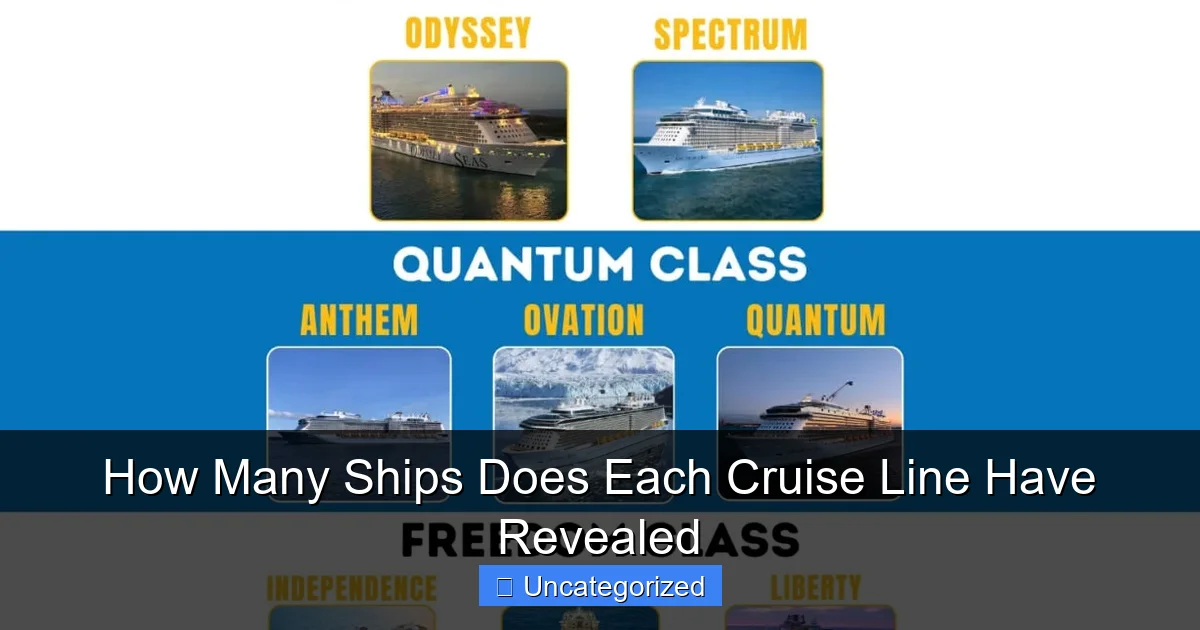
Featured image for how many ships does each cruise line have
Image source: shinecruise.com
Discover the exact fleet sizes of the world’s top cruise lines, from Carnival’s 27-ship powerhouse to niche operators like Viking Ocean Cruises with 9 vessels. We break down each brand’s current fleet, including new launches and upcoming additions, so you can compare scale, routes, and onboard experiences at a glance.
Key Takeaways
- Carnival Cruise Line leads with 27 ships, offering the most fleet diversity.
- Royal Caribbean dominates in size, operating 26 large-scale, innovative vessels.
- Norwegian Cruise Line runs 18 ships, focusing on freestyle cruising experiences.
- MSC Cruises expands rapidly, now commanding 22 ships globally with new builds.
- Disney Cruise Line has 5 ships, prioritizing immersive family-friendly itineraries.
- Luxury brands like Regent operate fewer ships (6), emphasizing high-end, all-inclusive service.
- Fleet size impacts choice: larger lines offer more options; smaller lines provide exclusivity.
📑 Table of Contents
- How Many Ships Does Each Cruise Line Have Revealed
- The Major Players: The Largest Cruise Lines by Fleet Size
- The Luxury and Premium Cruise Lines: Smaller Fleets, Big Experiences
- River and Expedition Cruises: Niche Fleets for Specialized Travel
- Budget and Family-Friendly Cruise Lines: Affordable Adventures
- Emerging Trends and Future Fleet Expansions
- Conclusion: What Fleet Size Means for Your Cruise
How Many Ships Does Each Cruise Line Have Revealed
The cruise industry is a dynamic and ever-evolving sector of global tourism, offering travelers a unique blend of luxury, adventure, and convenience. From intimate river cruises to massive floating cities, cruise lines have diversified their fleets to cater to every kind of traveler. Whether you’re a first-time cruiser or a seasoned sailor, understanding the size and scope of each cruise line’s fleet can significantly impact your vacation planning. But have you ever wondered just how many ships does each cruise line have? This question isn’t just about numbers—it’s about the scale of operations, the variety of destinations, the onboard experiences, and even the booking strategies that come into play.
In this comprehensive guide, we’ll dive deep into the fleets of the world’s leading cruise lines, revealing the exact number of ships in their arsenals, how they’ve grown over the years, and what that means for you as a passenger. We’ll explore the largest players in the industry, the boutique luxury lines, the river cruise specialists, and even the emerging expedition-focused operators. By the end of this post, you’ll not only know the answer to “how many ships does each cruise line have?” but also understand the implications of fleet size on pricing, itineraries, onboard amenities, and sustainability efforts. Whether you’re planning your next getaway or simply curious about the maritime giants, this is your ultimate fleet breakdown.
The Major Players: The Largest Cruise Lines by Fleet Size
Carnival Corporation & Plc: The Global Giant
Carnival Corporation & Plc stands as the undisputed leader in the cruise industry, operating 86 ships across its nine distinct brands. This includes Carnival Cruise Line, Princess Cruises, Holland America Line, Seabourn, Costa Cruises, AIDA Cruises, P&O Cruises (UK and Australia), Cunard Line, and Ibero Cruises. Each brand caters to a different market segment—from budget-friendly family vacations on Carnival Cruise Line to ultra-luxury on Seabourn. The sheer size of Carnival’s fleet allows it to offer a staggering variety of itineraries, from 3-day Caribbean jaunts to 100-day world cruises.
Visual guide about how many ships does each cruise line have
Image source: oceanblissjourneys.com
What makes Carnival’s fleet size so impactful? For travelers, it means more departure ports, more departure dates, and more cabin options. For example, if you’re looking for a last-minute 7-day Alaska cruise in June, Carnival brands like Princess or Holland America are likely to have multiple sailings available. Additionally, larger fleets often translate into economies of scale—lower operating costs per passenger, which can result in competitive pricing or more inclusive packages.
Royal Caribbean Group: Innovation and Scale Combined
Royal Caribbean Group, the parent company of Royal Caribbean International, Celebrity Cruises, Silversea Cruises, and TUI Cruises (50% ownership), operates a total of 63 ships. Royal Caribbean International alone has 26 vessels, including record-breaking ships like Symphony of the Seas, the largest passenger ship in the world. The group’s fleet is renowned for pushing technological and experiential boundaries—think robotic bartenders, skydiving simulators, and Central Park at sea.
The size of Royal Caribbean’s fleet enables it to dominate key markets like the Caribbean, Alaska, and the Mediterranean. For example, during the peak summer season, Royal Caribbean may have over 30 ships sailing in the Caribbean alone, offering everything from budget-friendly interior cabins to suite-level luxury. This scale also allows for frequent itinerary updates and seasonal repositioning—ships can move from the Caribbean in winter to Europe in summer, maximizing utilization and passenger demand.
Norwegian Cruise Line Holdings Ltd.: Flexibility and Variety
Norwegian Cruise Line Holdings (NCLH) operates 29 ships across three brands: Norwegian Cruise Line, Oceania Cruises, and Regent Seven Seas Cruises. Norwegian Cruise Line is known for its “Freestyle Cruising” concept, which eliminates formal dining times and dress codes, appealing to younger travelers and families. Oceania and Regent, on the other hand, focus on premium and all-inclusive luxury, respectively.
The diversity in fleet size across brands allows NCLH to target multiple demographics. For instance, Norwegian’s 19 ships offer high-energy, entertainment-driven vacations, while Regent’s six vessels provide intimate, all-suite experiences with nearly one crew member per guest. This segmentation means travelers can choose between a vibrant, activity-packed cruise or a serene, culturally immersive journey—all under one corporate umbrella.
The Luxury and Premium Cruise Lines: Smaller Fleets, Big Experiences
Silversea Cruises: All-Suite, All-Inclusive Elegance
Silversea Cruises, part of Royal Caribbean Group, operates 12 ships, ranging from intimate vessels with under 200 guests to larger expedition ships like Silver Nova. All Silversea ships feature all-suite accommodations, and the line is renowned for its all-inclusive model—covering drinks, gratuities, shore excursions, and even butler service.
Despite its smaller fleet, Silversea punches above its weight in the luxury segment. The line specializes in exotic itineraries, including Antarctica, the Arctic, and remote Pacific islands. For example, Silver Cloud and Silver Wind are ice-class vessels capable of navigating polar regions, offering passengers a rare opportunity to explore the world’s last frontiers. The limited fleet size ensures exclusivity and personalized service—perfect for travelers seeking a once-in-a-lifetime adventure without the crowds.
Regent Seven Seas Cruises: The All-Inclusive Pioneer
Regent Seven Seas Cruises, part of NCLH, operates 6 ships, all of which are all-inclusive. The line’s newest vessel, Seven Seas Grandeur, launched in 2023, features a $2,000-per-night suite with a private spa. Regent’s fleet is designed for ultra-luxury travelers who expect gourmet dining, spacious suites, and personalized service.
With only six ships, Regent focuses on longer, more immersive itineraries, often lasting 10 to 14 days. For example, a 12-day Mediterranean cruise might include stops in Santorini, Dubrovnik, and Monaco, with included excursions to ancient ruins and vineyards. The smaller fleet size allows Regent to maintain high crew-to-guest ratios (often 1:1.4) and offer unique onboard experiences like cooking classes with Michelin-starred chefs.
Oceania Cruises: The Culinary Cruise Specialist
Oceania Cruises, also under NCLH, operates 8 ships, including the Vista and Allura, which launched in 2023 and 2025, respectively. Known as the “Cruise Line for Foodies,” Oceania emphasizes gourmet dining and cultural enrichment. Each ship features multiple specialty restaurants, including Jacques by Jacques Pépin and Red Ginger for Asian cuisine.
Oceania’s fleet is designed for mid-sized ships (600–1,200 guests), allowing access to smaller ports and a more intimate atmosphere. For example, Insignia can dock in Venice, while larger ships must anchor offshore. This flexibility enables Oceania to offer unique itineraries, like a 10-day cruise from Lisbon to Barcelona with stops in lesser-known destinations like Porto Santo and Mahón.
River and Expedition Cruises: Niche Fleets for Specialized Travel
Scenic Luxury Cruises & Tours: River and Ocean Hybrid
Scenic operates a unique hybrid fleet of 16 river cruise ships and 3 ocean expedition vessels. The river fleet sails the Danube, Rhine, and Mekong, offering all-suite accommodations and included excursions. The ocean ships, like Scenic Eclipse, are luxury expedition vessels equipped with helicopters and submarines.
Scenic’s river fleet is designed for small-group, immersive experiences. For example, a 7-day Danube cruise might include a private concert in Vienna, a bike tour in Passau, and a wine-tasting in Dürnstein. The ocean ships, meanwhile, focus on polar and tropical expeditions, with itineraries to Antarctica, the Galápagos, and the South Pacific. The combination of river and ocean vessels allows Scenic to cater to travelers seeking both cultural depth and adventure.
Lindblad Expeditions: National Geographic Partnership
Lindblad Expeditions, in partnership with National Geographic, operates 11 ships, including the National Geographic Endurance and Resolution, which are ice-class vessels. These ships are designed for scientific exploration and wildlife viewing, with onboard naturalists, photo instructors, and citizen science programs.
Lindblad’s fleet specializes in remote and ecologically sensitive destinations, such as the Arctic, Galápagos, and the Amazon. For example, a 10-day Galápagos cruise includes daily Zodiac excursions to observe marine iguanas, blue-footed boobies, and giant tortoises. The small fleet size ensures low environmental impact and high educational value—ideal for travelers passionate about conservation and discovery.
AmaWaterways: The River Cruise Innovator
AmaWaterways operates 26 river cruise ships, making it one of the largest river cruise lines in the world. The fleet sails on the Danube, Rhine, Rhône, and Mekong, with a focus on active and wellness-oriented travelAmaMagna feature a fitness studio, massage rooms, and a fleet of bicycles for shore excursions.
AmaWaterways’ large river fleet allows for frequent departures and flexible itineraries**. For example, during the spring tulip season, multiple ships sail the “Tulip Time” route in the Netherlands, offering passengers a choice of departure dates and cabin categories. The line also partners with organizations like UNESCO to provide cultural enrichment, such as guided tours of World Heritage sites.
Budget and Family-Friendly Cruise Lines: Affordable Adventures
Carnival Cruise Line: The “Fun Ships”
Carnival Cruise Line, part of Carnival Corporation, operates 27 ships, including the Mardi Gras and Carnival Celebration, which feature roller coasters at sea. Known as the “Fun Ships,” Carnival focuses on affordable, family-friendly vacations** with a wide range of onboard activities, from water parks to comedy clubs.
The large fleet size allows Carnival to offer frequent 3- to 7-day cruises from major ports like Miami, Port Canaveral, and Galveston. For example, a family of four can book a 4-day Bahamas cruise for under $1,000 total, including meals and entertainment. Carnival’s scale also means more options for last-minute deals and loyalty program rewards.
MSC Cruises: European Flair, Global Reach
MSC Cruises operates 22 ships, including the MSC World Europa, which features a 104-meter-long promenade and a 1,000-seat theater. The line combines European elegance with affordable pricing and diverse itineraries, from the Caribbean to the Arabian Gulf.
MSC’s fleet is designed for international travelers, with multilingual crews and culturally themed dining. For example, a 7-day Eastern Mediterranean cruise might include stops in Athens, Mykonos, and Santorini, with onboard Greek nights and cooking demonstrations. The line also offers a unique “Kids Sail Free” program, making it a top choice for families.
Disney Cruise Line: Magic at Sea
Disney Cruise Line operates 5 ships, including the Disney Wish, which launched in 2022. The fleet is designed for families with children, featuring character meet-and-greets, Broadway-style shows, and themed staterooms.
Despite its small size, Disney’s fleet is highly specialized, with exclusive itineraries to Disney-owned Castaway Cay in the Bahamas and new destinations like Lighthouse Point in the Caribbean. The limited fleet size allows for high service standards and unique onboard experiences, such as a Frozen-themed dining room and Marvel superhero training.
Emerging Trends and Future Fleet Expansions
Sustainability and New Ship Orders
The cruise industry is investing heavily in sustainable and eco-friendly ships. Royal Caribbean’s Icon of the Seas (launching 2024) will be powered by LNG (liquefied natural gas), reducing emissions by up to 25%. Similarly, Carnival’s Carnival Jubilee will feature advanced wastewater treatment and energy-efficient lighting.
Many lines are also expanding their fleets to meet growing demand. For example, Norwegian Cruise Line has three new ships on order for delivery by 2027, while Viking Cruises plans to add 10 ocean ships and 10 river ships by 2030. These expansions will increase fleet sizes and offer passengers more choices in destinations and cabin categories.
The Rise of Expedition and Niche Cruising
Expedition cruises are growing in popularity, with lines like Hurtigruten, Ponant, and Quark Expeditions adding new ships. Hurtigruten, for example, operates 14 expedition vessels, including hybrid-powered ships like MS Roald Amundsen. These ships focus on low-impact, high-education travel, appealing to environmentally conscious travelers.
Niche cruises, such as LGBTQ+ focused trips (by Atlantis Events) or wellness retreats (by Virgin Voyages), are also expanding. Virgin Voyages, for instance, operates 4 ships with a “no kids, no casinos” policy, targeting adults seeking a modern, design-forward experience.
Data Table: Cruise Line Fleet Sizes (2024)
| Cruise Line | Number of Ships | Key Brands/Notes |
|---|---|---|
| Carnival Corporation & Plc | 86 | Carnival, Princess, Holland America, Seabourn, Costa, AIDA, P&O, Cunard, Ibero |
| Royal Caribbean Group | 63 | Royal Caribbean, Celebrity, Silversea, TUI Cruises (50%) |
| Norwegian Cruise Line Holdings | 29 | Norwegian, Oceania, Regent Seven Seas |
| MSC Cruises | 22 | Standalone brand |
| AmaWaterways | 26 | River cruises only |
| Lindblad Expeditions | 11 | National Geographic partnership |
| Disney Cruise Line | 5 | Family-focused |
Conclusion: What Fleet Size Means for Your Cruise
Understanding how many ships each cruise line has is more than just a numbers game—it’s a key factor in choosing the right vacation for you. Larger fleets like Carnival and Royal Caribbean offer unparalleled variety, frequent departures, and competitive pricing, making them ideal for first-time cruisers or budget-conscious travelers. Smaller, specialized fleets like Silversea, Lindblad, or Regent cater to those seeking exclusivity, unique itineraries, and high service standards.
As the industry evolves, sustainability, technology, and niche experiences are shaping the future of cruise fleets. Whether you’re drawn to a massive floating resort or a small ship exploring remote islands, knowing the size and focus of each line’s fleet empowers you to make informed decisions. So, the next time you book a cruise, ask not just “where do I want to go?” but also “how many ships does this cruise line have?”—because the answer could make all the difference in your dream vacation.
Frequently Asked Questions
How many ships does each cruise line have in 2024?
Major cruise lines operate fleets ranging from a few to over 100 ships. For example, Carnival Cruise Line has 27 ships, while Royal Caribbean operates 28, with more under construction.
Which cruise line has the largest fleet?
Carnival Corporation & plc brands collectively operate the largest fleet, but individually, Carnival Cruise Line leads with 27 active ships. Royal Caribbean and MSC Cruises follow closely with rapidly expanding fleets.
How many ships does Royal Caribbean have compared to other lines?
Royal Caribbean International has 28 ships, placing it among the top three largest fleets. This includes its groundbreaking Oasis- and Quantum-class vessels, with more on order.
How many cruise ships does Disney Cruise Line have?
Disney Cruise Line operates 5 ships, including the new Disney Wish. A sixth ship is scheduled for delivery in 2025, reflecting steady growth.
Does the number of ships a cruise line has affect its service?
Larger fleets often mean more itinerary options and economies of scale, but service quality depends on crew training and ship design. Smaller lines like Seabourn focus on personalized luxury with fewer vessels.
How many ships does each cruise line have under construction?
Most major lines are expanding—MSC Cruises has 7 ships on order, while Norwegian Cruise Line plans 5 new vessels. These additions aim to meet rising demand for innovative onboard experiences.