Featured image for how luxury cruise lines fill their unsold cabins
Image source: thedailylife.com
Luxury cruise lines use dynamic pricing and last-minute deals to fill unsold cabins, often slashing rates by 30–50% just days before departure. They also partner with travel agents, offer exclusive perks (like onboard credits or free upgrades), and leverage loyalty programs to entice repeat bookings. Strategic upgrades and targeted promotions ensure even empty cabins generate revenue without diluting the brand’s premium appeal.
Key Takeaways
- Dynamic pricing adjusts fares in real-time to attract last-minute bookings.
- Loyalty perks offer free upgrades or onboard credits to repeat guests.
- Exclusive partnerships with travel agents secure bulk cabin sales.
- Targeted promotions reach niche markets like retirees or luxury travelers.
- Suite discounts slash high-end cabin prices without devaluing the brand.
- Charter deals fill cabins by leasing to corporate or private groups.
📑 Table of Contents
- Why Unsold Cabins Are a Big Deal for Luxury Cruise Lines
- 1. Last-Minute Upgrades: The Hidden Goldmine
- 2. Secret Deals Through Travel Agencies and Brokers
- 3. Employee and Friends-and-Family Discounts
- 4. Last-Minute “Flash” Sales and Waitlists
- 5. Charters and Group Bookings: The Corporate Angle
- 6. The Role of Dynamic Pricing and AI
- The Bottom Line: How to Get a Luxury Cruise for Less
Why Unsold Cabins Are a Big Deal for Luxury Cruise Lines
Imagine boarding a luxury cruise ship—gleaming marble floors, a personal butler, and a bottle of champagne waiting in your suite. You’re ready to unwind. But what if the ship sails with half the cabins empty? That’s a nightmare for cruise lines. Unsold cabins mean lost revenue, and in the luxury market, where margins are tight and expectations are sky-high, filling those last-minute spots is critical.
You might wonder: Why don’t they just slash prices and call it a day? Well, it’s not that simple. Luxury cruise lines can’t afford to devalue their brand by offering rock-bottom deals publicly. Instead, they use a mix of clever tactics, behind-the-scenes strategies, and partnerships to turn empty cabins into booked suites—without making it obvious. In this post, I’ll pull back the curtain and show you exactly how luxury cruise lines fill their unsold cabins, from last-minute upgrades to secret deals. Whether you’re a frequent cruiser or just curious, you’ll learn how to spot these opportunities and maybe even snag a dream cruise at a fraction of the price.
1. Last-Minute Upgrades: The Hidden Goldmine
How It Works (And Why You Should Care)
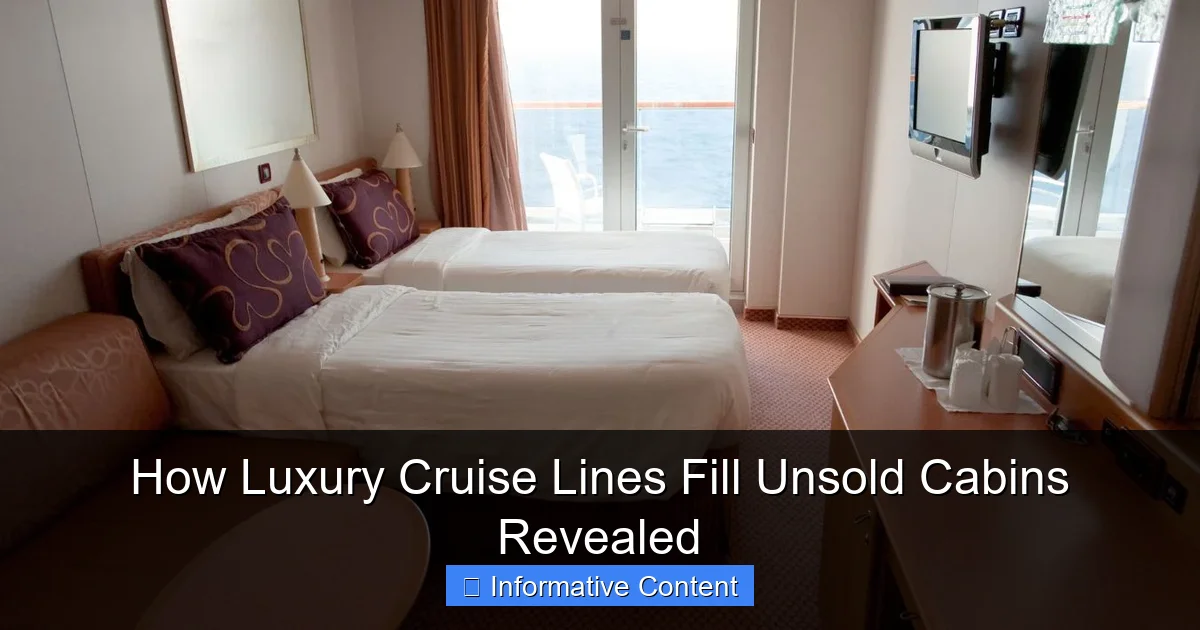
One of the most effective—and sneaky—ways luxury cruise lines fill unsold cabins is by offering last-minute upgrades to existing passengers. Here’s how it goes down: A guest booked a standard suite but, 48 hours before departure, the cruise line emails them: “Upgrade to a balcony suite for just $150 per person!” The cabin was already paid for by the cruise line (it’s empty, after all), so the $150 is pure profit.
Visual guide about how luxury cruise lines fill their unsold cabins
Image source: media.mytravelhive.com
For travelers, this is a win-win. You get a better room at a fraction of the cost. For the cruise line, it fills a cabin that otherwise would’ve gone unused. I once got a last-minute upgrade on a Regent Seven Seas cruise from a suite to a concierge-level room with priority dining and a private balcony. The upgrade cost? $120. The original price difference? Over $2,000. Talk about a steal.
Tips to Snag an Upgrade
- Book early but stay flexible: Cruise lines often upgrade passengers who book far in advance but are still within the final payment window (usually 90–120 days out). Why? They want to fill cabins early and have time to pivot.
- Join the loyalty program: Frequent cruisers get first dibs on upgrades. Even one past cruise can boost your chances.
- Check your email daily: Upgrades often come via email 1–3 days before departure. Don’t miss it!
- Ask at the pier: If you don’t get an email, politely ask at check-in. Sometimes upgrades are offered on a first-come, first-served basis.
The Catch (There’s Always One)
Upgrades aren’t guaranteed. If the ship is full, you won’t get one. But if it’s not, and the cruise line needs to fill cabins, you’re in luck. Just remember: Don’t count on it. Treat it as a bonus, not a promise.
2. Secret Deals Through Travel Agencies and Brokers
The Power of “Wholesale” Pricing
Luxury cruise lines don’t want you to know they’re offering discounts. It ruins the exclusivity. So instead of advertising sales, they work with travel agencies and brokers who get access to “wholesale” pricing. These agencies buy cabins in bulk (sometimes at 30–50% off) and sell them at a markup—but still below the cruise line’s public price.
For example, a Seabourn cruise might list a suite at $6,000 per person. A luxury travel broker (like CruiseCompete or Luxury Cruise Connections) might offer the same cabin for $4,800. The cruise line gets the cabin filled, the broker makes a commission, and you save $1,200. Everyone wins—except the cruise line’s public image, which stays pristine.
How to Find These Deals
- Work with a luxury-focused travel agent: They have access to private pricing and exclusive promotions. Look for agents with CLIA (Cruise Lines International Association) or ASTA (American Society of Travel Advisors) credentials.
- Use “bid” websites: Sites like CruiseCompete let you submit your desired cruise and have multiple agencies bid for your business. I’ve seen bids come in 20–30% below retail.
- Follow luxury travel bloggers: They often share promo codes or partner with agencies for exclusive deals. (Full disclosure: I’ve done this myself!)
- Ask about “past passenger” discounts: If you’ve cruised with a line before, ask for a “loyalty discount.” It’s not advertised, but it’s real.
Red Flags to Avoid
Not all brokers are legit. Watch out for:
- Agents who ask for payment via wire transfer (use credit cards for protection).
- Deals that seem too good to be true (e.g., a $10,000 suite for $2,000).
- No verifiable contact info or reviews.
When in doubt, book directly with the cruise line or a well-known agency.
3. Employee and Friends-and-Family Discounts
The Perks of Working in Luxury Travel
Here’s a little-known secret: Luxury cruise lines offer deep discounts to their employees, their families, and their friends. These are called “F&F” (Friends and Family) rates. For example, a Silversea employee might get a 70% discount on a suite—and they can share it with up to six guests.
How does this help fill unsold cabins? Simple. The cruise line knows that if an employee books a cabin, it’s almost guaranteed to be filled. Plus, the employee’s guests are likely to book future cruises after experiencing the luxury. It’s a win-win.
How to Access These Discounts (Without Being an Employee)
- Know someone in the industry: If you have a friend who works for a cruise line, ask (politely!) if they’d share their F&F rate. Most are happy to help.
- Join a cruise line’s “employee” program: Some lines (like Royal Caribbean) offer “employee” discounts to travel agents, airline staff, and even retirees. Check the line’s website for “travel partner” programs.
- Book through a travel agent with industry ties: Many agents have friends in high places. Ask if they can access F&F rates.
The Trade-Offs
F&F rates often come with restrictions:
- Non-refundable deposits.
- Limited availability (only a few cabins per sailing).
- No loyalty points or perks (like free drinks or Wi-Fi).
But if you’re flexible and just want a luxury experience at a lower price, it’s worth it.
4. Last-Minute “Flash” Sales and Waitlists
The Psychology of Scarcity
Luxury cruise lines know that urgency drives bookings. So they use “flash sales”—limited-time offers with big discounts—to create a sense of FOMO (fear of missing out). For example, a Crystal Cruises email might say: “Only 10 suites left! Save 40% if you book in the next 24 hours.”
But here’s the twist: These sales are often not advertised publicly. They’re sent to past passengers, loyalty members, and travel partners. Why? To avoid devaluing the brand. The public price stays high, but a select few get the deal.
How to Get on the List
- Subscribe to the cruise line’s newsletter: Flash sales often go to subscribers first. Look for “exclusive offers” or “member-only deals.”
- Join the loyalty program: The higher your tier, the better the perks. Even one cruise can get you on the radar.
- Ask your travel agent to put you on a waitlist: Agents often get alerts for last-minute openings. If a cabin opens up, they’ll call you.
Real-Life Example
I once got a flash sale email for a Regent Seven Seas cruise to Alaska. The suite was $5,000 per person—but with a 35% discount. I booked it in 10 minutes. The catch? I had to pay in full and couldn’t cancel. But for a $3,250 suite with all-inclusive perks, it was worth the risk.
5. Charters and Group Bookings: The Corporate Angle
When Companies Fill the Cabins
Luxury cruise lines don’t just rely on individual travelers. They also work with corporations, nonprofits, and event planners to fill unsold cabins. A company might charter an entire ship for a team-building retreat, a nonprofit might book a group cruise as a fundraiser, or a wedding planner might secure a block of cabins for a destination wedding.
For the cruise line, this is a no-brainer. They get guaranteed revenue, and the group gets a discounted rate. For example, a 100-cabin block on a Seabourn ship might get a 25% discount. The cruise line fills the cabins, the group saves money, and everyone wins.
How to Leverage This for Your Next Cruise
- Organize a group: Gather 10–20 friends or family members and book together. Most lines offer group discounts (usually 10–20% off).
- Book through a corporate travel program: If your company has a travel policy, ask if they can negotiate a group rate.
- Look for “charter” deals: Some lines (like Windstar) offer charter options for private events. It’s expensive, but for a special occasion, it’s unforgettable.
The Fine Print
Group bookings come with rules:
- You may need to pay a deposit upfront.
- Changes might be limited or costly.
- Not all cabins are created equal—some might be interior or have obstructed views.
But if you’re flexible, a group booking can save you hundreds per person.
6. The Role of Dynamic Pricing and AI
How Tech Fills the Gaps
Behind the scenes, luxury cruise lines use dynamic pricing—a system that adjusts prices based on demand, booking pace, and even weather forecasts. If a cruise is selling slowly, the price drops. If it’s selling fast, the price rises. It’s like Uber for cruises.
And now, AI is taking it further. Cruise lines use algorithms to predict which cabins will go unsold and when. They then target specific customers with personalized offers. For example, if you’ve searched for a Mediterranean cruise but haven’t booked, you might get an email: “We’ve saved a suite for you! Save 25% if you book in 48 hours.”
How to Use This to Your Advantage
- Clear your cookies: If you’re tracking prices, use incognito mode. Otherwise, the cruise line might show you higher prices after you visit their site.
- Set price alerts: Tools like Google Alerts or Cruise Critic’s Deal Alerts notify you when prices drop.
- Wait for the “sweet spot”: Most lines lower prices 60–90 days before departure if cabins are still open. But don’t wait too long—popular itineraries sell out fast.
Data Table: When to Book for the Best Deals
| Booking Window | Best For | Risk Level | Typical Discount |
|---|---|---|---|
| 12+ months out | Peak seasons (e.g., Alaska summer) | Low (early booking perks) | 5–10% off |
| 6–12 months out | Most itineraries | Medium (prices fluctuate) | 10–20% off |
| 3–6 months out | Shoulder seasons (e.g., Europe fall) | Medium (wait for flash sales) | 20–30% off |
| 1–3 months out | Last-minute deals | High (limited availability) | 30–50% off |
The Bottom Line: How to Get a Luxury Cruise for Less
Filling unsold cabins isn’t about desperation—it’s about smart strategy. Luxury cruise lines use a mix of upgrades, secret deals, employee perks, flash sales, group bookings, and AI-driven pricing to keep their ships full without sacrificing their brand. And the best part? You can use these tactics to your advantage.
Here’s my advice: Be flexible, stay informed, and don’t be afraid to ask. Join loyalty programs, work with a trusted agent, and keep an eye on your inbox. The next time you see an empty suite on a luxury cruise, remember: It might just be waiting for you—at a price you can afford.
And if you’re still on the fence? Think of it this way: A luxury cruise isn’t just a trip. It’s an experience. And with the right strategy, that experience doesn’t have to cost a fortune.
Frequently Asked Questions
How do luxury cruise lines fill unsold cabins at the last minute?
Luxury cruise lines often use dynamic pricing, last-minute promotions, and exclusive deals for loyalty program members to fill unsold cabins. They may also partner with travel agents to offer “mystery cabin” upgrades or discounted packages to fill inventory. This strategy helps maintain high occupancy without publicly slashing prices.
Can you book a luxury cruise cabin for less if it’s unsold?
Yes, travelers can often secure unsold luxury cabins at reduced rates through flash sales, last-minute deals, or travel agent perks. Some lines quietly offer these to repeat customers or via niche booking platforms to avoid devaluing their brand.
What happens to unsold cabins on luxury cruise lines?
Unsold cabins on luxury cruise lines are typically filled through strategic upgrades (e.g., offering them to paying guests as complimentary upgrades) or sold via opaque channels like luxury travel clubs. In rare cases, they may be used for crew accommodations or charitable donations.
Do luxury cruise lines auction off unsold cabins?
While rare, some luxury lines experiment with silent auctions or invite-only bidding for unsold cabins, often through partnerships with high-end travel agencies. This keeps the process discreet while maximizing revenue from otherwise empty cabins.
How do luxury cruise lines fill unsold cabins without hurting their brand?
They use targeted marketing to high-net-worth individuals, offer value-added perks (like onboard credits or dining packages), or sell through private consortia to avoid public discounting. The key is maintaining exclusivity while filling every cabin.
Are there secret ways to find unsold luxury cruise cabins?
Yes! Subscribe to luxury travel newsletters, work with a Virtuoso or ASTA-affiliated agent, or monitor members-only platforms like Mr & Mrs Smith. These channels often list unsold cabins at lower rates without public fanfare.