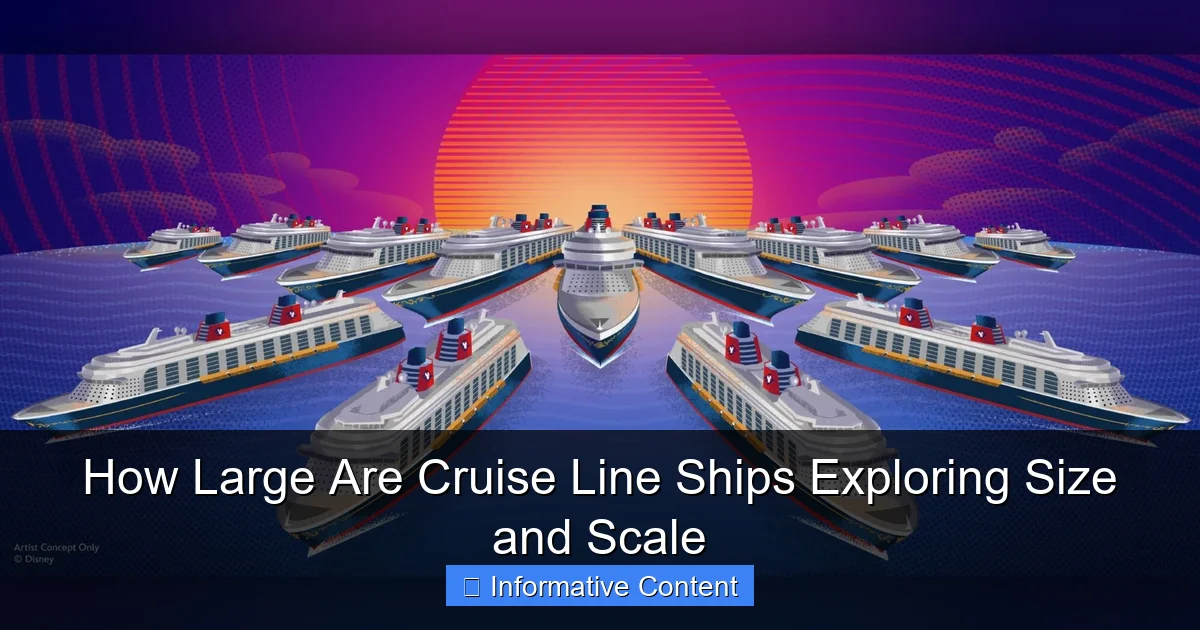
Featured image for how large are cruise line ships
Image source: media.wdwnt.com
The largest cruise ships today stretch over 1,200 feet—longer than four football fields—and can carry more than 6,000 passengers. These floating resorts boast incredible scale, featuring multiple pools, theaters, and even skydiving simulators, making them engineering marvels of modern travel. From compact 200-passenger yachts to behemoths like Royal Caribbean’s Icon-class, ship size directly impacts onboard amenities, itinerary flexibility, and overall passenger experience.
Key Takeaways
- Modern cruise ships exceed 1,000 feet in length, rivaling skyscrapers laid horizontally.
- Passenger capacity reaches 7,000+ on the largest vessels, like floating cities.
- Size impacts onboard amenities—larger ships offer more dining, entertainment, and activities.
- Newer ships prioritize space with wider decks and expanded cabin sizes for comfort.
- Size affects itineraries—massive ships may avoid smaller ports due to draft limits.
- Compare gross tonnage, not just length—it’s the best metric for true ship size.
📑 Table of Contents
- How Large Are Cruise Line Ships Exploring Size and Scale
- Understanding Cruise Ship Size: Key Metrics That Matter
- The Evolution of Cruise Ship Size: From Ocean Liners to Floating Resorts
- How Size Affects Your Cruise Experience
- Comparing the Giants: A Look at the World’s Largest Cruise Ships
- Choosing the Right Size for Your Cruise: Tips and Trade-Offs
- Conclusion: Size Isn’t Everything—But It Matters
How Large Are Cruise Line Ships Exploring Size and Scale
Imagine standing at the foot of a floating city, its towering decks rising like a skyline against the open ocean. That’s what you’re really looking at when you gaze up at a modern cruise ship. These massive vessels aren’t just transportation—they’re destinations in their own right, complete with restaurants, pools, theaters, and even parks. But just how large are cruise line ships, and what does that mean for your vacation?
When I first saw the Symphony of the Seas docked in Miami, I had to crane my neck just to see the top of the funnel. It felt like staring up at a 20-story building that somehow stayed afloat. And it’s not alone. Cruise ships today are engineering marvels, growing larger and more complex every year. But size isn’t just about bragging rights. It affects everything—from how crowded the pool feels to how smoothly the ship handles rough seas. Whether you’re a first-time cruiser or a seasoned traveler, understanding the scale of these giants can help you choose the right ship and set the right expectations.
Understanding Cruise Ship Size: Key Metrics That Matter
Length and Beam: Measuring the Basics
When people ask, “How large are cruise line ships?” they’re often picturing length. But two key dimensions define a ship’s footprint: length overall (LOA) and beam (width). Most modern cruise ships range from 800 to over 1,200 feet long—roughly the size of three to four football fields placed end to end. The beam can stretch from 100 to over 200 feet, especially on newer vessels with wider superstructures.
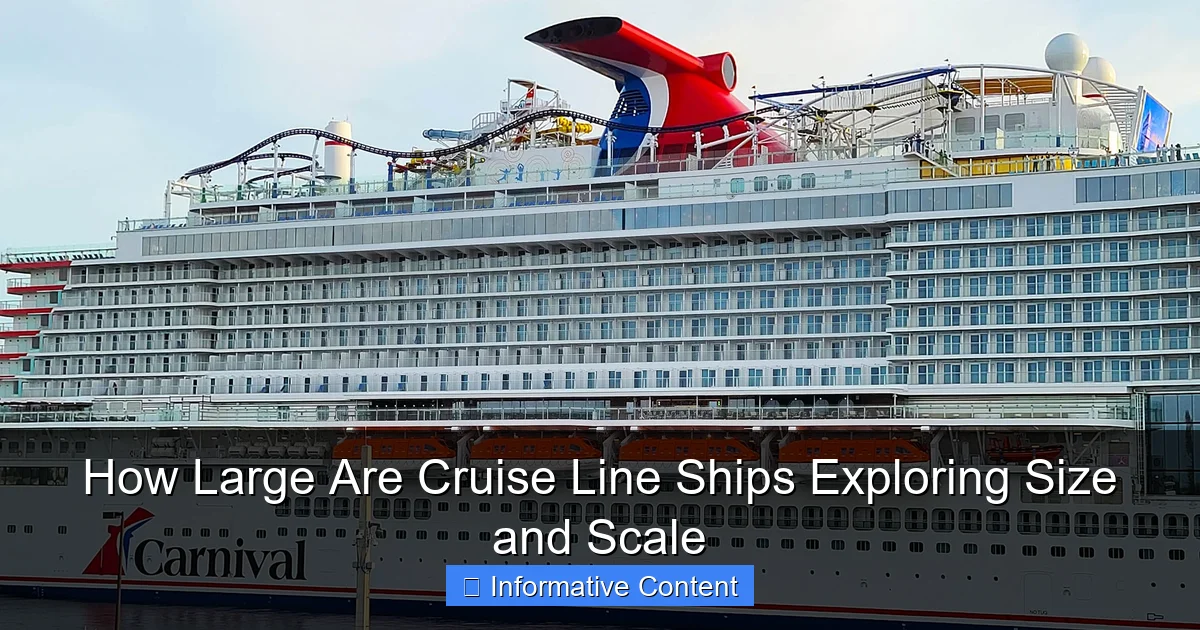
Visual guide about how large are cruise line ships
Image source: cruisefever.net
For example, Royal Caribbean’s Wonder of the Seas is 1,188 feet long and 215 feet wide. That’s longer than the Eiffel Tower is tall and wider than most city blocks. These dimensions aren’t arbitrary. A longer hull helps with stability and speed, while a wider beam increases deck space for amenities. But it also affects port access—some older harbors simply can’t accommodate ships this big.
Passenger Capacity and Density: More Than Just Numbers
Size isn’t just about physical dimensions. Passenger capacity is a critical factor. A ship’s double occupancy number (how many people it’s designed for) and maximum capacity (with extra beds or cots) can vary widely. A 2,000-passenger ship might feel intimate, while a 6,000-passenger vessel can feel like a small town at sea.
But here’s the catch: more passengers don’t always mean more space. Passenger space ratio (total interior space per passenger) is a better indicator of comfort. A high ratio (over 40) means more room to move; a low one (under 30) can mean crowded elevators and long lines. For instance, Norwegian Encore has a space ratio of 41, while some older ships fall below 30. If you hate crowds, this metric matters more than total size.
Gross Tonnage: The Industry Standard
If you’ve browsed cruise brochures, you’ve likely seen “gross tonnage” (GT). This isn’t weight—it’s a measure of internal volume, calculated by the total enclosed space in cubic meters. One ton equals 100 cubic feet. So a ship with 228,000 GT has about 6.5 million cubic feet of usable space.
Why does GT matter? It’s how the industry compares ships. A 100,000 GT ship is roughly half the size of a 200,000 GT one. But GT doesn’t tell the whole story. A ship with a high GT but low passenger capacity (like a luxury vessel) feels roomier than a high-capacity, low-GT ship. Always check GT alongside passenger numbers for a true sense of scale.
The Evolution of Cruise Ship Size: From Ocean Liners to Floating Resorts
Early Days: The Age of Ocean Liners
Before cruise ships, there were ocean liners—designed for speed and endurance, not leisure. The Queen Mary (1936) was 1,019 feet long and carried 2,139 passengers. It was massive for its time, but amenities were basic: dining rooms, a pool, and a few lounges. These ships prioritized function over comfort, with narrow hulls and limited deck space.
By the 1970s, the rise of air travel killed the liner era. Cruise lines shifted focus to vacationers, and ship design changed. The Song of Norway (1970), one of the first purpose-built cruise ships, was just 638 feet long but introduced features like multiple restaurants and entertainment venues. Size wasn’t the goal—fun was.
The 1990s–2000s: The Mega-Ship Revolution
The real size explosion began in the 1990s. Carnival’s Destiny (1996) was the first ship over 100,000 GT. Royal Caribbean’s Voyager of the Seas (1999) shattered records at 1,020 feet and 137,000 GT, introducing innovations like an ice rink and indoor promenade. Suddenly, size became a selling point.
By the 2000s, the “arms race” was in full swing. Freedom of the Seas (2006) added a water park and surfing simulator. Oasis of the Seas (2009) pushed boundaries with 225,282 GT and 5,400 passengers. These ships weren’t just big—they were complex, with neighborhoods, zip lines, and even Central Park-inspired gardens.
Today’s Giants: Pushing the Limits
Modern ships like Symphony of the Seas (228,081 GT) and MSC World Europa (215,863 GT) dwarf their predecessors. But bigger isn’t always better. Newer vessels focus on efficiency and sustainability. For example, MSC World Europa uses LNG (liquefied natural gas) to reduce emissions, while Icon of the Seas (2024) features advanced waste-to-energy systems.
The trend isn’t just about size—it’s about smart size. Cruise lines now balance scale with passenger experience. More space per person, quieter engines, and better crowd management are the new priorities.
How Size Affects Your Cruise Experience
Onboard Comfort: Crowds, Lines, and Space
Size directly impacts your day-to-day comfort. On a 6,000-passenger ship, you might wait 20 minutes for an elevator at peak times. Pool chairs vanish by 9 a.m., and specialty restaurants require reservations weeks in advance. But on a 2,000-passenger vessel, you’ll rarely feel crowded.
Pro tip: Book early. On large ships, securing dining times, excursions, and spa appointments as soon as you board can save frustration. If you hate crowds, consider mid-size ships (3,000–4,000 passengers)—they offer big-ship amenities without the chaos.
Stability and Motion: Bigger Isn’t Always Smoother
You might assume a larger ship handles rough seas better. Often, yes—but not always. A wider beam increases stability, but a very long ship can “pitch” (rock front-to-back) in heavy waves. Smaller ships, with lower centers of gravity, sometimes feel steadier.
For example, I once sailed on a 1,000-foot ship during a storm. The crew warned us of possible motion, but I barely felt a thing. On a 900-foot ship a few years later, I spent an afternoon in my cabin, queasy from the sway. Size matters, but design and ballast systems matter more. If you’re prone to seasickness, ask about the ship’s stabilizer technology before booking.
Port Access and Itinerary Flexibility
Not all ports can handle the biggest ships. Oasis-class vessels (225,000+ GT) can only dock in a few harbors worldwide, like Miami, Barcelona, and Cozumel. Smaller ships (under 100,000 GT) access remote destinations like the Norwegian fjords or the Amazon River.
If you’re dreaming of a unique itinerary (think: Antarctica or the Galápagos), size becomes a dealbreaker. Large ships stick to major ports; smaller ones offer adventure. Balance your desire for amenities with your destination goals.
Comparing the Giants: A Look at the World’s Largest Cruise Ships
The Top 5 Largest Ships by Gross Tonnage
Here’s a snapshot of today’s behemoths:
| Ship | GT | Length (ft) | Beam (ft) | Passenger Capacity | Key Features |
|---|---|---|---|---|---|
| Icon of the Seas (Royal Caribbean) | 248,663 | 1,198 | 213 | 7,600 | Water park, 8 neighborhoods, 40+ restaurants |
| Wonder of the Seas (Royal Caribbean) | 236,857 | 1,188 | 215 | 6,988 | Central Park, zip line, 19 pools |
| Symphony of the Seas (Royal Caribbean) | 228,081 | 1,184 | 215 | 6,687 | Aquatheater, ice rink, robotic bartenders |
| MSC World Europa (MSC Cruises) | 215,863 | 1,093 | 154 | 6,761 | LNG-powered, 13 dining options, 3D cinema |
| Harmony of the Seas (Royal Caribbean) | 226,963 | 1,187 | 215 | 6,687 | FlowRider surf simulator, 18 decks |
Note: Icon of the Seas (2024) is the largest ever built, but its passenger space ratio (32.7) is lower than smaller ships like Norwegian Encore (41). Size ≠ comfort.
Beyond the Numbers: Unique Design Elements
These ships aren’t just big—they’re designed to feel big. Royal Caribbean’s “neighborhoods” (like Central Park or Boardwalk) break up the space, making 6,000 passengers feel manageable. MSC’s World Europa uses a “spine” layout, with a central promenade connecting all decks.
Smaller ships, like Regent Seven Seas Explorer (55,000 GT), use high space ratios (44) to create a luxurious, uncrowded vibe. The takeaway? Don’t judge a ship by size alone. Look at layout, amenities, and passenger density.
Choosing the Right Size for Your Cruise: Tips and Trade-Offs
Large Ships (4,000+ Passengers): Pros and Cons
Pros:
- More amenities: Water parks, theaters, specialty dining, and kids’ clubs.
- Lower per-person costs (economies of scale).
- Entertainment options galore (shows, bars, activities).
Cons:
- Crowds and lines (elevators, pools, restaurants).
- Limited port access (can’t visit smaller harbors).
- Less personalized service (staff-to-guest ratio).
Best for: Families, first-time cruisers, and those who want endless activities.
Mid-Size Ships (2,000–4,000 Passengers): The Sweet Spot
Pros:
- Balance of amenities and space.
- Better crowd management (fewer lines).
- More itinerary flexibility.
Cons:
- Fewer “wow” features (no water parks or zip lines).
- Slightly higher prices than mega-ships.
Best for: Couples, multi-generational trips, and travelers who value comfort.
Small Ships (Under 2,000 Passengers): Luxury and Adventure
Pros:
- Intimate, uncrowded atmosphere.
- Access to remote destinations.
- Personalized service (staff know your name).
Cons:
- Limited dining and entertainment options.
- Higher prices (fewer economies of scale).
- Less stability in rough seas.
Best for: Honeymooners, luxury seekers, and adventure travelers.
Practical Tips for Choosing
- Read reviews: Look for mentions of crowds, noise, and service quality.
- Check the deck plan: See how space is distributed. Are pools clustered or spread out?
- Consider itinerary: Big ships = major ports; small ships = unique destinations.
- Think about your group: Families might love a mega-ship; couples might prefer a boutique vessel.
Conclusion: Size Isn’t Everything—But It Matters
So, how large are cruise line ships? The answer is: very, but that’s only part of the story. These floating cities range from 800-foot luxury yachts to 1,200-foot resorts, each designed for a different kind of traveler. Size affects everything—from how you experience the ship to where you can sail.
As someone who’s sailed on everything from a 2,000-passenger mid-size ship to a 6,000-passenger giant, I’ve learned that bigger isn’t always better. The right size depends on you: your tolerance for crowds, your destination goals, and what you want from your vacation. Whether you’re chasing adrenaline on a water slide or serenity in a quiet lounge, there’s a ship that fits your style.
Next time you’re browsing cruise options, look beyond the glossy photos. Check the GT, passenger capacity, and space ratio. Ask: How will this size make me feel on day three, when I’m tired and just want a quiet spot by the pool? The answers might surprise you—and lead you to the perfect ship for your next adventure.
Frequently Asked Questions
How large are cruise line ships compared to other vessels?
Cruise ships are among the largest passenger vessels ever built, often surpassing 1,000 feet in length—longer than three football fields. They dwarf most cargo ships and military vessels in both size and passenger capacity.
What is the average size of modern cruise line ships?
Most modern cruise ships range from 80,000 to over 200,000 gross tons, with lengths between 900 and 1,200 feet. Newer mega-ships, like Royal Caribbean’s Oasis-class, exceed 220,000 GT and carry over 6,000 passengers.
How do cruise ship sizes vary by class and cruise line?
Sizes vary widely: luxury lines (e.g., Regent Seven Seas) operate smaller, 50,000 GT ships, while mass-market lines (e.g., Carnival, MSC) build 150,000+ GT “mega-ships.” River cruise ships are much smaller, typically under 10,000 GT.
How large are cruise line ships in terms of passenger capacity?
Passenger capacity depends on size: small luxury ships host 500–1,000 guests, while the largest (e.g., Icon of the Seas) accommodate 7,600+ passengers. Double-occupancy ranges from 1,200 to over 5,000 guests.
Which cruise line has the biggest ships?
Royal Caribbean currently operates the world’s largest cruise ships, including the Oasis-class (225,282 GT) and the new 250,800 GT Icon of the Seas. These vessels feature neighborhoods, waterparks, and 18+ decks.
How do cruise ship dimensions impact the onboard experience?
Larger ships offer more amenities (multiple pools, theaters, and dining venues) but can feel crowded in hubs like elevators and pools. Smaller ships provide intimate, exclusive experiences but fewer entertainment options.