Featured image for how fast can a cruise liner travel
Image source: assets.kumu.io
The fastest cruise liners can reach speeds of up to 30 knots (35 mph or 56 km/h), with modern ships like Royal Caribbean’s *Icon of the Seas* and *Harmony of the Seas* pushing the limits of maritime engineering. While most cruise ships cruise comfortably between 20–24 knots, their top speeds are carefully balanced for fuel efficiency, passenger comfort, and itinerary timing—making speed a strategic choice, not just a technical feat.
Key Takeaways
- Top speeds reach 30+ knots: Modern cruise liners can exceed 30 knots under optimal conditions.
- Fuel efficiency matters most: Most ships cruise at 20–24 knots to balance speed and fuel costs.
- Size impacts speed: Larger ships often travel slower due to drag and stability requirements.
- Itineraries limit max speed: Scheduled stops prevent sustained high-speed travel for most voyages.
- Weather alters performance: Rough seas or currents may reduce speed for safety and comfort.
📑 Table of Contents
- How Fast Can a Cruise Liner Travel? Unveiling Top Speeds
- Understanding Cruise Liner Speed: What Determines It?
- Top Speeds of Modern Cruise Liners: The Fastest in the Fleet
- The Average Cruise Liner Speed: What to Expect on Your Voyage
- Historical Cruise Ships: How Speed Has Evolved Over Time
- How Speed Impacts Your Cruise Experience: Practical Insights
- Speed Comparison Table: Top Cruise Liners and Their Performance
- Conclusion: The Balance Between Speed and Experience
How Fast Can a Cruise Liner Travel? Unveiling Top Speeds
Have you ever stood on the deck of a massive cruise liner, watching the endless blue of the ocean stretch before you, and wondered: Just how fast are we moving? It’s a question that’s probably crossed the mind of every curious traveler at some point. After all, cruise ships are among the largest moving objects on Earth—floating cities with thousands of guests, pools, restaurants, and even mini-golf courses. Yet, despite their size, they glide across the sea with surprising grace. But here’s the thing: speed isn’t their top priority. Unlike fighter jets or race cars, cruise liners aren’t built to break records. They’re built for comfort, safety, and unforgettable experiences. Still, that doesn’t mean they can’t move quickly when needed.
So, how fast can a cruise liner travel? The answer might surprise you. While you won’t be breaking any land-speed records, modern cruise ships can reach speeds that would have been unimaginable just a few decades ago. In this guide, we’ll dive deep into the world of cruise ship speeds, explore what determines their pace, and uncover some of the fastest liners on the water. Whether you’re a first-time cruiser or a seasoned sailor, understanding the speed of these floating giants will give you a whole new appreciation for your next voyage.
Understanding Cruise Liner Speed: What Determines It?
Before we dive into top speeds, let’s take a moment to understand what actually determines how fast a cruise liner can travel. It’s not as simple as “bigger engine = faster ship.” There are several factors at play, each influencing the vessel’s performance in different ways.
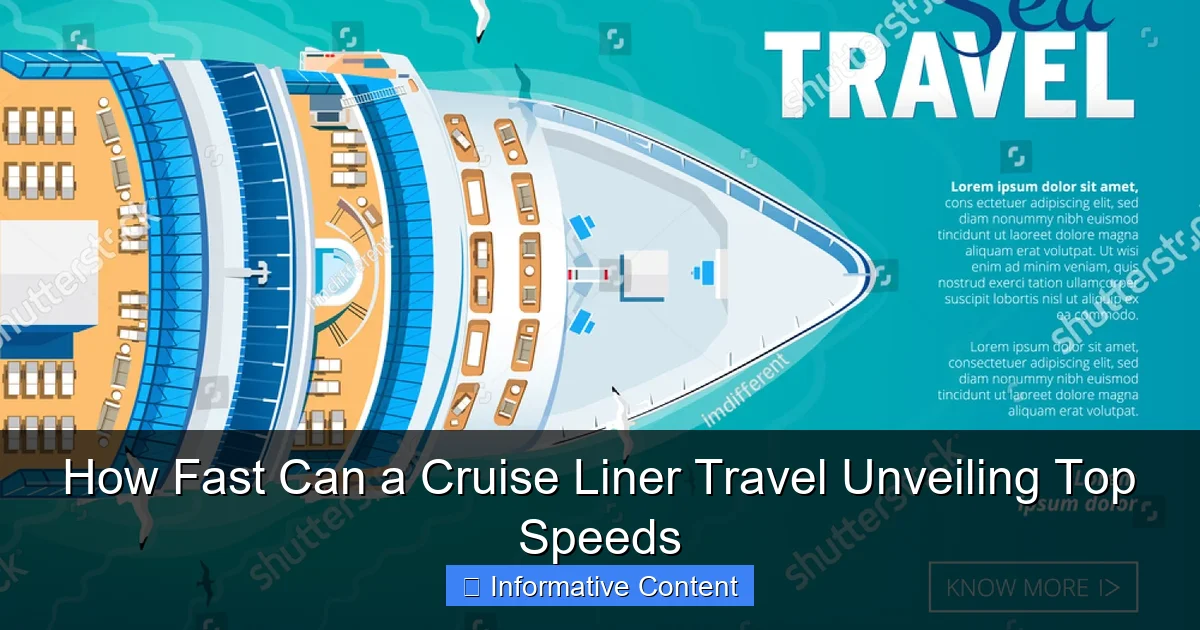
Visual guide about how fast can a cruise liner travel
Image source: image.shutterstock.com
Hull Design and Shape
The shape of a cruise ship’s hull is one of the most critical factors in its speed. Think of it like a race car’s aerodynamics—only in water. A sleek, streamlined hull cuts through the water with less resistance, allowing the ship to move faster with less fuel. Modern cruise liners are designed with a hydrodynamic hull that minimizes drag and maximizes efficiency. For example, Royal Caribbean’s Oasis-class ships use a bulbous bow—a protruding section at the front—that helps reduce wave resistance and improve fuel economy.
But here’s the catch: cruise ships aren’t built to slice through the water like speedboats. Their hulls are designed for stability and comfort, especially in rough seas. This means they’re wider and more rounded than high-speed vessels, which limits their top speed. It’s a trade-off: comfort over speed.
Engine Power and Propulsion Systems
Most modern cruise liners use diesel-electric propulsion systems, which combine diesel generators with electric motors to power the propellers. This setup offers flexibility and efficiency, allowing the ship to adjust its power output based on demand. The more powerful the engines, the faster the ship can go—but there’s a limit. Cruise ships don’t need to go full throttle all the time. In fact, doing so would waste fuel and increase wear and tear.
Some newer ships, like those in the Carnival Mardi Gras class, use liquefied natural gas (LNG) as fuel. LNG burns cleaner and is more efficient, which can improve speed and reduce emissions. However, LNG tanks take up space, which can slightly reduce the ship’s overall efficiency compared to traditional diesel.
Weather and Sea Conditions
Even the most powerful engines can’t overcome rough seas. High winds, heavy waves, and strong currents can slow a cruise liner down significantly. In fact, cruise lines often adjust their routes and speeds based on weather forecasts to ensure passenger comfort and safety. For example, a ship might reduce its speed by 10-15% in heavy swells to avoid excessive rocking.
Here’s a practical tip: if you’re on a cruise and notice the ship slowing down, check the weather. Chances are, it’s not a mechanical issue—it’s just the captain prioritizing your comfort over speed.
Top Speeds of Modern Cruise Liners: The Fastest in the Fleet
Now that we’ve covered the basics, let’s talk about the fun part: the actual speeds. How fast can a cruise liner travel in real-world conditions? The answer varies depending on the ship, but here are some of the fastest liners currently sailing the seas.
Royal Caribbean’s Oasis-Class: The Giants of Speed
The Oasis-class ships—like Symphony of the Seas and Harmony of the Seas—are among the largest and fastest cruise liners in the world. These behemoths can reach a top speed of 22-23 knots (25-26 mph) under optimal conditions. That might not sound like much compared to a car, but for a ship longer than three football fields, it’s impressive. To put it in perspective, 23 knots is about 26 mph—fast enough to outpace a cheetah in short bursts!
What’s even more impressive is that these ships maintain this speed while carrying over 6,000 passengers and 2,000 crew members. The secret? Their massive Wärtsilä diesel engines, which generate enough power to light up a small city.
Carnival Mardi Gras: The LNG-Powered Speedster
The Carnival Mardi Gras is a game-changer in the cruise industry, thanks to its LNG-powered engines. This ship can hit a top speed of 22.5 knots (25.9 mph), making it one of the fastest in Carnival’s fleet. LNG not only reduces emissions but also improves engine efficiency, allowing the ship to maintain high speeds for longer periods.
Fun fact: The Mardi Gras has a unique feature called the “Bolt” roller coaster, which is powered by the ship’s LNG engines. Talk about using speed to your advantage!
Norwegian Cruise Line’s Prima-Class: Speed Meets Luxury
Norwegian’s Prima and Viva ships are designed for speed and luxury. These liners can reach a top speed of 23 knots (26.5 mph), making them some of the fastest in the NCL fleet. They use advanced Azipod propulsion systems, which are electric-powered pods that rotate 360 degrees, allowing for better maneuverability and speed.
One thing to note: NCL’s Prima-class ships prioritize passenger experience over raw speed. You’ll still enjoy top speeds, but the focus is on smooth sailing and comfort rather than racing across the ocean.
The Average Cruise Liner Speed: What to Expect on Your Voyage
While top speeds are exciting, most cruise liners don’t spend their time at maximum throttle. In fact, the average speed of a cruise ship during a voyage is much lower—usually around 18-20 knots (20-23 mph). Why the difference? Let’s break it down.
Fuel Efficiency and Cost
Speed and fuel consumption are directly related. The faster a ship goes, the more fuel it burns. For cruise lines, fuel is one of the biggest expenses—often accounting for 20-30% of operating costs. To save money, ships typically cruise at economic speeds, which are slower than their top speeds but much more fuel-efficient.
For example, a ship traveling at 20 knots might burn 30% less fuel than one going at 22 knots. Over a week-long voyage, that’s a massive saving. So, while the ship can go faster, it usually doesn’t—unless there’s a compelling reason.
Itinerary and Schedule
Cruise itineraries are carefully planned to maximize port time and minimize sailing time. Most ships spend 2-3 days at sea between ports, with the rest of the trip dedicated to docking and excursions. This means they don’t need to rush—they just need to get there on time.
Practical tip: If your cruise has a tight schedule—say, a quick hop from Miami to Nassau—you might notice the ship going a bit faster. But for longer transatlantic crossings, expect a more leisurely pace.
Passenger Comfort
Let’s be honest: no one wants to spend their vacation bouncing around in rough seas. Cruise lines prioritize passenger comfort, which means avoiding high speeds in choppy conditions. Even if the ship could go faster, it might slow down to keep the motion smooth and the drinks from spilling.
Historical Cruise Ships: How Speed Has Evolved Over Time
Cruise ships have come a long way since the early days of ocean liners. Back then, speed was a major selling point—especially for transatlantic voyages. Let’s take a trip down memory lane to see how cruise liner speed has evolved.
The Golden Age of Ocean Liners (1900-1950s)
In the early 20th century, ocean liners competed for the Blue Riband, an unofficial award for the fastest transatlantic crossing. Ships like the SS Normandie (29.9 knots) and Queen Mary (32.8 knots) set records that still stand today. These ships were designed for speed, with sleek hulls and powerful steam turbines.
But here’s the catch: they weren’t built for comfort. Passengers often endured rough seas, cramped cabins, and limited amenities. It was all about getting there fast—not enjoying the journey.
The Rise of the Modern Cruise Liner (1960s-1990s)
As air travel became more popular, ocean liners shifted their focus from speed to comfort. The SS France (27 knots) and SS Norway (25 knots) were still fast, but they prioritized luxury over records. This era saw the birth of the modern cruise ship—larger, more stable, and designed for leisure.
Fun fact: The Norway was so popular that it was retrofitted with a larger pool and more restaurants to keep passengers happy—even if it meant going a little slower.
The Modern Era (2000s-Present)
Today’s cruise liners are faster than ever, but they’re also bigger and more comfortable. The Oasis-class ships, for example, can hit 23 knots while carrying twice as many passengers as the Queen Mary. It’s a testament to how far technology has come.
One thing hasn’t changed, though: speed is still a balance. Modern ships are fast, but they’re not racing. They’re built for unforgettable experiences—not breaking records.
How Speed Impacts Your Cruise Experience: Practical Insights
So, how does a cruise liner’s speed actually affect your vacation? The answer might surprise you. Speed isn’t just about how fast you get there—it’s about the entire journey.
Onboard Activities and Entertainment
When a ship is moving at high speeds, it can feel more stable, which means fewer seasick passengers. This allows cruise lines to offer more outdoor activities—like pool parties, deck games, and even roller coasters—without worrying about rough seas.
But here’s a downside: high speeds can also create more wind on deck, making it harder to relax with a book or enjoy a cocktail. Some ships use windbreaks or retractable roofs to solve this, but it’s something to keep in mind.
Port Time and Excursions
Faster ships can spend more time in port, which means more time for excursions and sightseeing. For example, a ship that sails at 22 knots might arrive at a destination 6 hours earlier than one going at 18 knots. That’s half a day you can spend exploring instead of at sea.
Practical tip: If you’re booking a cruise with lots of port stops, look for ships with higher average speeds. You’ll get more time to enjoy the places you visit.
Transatlantic and Repositioning Cruises
For long-distance voyages—like transatlantic crossings—speed becomes even more important. A faster ship can reduce the number of days at sea, making the trip more appealing. For example, a 23-knot ship might cross the Atlantic in 6 days, while a 18-knot ship takes 8.
But remember: these voyages are often about the journey, not the destination. Many passengers enjoy the days at sea for relaxation and onboard activities. So, faster isn’t always better—it depends on your priorities.
Speed Comparison Table: Top Cruise Liners and Their Performance
| Ship Name | Top Speed (Knots) | Top Speed (MPH) | Engine Type | Notable Features |
|---|---|---|---|---|
| Harmony of the Seas | 23 | 26.5 | Diesel-Electric | Largest cruise ship in the world |
| Carnival Mardi Gras | 22.5 | 25.9 | LNG | First LNG-powered cruise ship in North America |
| Norwegian Prima | 23 | 26.5 | Azipod | 360-degree propulsion system |
| Queen Mary 2 | 30 | 34.5 | Diesel-Electric | Fastest transatlantic liner |
| Disney Wish | 22 | 25.3 | Diesel-Electric | Luxury family-focused design |
Conclusion: The Balance Between Speed and Experience
So, how fast can a cruise liner travel? The answer is: fast enough to keep you moving, but not so fast that it ruins the experience. Modern cruise ships can hit speeds of 22-23 knots (25-26 mph), with some—like the Queen Mary 2—reaching an impressive 30 knots (34.5 mph) for transatlantic crossings. But for most voyages, the average speed is around 18-20 knots (20-23 mph), chosen for fuel efficiency, comfort, and itinerary planning.
At the end of the day, speed is just one part of the cruise experience. What matters most is the journey—the stunning sunsets, the delicious meals, the unforgettable excursions, and the time spent with loved ones. Whether your ship is gliding at a leisurely pace or powering through the waves, the goal is the same: to create memories that last a lifetime. So, the next time you’re on a cruise, take a moment to appreciate the engineering marvel beneath your feet. And who knows? You might just catch a glimpse of that top speed—and a whole new perspective on the open sea.
Frequently Asked Questions
How fast can a cruise liner travel on average?
Most modern cruise liners travel at an average speed of 20 to 24 knots (23–27 mph or 37–44 km/h) to balance fuel efficiency and passenger comfort. While capable of higher speeds, cruise lines often prioritize smooth sailing over racing between ports.
What’s the top speed of a cruise liner?
The fastest cruise liners, like the *Queen Mary 2*, can reach top speeds of 30 knots (35 mph or 56 km/h). These speeds are typically reserved for repositioning voyages or emergencies, as fuel costs rise significantly at higher velocities.
Why don’t cruise ships travel faster to save time?
Cruise liners avoid top speeds due to high fuel consumption and wear on engines, which increase operational costs. Additionally, faster speeds can reduce passenger comfort by causing more turbulence and vibrations.
How fast can a cruise liner travel compared to a cargo ship?
Cruise liners are faster than most cargo ships, which typically sail at 16–20 knots (18–23 mph). While cargo vessels prioritize fuel efficiency, cruise ships maintain higher speeds to adhere to tight itineraries and passenger expectations.
Do cruise ships ever run at full speed during a trip?
Rarely. Even on transatlantic voyages, ships like the *Queen Mary 2* rarely sustain top speeds except in emergencies or to meet schedule adjustments. Most trips use “economical speed” to optimize fuel and comfort.
How does a cruise liner’s speed affect vacation time?
Slower speeds allow for smoother seas and better fuel efficiency, but they extend travel time between ports. For example, a 3,000-nautical-mile journey at 22 knots takes about 6 days, while 30 knots would cut it to 5 days—but with higher costs.