Featured image for how do cruise lines handle hurricanes
Image source: i.ytimg.com
Cruise lines prioritize passenger safety by rerouting ships, monitoring storms 24/7, and collaborating with meteorologists to avoid hurricanes. They proactively cancel or delay sailings, offer refunds or credits, and adjust itineraries to keep travelers out of harm’s way. Advanced technology and flexible policies ensure minimal disruption while maintaining safety as the top priority.
Key Takeaways
- Cruise lines monitor storms 24/7 using advanced weather tracking systems for proactive decisions.
- Routes are adjusted swiftly to avoid hurricanes, prioritizing passenger safety above all.
- Communication is transparent with regular updates via apps, emails, and onboard announcements.
- Refunds or credits offered if itineraries change due to severe weather disruptions.
- Crew training is rigorous to handle emergencies, ensuring calm and efficient evacuations if needed.
- Ships are hurricane-ready with reinforced structures and backup systems for safety.
📑 Table of Contents
- How Do Cruise Lines Handle Hurricanes: Expert Insights Revealed
- Understanding the Hurricane Season and Cruise Itineraries
- Advanced Meteorological Monitoring and Decision-Making
- Onboard Safety Protocols and Passenger Communication
- Port Cancellations, Rerouting, and Financial Considerations
- Post-Storm Recovery and Industry-Wide Collaboration
- Data Table: Cruise Line Hurricane Response Summary (2020–2023)
- Conclusion: Safety First, Always
How Do Cruise Lines Handle Hurricanes: Expert Insights Revealed
When the first whispers of a tropical disturbance ripple across the Atlantic or Caribbean, cruise travelers often find themselves asking: How do cruise lines handle hurricanes? For millions of vacationers, the idea of being at sea during a hurricane is a terrifying prospect. Yet, cruise lines operate with sophisticated systems, decades of experience, and a relentless focus on safety to navigate these natural phenomena. From rerouting entire fleets to communicating transparently with guests, the cruise industry has developed a multi-layered approach to storm preparedness that prioritizes human life above all else.
Hurricanes are not just seasonal inconveniences—they are powerful forces of nature capable of disrupting entire regions. But unlike land-based hotels or resorts, cruise ships possess a unique advantage: mobility. This mobility, combined with advanced meteorological technology, real-time decision-making, and rigorous emergency protocols, allows cruise lines to stay one step ahead of storms. In this comprehensive guide, we’ll peel back the curtain on the behind-the-scenes operations, safety measures, and guest communication strategies that define how modern cruise lines respond to hurricanes. Whether you’re a first-time cruiser or a seasoned traveler, understanding these processes can help you make informed decisions and travel with greater confidence during hurricane season.
Understanding the Hurricane Season and Cruise Itineraries
When Is Hurricane Season?
Hurricane season in the Atlantic Basin—which includes the Caribbean, Gulf of Mexico, and the southeastern U.S.—officially runs from June 1 to November 30, with peak activity typically occurring between mid-August and late October. According to the National Oceanic and Atmospheric Administration (NOAA), this period accounts for over 95% of all major hurricanes in the region. During these months, cruise lines must remain vigilant, constantly monitoring weather patterns and adjusting itineraries as needed.
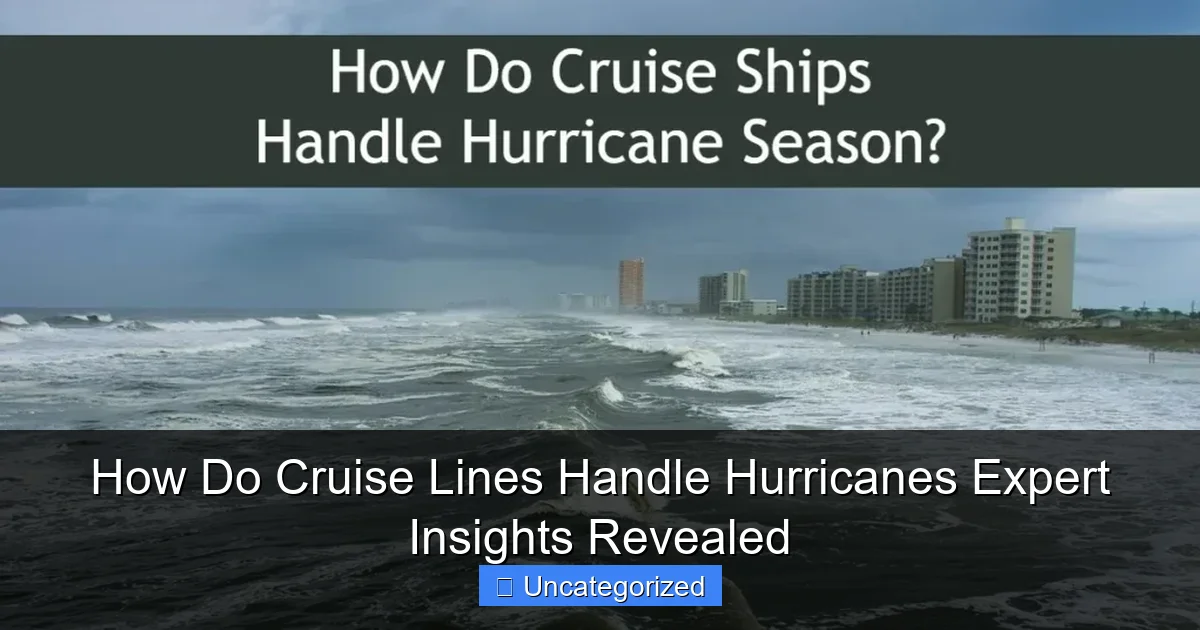
Visual guide about how do cruise lines handle hurricanes
Image source: maritimepage.com
While hurricanes can form outside this window, the risk increases dramatically during the peak months. Cruise lines plan their schedules with this in mind, often avoiding certain high-risk areas during the height of the season. For example, Eastern and Western Caribbean itineraries are more common in early summer and late fall, while Southern Caribbean cruises—which are farther from the typical storm paths—are often promoted during peak season to offer a safer alternative.
How Cruise Lines Design Hurricane-Resilient Itineraries
Cruise lines don’t just react to hurricanes—they anticipate them. When designing itineraries, they use historical storm data, ocean current patterns, and seasonal forecasts to minimize exposure to high-risk zones. For instance:
- Eastern Caribbean cruises (e.g., St. Maarten, St. Thomas) are more vulnerable to hurricanes, so lines may reduce departures during peak season.
- Southern Caribbean itineraries (e.g., Aruba, Bonaire, Curacao) are often marketed as “hurricane-safe” due to their location outside the main development region (MDR) for Atlantic storms.
- Alaskan and European cruises are generally unaffected by Atlantic hurricanes, making them popular alternatives during summer and fall.
Additionally, cruise lines often build flexibility into their schedules. For example, a 7-day Eastern Caribbean cruise might be advertised with “ports subject to change,” allowing the captain and operations team to substitute destinations if a storm approaches. This proactive planning is a cornerstone of how cruise lines handle hurricanes—anticipation, not reaction.
Real-World Example: Carnival Cruise Line’s 2022 Adjustments
In September 2022, Hurricane Fiona intensified rapidly near the Leeward Islands. Carnival Cruise Line, which had multiple ships scheduled to visit St. Thomas and San Juan, rerouted three vessels to St. Croix and Grand Turk instead. The changes were announced 48 hours in advance, and passengers were offered onboard credits and future cruise discounts for the inconvenience. This exemplifies how cruise lines use flexible routing to maintain safety while minimizing disruption.
Advanced Meteorological Monitoring and Decision-Making
Access to Real-Time Weather Data
Modern cruise lines don’t rely on public weather reports. Instead, they subscribe to private meteorological services that provide hyper-local, high-resolution data. Companies like Weather Routing Inc., StormGeo, and AccuWeather for Maritime deliver real-time satellite imagery, ocean current models, wind speed forecasts, and storm track projections directly to the bridge and operations centers.
These services use advanced algorithms and AI to predict a storm’s path, intensity, and potential impact on specific coordinates. For example, a cruise ship 300 miles from a developing tropical storm might receive a 72-hour forecast showing a 40% chance of direct impact. The data is updated every 15–30 minutes, allowing for rapid recalculations as conditions evolve.
The Role of the Bridge Team and Onboard Meteorologists
Every cruise ship has a bridge team led by the captain, who holds ultimate authority during emergencies. This team includes officers trained in meteorology, navigation, and emergency response. On larger ships, especially those in premium or luxury lines, an onboard meteorologist or weather officer may be stationed to interpret data and advise the captain.
The decision-making process follows a strict protocol:
- Stage 1: Monitoring – The team tracks all tropical systems within 1,000 miles of the ship’s planned route.
- Stage 2: Risk Assessment – If a storm enters the “watch zone,” the team evaluates wind speeds, wave height, and potential deviation options.
- Stage 3: Rerouting – The captain, in consultation with the cruise line’s shoreside operations team, decides whether to alter course, delay departure, or cancel a port call.
- Stage 4: Execution – The new route is plotted, and all departments (dining, entertainment, medical) are informed of schedule changes.
Case Study: Royal Caribbean’s Response to Hurricane Ian (2022)
When Hurricane Ian made landfall in Florida in September 2022, Royal Caribbean International had multiple ships docked in Miami and Fort Lauderdale. The company activated its Emergency Operations Center (EOC) in Miami, which coordinated with the National Hurricane Center, port authorities, and local emergency services. Ships were repositioned to safer anchorages or rerouted to the Bahamas or Gulf of Mexico. The Symphony of the Seas, one of the world’s largest cruise ships, was moved 150 miles offshore to avoid storm surge and high winds. This large-scale coordination highlights how cruise lines handle hurricanes through centralized command and real-time data integration.
Onboard Safety Protocols and Passenger Communication
Pre-Storm Preparations on the Ship
When a hurricane threat is identified, cruise lines initiate a series of pre-storm safety measures to protect passengers and crew:
- Securing loose items – Deck furniture, umbrellas, and recreational equipment are stowed or locked down.
- Reinforcing doors and hatches – Watertight doors are closed, and emergency seals are checked.
- Fuel and water reserves – Extra supplies are stocked in case of extended at-sea operations.
- Medical readiness – The ship’s infirmary prepares emergency kits and coordinates with telemedicine services.
Passengers may also be asked to secure cabin items, avoid balcony use, and attend safety briefings. On some ships, crew members conduct cabin checks to ensure compliance with safety protocols.
Transparent and Timely Communication
One of the most critical aspects of how cruise lines handle hurricanes is communication. Passengers need clear, consistent updates to reduce anxiety and make informed decisions. Cruise lines use multiple channels:
- In-cabin TV announcements – Regular updates are broadcast with storm status, itinerary changes, and safety instructions.
- Email and text alerts – Pre-registered guests receive real-time notifications via the cruise line’s app or website.
- Daily briefings – The cruise director or captain hosts live Q&A sessions to address concerns.
- Dedicated web pages – Lines like Norwegian Cruise Line and Carnival maintain hurricane-specific microsites with FAQs, itinerary trackers, and contact information.
For example, during Hurricane Dorian in 2019, Norwegian Cruise Line launched a “Storm Watch” page that updated every hour with storm coordinates, ship positions, and revised port calls. This level of transparency helped maintain passenger trust and reduced onboard panic.
Passenger Safety Drills and Evacuation Plans
All cruise ships are required by the International Convention for the Safety of Life at Sea (SOLAS) to conduct regular emergency drills, including hurricane preparedness. Passengers are briefed on:
- Location of life jackets and muster stations
- Procedures for “shelter in place” during high winds
- How to access emergency supplies (water, food, medical kits)
- Communication protocols with family ashore
In extreme cases, such as a direct hit from a Category 4 or 5 hurricane, cruise lines may initiate partial or full evacuation plans, though this is rare. More commonly, ships “ride out” the storm at sea, where they are safer than in port due to the ability to maneuver away from the storm’s strongest winds and waves.
Port Cancellations, Rerouting, and Financial Considerations
When and Why Ports Are Canceled
Port cancellations are one of the most visible consequences of hurricane threats. A cruise line may cancel a port visit if:
- The port is within 100 miles of the storm’s projected path
- Local authorities issue evacuation orders
- Shore excursions are unsafe or unavailable
- Ship docking is impossible due to high waves or storm surge
For example, during Hurricane Maria in 2017, San Juan, Puerto Rico, was closed for weeks. Cruise lines rerouted ships to alternative ports like St. Kitts, Antigua, or even extended sea days. While disappointing, these decisions are made solely for safety.
Substitute Ports and “Sea Days”
When a port is canceled, cruise lines typically:
- Substitute a nearby safe port – For instance, a canceled St. Thomas visit might be replaced with St. Croix.
- Add a “sea day” – The ship remains at sea, offering onboard activities, extended dining, and entertainment.
- Offer compensation – This may include onboard credits, refunds for pre-paid excursions, or future cruise discounts.
Royal Caribbean, for instance, offers a “Port Adventure Guarantee” on select sailings, promising a refund or credit if a port is canceled due to weather.
Financial Protections for Passengers
Understanding how cruise lines handle hurricanes also involves financial preparedness. Here’s what passengers should know:
- Travel insurance – Policies that cover “trip interruption” or “cancel for any reason” can reimburse non-refundable expenses.
- Cruise line policies – Most lines offer refunds or credits for missed ports, but rules vary. Always check the Terms & Conditions before booking.
- Third-party booking sites – If you book through Expedia or Costco, their policies may differ from the cruise line’s.
Pro Tip: Book cruises with flexible cancellation policies during hurricane season. Lines like Viking Ocean Cruises and Princess Cruises offer “Peace of Mind” policies allowing free cancellations up to 24–48 hours before departure.
Post-Storm Recovery and Industry-Wide Collaboration
Rebuilding and Reopening Damaged Ports
Hurricanes don’t just affect ships—they devastate entire islands. After a major storm, cruise lines work with local governments and NGOs to support recovery efforts. For example:
- Donating supplies – Carnival Corporation has delivered generators, water, and medical aid to St. Thomas and Dominica after hurricanes.
- Funding infrastructure – Norwegian Cruise Line contributed $1 million to rebuild St. Maarten’s port after Hurricane Irma.
- Resuming operations gradually – Ships return only after ports are declared safe and excursions are available.
This collaboration is essential for restoring tourism, which is often the backbone of Caribbean economies.
Industry Collaboration and Best Practices
Cruise lines don’t operate in isolation. They participate in industry-wide forums like the Cruise Lines International Association (CLIA), which shares best practices for hurricane response. These include:
- Standardized communication protocols
- Joint emergency drills with port authorities
- Shared meteorological data networks
- Mutual aid agreements for ship repositioning
For instance, during Hurricane Irma, multiple cruise lines coordinated to evacuate thousands of tourists from St. Maarten within 48 hours using shared airlift resources.
Lessons Learned and Future Preparedness
Each hurricane season provides new lessons. In recent years, cruise lines have invested in:
- AI-powered route optimization – Predictive modeling to find the safest paths.
- Enhanced onboard medical facilities – To handle emergencies at sea.
- Climate-resilient infrastructure – New ships are built to withstand higher waves and winds.
The industry is also exploring alternative fuel sources and shore power connections to reduce environmental impact during extended at-sea operations.
Data Table: Cruise Line Hurricane Response Summary (2020–2023)
| Cruise Line | Storms Responded To (2020–2023) | Avg. Reroute Time (Hours) | Compensation Offered | Notable Innovation |
|---|---|---|---|---|
| Royal Caribbean | 12 | 48 | Onboard credits, future cruise discounts | AI-powered route optimization |
| Carnival Cruise Line | 14 | 36 | Refunds for excursions, free Wi-Fi | Storm Watch microsite |
| Norwegian Cruise Line | 9 | 52 | Port Adventure Guarantee | Onboard meteorologist on select ships |
| Princess Cruises | 7 | 60 | Full refunds for canceled ports | Peace of Mind cancellation policy |
| MSC Cruises | 6 | 42 | Onboard credits, excursion refunds | Real-time app notifications |
Conclusion: Safety First, Always
Understanding how cruise lines handle hurricanes reveals a complex, well-oiled machine designed to protect lives, maintain service, and minimize disruption. From advanced meteorological monitoring and flexible itineraries to transparent communication and post-storm recovery, the industry has evolved into a model of proactive crisis management. While no system is perfect, the cruise sector’s commitment to safety is evident in its protocols, investments, and collaboration.
For travelers, the takeaway is clear: hurricanes are manageable risks, not reasons to avoid cruising. By choosing flexible itineraries, purchasing travel insurance, and staying informed, you can enjoy a safe and memorable vacation—even during hurricane season. The next time a storm appears on the horizon, remember: cruise lines don’t just react—they prepare, adapt, and lead with safety at the helm.
Frequently Asked Questions
How do cruise lines handle hurricanes and keep passengers safe?
Cruise lines monitor weather patterns 24/7 using advanced tracking systems and adjust itineraries proactively to avoid hurricanes. Safety protocols include rerouting ships, securing loose items onboard, and coordinating with meteorologists to ensure passenger safety.
Can a cruise line cancel my trip due to a hurricane?
Yes, cruise lines may cancel or modify trips if hurricanes threaten the planned route. In such cases, passengers are typically offered refunds, future cruise credits, or alternative itineraries to minimize inconvenience.
How do cruise lines handle hurricanes when a ship is already at sea?
If a hurricane emerges during a voyage, the captain and crew will reroute the ship to avoid the storm’s path. Passengers are informed via announcements, and onboard activities are adjusted to prioritize safety and comfort.
What happens if my cruise port is affected by a hurricane?
When a port is impacted, cruise lines often substitute it with another destination or add sea days. They coordinate with port authorities to ensure docking safety and communicate changes to passengers promptly.
Do cruise lines offer compensation for hurricane-related disruptions?
Many cruise lines provide compensation like refunds, onboard credits, or discounts on future cruises for significant hurricane-related delays or itinerary changes. Policies vary, so check your line’s terms before booking.
How do cruise lines prepare ships for hurricane season?
During hurricane season, cruise lines reinforce crew training, stock emergency supplies, and ensure ships are mechanically sound. They also maintain flexible itineraries to quickly adapt to changing weather conditions.