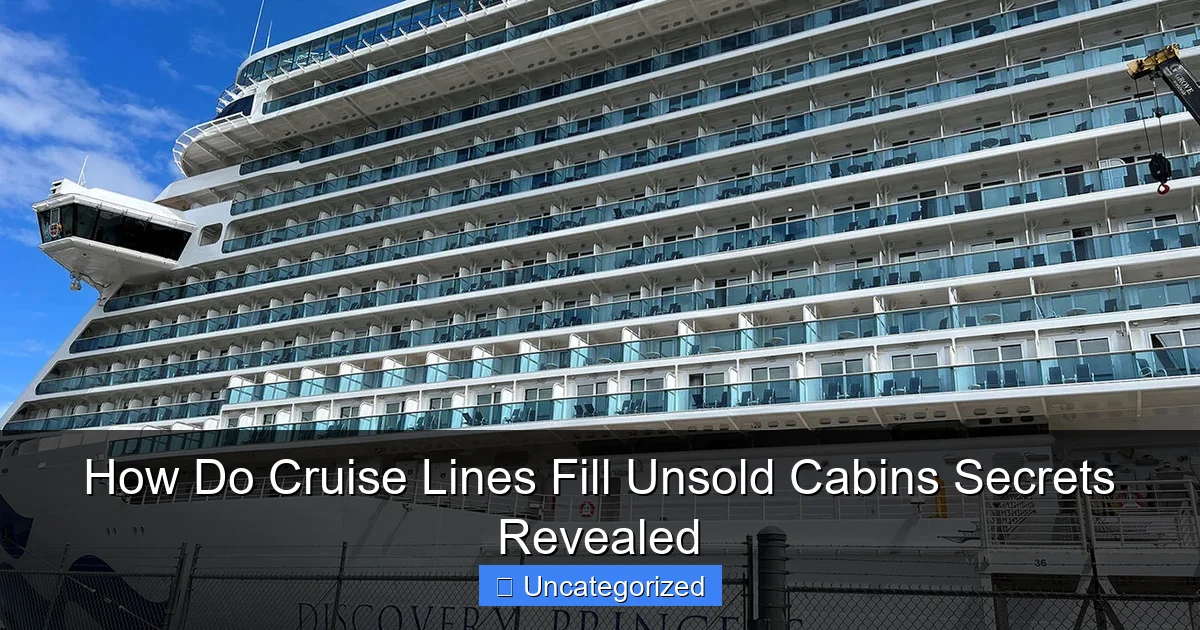
Featured image for how do cruise lines fill unsold cabins
Image source: touristsecrets.com
Cruise lines fill unsold cabins by slashing prices at the last minute through exclusive deals, travel agents, and flash sales. They also offer free upgrades, onboard credits, or perks to entice bookings while avoiding public discounts that could devalue their brand. Dynamic pricing algorithms and partnerships with third-party sites help them target bargain hunters without cannibalizing full-fare sales.
Key Takeaways
- Dynamic pricing slashes rates as departure nears to attract last-minute bookings.
- Upgrades over discounts maintain value while filling empty cabins discreetly.
- Partner promotions bundle cabins with flights or hotels to boost sales.
- Loyalty perks entice repeat cruisers with exclusive deals and freebies.
- Travel agent incentives offer commissions to push unsold inventory fast.
- Off-peak repositioning fills cabins during low-demand sailings with creative itineraries.
📑 Table of Contents
- The Hidden World of Cruise Cabin Sales: Unlocking the Secrets
- Dynamic Pricing and Revenue Management: The Algorithmic Backbone
- Last-Minute Deals and Flash Sales: The Urgency Game
- Partnerships and Third-Party Distribution: Expanding the Reach
- Mystery Cruises and “No-Port” Voyages: The Creative Solution
- Loyalty Programs and Repeat Guest Incentives: The Retention Engine
- Data Table: Cruise Line Strategies at a Glance
- Conclusion: The Art and Science of Filling Every Cabin
The Hidden World of Cruise Cabin Sales: Unlocking the Secrets
Imagine a cruise ship setting sail with hundreds of empty staterooms—a scenario that would send chills down the spine of any cruise line executive. In an industry where profit margins are razor-thin and operational costs are astronomical, leaving cabins unsold is not just a missed opportunity; it’s a financial disaster. Cruise ships operate on a model where time is money, and every unsold cabin represents lost revenue that can’t be recouped once the ship leaves port. This reality has driven cruise lines to develop an arsenal of sophisticated strategies to fill every available berth, from last-minute deals to exclusive partnerships. Whether you’re a budget-savvy traveler looking for a steal or simply curious about the business mechanics behind your next vacation, understanding how cruise lines fill unsold cabins reveals a fascinating interplay of pricing psychology, digital marketing, and strategic partnerships.
The stakes are high: a single 3,000-passenger cruise ship with 10% unsold cabins can lose over $2 million on a single voyage. To combat this, cruise lines have evolved from static pricing models to dynamic revenue management systems that adjust prices in real time based on demand, booking pace, and competitor activity. These systems, combined with aggressive marketing tactics and creative partnerships, ensure that even the most stubbornly empty cabins find occupants. In this deep dive, we’ll peel back the curtain on the secret strategies cruise lines use to avoid sailing with empty beds, from early-bird discounts to last-minute flash sales. You’ll discover how timing, technology, and targeted promotions converge to fill every cabin—and how you can leverage these tactics to score an unforgettable cruise at an unbeatable price.
Dynamic Pricing and Revenue Management: The Algorithmic Backbone
At the heart of every cruise line’s battle against unsold inventory lies a sophisticated revenue management system (RMS)—a blend of algorithms, historical data, and predictive analytics that adjusts prices in real time. Unlike fixed pricing models, dynamic pricing allows cruise lines to respond to market fluctuations, competitor pricing, and booking patterns with surgical precision. This system doesn’t just lower prices; it strategically manipulates them across different cabin categories, booking windows, and customer segments to maximize revenue while minimizing empty cabins.
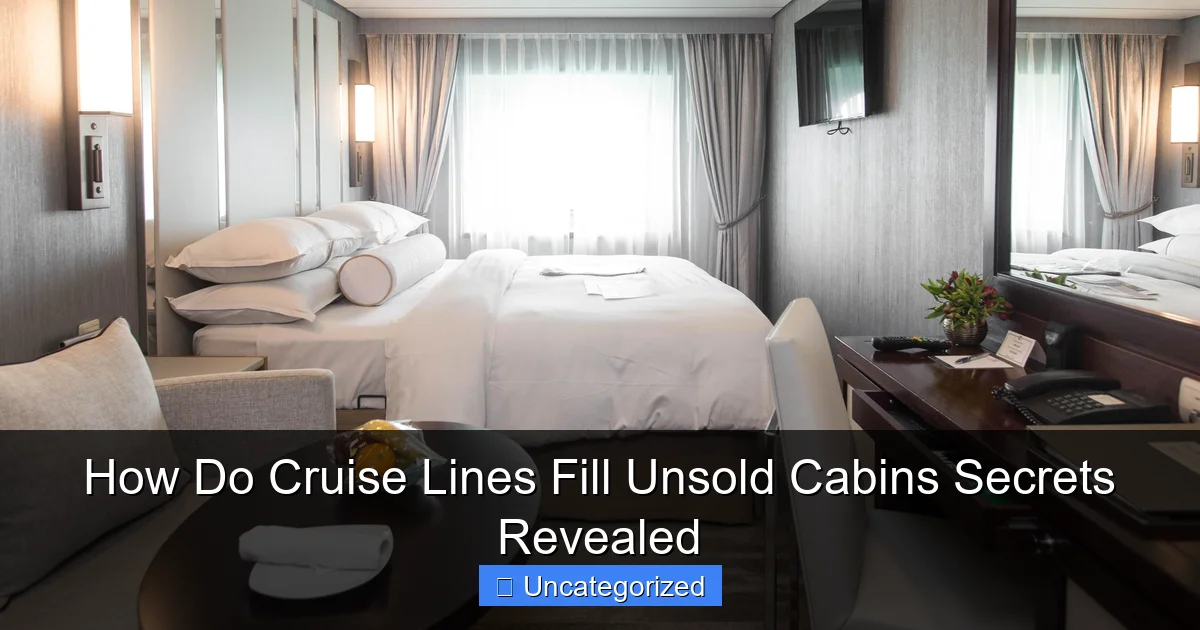
Visual guide about how do cruise lines fill unsold cabins
Image source: s3.amazonaws.com
How Dynamic Pricing Works: The Science Behind the Strategy
Dynamic pricing in the cruise industry operates on several key principles:
- Demand Forecasting: RMS analyzes historical booking data, seasonal trends, and macroeconomic factors to predict demand for specific sailings. For example, Caribbean cruises in December see higher demand due to holiday travel, prompting earlier price increases.
- Price Elasticity Modeling: The system identifies which cabin categories and customer segments are most price-sensitive. Interior cabins often have higher elasticity, meaning small price drops can trigger bookings, while suites are less sensitive.
- Competitor Monitoring: Real-time tracking of rival cruise lines’ pricing allows adjustments to stay competitive without triggering price wars. Royal Caribbean, for instance, might lower balcony cabin prices if Carnival offers a similar itinerary at a discount.
- Booking Pace Optimization: If a sailing is booking slower than anticipated, the RMS triggers targeted discounts. Conversely, high-demand sailings may see price hikes to capitalize on urgency.
For example, Norwegian Cruise Line (NCL) uses its “Freestyle Choice” algorithm to offer personalized discounts to past guests based on their booking history and preferences. A family that previously booked a midship balcony might receive a targeted email with a 20% discount on a similar cabin for an upcoming sailing, increasing the likelihood of conversion.
Real-World Impact: Case Study of a Last-Minute Price Drop
Consider a 7-day Alaska cruise on Princess Cruises with 300 unsold cabins 60 days before departure. The RMS detects slower-than-expected booking pace and triggers a strategic price reduction:
- Interior cabins drop from $899 to $699 (22% decrease).
- Balcony cabins receive a “free upgrade” offer to a mini-suite at the original balcony price.
- Last-minute bookers get a $100 onboard credit, sweetening the deal.
Result: Within 10 days, 250 cabins sell, and the remaining 50 are bundled into a “mystery cruise” promotion (see Section 3). This approach balances revenue loss with occupancy, avoiding the catastrophic scenario of sailing with 300 empty rooms.
Last-Minute Deals and Flash Sales: The Urgency Game
When time is running out, cruise lines deploy last-minute deals and flash sales—high-impact promotions that create urgency and attract spontaneous travelers. These tactics are not random discounts but carefully calculated strategies designed to fill cabins without devaluing the brand. The key lies in timing, exclusivity, and psychological triggers that prompt immediate action.
Types of Last-Minute Promotions and Their Mechanics
Cruise lines use several types of last-minute deals, each targeting different customer segments:
- Flash Sales (24–72 hours): Announced via email and social media, these sales offer 30–50% discounts but require immediate booking. Carnival’s “Cruise Countdown” sales, for example, feature 48-hour windows with limited inventory.
- 72-Hour Sales: Targeted at loyal customers, these sales offer deeper discounts (e.g., “4th guest free”) to reward brand advocates while filling cabins.
- Last-Minute Guarantees: Royal Caribbean’s “Cruise with Confidence” program allows bookings up to 48 hours before departure at discounted rates, with flexible cancellation policies to reduce buyer hesitation.
- Flash Sale Portals: Websites like Vacations To Go specialize in last-minute cruise deals, offering unsold cabins at up to 75% off. These portals act as a “clearance channel” for cruise lines.
Psychological Tactics: Creating Urgency and Scarcity
To maximize conversions, cruise lines employ psychological triggers:
- Countdown Timers: “Only 3 cabins left at this price!” messages create fear of missing out (FOMO).
- Social Proof: “1,243 people are viewing this deal” counters hesitation.
- Exclusive Access: “Members-only sale” emails make recipients feel valued.
- Bundle Offers: Pairing cabins with free airfare or excursions increases perceived value.
Example: MSC Cruises’ “Last Minute Magic” sale offers a 7-day Mediterranean cruise at $499 per person (originally $1,199), including a free balcony upgrade and $50 onboard credit. The sale is promoted with a countdown timer and limited to the first 200 bookings, resulting in 180 cabins sold in 48 hours.
Partnerships and Third-Party Distribution: Expanding the Reach
No cruise line can rely solely on direct sales to fill cabins. To reach new audiences and tap into niche markets, they form strategic partnerships with travel agencies, online platforms, and even non-traditional partners. These collaborations act as force multipliers, extending the reach of marketing campaigns and creating alternative revenue streams.
Key Partnership Models and Their Benefits
Cruise lines leverage several partnership types:
- Online Travel Agencies (OTAs): Platforms like Expedia, Travelocity, and Kayak offer cruise lines access to millions of users. Expedia’s “Cruise Deals” section features unsold cabins at discounted rates, often with exclusive package deals (e.g., cruise + hotel).
- Travel Agents and Consortia: Brick-and-mortar agencies and networks like Virtuoso and Signature Travel Network receive commissions to promote specific sailings. For example, a Virtuoso agent might offer a “free shore excursion” incentive to book a slow-selling Alaska cruise.
- Corporate and Group Partnerships: Companies like Costco and AAA negotiate bulk discounts for members. Costco’s “Travel with Costco” program offers exclusive cruise deals, filling cabins through member referrals.
- Non-Traditional Partners: Cruise lines partner with airlines (e.g., Delta’s “Cruise with Delta Vacations”), credit card companies (Chase Ultimate Rewards), and even retailers (Amazon Prime Travel) to cross-promote deals.
Case Study: The Power of Airline Alliances
Norwegian Cruise Line’s partnership with American Airlines exemplifies this strategy. Through the “AAdvantage Cruise” program:
- American Airlines customers earn 5x miles on NCL bookings.
- NCL offers exclusive “fly-cruise” packages with discounted airfare.
- Unsold cabins are bundled with free airport transfers and priority boarding.
Result: NCL filled 1,200 cabins on a transatlantic sailing by targeting American Airlines’ loyalty members, who valued the mileage rewards over price.
Mystery Cruises and “No-Port” Voyages: The Creative Solution
When traditional tactics fail, cruise lines resort to creative solutions like mystery cruises and “no-port” voyages—unconventional itineraries designed to sell unsold cabins by offering unique experiences at rock-bottom prices. These strategies turn a financial liability into a marketing opportunity, attracting adventurous travelers and filling cabins that might otherwise remain empty.
Mystery Cruises: The Thrill of the Unknown
Mystery cruises are exactly what they sound like: passengers book without knowing the destination until departure. Cruise lines use these to:
- Fill Slow-Selling Itineraries: A 10-day “mystery” Caribbean cruise might actually be a repositioning voyage from Miami to San Juan, combining two under-booked segments.
- Attract Spontaneous Travelers: The thrill of uncertainty appeals to younger demographics and thrill-seekers.
- Test New Markets: A mystery cruise to a lesser-known port (e.g., Dominica) can gauge interest before adding it to the regular schedule.
Example: Holland America Line’s “Mystery Cruise to Nowhere” offers a 3-day voyage from Seattle with no ports of call. Priced at $199 per person (normally $599), it includes themed entertainment, gourmet dining, and a “reveal” ceremony at sea. The cruise sells out within 24 hours, filling 1,800 cabins.
“No-Port” and “Staycation” Cruises: Sailing for the Sake of Sailing
During off-peak seasons or global disruptions (e.g., pandemics), cruise lines introduce “no-port” cruises—voyages where the ship sails but doesn’t dock. These cruises focus on onboard experiences:
- Themed Entertainment: “Music of the Decades” cruises with live performances.
- Wellness Retreats: Yoga, spa, and meditation packages.
- Local Flavors: Regional cuisine and cultural workshops.
Royal Caribbean’s “Staycation at Sea” program, launched during COVID-19, offered 2-night Bahamas cruises with no disembarkation. Priced at $150 per person, the cruises sold out, providing revenue while adhering to health guidelines.
Loyalty Programs and Repeat Guest Incentives: The Retention Engine
While filling unsold cabins is critical, retaining loyal customers is just as important. Cruise lines invest heavily in loyalty programs that reward repeat guests with exclusive deals, upgrades, and perks. These programs not only fill cabins but also build long-term customer relationships, ensuring future bookings and reducing reliance on last-minute tactics.
How Loyalty Programs Fill Cabins
Cruise line loyalty tiers (e.g., Carnival’s VIFP, Royal Caribbean’s Crown & Anchor) offer escalating benefits:
- Exclusive Early Access: Gold-tier members get first dibs on last-minute deals.
- Complimentary Upgrades: Platinum members receive free balcony upgrades on slow-selling sailings.
- Onboard Credit: Diamond members earn $100–$500 in credit for booking unsold cabins.
- Double Points: Accelerated point accumulation for bookings on under-occupied sailings.
Example: Princess Cruises’ Captain’s Circle program offers a “Last-Minute Escape” email to Platinum members, featuring a 7-day Caribbean cruise at $599 (normally $1,299) with a free mini-bar and priority embarkation. The email targets members who haven’t booked in 12 months, resulting in a 35% conversion rate.
Data-Driven Personalization: The Future of Loyalty
Advanced CRM systems analyze booking history, preferences, and behavior to deliver hyper-personalized offers:
- A family that booked a Disney cruise might receive a “Kids Sail Free” offer on a similar itinerary.
- A couple that prefers Alaska cruises gets a targeted email with a free shore excursion in Juneau.
- Business travelers receive “quick getaway” deals for short weekend cruises.
Celebrity Cruises’ “Captain’s Club” program uses AI to predict which members are most likely to book last-minute, sending them personalized offers 30 days before departure—a tactic that fills 20% of unsold cabins on average.
Data Table: Cruise Line Strategies at a Glance
| Strategy | Best For | Example | Typical Discount | Time Frame |
|---|---|---|---|---|
| Dynamic Pricing | All cabins, all sailings | Royal Caribbean’s RMS | 10–25% | 60–90 days pre-sail |
| Flash Sales | Last-minute travelers | Carnival’s 48-hour sale | 30–50% | 30–60 days pre-sail |
| Partnerships | New customer acquisition | Costco Travel deals | 15–30% | 3–6 months pre-sail |
| Mystery Cruises | Adventurous travelers | Holland America’s mystery cruise | 40–60% | 14–30 days pre-sail |
| Loyalty Deals | Repeat guests | Princess Platinum offer | 20–40% | 30–60 days pre-sail |
Conclusion: The Art and Science of Filling Every Cabin
The battle against unsold cabins is a high-stakes game of strategy, psychology, and innovation. Cruise lines have transformed this challenge into a multi-layered ecosystem where dynamic pricing algorithms, flash sales, strategic partnerships, creative itineraries, and loyalty programs work in concert to ensure no cabin sails empty. For travelers, this means unprecedented opportunities to score incredible deals—if you know where to look and when to act. Whether it’s a last-minute flash sale, a mystery cruise, or an exclusive loyalty offer, the key is to stay informed, be flexible, and embrace spontaneity.
Behind every discount and promotion lies a sophisticated revenue management system that balances financial viability with customer satisfaction. As the cruise industry evolves, these tactics will only grow more refined, leveraging AI, big data, and predictive analytics to fill cabins with surgical precision. The next time you book a cruise, remember: the “deal” you’re getting isn’t just luck—it’s the result of a carefully orchestrated strategy designed to fill every berth. By understanding these secrets, you’re not just saving money; you’re gaining insight into one of the most dynamic sectors of the travel industry. So set sail with confidence, knowing that behind every cabin door lies a story of innovation, urgency, and the relentless pursuit of full occupancy.
Frequently Asked Questions
How do cruise lines fill unsold cabins at the last minute?
Cruise lines use last-minute discounts, flash sales, and exclusive promotions to attract bookings for unsold cabins. They also partner with travel agencies and loyalty programs to offer perks like free upgrades or onboard credits, making last-minute deals irresistible.
What strategies do cruise lines use to fill unsold cabins?
They employ dynamic pricing, bundling cabins with airfare or excursions, and offering “mystery” cabin deals. Additionally, they target past guests and email subscribers with personalized offers to fill unsold cabins quickly.
Do cruise lines ever give away unsold cabins for free?
While rare, cruise lines may comp cabins for high-value loyalty members, influencers, or travel agents to generate buzz. This tactic helps maintain occupancy and encourages future bookings through word-of-mouth marketing.
How do cruise lines fill unsold cabins without devaluing their brand?
They discreetly offer discounts through third-party sites, private sales, or loyalty programs rather than public markdowns. This keeps base prices stable while still moving inventory.
Are unsold cruise cabins ever auctioned off?
Yes, some lines use online auctions or “bid-based” pricing, allowing customers to name their price. This creates urgency and helps fill unsold cabins without publicly slashing prices.
Why don’t cruise lines just reduce capacity instead of offering deals?
Even empty cabins incur fixed costs (fuel, crew, etc.), so filling them at a discount is more profitable than sailing with unused space. Plus, onboard spending from last-minute guests boosts revenue further.