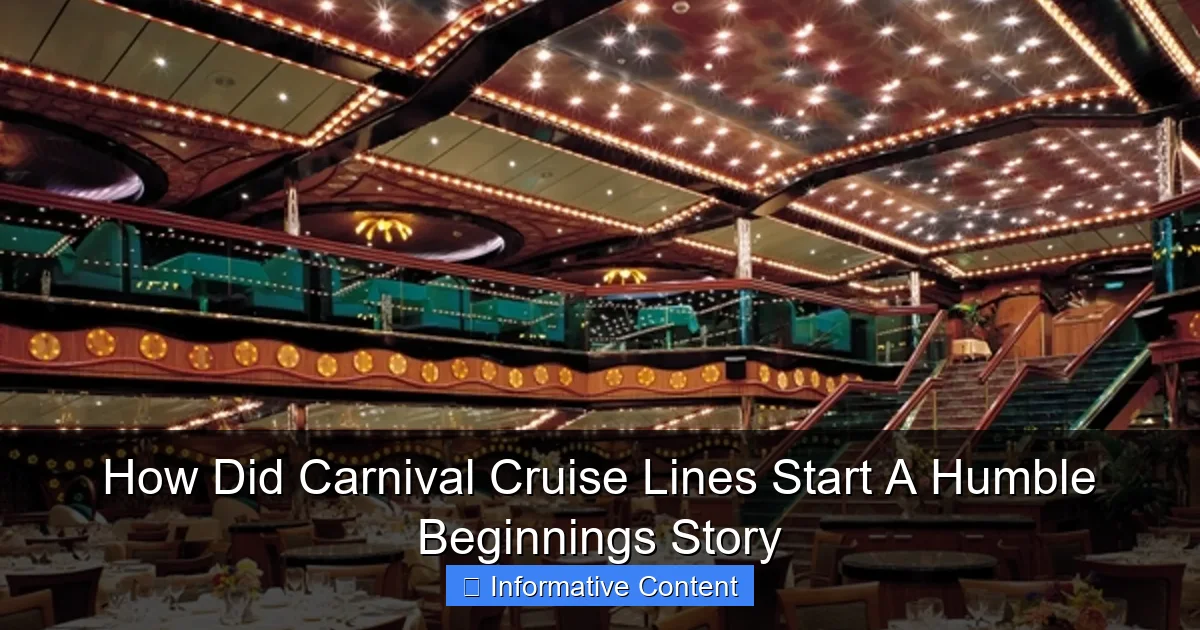
Featured image for how did carnival cruise lines start
Image source: a57.foxnews.com
Carnival Cruise Lines began in 1972 with a single, aging ship and a bold vision to make cruising fun and affordable for the average American. Founded by Ted Arison, the company overcame early financial struggles and near-bankruptcy to revolutionize the industry with its “Fun Ship” concept, combining casual luxury with high-energy entertainment. This daring approach transformed Carnival into the world’s largest cruise line.
Key Takeaways
- Carnival began in 1972 with one ship and bold vision.
- Faced early financial struggles but rebounded through creative marketing.
- Introduced “Fun Ships” to redefine casual, affordable cruising.
- Expanded rapidly in the 1980s by targeting middle-class travelers.
- Leveraged pop culture with TV ads and celebrity partnerships.
- Pioneered short Caribbean cruises to attract first-time cruisers.
📑 Table of Contents
- How Did Carnival Cruise Lines Start A Humble Beginnings Story
- From Dream to Reality: The Birth of Carnival Cruise Lines
- The “Fun Ship” Concept: Revolutionizing the Cruise Industry
- Expansion and Innovation: Growing the Fleet and Brand
- Overcoming Challenges: Navigating Crises and Competition
- Legacy and Impact: How Carnival Changed the Cruise Industry
- Conclusion: A Story of Grit, Vision, and Fun
How Did Carnival Cruise Lines Start A Humble Beginnings Story
Imagine a time when cruising wasn’t the luxurious, all-inclusive vacation we know today. Back in the early 1970s, taking a cruise was seen as an extravagant, once-in-a-lifetime experience reserved for the wealthy. But one man had a bold vision: to make cruising affordable, fun, and accessible to everyday people. That man was Ted Arison, and his dream gave birth to Carnival Cruise Lines. What started as a single aging ocean liner with more charm than comfort has grown into one of the largest and most recognizable cruise brands in the world.
You might be surprised to learn that Carnival’s story isn’t about a wealthy tycoon launching a flashy new venture. It’s the tale of a scrappy entrepreneur with a passion for the sea, a willingness to take risks, and an eye for opportunity. This is a story of how a single ship, a bold idea, and a relentless drive to innovate transformed an entire industry. So, how did Carnival Cruise Lines start? Let’s dive into the fascinating journey from humble beginnings to global domination.
From Dream to Reality: The Birth of Carnival Cruise Lines
Carnival Cruise Lines didn’t begin with a fleet of megaships or a massive marketing budget. It began with a dream, a man, and a boat that was past its prime. In 1972, Ted Arison, an Israeli-American businessman with a background in shipping and music, saw an opportunity where others saw only risk. At the time, the cruise industry was struggling. Many traditional ocean liners were being retired, and the idea of “vacation cruising” was still in its infancy. Arison believed he could change that.
Visual guide about how did carnival cruise lines start
Image source: i.ytimg.com
Ted Arison’s Early Life and Vision
Born in 1924 in British Mandatory Palestine (now Israel), Ted Arison grew up around the sea. His father was a shipping magnate, which gave Ted early exposure to the maritime world. After moving to the U.S. in the 1950s, he co-founded the Norwegian Cruise Line (NCL), where he learned the ropes of the cruise business. But Arison had bigger ideas. He envisioned a cruise experience that wasn’t about formality, luxury, or transatlantic travel—it was about fun.
Arison wanted to create a “floating resort” where families, couples, and groups of friends could enjoy a relaxed, affordable vacation. He imagined lively entertainment, casual dining, and activities that didn’t require tuxedos or formal gowns. In short, he wanted to democratize cruising. This vision would become the foundation of Carnival Cruise Lines.
The First Ship: The M/V Mardi Gras
In 1972, Arison scraped together $6.5 million (a huge sum at the time) to purchase the M/V Mardi Gras, a 27-year-old ocean liner originally built as the Empress of Canada for the Canadian Pacific Steamship Company. The ship had seen better days—its engines were outdated, and its interiors were worn. But Arison saw potential. He renamed it the Mardi Gras and launched Carnival Cruise Lines with a single route: four-day trips from Miami to Cozumel, Mexico.
The first voyage, on March 11, 1972, was a disaster. The ship ran aground near Nassau, Bahamas, and passengers had to be evacuated. The incident made headlines and nearly sank the company before it even started. But Arison didn’t give up. He used the setback as a learning experience, investing in better navigation systems, crew training, and marketing. Within months, the Mardi Gras was back on track—literally and figuratively.
Building a Brand Around Fun and Value
From the start, Arison focused on branding. He didn’t want Carnival to be seen as a luxury cruise line. Instead, he positioned it as “The Fun Ships,” a slogan that would become iconic. Carnival’s early ads emphasized affordability, entertainment, and a carefree atmosphere. The company offered all-inclusive packages, onboard activities like bingo and dance parties, and a relaxed dress code.
This strategy worked. By 1974, Carnival was turning a profit. The Mardi Gras was consistently at or near full capacity, and Arison began dreaming of expansion. The lesson here? Start small, think big, and focus on what makes your product unique. For Carnival, it was the promise of fun, not formality, that set it apart.
The “Fun Ship” Concept: Revolutionizing the Cruise Industry
While other cruise lines focused on elegance and tradition, Carnival dared to be different. The “Fun Ship” concept wasn’t just a slogan—it was a complete reimagining of what a cruise could be. Carnival didn’t just sell a vacation; it sold an experience. And that experience was built on energy, entertainment, and accessibility.
Entertainment as a Core Product
One of Carnival’s earliest innovations was its onboard entertainment. Instead of classical music and formal dinners, Carnival offered live bands, discos, comedy shows, and even talent contests. The ship’s main lounge, the “Follies Lounge,” became a hub of activity. Passengers could dance the night away, play games, or just relax with a drink.
For example, Carnival introduced “Carnival Capers,” a daily newsletter that listed activities, menus, and events. This simple tool helped passengers plan their days and made them feel involved. It also gave Carnival a way to promote its brand and build loyalty. The takeaway? Make your customers feel like they’re part of the experience, not just observers.
Casual Dining and All-Inclusive Pricing
Another key differentiator was Carnival’s approach to food and pricing. Instead of formal, multi-course meals, Carnival offered buffet-style dining, casual cafeterias, and 24-hour snack bars. The idea was to remove the stress of dining and let passengers eat when and how they wanted.
Even more revolutionary was the all-inclusive model. Carnival bundled most amenities—meals, entertainment, activities—into one upfront price. This eliminated the “nickel-and-diming” that plagued other cruise lines. Passengers knew exactly what they were paying for, and they appreciated the transparency. This model is now standard across the industry, but Carnival was one of the first to adopt it.
Marketing the “Fun” Lifestyle
Carnival’s marketing was as bold as its concept. Early ads featured vibrant colors, smiling families, and slogans like “The Most Fun afloat!” The company targeted middle-class Americans, especially families and young couples, with affordable pricing and flexible itineraries. Carnival also partnered with travel agents, offering generous commissions to drive bookings.
One clever tactic was the “Carnival Cruise Card,” a prepaid card passengers could use onboard for drinks, souvenirs, and excursions. It reduced cash transactions and increased spending—a win-win for both passengers and the company. The lesson? Innovation isn’t just about the product; it’s also about the experience and the business model.
Expansion and Innovation: Growing the Fleet and Brand
By the late 1970s, Carnival was a success. The Mardi Gras was profitable, and demand was rising. Arison knew he needed to expand. But growth wasn’t just about buying more ships—it was about evolving the brand and staying ahead of the competition.
Adding New Ships: The Carnival Fantasy Class
In 1987, Carnival launched its first brand-new ship, the Carnival Fantasy, part of a new class of vessels designed from the ground up as “Fun Ships.” The Fantasy was larger, faster, and more modern than the Mardi Gras, with amenities like a full-sized theater, multiple dining rooms, and a water slide.
The Fantasy-class ships (Fantasy, Ecstasy, Sensation, etc.) became Carnival’s workhorses. They were built in Finland and featured standardized designs, which reduced costs and simplified operations. By the early 1990s, Carnival had a fleet of 10 ships, making it the largest cruise line in the world by passenger capacity.
Entering the Mega-Ship Era
In the 1990s, Carnival embraced the “mega-ship” trend. The Carnival Destiny, launched in 1996, was the first cruise ship to exceed 100,000 tons. It could carry over 3,000 passengers and featured innovations like a retractable roof for the main pool and a three-story dining room.
The Destiny was a game-changer. It proved that Carnival could compete with luxury lines on scale and amenities while keeping prices affordable. The company followed up with the Conquest-class ships, which were even larger and more feature-rich. These ships included full-sized theaters, shopping promenades, and even mini-golf courses.
Global Expansion and Brand Diversification
As Carnival grew, it expanded beyond the Caribbean. The company added routes to Alaska, Europe, and the Mediterranean. It also launched new brands to target different markets: Holland America Line (luxury), Princess Cruises (premium), and Costa Cruises (European-focused). These brands operated under the Carnival Corporation umbrella, creating the world’s largest cruise company.
This strategy allowed Carnival to capture a wider audience. A family looking for an affordable Caribbean cruise could choose Carnival Cruise Lines, while a retiree seeking a luxurious European voyage might prefer Holland America. The lesson? Don’t put all your eggs in one basket—diversify to reach more customers.
Overcoming Challenges: Navigating Crises and Competition
No success story is without its challenges, and Carnival’s journey was no exception. From economic downturns to public relations crises, the company had to adapt and persevere.
The 1990s Economic Slowdown
In the early 1990s, a recession hit the U.S. economy, and cruise demand dropped. Carnival responded by cutting costs, offering discounts, and focusing on value. The company also invested in new marketing campaigns, emphasizing affordability and flexibility. By 1994, Carnival was back on track, and demand was stronger than ever.
The 2001 “Carnival Triumph” Incident
In 2013, the Carnival Triumph lost power in the Gulf of Mexico, leaving passengers without air conditioning, hot food, or working toilets. The ship had to be towed to port, and the incident sparked widespread criticism. Carnival responded quickly, offering refunds, future cruise credits, and apologies. The company also invested in better emergency systems and crew training.
The takeaway? When a crisis hits, act fast, be transparent, and put customers first. Carnival’s response helped it recover its reputation and even improve its safety record.
Competition from Rivals
As Carnival grew, so did its competition. Royal Caribbean and Norwegian Cruise Line launched their own mega-ships and “fun” branding. Carnival countered by focusing on its core strengths: affordability, entertainment, and a loyal customer base. It also introduced new amenities, like the “Serenity Adult-Only Retreat” and the “Carnival Hub” app, to stay competitive.
Legacy and Impact: How Carnival Changed the Cruise Industry
Today, Carnival Cruise Lines is a household name, with over 25 ships and millions of passengers each year. But its impact goes beyond size. Carnival fundamentally changed how people think about cruising.
Democratizing Cruising
Before Carnival, cruising was seen as a luxury for the elite. Arison’s vision made it accessible to the masses. By offering affordable prices, flexible itineraries, and fun experiences, Carnival opened the door for millions of people to enjoy the sea.
Setting Industry Standards
Carnival’s innovations—all-inclusive pricing, onboard entertainment, mega-ships—have become industry standards. Other cruise lines now mimic its approach, proving that Carnival’s model was not just a fad, but a lasting shift in the market.
Data Table: Carnival’s Growth Over the Years
| Year | Key Milestone | Fleet Size | Notable Ships |
|---|---|---|---|
| 1972 | Launch of Carnival Cruise Lines | 1 | M/V Mardi Gras |
| 1987 | First newbuild ship | 6 | Carnival Fantasy |
| 1996 | First 100,000-ton ship | 15 | Carnival Destiny |
| 2020 | Largest cruise line by capacity | 24+ | Carnival Horizon, Mardi Gras (new) |
Conclusion: A Story of Grit, Vision, and Fun
So, how did Carnival Cruise Lines start? It started with a man who saw an opportunity, a ship that was past its prime, and a bold idea: to make cruising fun and affordable for everyone. From the rocky first voyage of the Mardi Gras to the launch of mega-ships like the Carnival Horizon, Carnival’s journey is a testament to the power of vision, perseverance, and innovation.
Today, when you step onto a Carnival ship, you’re not just boarding a cruise—you’re stepping into a legacy. A legacy of fun, accessibility, and a belief that everyone deserves a little adventure. Whether you’re a first-time cruiser or a seasoned sailor, Carnival’s story reminds us that the best things in life often start with a simple dream. And sometimes, that dream begins with a little fun.
Frequently Asked Questions
How did Carnival Cruise Lines start as a budget-friendly cruise option?
Carnival Cruise Lines began in 1972 with a single refurbished ocean liner, the Mardi Gras, aiming to make cruising affordable for everyday travelers. Founder Ted Arison envisioned “fun, sun, and value” as the brand’s core, pioneering the casual, entertainment-focused cruising model.
What inspired the founding of Carnival Cruise Lines?
Ted Arison, a shipping entrepreneur, saw untapped potential in offering leisure cruises to middle-class Americans during a time when cruising was considered a luxury. His vision of “The Fun Ships” transformed the industry by prioritizing onboard activities and affordable pricing.
How did Carnival Cruise Lines get its name?
The name “Carnival” was chosen to evoke excitement, celebration, and the lively spirit of its inaugural ship, the Mardi Gras. This branding aligned with their mission to deliver an energetic, party-like atmosphere at sea.
What was Carnival Cruise Lines’ first ship?
The Mardi Gras, a 1961-built ocean liner formerly named the Empress of Canada, became Carnival’s first vessel after extensive renovations. It set sail from Miami in 1972, marking the start of Carnival’s “Fun Ship” era.
How did Carnival Cruise Lines grow so quickly in its early years?
By focusing on affordable fares, vibrant entertainment, and mass-market appeal, Carnival filled a niche ignored by traditional luxury cruise lines. Aggressive marketing and word-of-mouth buzz about its lively onboard experience fueled rapid expansion.
What challenges did Carnival Cruise Lines face at the start?
Early struggles included near-bankruptcy in the 1970s due to high fuel costs and low bookings, but a turnaround came with smarter pricing and a focus on fun. These hurdles shaped Carnival’s resilient, customer-centric approach to cruising.