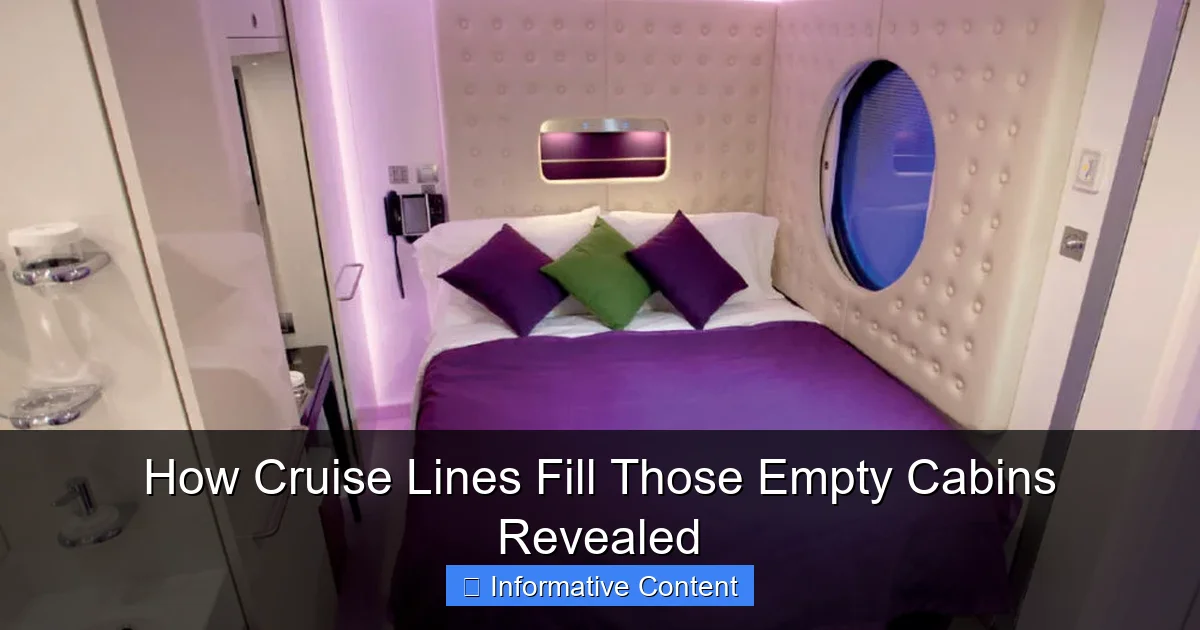
Featured image for how cruise lines fill those empty cabins
Image source: cruisefever.net
Cruise lines use dynamic pricing and last-minute deals to fill empty cabins, slashing prices days before departure. They also partner with travel agents, offer free upgrades, and leverage loyalty programs to attract last-minute bookers. Exclusive perks like onboard credits or free excursions sweeten the deal, ensuring ships sail at near-full capacity.
Key Takeaways
- Dynamic pricing adjusts fares in real-time to boost last-minute bookings.
- Targeted promotions lure past cruisers with exclusive discounts and perks.
- Cabin upgrades incentivize guests to book higher-tier rooms at lower costs.
- Group partnerships fill cabins via corporate, event, or affinity group deals.
- Repositioning sailings offer unique itineraries at steep discounts to fill ships.
- Loyalty perks reward repeat customers with free or discounted cabins.
📑 Table of Contents
- How Cruise Lines Fill Those Empty Cabins Revealed
- 1. Dynamic Pricing: The Art of the Last-Minute Deal
- 2. Loyalty Programs: Rewarding Repeat Cruisers
- 3. Group Bookings and Corporate Partnerships
- 4. Onboard Upsells and Last-Minute Offers
- 5. Charters and Repositioning Cruises
- 6. The “Secret” Channels: Wholesalers and Flash Sales
- Data Table: How Cruise Lines Fill Empty Cabins
- Conclusion
How Cruise Lines Fill Those Empty Cabins Revealed
Ever looked at a cruise ship and wondered: How do they possibly fill all those rooms? It’s not like every cabin is booked months in advance. In fact, cruise lines often sail with empty cabins—sometimes even hundreds of them. But here’s the thing: they don’t want you to know that. Or, more accurately, they don’t want you to know how they handle it. Because behind the polished brochures and flashy onboard experiences, cruise lines have a whole playbook of clever, sometimes surprising, tactics to fill those empty cabins. And if you’re a savvy traveler, this is gold.
I remember booking a last-minute cruise a few years ago. I was scrolling through deals on a Tuesday night, half-expecting to see prices like $2,000 per person. Instead, I found a 7-day Caribbean trip for $399—including airfare. I couldn’t believe it. But when I boarded, I realized: the ship wasn’t full. Not even close. And yet, by the end of the week, it felt like every seat in the theater was taken, and the buffet was bustling. That’s when it hit me: cruise lines don’t just rely on early birds. They’ve got strategies—some subtle, some not-so-subtle—to fill every nook and cranny. And today, I’m pulling back the curtain.
1. Dynamic Pricing: The Art of the Last-Minute Deal
You’ve probably heard of dynamic pricing in the context of airlines or hotels. But cruise lines? They’re masters at it. Dynamic pricing means adjusting prices based on demand, time, and even who’s looking. Think of it like a digital auction—except you’re the one bidding (without even knowing it).
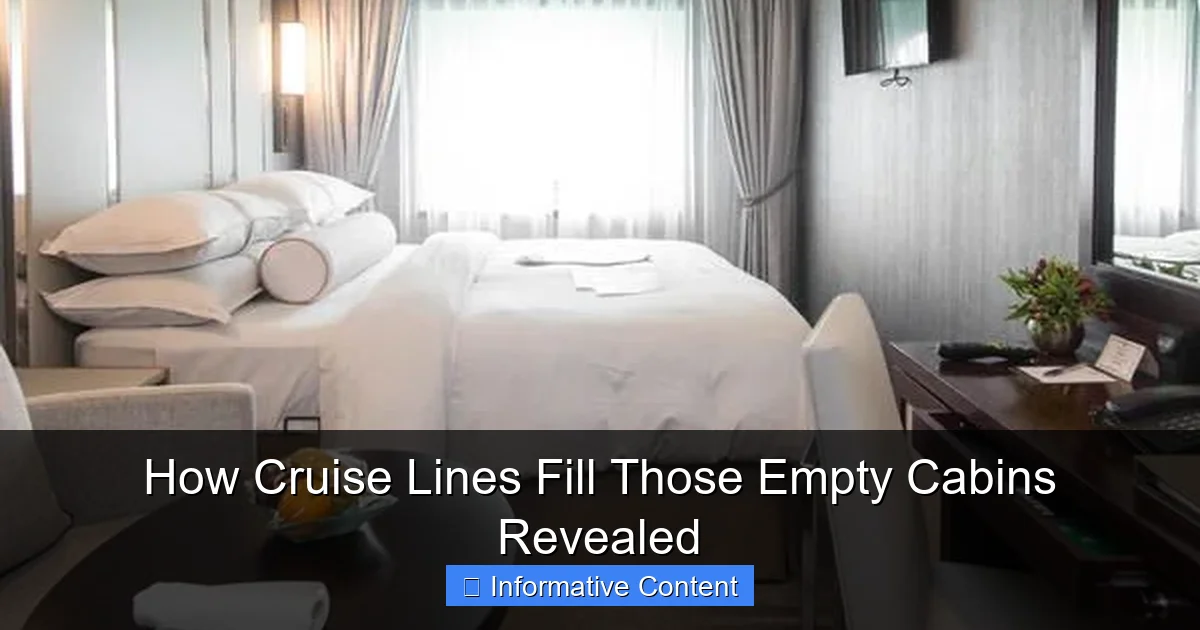
Visual guide about how cruise lines fill those empty cabins
Image source: i.pinimg.com
How It Works
Cruise lines use algorithms that monitor booking patterns, competitor pricing, and even weather forecasts. If a ship isn’t filling up as expected, the system automatically slashes prices. The goal? To attract travelers who are flexible and price-sensitive. For example, a family planning a summer cruise might book six months out, but a retiree with a free calendar might wait until two weeks before departure—and score a 50% discount.
Real-life example: Royal Caribbean’s “Last-Minute Deals” page offers cruises departing within 60 days, often at 30-60% off. These aren’t “bad” cabins either—they’re often ocean-view or balcony rooms that just didn’t sell early.
Pro Tip for Travelers
- Wait, but not too long: The sweet spot for last-minute deals is usually 2-6 weeks before departure. Earlier than that, the line might not have enough data to drop prices. Later than that, they’re more likely to offer upgrades instead of discounts.
- Use a cruise specialist: Travel agents often get access to unpublished rates or “price-drop alerts” that you won’t see on public sites.
- Be flexible on dates and ports: A Tuesday departure might be $200 cheaper than a Saturday one.
But here’s the catch: dynamic pricing can backfire. If a cruise line drops prices too early, early bookers might feel cheated. That’s why they’re careful to offer perks (like onboard credits) instead of outright discounts to early birds. It’s a delicate balance—and one that keeps the revenue team up at night.
2. Loyalty Programs: Rewarding Repeat Cruisers
Imagine this: You’ve just returned from your third cruise with Carnival. You loved the food, the crew, even the cheesy deck games. Now, you get an email: “Welcome back! Here’s 20% off your next cruise, plus a free balcony upgrade.” Sound familiar? That’s not luck—it’s a strategy.
Why Loyalty Programs Work
Cruise lines know that retaining customers is cheaper than finding new ones. According to industry data, it costs 5-10 times more to attract a new cruiser than to keep an existing one. So, they invest heavily in loyalty programs. These aren’t just “earn points” schemes—they’re full-blown ecosystems designed to make you feel special (and keep you coming back).
Take Norwegian Cruise Line’s Latitudes Rewards program. Members get:
- Priority boarding and check-in
- Free specialty dining nights
- Exclusive shore excursions
- Discounts on future cruises
The higher your tier (based on nights sailed), the better the perks. And here’s the kicker: these perks often don’t cost the cruise line much (e.g., a free dinner in a half-empty restaurant), but they make you feel like a VIP.
How They Fill Cabins
Loyalty members are more likely to book last-minute. Why? Because they know they’ll get something extra—even if the base price is low. So, when a cabin goes unsold, the cruise line might:
- Offer it to a loyalty member at a steep discount
- Include a “free” upgrade (e.g., from ocean-view to balcony)
- Add onboard credit (e.g., $100 to spend on drinks or spa)
It’s a win-win: the member feels valued, and the cabin gets filled.
Insider Tip
Join the loyalty program before your first cruise. Even if you’re sailing once, you might get a “new member” discount or onboard credit. And if you love the cruise? You’re already in the system for next time.
3. Group Bookings and Corporate Partnerships
Picture this: A company’s annual retreat isn’t at a stuffy hotel—it’s on a cruise ship. Or a wedding party takes over a deck for a week. Or a university charters an entire ship for a study-abroad trip. These are all group bookings, and they’re a goldmine for cruise lines.
The Power of Bulk
Group bookings let cruise lines sell large blocks of cabins at once. This is huge for filling unsold inventory. For example, if a ship has 200 empty cabins a month before sailing, the line might:
- Offer them to a tour operator at a 40% discount
- Partner with a travel agency to create a “group package” (e.g., “10 cabins for the price of 8”)
- Work with a corporate client to host a conference or incentive trip
The key? The cruise line doesn’t have to market each cabin individually. They just need one big buyer.
Corporate Partnerships
Many cruise lines have partnerships with companies, schools, and nonprofits. These groups get:
- Discounted rates (sometimes as low as 50% off)
- Custom itineraries (e.g., a science cruise with lectures)
- Onboard meeting spaces or event coordination
For example, Princess Cruises partners with universities for “Semester at Sea” programs. These book hundreds of cabins months in advance—and often fill the rest with last-minute deals.
Pro Tip for Travelers
If you’re planning a family reunion, bachelorette party, or corporate retreat, ask your travel agent about group rates. You might get:
- Free cabins (e.g., one free for every 10 booked)
- Private events (e.g., a deck party)
- Customized shore excursions
And if you’re part of a large group, you might even negotiate a lower per-person price.
4. Onboard Upsells and Last-Minute Offers
You’re on day two of your cruise, sipping a cocktail by the pool, when a crew member approaches: “Hey, I noticed you’re in an interior cabin. We have a few balcony rooms available for just $199 more—want to upgrade?” Sound familiar? That’s onboard upselling, and it’s one of the most effective ways cruise lines fill empty cabins.
Why It Works
By the time you’re on the ship, you’re already invested. You’ve paid for flights, packed your bags, and maybe even bought a new swimsuit. The last thing you want is to miss out on a better cabin. So, when the cruise line offers an upgrade, it’s a no-brainer. And the best part? The cabin was going to be empty anyway. Now, they’re making extra revenue.
Common onboard upsells include:
- Cabin upgrades: From interior to ocean-view, or balcony to suite
- “Last-chance” packages: e.g., “Book a spa treatment today and get 20% off”
- Shore excursion deals: e.g., “Sign up now and get a free photo package”
These are often offered in the first 2-3 days of the cruise—when passengers are still exploring and haven’t settled into their cabins yet.
How They Fill the Gaps
Onboard upsells aren’t just about revenue—they’re about experience. A passenger who upgrades to a balcony might spend more on room service, cocktails, and spa treatments. They might even post about it on social media, attracting future bookings. And if the upgrade is cheap enough, it’s a win for both sides.
Traveler Tip
Don’t feel pressured to upgrade on the spot. Ask:
- “Is this the best price you can offer?”
- “What’s the view from that balcony?”
- “Can I see the cabin first?”
Sometimes, waiting a day or two can get you a better deal. And if you’re on a budget, remember: an interior cabin is still a great experience.
5. Charters and Repositioning Cruises
Not all empty cabins are filled with tourists. Sometimes, cruise lines turn to charters—entire ships booked by a single entity. And when ships need to move from one region to another (e.g., from the Caribbean to Alaska), they offer repositioning cruises at steep discounts.
Charters: A Whole Ship, One Buyer
Charters are rare but powerful. A company, school, or even a country might charter an entire ship for a specific purpose. For example:
- Disney Cruise Line charters ships for “Star Wars” or “Marvel” themed cruises
- Holland America partners with music festivals for “cruise concerts”
- Costa Cruises has hosted corporate retreats for European companies
In these cases, the buyer gets:
- Complete control over the itinerary
- Customized onboard events
- Branding opportunities (e.g., “Company X Cruise”)
And the cruise line? They fill every cabin in one fell swoop.
Repositioning Cruises: The Hidden Gem
Repositioning cruises happen when ships move between regions. For example, a ship might sail from the Caribbean to Alaska in April (before Alaska’s summer season). These cruises often:
- Have longer itineraries (10-14 days)
- Visit unique ports (e.g., the Panama Canal)
- Offer deep discounts (sometimes 50% off)
Why? Because they’re not “vacation cruises”—they’re logistical moves. But for travelers, they’re a chance to see multiple regions in one trip.
Pro Tip
Repositioning cruises are perfect for:
- Retirees with flexible schedules
- Digital nomads (many ships have reliable Wi-Fi)
- Adventure seekers (e.g., transatlantic crossings)
Just remember: these cruises often have sea days (no ports), so pack books, games, or a good playlist.
6. The “Secret” Channels: Wholesalers and Flash Sales
Ever booked a cruise through Costco or a “flash sale” site? You’re not alone. These are secret channels that cruise lines use to fill unsold cabins—without devaluing their brand.
How It Works
Cruise lines sell unsold cabins to wholesalers (e.g., Costco Travel, Expedia, or local travel agencies) at a discount. These wholesalers then:
- Add their own markup
- Bundle the cruise with flights or hotels
- Run limited-time “flash sales”
For example, a cruise line might sell 50 balcony cabins to Costco for $500 each. Costco then offers them for $799—including airfare. The cruise line gets revenue, Costco makes a profit, and the traveler feels like they got a steal.
Flash Sales: FOMO at Its Finest
Flash sales create urgency. Sites like Cruise.com or VacationsToGo might email subscribers: “7-day Caribbean cruise—$399! Book in the next 24 hours.” These deals are real, but they’re limited. Why? Because the cruise line only has a few cabins to fill.
Traveler Tip
To find these deals:
- Sign up for cruise deal newsletters (e.g., VacationsToGo, CruiseSheet)
- Check wholesalers like Costco, AAA, or Sam’s Club
- Follow cruise lines on social media (they sometimes post flash sales)
But read the fine print: some deals have restrictions (e.g., “no balcony upgrades”).
Data Table: How Cruise Lines Fill Empty Cabins
| Strategy | When It’s Used | Example | Best For |
|---|---|---|---|
| Dynamic Pricing | 60-30 days before sailing | Royal Caribbean’s “Last-Minute Deals” | Flexible travelers |
| Loyalty Programs | Ongoing | Norwegian’s Latitudes Rewards | Repeat cruisers |
| Group Bookings | 3-6 months before sailing | Corporate incentive trips | Large groups |
| Onboard Upsells | Days 1-3 of cruise | “Balcony upgrade for $199” | Passengers in interior cabins |
| Repositioning Cruises | Seasonal transitions | Caribbean to Alaska in April | Adventure seekers |
| Secret Channels | Ongoing | Costco’s cruise packages | Deal hunters |
Conclusion
So, how do cruise lines fill those empty cabins? It’s not magic—it’s a mix of smart pricing, clever marketing, and a deep understanding of human psychology. They use dynamic pricing to attract last-minute travelers, loyalty programs to reward repeat cruisers, group bookings to sell in bulk, onboard upsells to upgrade passengers, repositioning cruises to move ships, and secret channels to reach deal-hunters.
And here’s the best part: you can use these strategies to your advantage. Whether you’re booking six months out or two weeks before departure, there’s a way to score a great deal. Just remember: cruise lines want to fill those cabins. They’d rather sell a room at a discount than let it go empty. So, be flexible, be patient, and don’t be afraid to ask for upgrades or deals.
Next time you’re on a cruise, look around. That balcony cabin next to yours? It might have been empty a week ago. And now, it’s yours—thanks to the cruise line’s playbook. And honestly? That’s a pretty cool feeling.
Frequently Asked Questions
How do cruise lines fill empty cabins at the last minute?
Cruise lines use last-minute deals, flash sales, and dynamic pricing to attract bookings as departure dates approach. They also partner with travel agencies and offer discounts to loyalty program members to fill remaining inventory.
Why do cruise lines offer such steep discounts to fill empty cabins?
Empty cabins generate zero revenue once the ship sails, so cruise lines prioritize filling them over maintaining high prices. Discounts, upgrades, and onboard credits help entice last-minute travelers while maximizing profit.
How do cruise lines fill those empty cabins without hurting their brand value?
They discreetly offer deals through private sales, email exclusives, or third-party platforms to avoid public price erosion. Perks like free upgrades or drink packages sweeten the deal without slashing advertised fares.
Do cruise lines ever give away free cabins to fill empty berths?
While rare, some lines offer free or deeply discounted cabins to travel influencers, media, or crew referrals to ensure full occupancy. These are usually tightly controlled to avoid devaluing the guest experience.
What role do travel agents play in how cruise lines fill empty cabins?
Travel agents receive exclusive access to unsold inventory and can bundle cabins with flights or hotels to create attractive packages. This helps cruise lines offload inventory while agents earn commissions.
Are empty cabins ever repurposed for non-guest use?
Yes, cruise lines may convert unsold cabins into staff accommodations, storage, or temporary event spaces. Others use them to host complimentary guests for marketing or operational purposes, like crew training.