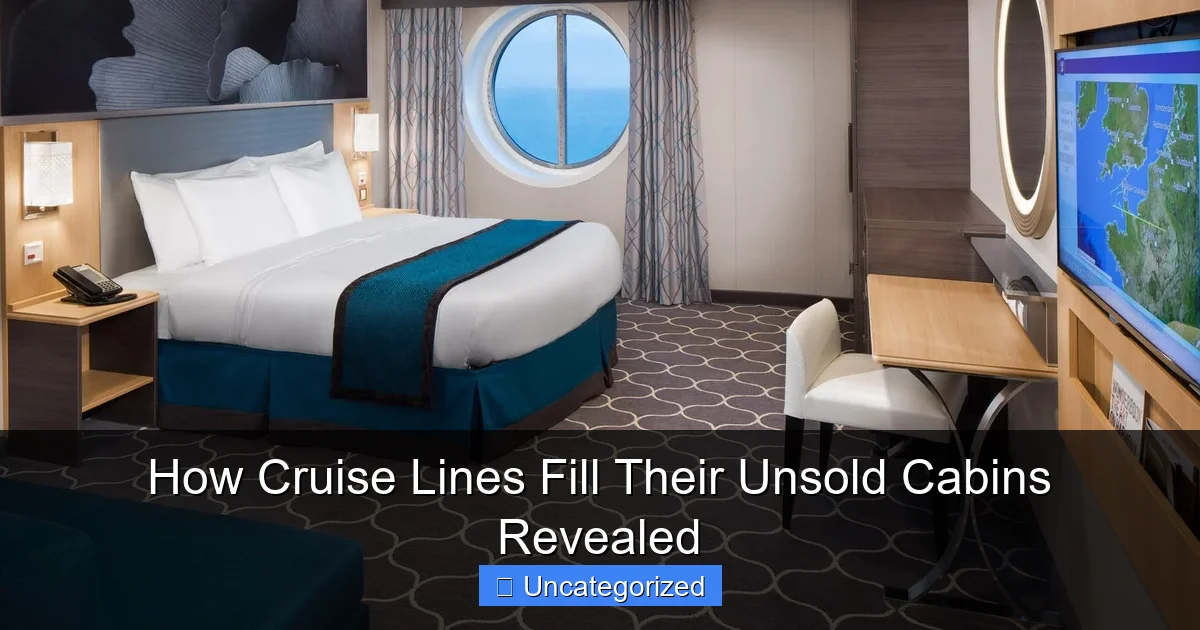
Featured image for how cruise lines fill their unsold cabins
Image source: i.pinimg.com
Cruise lines use dynamic pricing and last-minute deals to fill unsold cabins, slashing prices as departure dates near. They partner with travel agents, offer free upgrades, and promote “mystery” sailings to attract bargain hunters. Loyalty programs and flash sales also play a key role, turning empty cabins into revenue while giving passengers unexpected perks.
Key Takeaways
- Dynamic pricing slashes rates days before departure to attract last-minute bookings.
- Loyalty perks offer free upgrades or onboard credit to fill empty cabins.
- Partner deals bundle cabins with flights or hotels to boost occupancy.
- Employee discounts let staff book unsold rooms at steeply reduced rates.
- Group allocations reserve blocks for travel agents, often sold at discounts.
- Charter cruises let organizations buy entire ships for exclusive events.
📑 Table of Contents
- How Cruise Lines Fill Their Unsold Cabins: A Behind-the-Scenes Look
- 1. Dynamic Pricing and Fare Adjustments
- 2. Strategic Partnerships and Third-Party Sellers
- 3. Last-Minute Deals and Flash Sales
- 4. Loyalty Programs and Past Passenger Discounts
- 5. Bundling and Value-Added Packages
- 6. Repositioning Cruises and Shoulder Season Promotions
- Conclusion: The Art and Science of Filling Cabins
How Cruise Lines Fill Their Unsold Cabins: A Behind-the-Scenes Look
Imagine boarding a cruise ship, only to find half the cabins empty. For vacationers, this might seem like a dream—more space, quieter decks, and perhaps even a free upgrade. But for cruise lines, unsold cabins are a financial nightmare. Each empty stateroom represents lost revenue from not just the base fare, but also onboard spending on dining, drinks, spa services, and excursions. With ships designed to operate at near-full capacity, cruise companies deploy a mix of sophisticated strategies and last-minute tactics to ensure every cabin is filled before departure.
From dynamic pricing algorithms to exclusive partnerships with third-party sellers, cruise lines have developed a multifaceted playbook to avoid sailing with empty beds. These strategies are not just about filling seats; they’re about maximizing profitability, maintaining brand reputation, and delivering value to both loyal customers and new travelers. In this deep dive, we’ll uncover the secrets behind how cruise lines fill their unsold cabins, revealing the data-driven decisions, marketing tactics, and industry collaborations that keep ships sailing at full steam.
1. Dynamic Pricing and Fare Adjustments
How Dynamic Pricing Works
At the heart of filling unsold cabins is dynamic pricing—a strategy borrowed from the airline and hotel industries. Cruise lines use advanced algorithms to adjust fares in real-time based on demand, booking pace, seasonality, and competitor pricing. Unlike fixed pricing models, dynamic pricing allows cruise companies to lower fares as departure dates approach, creating urgency among potential travelers.
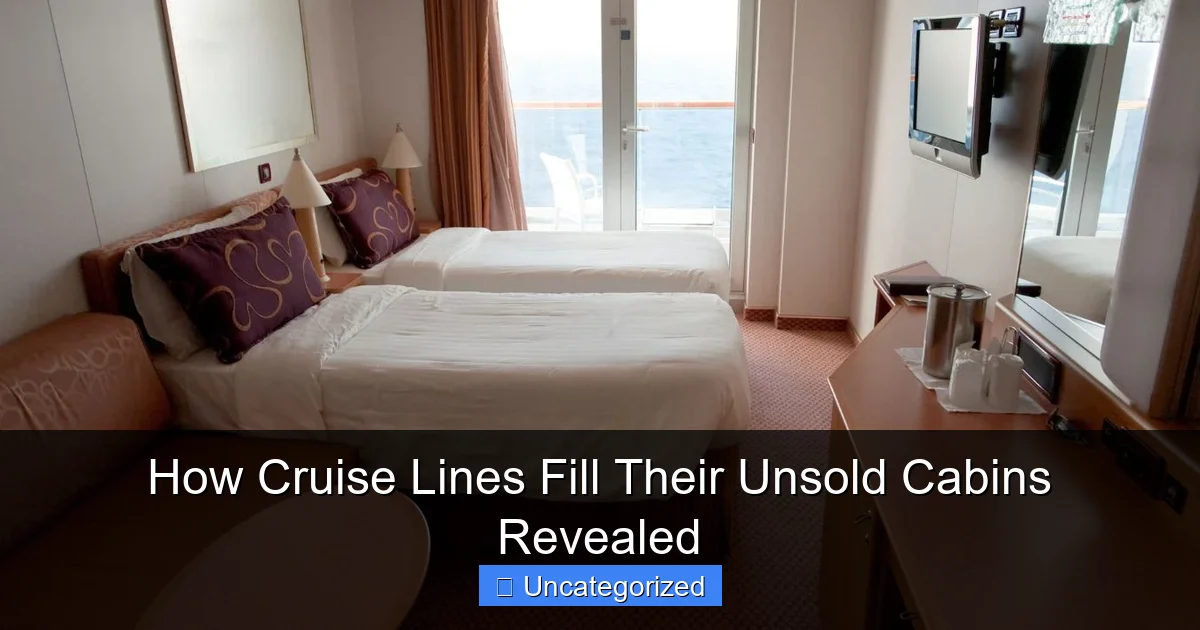
Visual guide about how cruise lines fill their unsold cabins
Image source: media.mytravelhive.com
For example, a balcony cabin on a Mediterranean cruise might start at $2,000 per person but drop to $1,200 two months before sailing if bookings are slow. This price drop is often paired with limited-time offers, such as “book now and get 50% off your second guest” or “free airfare with balcony suite.” These adjustments are calculated using historical data, booking trends, and predictive analytics.
Examples of Fare Adjustments
- Royal Caribbean uses a system called “Smart Pricing,” which analyzes over 300 variables, including weather forecasts, local events, and even social media sentiment, to adjust fares.
- Carnival Cruise Line frequently releases “Flash Sales” 60–90 days before departure, slashing prices by 30–50% to stimulate demand.
- Norwegian Cruise Line introduced “Free at Sea” promotions, which bundle free drinks, Wi-Fi, and specialty dining into lower base fares, making the deal more attractive even when the base price is reduced.
Tips for Travelers
Smart cruisers can leverage dynamic pricing to their advantage:
- Monitor cruise line websites and email newsletters for price drops.
- Use price tracking tools like CruiseSheet or CruiseWatch to receive alerts when fares decrease.
- Be flexible with dates—mid-week departures and shoulder seasons often offer better deals.
- Consider booking a “price hold” or “price freeze” option if available, allowing you to lock in a fare with the option to rebook at a lower price later.
2. Strategic Partnerships and Third-Party Sellers
Working with Travel Agencies and Online Platforms
Cruise lines don’t rely solely on direct sales. They form strategic partnerships with travel agencies, online travel agencies (OTAs), and vacation package aggregators to reach broader audiences. These partners often receive exclusive inventory or special pricing, which they then market through their own channels.
For instance, Expedia, Priceline, and Costco Travel have dedicated cruise sections where they sell unsold or “distressed” inventory at discounted rates. These platforms use their massive user bases to promote last-minute deals, often bundling cruises with airfare, hotels, and car rentals to increase perceived value.
Private Label and White-Label Sales
Another tactic is private label selling, where cruise lines sell cabins under a third-party brand. For example:
- Vacation Express partners with Carnival, Royal Caribbean, and Norwegian to sell “exclusive” cruise packages with added perks like onboard credits or free excursions.
- Vacations To Go, a Houston-based agency, has direct contracts with major cruise lines to sell unsold cabins at up to 80% off retail price.
- Costco Travel offers members-only cruise deals, often including extra benefits like free upgrades or gift cards.
Group Sales and Corporate Contracts
Cruise lines also target group bookings—weddings, family reunions, corporate retreats, and alumni groups. These bookings often require a minimum number of cabins, and cruise lines are willing to offer steep discounts to secure them. For example, a company booking 20 cabins for a team-building trip might receive a 25% discount, free meeting space, and a dedicated concierge.
Tips for Travelers
To find the best deals through third parties:
- Sign up for newsletters from OTAs and travel agencies known for cruise deals (e.g., Vacations To Go, Cruise.com).
- Compare prices across platforms—sometimes the same cabin is priced differently on different sites.
- Check if the third-party seller is accredited by the Cruise Lines International Association (CLIA) for added credibility.
3. Last-Minute Deals and Flash Sales
The Psychology of Urgency
When a cruise is 30–60 days from departure and still has unsold cabins, cruise lines shift into last-minute deal mode. These promotions rely heavily on psychological triggers like scarcity, urgency, and social proof. Emails with subject lines like “Only 3 Cabins Left!” or “Last Chance: 70% Off Ends Tonight!” are designed to prompt immediate action.
Flash sales are often time-limited (24–72 hours) and promoted through email, social media, and cruise line apps. They may include:
- “Buy One, Get One Free” (BOGO) offers.
- “Free Upgrades” from inside to balcony cabins.
- “Free Onboard Credit” (OBC) ranging from $100 to $500 per cabin.
- “Kids Sail Free” promotions during school breaks.
Real-World Examples
In 2023, Princess Cruises launched a “Summer Flash Sale” with 7-day Alaska cruises starting at $499 per person—down from $1,200. The sale generated over 10,000 bookings in 48 hours. Similarly, MSC Cruises offered “Buy One, Get One Free” deals on Caribbean sailings, filling 85% of unsold inventory within a week.
How Cruise Lines Promote Last-Minute Deals
- Email marketing: Targeted campaigns to past cruisers and subscribers.
- Social media ads: Geo-targeted Facebook and Instagram ads highlighting “last chance” deals.
- Push notifications: Real-time alerts via cruise line apps.
- Retargeting ads: Follow users who visited the website but didn’t book.
Tips for Travelers
To capitalize on last-minute deals:
- Set up Google Alerts for phrases like “[Cruise Line] flash sale” or “last minute cruise deals.”
- Follow cruise lines on Instagram and Facebook for real-time updates.
- Be ready to book quickly—last-minute deals often sell out in hours.
- Consider repositioning cruises (when ships move between regions), which are often heavily discounted.
4. Loyalty Programs and Past Passenger Discounts
The Power of Repeat Customers
Cruise lines invest heavily in loyalty programs because repeat passengers are more likely to book again—and often spend more on board. Programs like Royal Caribbean’s Crown & Anchor Society, Carnival’s VIFP Club, and Norwegian’s Latitudes Rewards offer tiered benefits, including:
- Exclusive pre-sale access to new itineraries.
- Discounts of 10–20% on future cruises.
- Free upgrades, priority boarding, and onboard credits.
- Invitations to VIP events and private parties.
For unsold cabins, cruise lines often target loyal customers with “Past Passenger” (PP) promotions—special deals sent via email or mail. These promotions are highly effective because they appeal to emotional loyalty and brand trust.
Case Study: Carnival’s “VIFP Flash Sale”
In 2022, Carnival launched a VIFP-exclusive sale offering 7-day Caribbean cruises for $299 per person—only for members with 10+ sailings. The sale filled 12,000 cabins in 72 hours, with an average onboard spend 30% higher than non-members.
How Loyalty Programs Fill Cabins
- Targeted email campaigns: Personalized offers based on past booking behavior.
- Early access: Loyalty members get first dibs on discounted inventory.
- Double points: Incentives to book during slow periods.
- Referral bonuses: Members earn rewards for bringing new guests.
Tips for Travelers
To maximize loyalty program benefits:
- Always book through your loyalty program portal to earn points.
- Check your email for PP-only deals—they’re often not advertised publicly.
- Reach higher tiers (e.g., Diamond or Platinum) to unlock better discounts and perks.
- Use onboard spending to earn more points—many programs award points for dining, spa, and excursions.
5. Bundling and Value-Added Packages
The Art of the Bundle
Instead of lowering prices, cruise lines often bundle value-added services to make unsold cabins more attractive. These packages enhance the perceived value without directly discounting the base fare. Common bundles include:
- “Free at Sea” (Norwegian): Choose up to 5 free perks (drinks, Wi-Fi, specialty dining, shore excursions, airfare).
- “Cruise with Confidence” (Royal Caribbean): Free cancellation, future cruise credits, and price protection.
- “All-Inclusive” packages (Celebrity, Viking): Cover drinks, gratuities, Wi-Fi, and excursions.
For example, a $1,500 cruise with a $500 “Free at Sea” package effectively becomes a $2,000 value for the same price, making it more appealing to budget-conscious travelers.
How Bundling Fills Cabins
- Increases perceived value: Travelers feel they’re getting more for their money.
- Reduces sticker shock: Bundled items are included, so the upfront cost seems lower.
- Encourages onboard spending: Free Wi-Fi or drinks reduce the need to pay extra, increasing satisfaction.
- Simplifies decision-making: All-inclusive packages reduce the need to budget for extras.
Data Table: Value-Added Package Comparison (2024)
| Cruise Line | Package Name | Included Perks | Typical Savings |
|---|---|---|---|
| Norwegian | Free at Sea | Drinks, Wi-Fi, Dining, Excursions, Airfare | $1,200 per cabin |
| Royal Caribbean | Cruise with Confidence | Free cancellation, price protection, OBC | $300–$500 per cabin |
| Celebrity | All-Inclusive | Drinks, Wi-Fi, Gratuities, Excursions | $800 per cabin |
| Viking | Included Extras | Airfare, Wi-Fi, Shore Excursions, Gratuities | $1,500 per cabin |
Tips for Travelers
To choose the best bundle:
- Estimate your onboard spending—if you’d spend $500 on drinks anyway, a free drink package is a no-brainer.
- Compare bundles across lines—Norwegian’s “Free at Sea” may offer more flexibility than Celebrity’s all-inclusive.
- Check if the bundle is mandatory—some are optional add-ons.
- Look for “buy-up” options to customize your perks.
6. Repositioning Cruises and Shoulder Season Promotions
What Are Repositioning Cruises?
Repositioning cruises occur when ships move between regions (e.g., from Alaska to the Caribbean) at the end of a season. These voyages are often longer (10–21 days) and less popular, leading to heavy discounts. Cruise lines use these sailings to fill unsold inventory while offering unique itineraries.
For example, a 14-day repositioning cruise from Vancouver to Miami might visit ports like Seattle, Los Angeles, and Cabo San Lucas—destinations not typically included in standard Caribbean itineraries.
Shoulder Season Discounts
Shoulder seasons (just before or after peak season) also present opportunities for cruise lines to fill cabins. For instance:
- Alaska cruises in May or September are cheaper than July sailings.
- Caribbean cruises in April or November offer lower fares than winter holidays.
- Mediterranean cruises in October are discounted after summer peak.
During these periods, cruise lines promote “early bird” or “late season” deals, often combining lower fares with free upgrades or onboard credits.
Case Study: Holland America’s 2023 Transatlantic Repositioning
Holland America offered a 14-day transatlantic cruise from New York to Rotterdam for $799 per person—down from $1,800. The ship was 92% full, with 40% of passengers booking for the first time.
Tips for Travelers
To save on repositioning and shoulder season cruises:
- Look for “repositioning” or “repositioning cruise” in search terms.
- Be open to longer itineraries—repositioning cruises often include sea days.
- Travel during shoulder seasons for lower prices and fewer crowds.
- Check if the cruise includes a one-way flight—some lines offer free or discounted airfare.
Conclusion: The Art and Science of Filling Cabins
Filling unsold cabins is a high-stakes game that blends data science, marketing psychology, and strategic partnerships. From dynamic pricing algorithms to loyalty programs and last-minute flash sales, cruise lines deploy a diverse arsenal of tactics to ensure every stateroom generates revenue. For travelers, this means unprecedented opportunities to score incredible deals—if you know where and when to look.
The key takeaway? Flexibility is your greatest asset. Whether you’re booking a last-minute flash sale, leveraging a loyalty program, or embracing a repositioning cruise, the best deals often go to those willing to adapt. By understanding the strategies cruise lines use to fill cabins, you can turn industry secrets into personal savings, ensuring your next vacation is not just affordable, but unforgettable.
So the next time you see a “70% Off” cruise deal, don’t assume it’s desperation. It’s strategy—and with the insights from this guide, you’re now equipped to ride the wave.
Frequently Asked Questions
How do cruise lines fill their unsold cabins at the last minute?
Cruise lines use dynamic pricing and last-minute deals to attract bookings, slashing prices or offering free upgrades to fill empty cabins. They also partner with travel agents and flash-sale websites to push unsold inventory quickly.
What strategies do cruise lines use to sell unsold cabins?
They deploy tactics like “guarantee cabins” (letting passengers book a category without a specific location) or offer onboard credit to incentivize bookings. Loyalty programs and targeted email campaigns to past guests also help fill gaps.
How do cruise lines fill their unsold cabins without hurting their brand?
They discreetly offer discounts through third-party sites or to select groups (e.g., past passengers) to avoid public price drops. Bonus perks like free drinks or Wi-Fi are added instead of outright price cuts.
Do cruise lines ever give away unsold cabins for free?
Rarely, but they may comp cabins to travel agents as incentives or donate them to charities to maintain goodwill. More commonly, they offer steep discounts to fill ships while keeping base prices stable.
How do cruise lines use technology to fill unsold cabins?
They leverage AI-driven pricing tools to adjust rates in real-time and use data analytics to target potential buyers. Automated systems also trigger personalized deals based on browsing behavior or past bookings.
Why don’t cruise lines just sail with empty cabins?
Empty cabins mean lost revenue, even if marginal costs are low. A full ship improves onboard spending (e.g., dining, excursions) and creates a livelier atmosphere, encouraging future bookings.