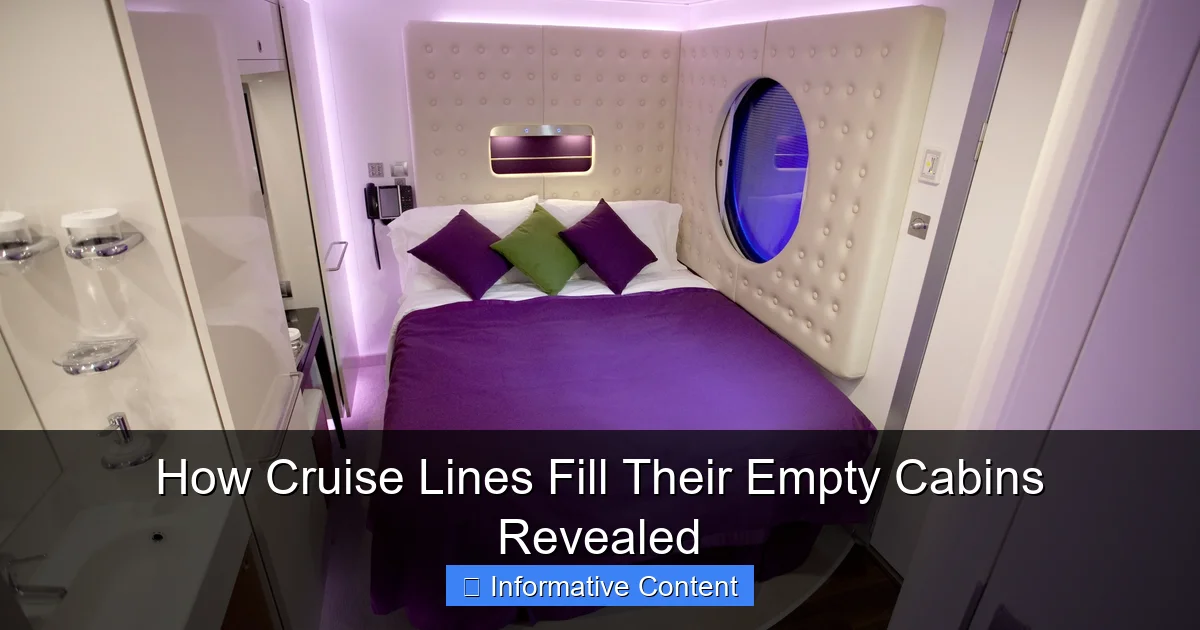
Featured image for how cruise lines fill their empty cabins
Image source: cruise.blog
Cruise lines use dynamic pricing and last-minute deals to fill empty cabins, slashing prices as departure dates approach. They partner with travel agents, offer loyalty perks, and bundle packages (like free upgrades or onboard credits) to entice bookings. Exclusive “mystery cabin” sales and repositioning cruise discounts also help maximize occupancy without devaluing the brand.
Key Takeaways
- Dynamic pricing adjusts fares in real-time to fill unsold cabins.
- Last-minute deals target spontaneous travelers with steep discounts.
- Upgrade incentives offer free or low-cost cabin upgrades to boost sales.
- Group bookings fill cabins by offering perks for bulk reservations.
- Loyalty programs reward repeat customers with exclusive cabin deals.
- Travel agents receive commissions to prioritize and sell empty cabins.
📑 Table of Contents
- How Cruise Lines Fill Their Empty Cabins Revealed
- 1. Last-Minute Discounts and Flash Sales
- 2. Strategic Partnerships and Group Sales
- 3. Loyalty Programs and Past Passenger Perks
- 4. Dynamic Pricing and Inventory Management
- 5. The Role of Travel Insurance and Cancellation Policies
- 6. Niche Markets and Themed Cruises
- Data Table: Common Cruise Line Tactics to Fill Cabins
- Conclusion
How Cruise Lines Fill Their Empty Cabins Revealed
Imagine this: you’re browsing last-minute cruise deals and stumble upon a luxury suite for less than the cost of a mid-range hotel room. Sounds too good to be true, right? Well, behind those seemingly magical discounts is a well-oiled machine that cruise lines use to fill every cabin, every time. It’s a mix of psychology, timing, and smart marketing—and it’s far more fascinating than most travelers realize.
Every cruise ship has a fixed number of cabins, and empty beds mean lost revenue. Unlike airlines, which can adjust flight schedules, cruise lines are stuck with a set number of berths for each voyage. That’s why they’ve developed clever, often surprising strategies to fill every last cabin. Whether it’s slashing prices at the last minute or partnering with niche travel agencies, cruise lines are masters at the game of occupancy. In this post, we’ll pull back the curtain and reveal the real tactics they use—and how you can benefit from them.
1. Last-Minute Discounts and Flash Sales
One of the most visible ways cruise lines fill empty cabins is through last-minute discounts and flash sales. As departure day approaches, unsold cabins become a liability. To avoid sailing with empty rooms, cruise lines slash prices—sometimes by 50% or more—just days or even hours before boarding.

Visual guide about how cruise lines fill their empty cabins
Image source: touristsecrets.com
Why Last-Minute Sales Work
Last-minute deals are a win-win. For cruise lines, filling a cabin at a lower price is better than sailing with it empty. For travelers, it’s a golden opportunity to score a bargain on a trip they might have thought was out of reach. These sales are often promoted through:
- Email newsletters from cruise lines
- Flash sale websites like Cruise.com or VacationsToGo
- Social media campaigns with countdown timers
- Partnerships with travel apps and deal aggregators
Real-World Example: Royal Caribbean’s “Sail Away” Deals
Royal Caribbean runs a program called “Sail Away” deals, where prices drop dramatically in the final 30–60 days before departure. For instance, a 7-night Caribbean cruise that started at $1,200 per person might be offered for $699 just two weeks before sailing. These deals are heavily advertised through their website and third-party partners, and they’re especially effective for flexible travelers who can pack and go on short notice.
Tips for Snagging Last-Minute Cruises
- Be flexible with dates and destinations: The more open you are, the better your chances of finding a deal.
- Set up price alerts: Use tools like CruiseWatch or Google Alerts to get notified when prices drop.
- Book through a travel agent: Many agents have access to “insider” inventory that isn’t public.
- Consider repositioning cruises: These one-way trips (e.g., Alaska to California) often have more empty cabins and bigger discounts.
While last-minute deals are great, they’re not without risks. You might have limited cabin choices (often interior or obstructed views), and airfare can spike if you need to fly in last-minute. But for spontaneous travelers, the savings can outweigh the trade-offs.
2. Strategic Partnerships and Group Sales
Not all cruise sales happen directly through the cruise line’s website. In fact, a significant portion of cabins are sold through strategic partnerships and group bookings. These arrangements help fill cabins while also building long-term customer relationships.
Travel Agencies and Wholesalers
Travel agencies and wholesale tour operators (like Costco Travel or Expedia) buy large blocks of cabins at discounted rates and resell them to customers. These partnerships are crucial because:
- They guarantee a certain number of filled cabins, even if individual sales are slow.
- They allow cruise lines to reach new audiences through trusted brands.
- They often include added perks (e.g., free airfare, onboard credits) to make the package more attractive.
For example, Costco Travel often partners with Carnival or Norwegian Cruise Line to offer “all-inclusive” packages with perks like $100 onboard credit or free gratuities. These deals are marketed as “Costco exclusives,” creating a sense of value and scarcity.
Group and Incentive Travel
Cruise lines also sell cabins to companies, organizations, and event planners for group trips. Think:
- Corporate retreats or sales incentive trips
- Wedding groups or family reunions
- Religious or educational organizations
These groups often book 10–100 cabins at a time, and cruise lines are happy to offer discounts or perks to secure the bulk booking. In return, the group gets a cohesive experience—private dining, meeting spaces, or even a reserved deck area.
How You Can Benefit from Group Sales
- Join a group: Look for cruises organized by alumni associations, hobby clubs, or religious groups.
- Book with friends: Many cruise lines offer “group pricing” for 8+ cabins booked together, often with a free cabin for the organizer.
- Negotiate as a business: If you’re planning a team-building trip, ask about corporate rates or custom itineraries.
While group deals can be great, they often come with restrictions (e.g., non-refundable deposits, fixed departure dates). Make sure to read the fine print and understand the cancellation policy.
3. Loyalty Programs and Past Passenger Perks
Cruise lines are obsessed with repeat customers. In fact, past passengers are one of their most valuable assets. Why? Because they’re more likely to book again, spend more onboard, and recommend the cruise to friends. To keep them coming back, cruise lines offer loyalty programs with perks that help fill cabins—especially during slow periods.
How Cruise Loyalty Programs Work
Most major cruise lines have tiered loyalty programs (e.g., Carnival’s VIFP, Royal Caribbean’s Crown & Anchor, Norwegian’s Latitudes). The more you sail, the higher your status—and the more benefits you unlock. These benefits include:
- Priority boarding and check-in
- Free specialty dining or spa credits
- Exclusive onboard events
- Discounts on future cruises
- Free upgrades or cabin selection
Targeted Promotions for Loyal Customers
Cruise lines use data analytics to identify loyal customers and target them with personalized deals. For example:
- A past passenger who sailed on a Mediterranean cruise might get an email about a similar itinerary with a 20% discount.
- Members with high loyalty status might be offered “early access” to new ships or itineraries.
- Some lines offer “rebook bonuses”—if you book your next cruise before disembarking, you get extra perks.
Real-World Example: Princess Cruises’ Captain’s Circle
Princess Cruises’ loyalty program, Captain’s Circle, rewards repeat cruisers with escalating benefits. At the highest tier (Elite), members get:
- Free gratuities
- $100 onboard credit per cruise
- Priority dining reservations
- Invitations to exclusive events
These perks make it more likely that loyal customers will book again—even if they have to wait a few months for a good deal. And because these customers are already familiar with the cruise line, they’re less likely to cancel, reducing the risk of last-minute empty cabins.
Tips for Maximizing Loyalty Perks
- Join early: Sign up for the loyalty program before your first cruise—some lines count your first cruise toward status.
- Track your points: Use the cruise line’s app or website to monitor your progress.
- Book during promotions: Many lines offer extra points or bonuses during certain times of the year.
- Ask about status matches: If you’re loyal to another cruise line, you might be able to transfer your status.
4. Dynamic Pricing and Inventory Management
Behind the scenes, cruise lines use sophisticated dynamic pricing models to adjust cabin prices in real time. Unlike fixed pricing, dynamic pricing means prices can go up or down based on demand, booking pace, and other factors.
How Dynamic Pricing Works
Imagine a cruise with 2,000 cabins. As bookings come in, the system monitors:
- How many cabins are sold
- How fast they’re selling
- Which cabin categories are in demand
- Competitor pricing
- Seasonal trends (e.g., peak vs. shoulder season)
If a certain cabin category (e.g., balcony rooms) is selling quickly, prices might increase. If interior cabins are lagging, prices might drop. This system ensures that cruise lines maximize revenue while minimizing empty cabins.
Real-World Example: Carnival’s “Price Guarantee”
Carnival offers a “Price Guarantee” program: if the price of your cabin drops after you book, you can request a refund for the difference. This encourages early bookings (because you’re protected against price drops) while also giving Carnival data on demand patterns.
How Travelers Can Use Dynamic Pricing to Their Advantage
- Book early for peak seasons: Prices tend to rise as departure approaches, especially for popular routes (e.g., Alaska in July).
- Wait for shoulder seasons: Prices are often lower in the shoulder months (e.g., May or September for Caribbean cruises).
- Monitor price trends: Use tools like CruiseSheet or Cruiseline.com’s price history to see how prices have changed over time.
- Book refundable fares: If you book a refundable fare, you can cancel and rebook if prices drop.
Dynamic pricing can be confusing, but it’s a powerful tool for both cruise lines and savvy travelers. The key is to understand the patterns and book at the right time.
5. The Role of Travel Insurance and Cancellation Policies
One of the biggest risks for cruise lines is cancellations. If a passenger cancels close to departure, the cabin might not be resold—leading to lost revenue. To mitigate this risk, cruise lines use flexible cancellation policies and travel insurance partnerships to fill cabins, even after initial bookings fall through.
Flexible Cancellation Policies
In recent years, many cruise lines have relaxed their cancellation policies to attract more bookings. For example:
- Carnival now offers “Carnival EasyCruise” with free cancellations up to 48 hours before departure.
- Royal Caribbean allows cancellations up to 90 days before departure for a full refund (with some restrictions).
- Some lines offer “future cruise credits” instead of refunds, ensuring the passenger books again.
These policies reduce the fear of booking early, which helps fill cabins months in advance. And if someone cancels, the cabin can often be resold at a last-minute discount.
Travel Insurance as a Safety Net
Cruise lines often partner with travel insurance providers (e.g., Allianz, Travel Guard) to offer coverage for cancellations, medical emergencies, and other issues. When passengers buy insurance, they’re more likely to book early and less likely to cancel—because they know they’re protected.
Insurance also benefits cruise lines in another way: if a passenger cancels and files a claim, the insurance company might pay the cruise line directly, reducing revenue loss.
How Travelers Can Use This to Their Advantage
- Book with flexible policies: Look for cruises with generous cancellation terms, especially if you’re uncertain about your plans.
- Buy travel insurance: It’s worth the cost for peace of mind, and it might even cover pre-existing conditions if you book early.
- Monitor for cancellations: Some third-party sites (e.g., CruiseSheet) track canceled bookings and resold cabins, which can lead to last-minute deals.
6. Niche Markets and Themed Cruises
Not all cruises are about sunbathing and buffets. Cruise lines also target niche markets and themed experiences to fill cabins with passionate travelers. These cruises often have higher demand and lower risk of empty cabins because they attract dedicated audiences.
Examples of Niche Cruises
- Music cruises: Rock, jazz, or country-themed cruises (e.g., “The Rock Boat” or “Cruise to the Edge”).
- Food and wine cruises: Culinary experiences with celebrity chefs or vineyard tastings.
- Adventure cruises: Expedition ships with kayaking, snorkeling, or wildlife viewing.
- Wellness cruises: Yoga, meditation, and spa-focused itineraries.
- LGBTQ+ cruises: Dedicated sailings with inclusive programming and events.
These cruises often sell out quickly because they appeal to specific interests. And because the audience is passionate, they’re more likely to book early and pay a premium.
How Travelers Can Find Themed Cruises
- Search niche operators: Companies like Sixthman or Vacations to Go specialize in themed cruises.
- Check cruise line websites: Many lines list themed sailings under “Special Cruises” or “Events.”
- Join interest groups: Facebook groups or forums for hobbies (e.g., photography, birdwatching) often organize group cruises.
Themed cruises can be more expensive, but they offer unique experiences that regular cruises can’t match. And for cruise lines, they’re a reliable way to fill cabins with engaged, loyal customers.
Data Table: Common Cruise Line Tactics to Fill Cabins
| Tactic | When Used | Best For | Traveler Tip |
|---|---|---|---|
| Last-minute discounts | Final 30–60 days before departure | Flexible travelers | Set up price alerts and be ready to book fast. |
| Group sales | Anytime, but especially for events | Families, friends, or organizations | Book 8+ cabins together for group perks. |
| Loyalty programs | Ongoing, with targeted promotions | Repeat cruisers | Join early and track your status. |
| Dynamic pricing | Real-time, based on demand | All travelers | Book early for peak seasons; wait for shoulder months. |
| Themed cruises | Year-round, but often sell out fast | Passionate hobbyists | Book early and check niche operators. |
Conclusion
Filling empty cabins isn’t just about slashing prices—it’s a complex, multi-layered strategy that combines timing, psychology, and smart partnerships. Cruise lines use everything from last-minute flash sales to niche-themed cruises to ensure every berth is occupied. And while their goal is to maximize revenue, travelers benefit too—with lower prices, exclusive perks, and unique experiences.
The next time you see a “too good to be true” cruise deal, remember: it’s not luck. It’s the result of a well-calculated system designed to fill every cabin. By understanding these tactics—and knowing how to use them—you can book smarter, save money, and maybe even discover a new favorite way to travel. Whether you’re a spontaneous adventurer or a loyal cruiser, there’s a cabin waiting for you. All you have to do is know where to look.
Frequently Asked Questions
How do cruise lines fill their empty cabins at the last minute?
Cruise lines use last-minute flash sales, deep discounts, and partnerships with travel agents to fill unsold cabins. They also offer onboard credits or free upgrades to attract last-minute bookings.
Why do cruise lines offer such steep discounts to fill empty cabins?
Unsold cabins generate zero revenue once the ship sets sail, so cruise lines prioritize filling them at a lower rate over leaving them empty. Discounts are often paired with non-refundable deposits to secure bookings quickly.
How do loyalty programs help cruise lines fill their empty cabins?
Loyalty programs reward repeat customers with exclusive deals, free upgrades, or reduced fares, incentivizing them to book last-minute empty cabins. This strategy keeps cabins full and builds long-term customer relationships.
Can cruise lines give away empty cabins for free?
While rare, cruise lines may offer free or heavily discounted cabins to influencers, travel agents, or as contest prizes to generate buzz. This tactic helps fill cabins while boosting marketing efforts.
What role do third-party sites play in filling empty cruise cabins?
Third-party sites like Expedia or CruiseSheet specialize in selling unsold cabins at discounted rates, helping cruise lines fill their empty cabins without devaluing their brand. These platforms target bargain-seeking travelers.
How do cruise lines use dynamic pricing to fill unsold cabins?
Dynamic pricing adjusts fares in real-time based on demand, dropping prices as the departure date nears to fill their empty cabins. Algorithms analyze booking patterns to optimize pricing strategies.