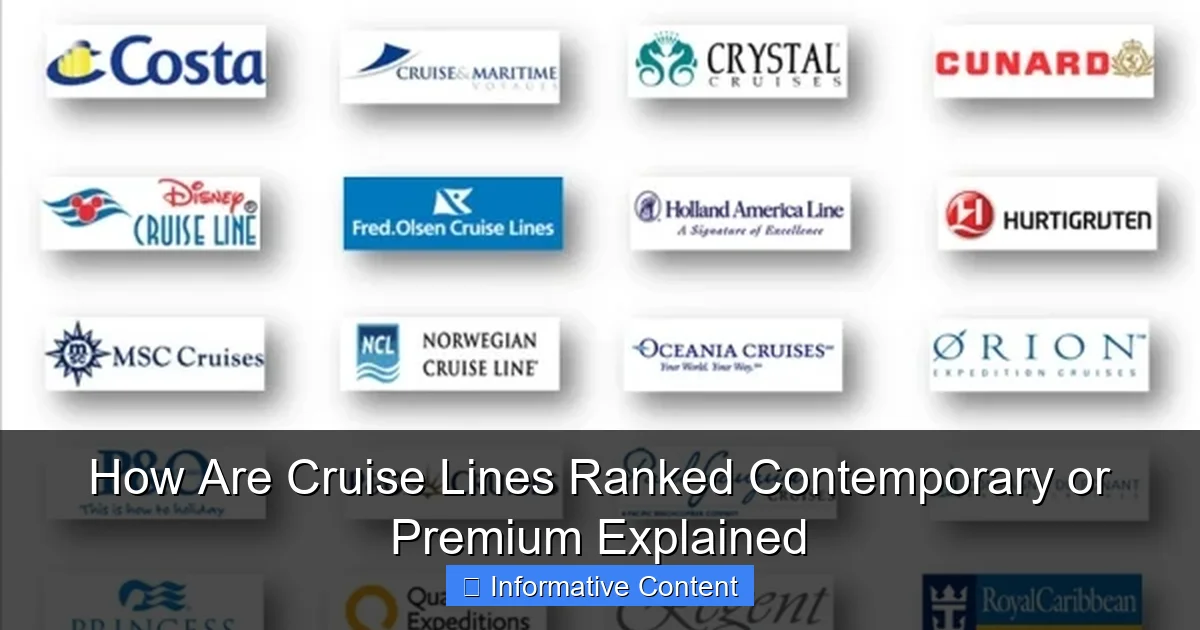
Featured image for how are cruise lines ranked contemporary or premium
Image source: premiumcruiseholidays.com.au
Cruise lines are ranked as contemporary or premium based on service level, amenities, and overall experience, not just price. Contemporary lines like Royal Caribbean and Norwegian focus on vibrant, activity-packed voyages with diverse dining and entertainment, while premium brands such as Holland America and Oceania emphasize refined service, gourmet cuisine, and more inclusive offerings. This distinction helps travelers choose the cruise experience that best fits their expectations and lifestyle.
Key Takeaways
- Ship size matters: Larger ships often indicate contemporary lines with more casual, activity-focused experiences.
- Price defines tier: Premium lines cost 20-50% more, offering refined service and inclusive amenities.
- Service ratio reveals quality: Premium brands maintain 1 staff per 2 guests; contemporary lines average 1:3.
- Dining options distinguish classes: Premium lines feature specialty restaurants; contemporary focus on flexible buffet dining.
- Itineraries signal positioning: Premium lines visit niche ports; contemporary favor mainstream destinations.
📑 Table of Contents
- What Makes a Cruise Line Contemporary or Premium?
- 1. The Core Difference: Price, Service, and Target Audience
- 2. Onboard Experience: Amenities, Dining, and Atmosphere
- 3. Ship Design and Technology: Innovation vs. Refinement
- 4. Itineraries and Destinations: Where Do They Go?
- 5. Loyalty Programs and Inclusions: What’s Really Included?
- 6. Real-World Examples: Side-by-Side Comparisons
- Final Thoughts: Choosing Your Perfect Cruise
What Makes a Cruise Line Contemporary or Premium?
Picture this: You’re scrolling through vacation options, dreaming of turquoise waters and endless buffets, when you come across two cruise lines. One is labeled contemporary, the other premium. At first glance, they might seem similar—both offer pools, dining, and entertainment. But dig a little deeper, and you’ll notice subtle (and not-so-subtle) differences that shape the entire experience. So, how are cruise lines ranked contemporary or premium? It’s not just about price or size. It’s about the entire package: service, amenities, design, and the kind of vacation you’re hoping to have.
As someone who’s spent years exploring the high seas and chatting with fellow cruisers, I’ve learned that the line between contemporary and premium isn’t always clear-cut. It’s not like one is “better” than the other—it’s about fit. Think of it like choosing between a stylish boutique hotel and a five-star resort. Both are great, but they serve different tastes, budgets, and expectations. Whether you’re a first-time cruiser or a seasoned sailor, understanding how cruise lines are categorized helps you pick the perfect match. Let’s break down what truly sets contemporary and premium cruise lines apart—and why it matters when you’re booking your next escape.
1. The Core Difference: Price, Service, and Target Audience
Price Points and Value Perception
The most obvious distinction between contemporary and premium cruise lines is price. Contemporary lines like Carnival Cruise Line and Royal Caribbean International are known for offering affordable base fares. You can often find 7-night Caribbean cruises starting under $600 per person. That’s a big draw for families, budget-conscious travelers, and those looking for a fun, energetic atmosphere.
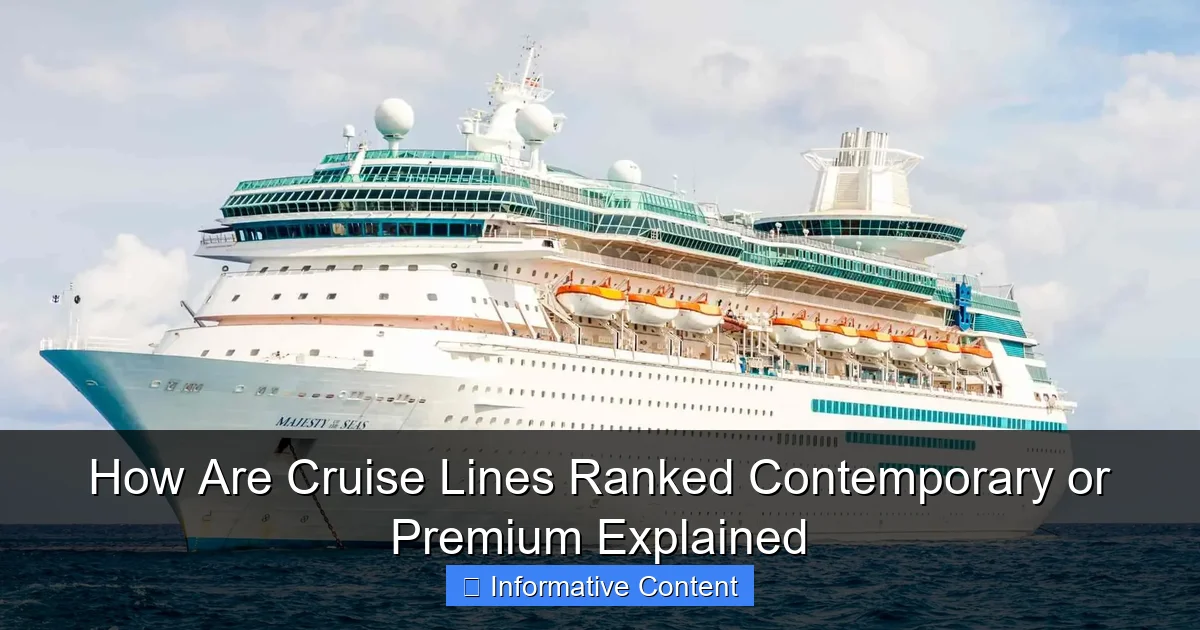
Visual guide about how are cruise lines ranked contemporary or premium
Image source: elliestraveltips.com
Premium lines—such as Holland America Line, Princess Cruises, and Celebrity Cruises—typically charge 20–40% more for the same itinerary. But that higher price tag isn’t just for show. It reflects a more refined experience: better food, more attentive service, fewer passengers, and a quieter onboard environment. For example, a 7-night Alaska cruise on Princess might cost $1,200 per person, while a similar itinerary on Royal Caribbean starts around $800. The extra $400 buys you a more curated, less crowded experience.
Who Are They For?
Contemporary lines attract a wide range of travelers: families with kids, young couples, and groups of friends looking for non-stop fun. The vibe is upbeat, loud, and packed with activities. Think pool parties, rock climbing, ice skating, and Broadway-style shows. These ships are designed to keep you entertained every minute.
Premium lines, on the other hand, tend to appeal to older couples, retirees, and travelers who value relaxation and sophistication. The average age on a premium cruise is often 50+, and the atmosphere is more subdued. You’ll find wine tastings, cooking demos, and live jazz—not foam parties. The focus is on comfort, quality, and a slower pace. It’s less about “doing it all” and more about enjoying the moment.
Service: A Key Differentiator
Service is where the gap really shows. On contemporary ships, crew-to-guest ratios are often around 1:2.5, meaning one staff member for every 2.5 passengers. That’s efficient, but service can feel rushed during peak times. You might wait in line for a drink or have to remind your room steward to refill the coffee pods.
On premium ships, the ratio is closer to 1:1.8. That means more staff per guest, leading to quicker service, personalized attention, and a more seamless experience. For instance, on a Celebrity Edge-class ship, you’ll often find crew members remembering your name and drink preferences by day two. That kind of attention is rare on larger, busier contemporary vessels.
2. Onboard Experience: Amenities, Dining, and Atmosphere
Dining: From Buffets to Gourmet
Food is a major factor in how cruise lines are ranked. Contemporary lines excel at variety. You’ll find 10+ dining venues, including buffets, fast-casual spots, and specialty restaurants (like Guy’s Burger Joint on Carnival or Jamie’s Italian on Royal Caribbean). But the quality can be hit or miss. Buffets are convenient but often crowded and inconsistent. Specialty dining is a step up, but usually requires an extra fee.

Visual guide about how are cruise lines ranked contemporary or premium
Image source: elliestraveltips.com
Premium lines take a different approach: fewer venues, but higher quality. Princess Cruises, for example, offers the Main Dining Room, Horizon Court buffet, and a few specialty spots like Steakhouse and Chef’s Table Lumiere. The focus is on fresh, locally sourced ingredients, and menus change nightly. You’ll notice the difference in flavor, presentation, and portion control. And while specialty dining still costs extra, it’s often more refined—like a multi-course tasting menu with wine pairings.
One standout example: Celebrity Cruises’ Le Petit Chef, a 3D animated dining experience where a virtual chef “cooks” your meal on your plate. It’s whimsical, high-tech, and only available on premium ships. That kind of innovation reflects the premium line’s commitment to unique, elevated experiences.
Entertainment and Activities
Contemporary ships are entertainment powerhouses. Royal Caribbean’s Anthem of the Seas has a skydiving simulator, robotic bartenders, and a two-deck-high theater. Carnival’s Mardi Gras features a roller coaster and a massive water park. These ships are built for excitement, with non-stop options for every age group.
Premium lines offer entertainment too, but it’s more curated. Think classical music concerts, guest lectures on art or history, and intimate jazz lounges. Holland America, for example, partners with BBC Earth for onboard documentaries and wildlife presentations. It’s not about volume—it’s about depth. You won’t find a roller coaster, but you might catch a live orchestra or a wine expert discussing Burgundy terroir.
Atmosphere and Crowds
Size matters. Contemporary ships often carry 4,000–6,000 passengers. That means long lines, crowded pools, and packed elevators. It’s a lively scene, but not always relaxing. Premium ships, while still large, carry fewer people—usually 2,000–3,500. The result? More space, quieter lounges, and less competition for sun loungers.
For example, the Regal Princess (3,560 guests) feels more spacious than the Freedom of the Seas (4,370 guests), even though they’re similar in size. Why? Premium lines design public areas with comfort in mind: wider decks, more shaded seating, and fewer high-traffic zones.
3. Ship Design and Technology: Innovation vs. Refinement
Contemporary: Big, Bold, and Tech-Forward
Contemporary cruise lines invest heavily in innovation. Royal Caribbean’s Quantum-class ships introduced the North Star—a glass capsule that lifts guests 300 feet above the ocean for panoramic views. They also have virtual balconies in interior staterooms, showing real-time footage of the ocean outside.
Norwegian Cruise Line’s Breakaway-class ships feature water slides that twist through the ship’s exterior, and open-air promenades with bars and lounges. These features are designed to wow and attract social media buzz. The goal? Make the ship itself a destination.
Premium: Elegance and Thoughtful Design
Premium lines focus on refinement over flash. Celebrity Cruises’ Edge-class ships have the Magic Carpet, a movable platform that serves as a restaurant, bar, or embarkation point at different decks. It’s not just functional—it’s sleek and futuristic, with glass walls and ambient lighting.
Holland America’s Koningsdam features a Music Walk—a dedicated zone for live music, from classical to pop. The design emphasizes acoustics, comfort, and ambiance. It’s not about spectacle; it’s about creating a memorable, immersive experience.
Sustainability and Tech
Both categories are embracing eco-friendly tech, but in different ways. Contemporary lines often highlight LNG-powered ships (like Carnival’s Mardi Gras) and advanced wastewater treatment. These are important, but they’re more about meeting regulations and cutting costs.
Premium lines take a more holistic approach. Celebrity Cruises has zero single-use plastics on its Edge-class ships and uses AI to optimize fuel efficiency. Princess Cruises partners with Ocean Medallion tech, which tracks guest preferences and streamlines boarding—but also reduces paper waste. The focus is on long-term sustainability, not just short-term savings.
4. Itineraries and Destinations: Where Do They Go?
Contemporary: Mass Appeal and Popular Routes
Contemporary lines dominate the Caribbean, Alaska, and European markets with high-volume itineraries. Royal Caribbean offers 3- to 7-night Bahamas cruises from Miami almost daily. Carnival runs similar routes from ports like Galveston and Port Canaveral. These are perfect for short getaways and first-time cruisers.
The downside? Popular ports like Cozumel or Grand Cayman can feel overcrowded when 10,000+ passengers descend in one day. It’s a trade-off: affordability and convenience vs. authenticity and space.
Premium: Deeper, More Unique Journeys
Premium lines often offer longer, more niche itineraries. Princess Cruises runs world cruises (100+ days) and expedition-style voyages to Antarctica. Holland America specializes in Alaska wilderness tours, with stops in small towns like Haines and Skagway—places most big ships can’t reach.
These lines also partner with local experts. For example, on a Princess Alaska cruise, you might have a glaciologist onboard explaining ice formations, or a native Tlingit guide leading a cultural walk. It’s not just sightseeing—it’s education and connection.
Port Experience Matters
Premium lines often include shore excursions in the base fare or offer them at a discount. Carnival and Royal Caribbean usually charge extra (and prices can be steep). A private beach day in Nassau might cost $150 per person on a contemporary line, but only $80 on Princess—with better guides and smaller groups.
5. Loyalty Programs and Inclusions: What’s Really Included?
Contemporary: Pay-as-You-Go Culture
Contemporary lines are famous for à la carte pricing. Your base fare covers basic meals, stateroom, and entertainment. But drinks, specialty dining, spa treatments, and excursions cost extra. A soda package? $10/day. Internet? $20–$30/day. Gratuities? Added automatically, usually $15–$20/day per person.
This model works for some—it keeps base prices low. But for others, it creates “nickel-and-diming” stress. I once spent $300 on drinks and excursions on a 7-day Carnival cruise—nearly as much as the cruise itself!
Premium: More Inclusions, Fewer Surprises
Premium lines include more in the base fare. Princess Cruises offers free wine and beer at dinner, complimentary fitness classes, and discounted shore excursions. Celebrity includes free premium coffee, gratuities, and basic Wi-Fi on many sailings.
Holland America even includes free specialty dining for suite guests and offers onboard credit for loyalty members. These perks add up. A $1,200 premium cruise might feel like a $1,500+ value when you factor in inclusions.
Loyalty Programs: Tiered Benefits
Both categories have loyalty programs, but premium lines tend to offer better perks. Royal Caribbean’s Crown & Anchor Society gives discounts and priority boarding, but elite tiers require 100+ cruise days. Princess’s Captain’s Circle offers free laundry, priority dining reservations, and exclusive events at lower tiers. The message? Premium lines reward loyalty more generously.
6. Real-World Examples: Side-by-Side Comparisons
Let’s compare two 7-night Alaska cruises to see how the rankings play out in practice.
| Feature | Royal Caribbean (Contemporary) | Princess Cruises (Premium) |
|---|---|---|
| Ship | Ovation of the Seas (4,180 guests) | Discovery Princess (3,660 guests) |
| Base Fare (per person) | $899 | $1,299 |
| Crew-to-Guest Ratio | 1:2.4 | 1:1.9 |
| Dining Options | 15+ venues, including buffet, specialty (extra fee) | 9 venues, including free wine at dinner, specialty (extra) |
| Entertainment | Broadway show, ice skating, rock climbing, pool parties | Guest lectures, live jazz, BBC Earth presentations |
| Shore Excursions | Average $120–$180; not included | Discounted; some included with loyalty status |
| Included Perks | Basic Wi-Fi ($15/day), soda package ($10/day) | Free beer/wine at dinner, basic Wi-Fi, gratuities |
| Best For | Families, first-time cruisers, thrill-seekers | Couples, retirees, culture lovers |
This table shows how the ranking system translates into real choices. Royal Caribbean wins on price and fun. Princess wins on comfort, inclusions, and depth of experience. Neither is “better”—it depends on what you value.
Final Thoughts: Choosing Your Perfect Cruise
So, how are cruise lines ranked contemporary or premium? It’s not a strict formula. It’s a blend of price, service, design, inclusions, and target audience. Contemporary lines are about fun, affordability, and non-stop activity. Premium lines are about comfort, quality, and a more personalized journey.
As you plan your next cruise, ask yourself: What kind of vacationer am I? If you love poolside DJs, kids’ clubs, and trying every activity, go contemporary. If you crave quiet evenings, gourmet meals, and meaningful shore experiences, lean premium. And don’t forget—many lines blur the lines. Royal Caribbean’s Quantum-class has premium touches, while Princess’s Sky Princess includes some contemporary-style thrills.
My advice? Read reviews, talk to past cruisers, and don’t just focus on price. A $500 cruise that feels chaotic might cost more in stress. A $1,200 cruise with free wine and quiet decks might be the best value you’ve ever found. The right cruise isn’t about the label—it’s about the experience. And now, you’re equipped to find the perfect one.
Frequently Asked Questions
How are cruise lines ranked as contemporary or premium?
Cruise lines are ranked as contemporary or premium based on factors like onboard amenities, service quality, dining options, and overall passenger experience. Contemporary lines cater to a broad audience with casual, flexible offerings, while premium lines focus on elevated service, refined dining, and curated itineraries.
What’s the difference between contemporary and premium cruise lines?
Contemporary cruise lines prioritize affordability, larger ships, and casual entertainment, appealing to families and first-time cruisers. Premium lines offer a more refined experience with personalized service, gourmet cuisine, and often smaller, more intimate ships.
Are premium cruise lines worth the extra cost compared to contemporary?
Premium cruise lines justify their higher prices with superior service, spacious accommodations, and exclusive perks like included gratuities or shore excursions. If you value comfort and curated experiences, the upgrade is often worth it.
How do cruise review sites rank contemporary vs. premium lines?
Review sites analyze passenger feedback, ship quality, dining, and value for money to rank contemporary and premium cruise lines. Premium lines often score higher for service and exclusivity, while contemporary lines excel in affordability and family-friendly activities.
Do luxury amenities automatically make a cruise line premium?
Not always—while luxury amenities like spas and gourmet dining are common, premium status also hinges on consistent service quality and a cohesive upscale experience. Some contemporary lines offer luxury touches but lack the overall refinement of premium brands.
Can a cruise line transition from contemporary to premium?
Yes, some lines rebrand or reposition themselves by upgrading ships, enhancing service, and refining itineraries to target the premium market. However, this shift requires significant investment and a clear strategy to meet elevated guest expectations.