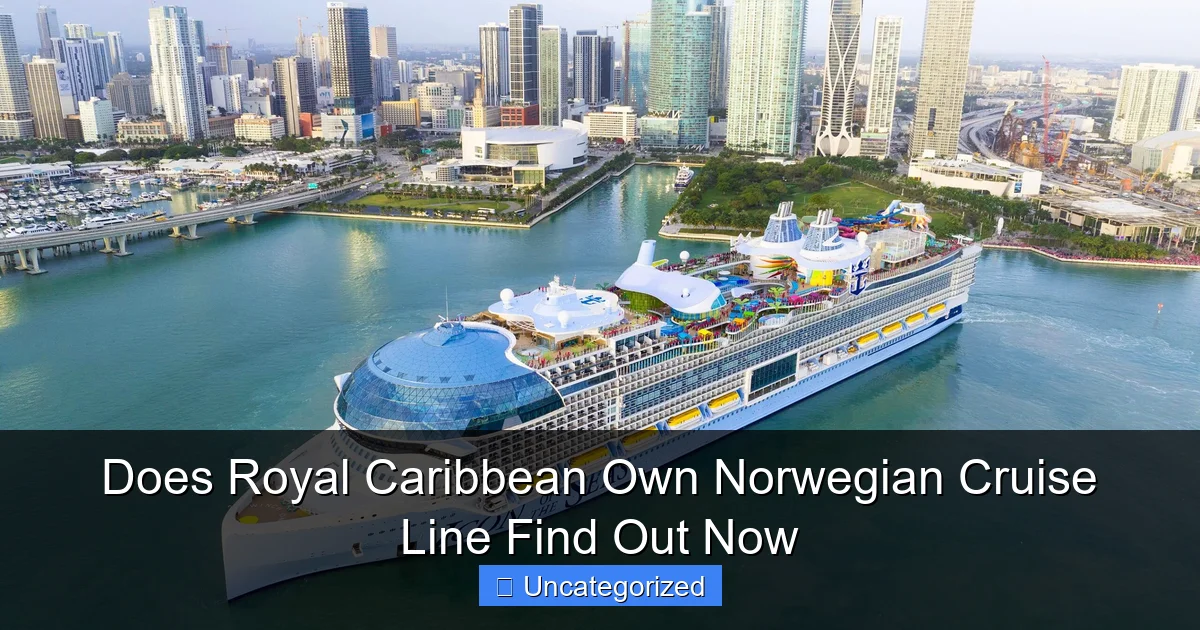
Featured image for does royal caribbean own norwegian cruise line
Image source: media.publit.io
No, Royal Caribbean does not own Norwegian Cruise Line—they are separate, publicly traded companies competing in the global cruise industry. Both operate independently, with distinct brands, fleets, and management, though they occasionally collaborate on port developments and industry initiatives.
Key Takeaways
- No ownership: Royal Caribbean does not own Norwegian Cruise Line.
- Independent brands: Both operate as separate, competing cruise companies.
- Stock exchange: Each trades independently—RCL and NCLH—on the NYSE.
- Diverse fleets: They maintain unique ships, itineraries, and brand identities.
- No shared ownership: No parent company owns both cruise lines outright.
- Market competition: They rival each other in pricing, destinations, and onboard experiences.
📑 Table of Contents
- The Big Cruise Line Rivalry: Royal Caribbean vs. Norwegian
- Understanding the Corporate Ownership Structures
- Market Position and Fleet Comparison
- Brand Differentiation and Guest Experience
- Historical Milestones and Industry Influence
- Competitive Landscape and Future Outlook
- Conclusion: Two Giants, One Industry
The Big Cruise Line Rivalry: Royal Caribbean vs. Norwegian
When planning your next dream vacation, you might find yourself comparing the major players in the cruise industry—Royal Caribbean International and Norwegian Cruise Line (NCL). Both brands boast luxurious ships, innovative amenities, and itineraries that span the globe, from the sun-kissed Caribbean to the icy wonders of Alaska. With such similar offerings, it’s natural to wonder: Does Royal Caribbean own Norwegian Cruise Line? The short answer is no, but the relationship between these two giants is far more nuanced than a simple yes or no.
The cruise industry is a fascinating ecosystem where competition, innovation, and strategic partnerships shape the travel experience. While Royal Caribbean and Norwegian Cruise Line may seem like rivals—and in many ways, they are—they operate under entirely separate corporate umbrellas. Understanding the ownership structures, historical developments, and competitive dynamics between these brands can help you make informed decisions about your next cruise. In this deep dive, we’ll explore the corporate lineages of both companies, their market positions, and how they stack up against each other in terms of size, innovation, and guest experience.
Understanding the Corporate Ownership Structures
Who Owns Royal Caribbean?
Royal Caribbean International is a subsidiary of Royal Caribbean Group, a publicly traded company (NYSE: RCL) headquartered in Miami, Florida. The company was founded in 1968 by three Norwegian shipping companies—Anders Wilhelmsen & Co., I.M. Skaugen & Co., and Gotaas-Larsen—but today, it operates as an independent entity with a diverse shareholder base. The Wilhelmsen family still holds a significant stake, maintaining a legacy of maritime expertise.
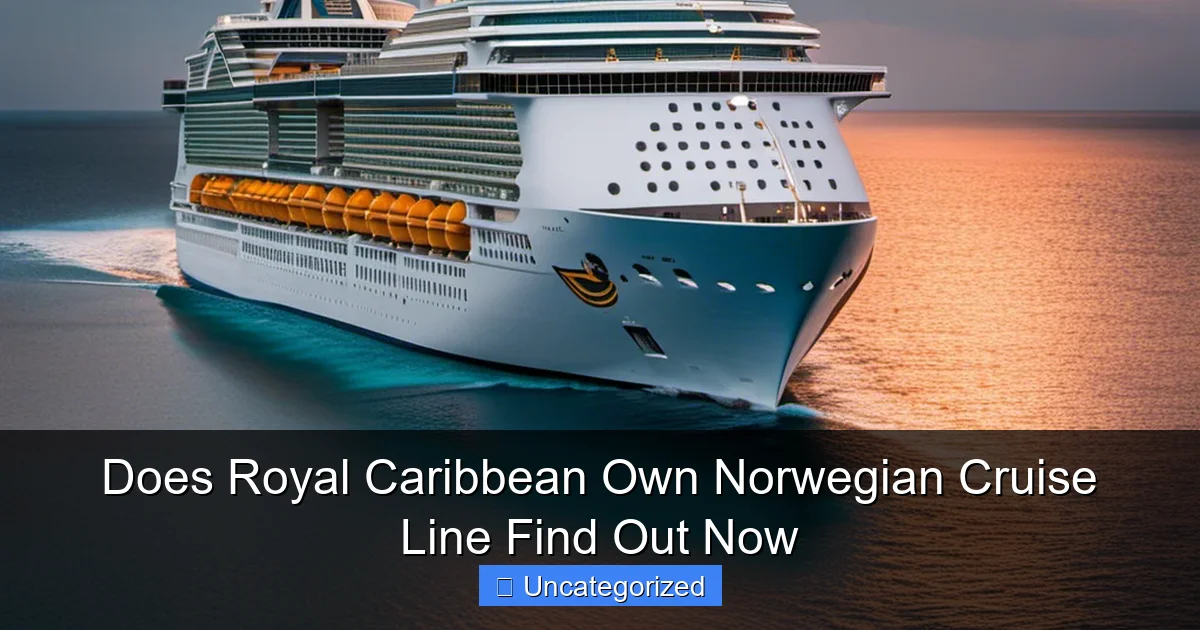
Visual guide about does royal caribbean own norwegian cruise line
Image source: voyagerinfo.com
The Royal Caribbean Group portfolio includes several cruise brands beyond Royal Caribbean International:
- Royal Caribbean International – The flagship brand known for megaships like Symphony of the Seas.
- Celebrity Cruises – A premium brand focusing on refined luxury and modern design.
- Silversea Cruises – An ultra-luxury, all-inclusive line acquired in 2018.
- Hapag-Lloyd Cruises – A German-based luxury and expedition brand acquired in 2019.
- TUI Cruises – A joint venture with TUI AG, catering to the German-speaking market.
This multi-brand strategy allows Royal Caribbean Group to target different market segments—from family-friendly mega-ships to intimate, high-end experiences—without diluting its core brand identity.
Who Owns Norwegian Cruise Line?
Norwegian Cruise Line is operated by Norwegian Cruise Line Holdings Ltd. (NCLH), another publicly traded company (NYSE: NCLH), also based in Miami. NCLH was formed in 2013 after a corporate restructuring that brought together Norwegian Cruise Line, Oceania Cruises, and Regent Seven Seas Cruises under one umbrella.
The ownership of NCLH is more diverse, with major shareholders including:
- Apollo Global Management – A private equity firm that acquired a majority stake in 2007 and helped expand the fleet.
- T. Rowe Price – A major institutional investor with long-term holdings.
- Public shareholders – Individual and institutional investors trading on the NYSE.
Unlike Royal Caribbean Group, NCLH does not have a single founding family with ongoing control. Instead, it’s driven by a mix of private equity influence and public market performance. This structure has allowed NCL to pursue aggressive growth strategies, including the development of the Norwegian Prima class—the first new class of ships in over a decade.
No Direct Ownership—Just Separate Paths
Despite both being based in Miami and competing for the same customer base, Royal Caribbean does not own Norwegian Cruise Line, nor does NCLH own Royal Caribbean. They are independent companies with distinct leadership, brand identities, and strategic goals. While they may partner on industry-wide initiatives—such as environmental sustainability or health and safety protocols—their operations, marketing, and product development remain entirely separate.
For example, Royal Caribbean’s Perfect Day at CocoCay private island is exclusive to its brands, while Norwegian’s Harvest Caye in Belize is only accessible to NCL passengers. This competitive differentiation reinforces their autonomy in the marketplace.
Market Position and Fleet Comparison
Fleet Size and Global Reach
When it comes to scale, both Royal Caribbean and Norwegian Cruise Line are among the top cruise companies in the world. However, Royal Caribbean holds a clear edge in fleet size and market share.
As of 2024, Royal Caribbean Group operates 64 ships across its five brands, with 17 of those under the Royal Caribbean International banner. The company is known for its record-breaking vessels, including Icon of the Seas—the largest cruise ship in the world at 250,800 gross tons—launched in early 2024. Royal Caribbean also has a robust pipeline of new ships, including the Utopia of the Seas (2024) and Star of the Seas (2025).
In contrast, Norwegian Cruise Line Holdings operates 32 ships:
- 18 under Norwegian Cruise Line
- 7 under Oceania Cruises
- 7 under Regent Seven Seas Cruises
While NCL’s fleet is smaller, it emphasizes innovation and guest experience over sheer size. The Norwegian Prima class, for instance, features the first 360-degree Ocean Boulevard, a wraparound promenade with infinity pools, and a redesigned spa and fitness center—features designed to enhance guest satisfaction rather than break tonnage records.
Passenger Capacity and Revenue
Royal Caribbean International alone carries over 6 million passengers annually, with a revenue of approximately $13.5 billion in 2023. The company’s focus on large, technologically advanced ships allows it to achieve economies of scale, offering lower per-day pricing on many itineraries.
Norwegian Cruise Line, while smaller, generated around $8.5 billion in revenue in 2023, with a total of 3.2 million passengers across its three brands. NCL’s “Free at Sea” program—offering free airfare, specialty dining, and shore excursions—has been a major driver of bookings, especially among first-time cruisers.
The following table compares key metrics between the two parent companies:
| Metric | Royal Caribbean Group | Norwegian Cruise Line Holdings |
|---|---|---|
| Number of Ships | 64 | 32 |
| Annual Passengers | ~10 million (across all brands) | ~3.2 million (across all brands) |
| 2023 Revenue | $13.5 billion | $8.5 billion |
| Market Cap (2024) | $32 billion | $8.7 billion |
| Flagship Brand | Royal Caribbean International | Norwegian Cruise Line |
| Newest Ship (2024) | Icon of the Seas | Norwegian Aqua (2025, under construction) |
This data underscores Royal Caribbean’s dominance in scale, but it also highlights NCL’s agility and focus on premium experiences. While Royal Caribbean wins on size and revenue, NCL differentiates through personalized service and innovative onboard programs.
Brand Differentiation and Guest Experience
Royal Caribbean: The Innovation Powerhouse
Royal Caribbean is synonymous with cutting-edge technology and family-friendly entertainment. The brand consistently pushes boundaries with features like:
- Sky Pad – A virtual reality trampoline experience on Harmony of the Seas.
- North Star – A glass capsule that lifts guests 300 feet above the ocean.
- FlowRider – A surf simulator available on most ships.
- Robotic Bars – Automated cocktail stations in the Royal Promenade.
The company also invests heavily in private destinations. Perfect Day at CocoCay in the Bahamas includes a 1,600-foot zip line, the largest freshwater pool in the Caribbean, and a helium balloon ride. These attractions are designed to keep families engaged and encourage repeat bookings.
For dining, Royal Caribbean offers a mix of complimentary and specialty options, including Jamie’s Italian, Chops Grille, and Wonderland Imaginative Dining. The brand also introduced Dynamic Dining—a flexible dining model that lets guests choose when and where to eat, similar to NCL’s Freestyle Dining.
Norwegian Cruise Line: The Pioneer of Freestyle Cruising
Norwegian Cruise Line revolutionized the industry in 2000 with its “Freestyle Cruising” concept, which eliminated assigned dining times, formal nights, and strict dress codes. This flexibility resonated with younger travelers and families seeking a relaxed, personalized experience.
Key features of NCL’s brand identity include:
- Open seating dining – No fixed times or tables; guests can eat whenever they want.
- Free at Sea promotions – Bundled perks like free airfare, drinks, and excursions.
- Studio cabins – Designed for solo travelers, complete with private lounges.
- Broadway shows – Ships like Norwegian Encore feature full-length productions of Jersey Boys and Kinky Boots.
NCL also emphasizes wellness and sustainability. The Norwegian Prima class includes a redesigned Mandara Spa with thermal suites, a salt room, and a fitness center with ocean views. The brand has also committed to reducing single-use plastics and investing in LNG (liquefied natural gas) propulsion for future ships.
Target Audience and Pricing Strategy
Royal Caribbean tends to attract families, multi-generational groups, and thrill-seekers who want non-stop entertainment and activities. Its pricing is competitive, with many deals under $100 per person, per day—especially on Caribbean itineraries.
Norwegian Cruise Line appeals to couples, solo travelers, and those who value flexibility and relaxation. While base fares may be similar, the “Free at Sea” program often makes NCL a better value for travelers who want included drinks, dining, and excursions. For example, a 7-night Caribbean cruise on Norwegian Joy might start at $999 per person with free specialty dining and a $50 shore excursion credit—offers not always matched by Royal Caribbean.
Tip: If you’re a solo traveler, consider NCL’s Studio cabins, which are often cheaper than paying a single supplement on Royal Caribbean. For families with kids who love water slides and VR games, Royal Caribbean’s megaships are hard to beat.
Historical Milestones and Industry Influence
Royal Caribbean’s Rise to Dominance
Founded in 1968, Royal Caribbean launched its first ship, Song of Norway, in 1970. The company gained attention for introducing the first onboard ice rink (on Norwegian Crown, later transferred) and the first rock-climbing wall at sea (on Voyager of the Seas, 1999). These innovations set the stage for the brand’s reputation as an industry leader.
Key milestones include:
- 1988 – Launch of Sovereign of the Seas, the first modern megaship (73,000 GT).
- 2009 – Introduction of the Oasis class (Oasis of the Seas), doubling the size of previous ships.
- 2018 – Acquisition of Silversea, expanding into ultra-luxury cruising.
- 2024 – Launch of Icon of the Seas, the first LNG-powered megaship and the largest in the world.
Royal Caribbean’s focus on LNG propulsion, AI-driven guest services, and sustainability continues to shape the future of cruising.
Norwegian’s Evolution and Challenges
Norwegian Cruise Line began in 1966 as Norwegian Caribbean Line, with the acquisition of the Sunward. The brand gained traction in the 1980s with the launch of Norwegian Sky and Norwegian Sun, which introduced more casual, resort-style cruising.
Major turning points include:
- 1987 – First cruise line to offer all-inclusive pricing on select itineraries.
- 2000 – Launch of Freestyle Cruising, changing industry norms.
- 2007 – Acquisition by Apollo Global Management, leading to fleet expansion.
- 2013 – Formation of NCLH, merging Norwegian, Oceania, and Regent.
- 2023 – Launch of Norwegian Prima, the first in a new class emphasizing design and guest experience.
Despite its innovations, NCL faced challenges during the pandemic, with significant financial losses. However, its aggressive marketing and loyalty programs have helped it recover faster than many competitors.
Competitive Landscape and Future Outlook
How They Compete—And Why They Don’t Merge
Royal Caribbean and Norwegian Cruise Line are fierce competitors, but they serve slightly different niches. Royal Caribbean dominates in scale, technology, and family entertainment, while NCL excels in flexibility, value-added perks, and premium experiences.
A merger between the two is highly unlikely due to:
- Regulatory hurdles – A combination would control over 50% of the North American cruise market, raising antitrust concerns.
- Brand identity – Both companies have loyal followings; merging could alienate core customers.
- Corporate culture – Royal Caribbean emphasizes innovation and growth, while NCL focuses on guest-centric service.
Instead, both companies are investing in sustainability, digital transformation, and new markets. Royal Caribbean is expanding in Asia and the Middle East, while NCL is focusing on European and Australian itineraries.
The Future of Cruising: What’s Next?
Both brands are preparing for a post-pandemic world with:
- LNG-powered ships – Reducing carbon emissions and fuel costs.
- Enhanced health protocols – Including advanced air filtration and contactless services.
- AI and personalization – Using data to tailor onboard experiences.
- Expedition cruising – Both have launched ships for polar and remote destinations.
Royal Caribbean’s Icon of the Seas sets a new benchmark for luxury and sustainability, while NCL’s Norwegian Aqua (launching 2025) promises even more immersive experiences, including a redesigned go-kart track and expanded spa.
Conclusion: Two Giants, One Industry
So, does Royal Caribbean own Norwegian Cruise Line? The answer is a definitive no. These two cruise powerhouses operate under separate corporate entities—Royal Caribbean Group and Norwegian Cruise Line Holdings—with distinct strategies, brand identities, and market positions. While they compete for your vacation dollars, they also push each other to innovate, improve guest experiences, and shape the future of cruising.
Choosing between them comes down to what you value most. If you want non-stop action, record-breaking ships, and family-friendly thrills, Royal Caribbean is the clear choice. If you prefer flexibility, inclusive perks, and a more relaxed pace, Norwegian Cruise Line might be your perfect match.
Ultimately, both companies offer world-class service, unforgettable destinations, and experiences that go far beyond a typical vacation. By understanding their differences—and their independence—you can make a smarter, more informed decision for your next cruise. Whether you’re sailing on Icon of the Seas or Norwegian Prima, one thing is certain: the cruise industry is stronger because these two giants continue to innovate, compete, and inspire travelers around the globe.
Frequently Asked Questions
Does Royal Caribbean own Norwegian Cruise Line?
No, Royal Caribbean does not own Norwegian Cruise Line (NCL). The two are separate, publicly traded companies that operate as competitors in the cruise industry.
Are Royal Caribbean and Norwegian Cruise Line part of the same parent company?
No, they are not. Royal Caribbean Group (formerly Royal Caribbean Cruises Ltd.) and Norwegian Cruise Line Holdings Ltd. are independent corporations with distinct leadership, fleets, and brand identities.
Is Norwegian Cruise Line a subsidiary of Royal Caribbean?
No, NCL is not a subsidiary. Both Royal Caribbean and Norwegian Cruise Line are major players in the cruise market but maintain separate ownership and operational structures.
Do Royal Caribbean and Norwegian Cruise Line share ownership or investors?
While institutional investors may hold shares in both companies, neither has ownership over the other. Their stock is publicly traded under different tickers (RCL and NCLH).
Which company owns Norwegian Cruise Line?
Norwegian Cruise Line is owned by Norwegian Cruise Line Holdings Ltd., a standalone company headquartered in Miami, Florida. It does not have ties to Royal Caribbean Group.
Does Royal Caribbean Group have any partnership with Norwegian Cruise Line?
There is no formal partnership or ownership link between Royal Caribbean Group and Norwegian Cruise Line. They remain independent competitors in the global cruise market.