Featured image for does disney own disney cruise line
Image source: filmlifestyle.com
Yes, Disney Cruise Line is fully owned by The Walt Disney Company, operating as a subsidiary under Disney Experiences. This direct ownership ensures the cruise line delivers the same signature storytelling, immersive themes, and family-friendly magic found in Disney’s parks and media, with ships designed to extend the brand’s legendary guest experience to the high seas.
Key Takeaways
- Disney fully owns Disney Cruise Line: It’s a wholly owned subsidiary of The Walt Disney Company.
- No third-party ownership: Unlike some theme parks, Disney Cruise Line has no external shareholders.
- Operated by Disney: All ships, staff, and experiences are managed directly by Disney.
- Brand synergy: Cruises leverage Disney’s IPs like Marvel, Pixar, and Star Wars for exclusive offerings.
- Expansion confirms commitment: New ships and destinations prove Disney’s long-term investment in cruising.
📑 Table of Contents
- The Magic Behind the Waves: Does Disney Own Disney Cruise Line?
- Disney Cruise Line: A Fully Owned Subsidiary of The Walt Disney Company
- How Disney Built and Expands Its Cruise Fleet
- Operational Control: Disney’s Hands-On Management
- Brand Protection and Intellectual Property
- Financial Performance and Market Position
The Magic Behind the Waves: Does Disney Own Disney Cruise Line?
When you think of Disney, images of enchanted castles, beloved characters like Mickey Mouse, and blockbuster movies like Frozen and Star Wars might spring to mind. But what about the high seas? For decades, Disney has extended its magical touch beyond theme parks and films into the world of luxury cruising with the Disney Cruise Line. Families across the globe have experienced unforgettable vacations aboard these floating wonderlands, complete with Broadway-style shows, themed dining, and even fireworks at sea. But here’s a question that often sparks curiosity: Does Disney own Disney Cruise Line? At first glance, the answer seems obvious—after all, the name is right there in the title. Yet, beneath the surface of this seemingly simple question lies a fascinating story of corporate structure, strategic partnerships, and the seamless integration of one of the world’s most powerful entertainment brands into a completely different industry.
The allure of Disney Cruise Line lies not just in its entertainment value but in its ability to deliver a consistent, high-quality experience that mirrors the magic found in Disney’s parks and movies. From the moment guests board a Disney ship, they are immersed in a world where storytelling, safety, and service converge. But ownership and operation are more complex than they appear. While the Disney name is front and center, the cruise line operates within a unique framework involving shipbuilding, maritime regulations, and global logistics. In this deep dive, we’ll explore the truth behind Disney Cruise Line’s ownership, uncovering how The Walt Disney Company maintains control, what subsidiaries are involved, and how the brand’s identity is protected across international waters. Whether you’re a seasoned cruiser or planning your first Disney voyage, understanding the structure behind the scenes can deepen your appreciation for the magic on the water.
Disney Cruise Line: A Fully Owned Subsidiary of The Walt Disney Company
Corporate Structure and Ownership
The short and definitive answer to “does Disney own Disney Cruise Line?” is yes—but with nuance. Disney Cruise Line is a wholly owned subsidiary of The Walt Disney Company, operating under the umbrella of Disney Parks, Experiences and Products (DPEP), one of the company’s four major business segments. This division also includes Disneyland, Walt Disney World, Disney Vacation Club, and international parks like Shanghai Disney Resort. Unlike some entertainment brands that license their names to third-party operators, Disney maintains full ownership and operational control over its cruise line, ensuring brand consistency, quality standards, and direct accountability.
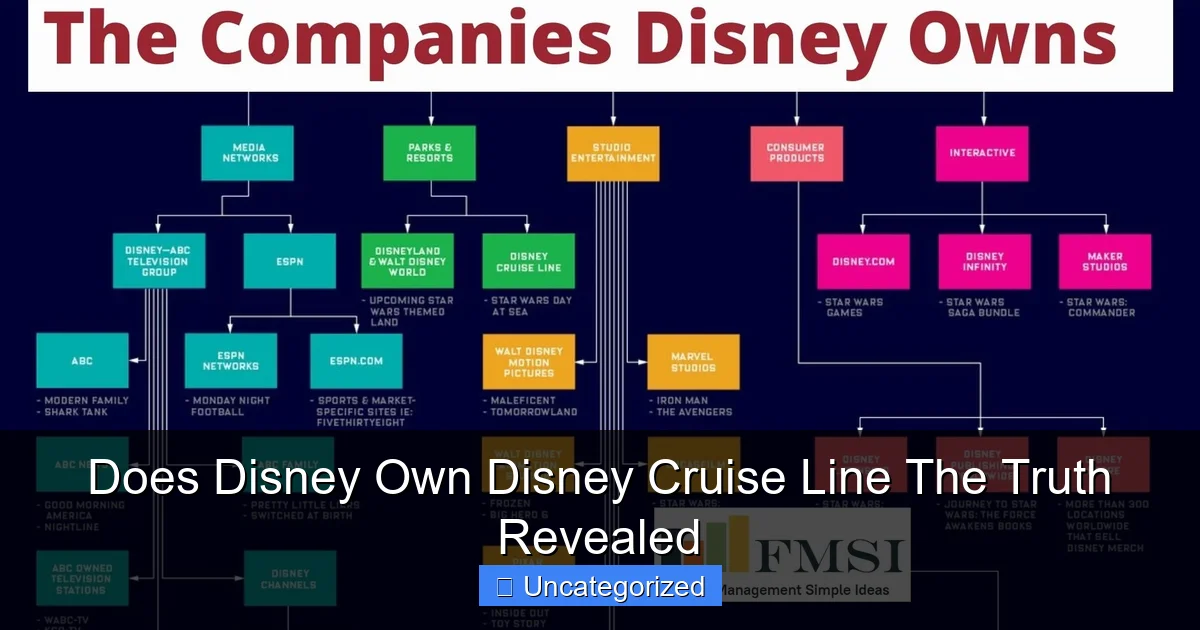
Visual guide about does disney own disney cruise line
Image source: fmsi.biz
Formally incorporated in 1995 and launching its first ship, the Disney Magic, in 1998, Disney Cruise Line was conceived as a natural extension of Disney’s experiential entertainment strategy. The company didn’t just slap its name on an existing cruise brand—it built the concept from the ground up. According to Disney’s 2023 Annual Report, the cruise line contributes to the DPEP segment’s revenue through ticket sales, onboard spending, and vacation packages. This vertical integration allows Disney to capture more of the guest’s vacation spend, from park visits to sea voyages, all under one corporate roof.
Why Full Ownership Matters
Full ownership enables Disney to maintain tight control over every aspect of the cruise experience. Unlike partnerships (e.g., Universal’s licensing deals with Royal Caribbean), Disney Cruise Line doesn’t have to negotiate brand usage, character appearances, or design aesthetics with an external operator. For example:
- Character Integration: Mickey, Minnie, and other characters appear daily in parades, meet-and-greets, and themed events—all managed internally by Disney staff.
- Themed Dining: Restaurants like Animator’s Palate and Rapunzel’s Royal Table are designed by Disney Imagineers, ensuring authenticity.
- Entertainment: Broadway-caliber shows are produced by Disney Theatrical Productions, a Disney-owned subsidiary.
This level of control ensures that the cruise line delivers a “Disney experience” in every sense, from the napkin folds to the fireworks. It also allows Disney to innovate quickly—such as introducing the first fireworks at sea in the cruise industry or launching the Star Wars: Hyperspace Lounge on the Disney Wish.
How Disney Built and Expands Its Cruise Fleet
Shipbuilding Partnerships: Ownership vs. Construction
While Disney owns the cruise line, it doesn’t build its ships. Instead, the company partners with shipyards to construct vessels to its exacting specifications. For example:
Visual guide about does disney own disney cruise line
Image source: 1.bp.blogspot.com
- The Disney Magic and Disney Wonder were built by Fincantieri in Italy.
- The Disney Dream and Disney Fantasy were constructed by Meyer Werft in Germany.
- The Disney Wish, Disney Treasure, and upcoming Disney Destiny are being built by Meyer Neptun (a joint venture of Meyer Werft and Neptun Werft) in Germany.
These partnerships are critical: shipbuilding requires specialized maritime engineering, regulatory compliance, and massive capital investment. By outsourcing construction, Disney focuses on design, guest experience, and operations—areas where it excels. Once completed, the ships are delivered to Disney Cruise Line, which takes full ownership and registers them under the Bahamas Maritime Authority (a common practice for international cruise lines due to favorable tax and labor regulations).
Fleet Expansion and Future Plans
Disney’s cruise fleet has grown steadily, with plans for continued expansion. As of 2024, the fleet includes:
| Ship | Launched | Capacity (Guests) | Builder |
|---|---|---|---|
| Disney Magic | 1998 | 2,713 | Fincantieri (Italy) |
| Disney Wonder | 1999 | 2,713 | Fincantieri (Italy) |
| Disney Dream | 2011 | 4,000 | Meyer Werft (Germany) |
| Disney Fantasy | 2012 | 4,000 | Meyer Werft (Germany) |
| Disney Wish | 2022 | 4,000 | Meyer Neptun (Germany) |
| Disney Treasure | 2024 (Planned) | 4,000 | Meyer Neptun (Germany) |
| Disney Destiny | 2025 (Planned) | 4,000 | Meyer Neptun (Germany) |
Disney has also announced a fourth new ship (name TBD) for delivery in 2026, signaling long-term commitment to the cruise market. These new vessels feature advanced technology, such as LNG (liquefied natural gas) propulsion, reducing emissions and aligning with Disney’s environmental goals. The expansion reflects Disney’s strategy to capture a larger share of the family cruise market, estimated to be worth over $100 billion annually.
Operational Control: Disney’s Hands-On Management
Staffing and Crew
Disney Cruise Line employs over 15,000 crew members worldwide, all hired and trained by Disney. Unlike some cruise lines that outsource staffing to third-party agencies, Disney maintains direct control over recruitment, training, and management. Crew undergo a rigorous Disney Traditions training program, emphasizing guest service, safety, and brand immersion. For example, every crew member learns the “Disney Service Basics”—a set of principles focused on courtesy, safety, and showmanship.
This hands-on approach ensures consistency. On the Disney Wish, the “Worlds of Marvel” dining experience is staffed by cast members trained in Marvel lore, allowing them to interact with guests using character-specific knowledge. Similarly, youth counselors are trained in Disney storytelling, making kids’ clubs feel like an extension of the parks.
Port Operations and Logistics
Disney manages its own port operations at Castaway Cay (its private island in the Bahamas) and Disney Lookout Cay at Lighthouse Point (a new private destination in Eleuthera, opening in 2024). These islands are fully owned by Disney and operated as exclusive retreats for cruise guests. At Castaway Cay, for instance, Disney employs over 500 Bahamians, manages all infrastructure (from water desalination to waste management), and even operates a medical clinic.
For international ports, Disney partners with local agencies but retains oversight. For example, in Alaska, Disney Cruise Line works with the State of Alaska to ensure environmental compliance and cultural sensitivity. The company also collaborates with the U.S. Coast Guard and International Maritime Organization (IMO) to meet safety standards. This level of control is rare in the cruise industry and underscores Disney’s commitment to quality.
Brand Protection and Intellectual Property
Trademarks and Licensing
Disney’s ownership of the cruise line is legally protected through a robust trademark portfolio. The company holds over 100 trademarks related to “Disney Cruise Line,” “Disney Magic,” and other ship names, registered in key jurisdictions like the U.S., EU, and Japan. These trademarks cover not just the names but also logos, slogans (e.g., “A Magical Cruise Awaits”), and design elements (e.g., the iconic red funnel with Mickey ears).
Crucially, Disney does not license the cruise line to third parties. Every aspect of the operation—from the ships to the merchandise—is produced in-house or by Disney-approved vendors. For example, the “Disney Cruise Line Vacation Planner” app is developed by Disney’s technology team, not an external software company. This protects the brand from dilution or misuse.
Merchandising and Onboard Sales
Onboard retail is a significant revenue stream. Disney Cruise Line operates shops selling exclusive merchandise, such as:
- Character apparel (e.g., Mickey ears with nautical themes)
- Ship-specific collectibles (e.g., models of the Disney Wish)
- Photo packages (e.g., character meet-and-greet prints)
These items are designed by Disney Consumer Products and sold only on ships or through Disney’s website. The company uses advanced inventory systems to track sales in real time, adjusting stock based on demand. For instance, during a Star Wars-themed cruise, lightsaber sales spike, prompting restocking from Disney’s global supply chain.
Financial Performance and Market Position
Revenue and Profitability
While Disney doesn’t break out cruise line finances separately, analysts estimate the segment contributes $2–3 billion annually to DPEP’s revenue. The cruise line is highly profitable due to:
- Premium pricing: Fares are 20–30% higher than mass-market lines like Carnival.
- Onboard spending: Guests spend an average of $500–$1,000 per cruise on extras (photos, drinks, spa).
- Brand loyalty: Over 40% of cruisers are repeat guests, reducing marketing costs.
Disney’s cruise revenue has grown by 8% CAGR since 2015, outpacing the industry average of 4%. The company’s investment in new ships and destinations is expected to drive further growth.
Competitive Edge
Disney Cruise Line dominates the family cruise market, holding ~15% market share in North America. Its success stems from:
- Exclusive experiences: No other line offers Frozen-themed dining or Star Wars adventures.
- Safety record: Zero major incidents in 25+ years of operation.
- Global reach: Itineraries span the Caribbean, Europe, Alaska, and the South Pacific.
For example, the Disney Fantasy’s 7-night Eastern Caribbean itinerary sells out months in advance, often at full capacity. In contrast, many competitors face fluctuating demand due to weaker brand appeal.
In conclusion, Disney Cruise Line is unequivocally owned and operated by The Walt Disney Company. From ship design to crew training, every facet reflects Disney’s hands-on approach to quality and brand integrity. The cruise line isn’t just a business venture—it’s a storytelling platform, a revenue driver, and a testament to Disney’s ability to innovate across industries. Whether you’re sailing on the Disney Magic or booking the Disney Destiny, you’re experiencing a product of Disney’s full ownership, meticulous control, and relentless pursuit of magic. The next time someone asks, “Does Disney own Disney Cruise Line?” you’ll know the answer isn’t just yes—it’s a resounding, fireworks-at-sea, yes.
Frequently Asked Questions
Is Disney Cruise Line actually owned by Disney?
Yes, Disney Cruise Line is a wholly owned subsidiary of The Walt Disney Company. It operates as part of Disney’s Parks, Experiences, and Products division, ensuring direct oversight and alignment with Disney’s brand standards.
Does Disney own Disney Cruise Line or is it a franchise?
Disney fully owns and operates Disney Cruise Line—it is not a franchise. The cruise line was launched in 1995 as a direct extension of Disney’s entertainment and hospitality offerings.
How does Disney Cruise Line fit into Disney’s overall business?
Disney Cruise Line is a key component of Disney’s Parks, Experiences, and Products segment. It leverages Disney’s storytelling, characters, and service culture to deliver immersive vacation experiences at sea.
Who is the parent company of Disney Cruise Line?
The parent company of Disney Cruise Line is The Walt Disney Company. All ships, operations, and itineraries are developed and managed in-house under Disney’s direct control.
Why is there confusion about whether Disney owns Disney Cruise Line?
Some confusion arises due to third-party travel agencies selling Disney Cruise Line packages. However, these are authorized resellers—the cruise line itself remains fully owned and operated by Disney.
Does Disney own all the ships in the Disney Cruise Line fleet?
Yes, Disney owns all four ships in the Disney Cruise Line fleet—Disney Magic, Wonder, Dream, and Fantasy. The company also has additional ships under construction, further expanding its owned fleet.