Featured image for does cruise lines have tsa
Image source: explore.com
Cruise lines do not have TSA agents, but they enforce similar security screenings to ensure passenger safety, including ID checks, bag scans, and metal detectors at embarkation. You’ll need a government-issued photo ID and boarding pass, just like at the airport, so arrive prepared to avoid delays.
Key Takeaways
- Cruise lines don’t use TSA: They have their own security screening processes at terminals.
- Arrive early: Boarding involves checks similar to airports—plan for 1-2 hours.
- Valid ID is critical: Carry a passport even if not required for your itinerary.
- Prohibited items apply: Avoid sharp objects or large liquids to speed up screening.
- Pre-check programs: Some lines offer priority screening—inquire when booking.
- Kids need documentation: Minors require birth certificates or notarized letters for boarding.
- Check line policies: Rules vary—verify your cruise’s specific security requirements.
📑 Table of Contents
- Do Cruise Lines Have TSA? What You Need to Know Before You Sail
- How Cruise Line Security Differs from TSA
- What Security Procedures Do Cruise Lines Use?
- Prohibited and Restricted Items on Cruises
- Tips for a Smooth Cruise Security Experience
- Security at Different Cruise Ports: A Global Perspective
- Conclusion
Do Cruise Lines Have TSA? What You Need to Know Before You Sail
Planning a cruise vacation is an exciting adventure, filled with dreams of turquoise waters, exotic ports, and onboard entertainment. However, one crucial aspect often overlooked during the planning process is security screening. If you’ve ever boarded a plane, you’re familiar with the Transportation Security Administration (TSA) and its rigorous procedures. But do cruise lines have TSA? The short answer is no — but that doesn’t mean your cruise embarkation is a free-for-all. Cruise lines implement their own comprehensive security protocols that, while different from TSA, are equally designed to ensure passenger safety.
Understanding how cruise security works is essential for a smooth embarkation day. Unlike airports, where TSA is a federal agency operating under U.S. Department of Homeland Security mandates, cruise terminals rely on a combination of private security teams, international maritime regulations, and coordination with local law enforcement. This blog post will explore the nuances of cruise line security, how it compares to TSA, and what you need to know before stepping foot on your next ocean voyage. From boarding procedures to prohibited items and tips for minimizing delays, we’ll cover everything to help you sail with confidence.
How Cruise Line Security Differs from TSA
The Role of TSA in Air Travel
The Transportation Security Administration (TSA) is a U.S. federal agency created in response to the 9/11 attacks. Its primary mission is to secure the nation’s transportation systems, particularly commercial aviation. TSA operates at over 440 airports across the United States, conducting passenger screening, baggage checks, and threat detection using advanced technology like body scanners and explosive trace detection (ETD) systems. TSA agents are federal employees trained in standardized procedures, and their presence is mandatory at all U.S. commercial airports.
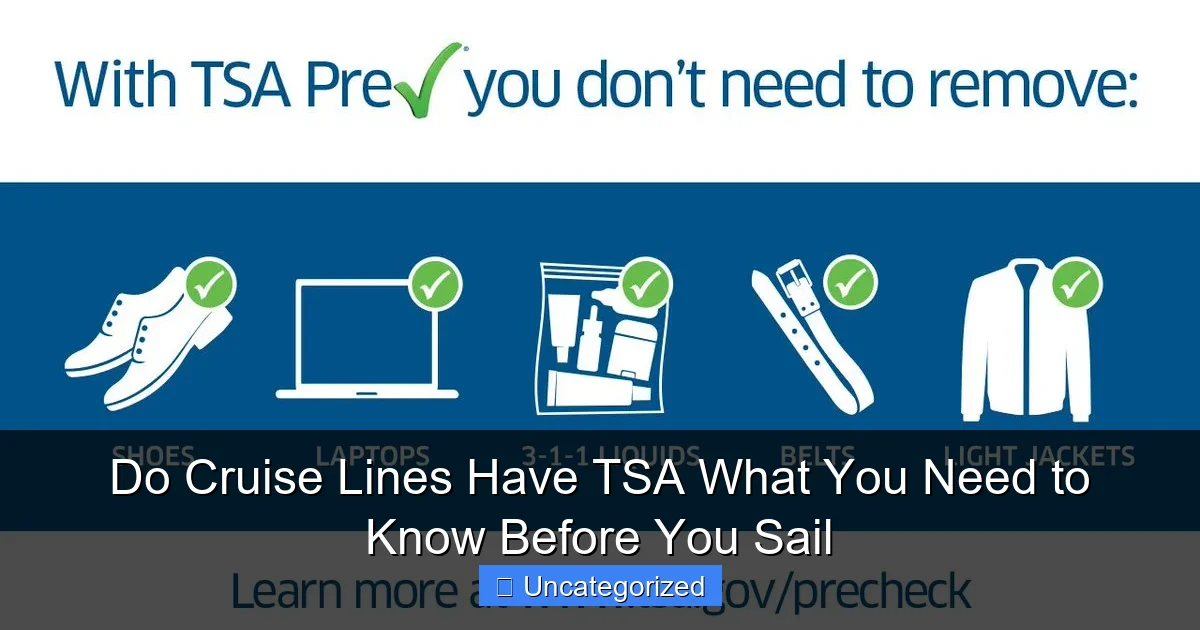
Visual guide about does cruise lines have tsa
Image source: tsa.gov
When you fly, you undergo a series of checks: showing ID and boarding pass, placing carry-ons and personal items on the conveyor belt, removing shoes and electronics, and walking through metal detectors or advanced imaging technology. All of this is governed by strict federal regulations, and violations can result in fines, denial of boarding, or even criminal charges.
Cruise Security: Private, Not Federal
Unlike TSA, there is no federal TSA agency operating at cruise terminals. Instead, cruise lines contract with private security firms to manage screening at embarkation. These firms are typically certified by the International Ship and Port Facility Security (ISPS) Code, a global standard established by the International Maritime Organization (IMO). The ISPS Code ensures that all commercial vessels and port facilities adhere to consistent security measures, regardless of nationality.
For example, major cruise lines like Carnival, Royal Caribbean, and Norwegian Cruise Line use third-party security providers such as Universal Protection Services (UPS) or Allied Universal. These teams wear uniforms similar to TSA agents — often with “Security” or “Cruise Security” insignia — but they are not federal employees. They follow protocols set by the cruise line in coordination with the U.S. Coast Guard, U.S. Customs and Border Protection (CBP), and local port authorities.
Key differences include:
- No federal oversight: Cruise security is not a government-run operation, so enforcement varies slightly by terminal and cruise line.
- No standardized technology: While most terminals use X-ray machines and metal detectors, the models and capabilities may differ.
- Less stringent carry-on screening: You won’t be required to remove shoes or laptops unless flagged for additional screening.
- No TSA PreCheck or Global Entry integration: These expedited programs do not apply to cruise embarkation.
Why the Difference Matters
The absence of TSA at cruise terminals doesn’t mean less security — it means a different approach. Cruise ships are floating cities with thousands of people, and their security model prioritizes efficiency and passenger experience without sacrificing safety. For instance, cruise security often uses behavioral detection officers (similar to TSA’s SPOT program) to identify suspicious activity, but they focus more on crowd flow and less on individual bag searches.
Moreover, cruise terminals are designed for high-volume processing. A terminal like PortMiami can handle 20,000+ passengers daily during peak season. TSA-style bottlenecks would be impractical, so cruise security emphasizes streamlined checkpoints with multiple lanes and rapid ID verification. This means you might not see the same level of scrutiny as at an airport, but the underlying goal — preventing threats — is the same.
What Security Procedures Do Cruise Lines Use?
Pre-Boarding Documentation and Check-In
Security begins long before you reach the terminal. Cruise lines require online check-in 7–14 days before departure. During this process, you’ll upload government-issued photo ID (e.g., passport or driver’s license), a recent photo, and complete health questionnaires (especially important post-pandemic). This digital pre-screening helps identify potential issues early, such as expired documents or flagged individuals, reducing delays at the terminal.
Example: Royal Caribbean’s “Check-In & Security” portal allows you to review your boarding pass, select dining times, and even pre-purchase shore excursions. Their system flags any missing documents, so you can resolve them before arrival.
Terminal Screening Process
Once at the terminal, you’ll undergo a multi-step security process:
- Document Verification: A staff member scans your ID and boarding pass. Some terminals use facial recognition software to match your photo.
- Bag X-Ray: All carry-on bags, backpacks, and personal items go through an X-ray machine. Security officers monitor the screens for prohibited items.
- Metal Detector or Walk-Through Scanner: You’ll walk through a metal detector or, in some cases, a full-body scanner. Unlike TSA, you usually keep your shoes and jacket on unless flagged.
- Hand Searches: If an item is suspicious, your bag may be opened and inspected. This is rare but can happen with bulky or oddly shaped items.
- Passenger Verification: Your ID is scanned again at the gangway before boarding. This final check ensures no unauthorized individuals board.
Tip: Arrive early (1–2 hours before boarding time) to avoid long lines, especially during peak season. Some cruise lines offer priority boarding for suite guests or loyalty members.
Technology and Threat Detection
Modern cruise terminals use advanced tools to enhance security:
- Explosive Trace Detection (ETD): Swabs from bags or surfaces are analyzed for traces of explosives.
- Behavioral Detection Officers (BDOs): Trained personnel observe passenger behavior for signs of stress or deception.
- Surveillance Cameras: High-definition cameras monitor all areas of the terminal and gangways.
- K-9 Units: Some terminals employ drug and explosive-sniffing dogs, especially at U.S. and European ports.
For example, Port Everglades (Fort Lauderdale) uses AI-powered cameras to detect unattended bags or unusual movements. The system alerts security in real time, enabling rapid response.
Onboard Security Measures
Security doesn’t end at boarding. Cruise ships have:
- 24/7 Surveillance: CCTV cameras monitor public areas, stairwells, and corridors.
- Security Staff: Uniformed officers patrol the ship, especially at night.
- Access Control: Keycard systems restrict access to crew-only areas.
- Emergency Protocols: Drills for fire, man-overboard, and security threats are conducted regularly.
Note: While cruise security is robust, it’s less visible than TSA. You may not see armed officers, but ships are equipped to handle threats discreetly.
Prohibited and Restricted Items on Cruises
Items Banned by All Major Cruise Lines
Cruise lines enforce strict rules on what you can bring onboard. Violating these rules can result in items being confiscated or denial of boarding. Here are the most common prohibited items:
- Alcohol: Most lines (e.g., Carnival, Norwegian) prohibit outside alcohol, including wine, beer, and spirits. Exceptions exist for specialty dining packages or duty-free purchases.
- Drugs: Illegal substances are strictly banned. Prescription medications must be in original containers.
- Weapons: Guns, knives, pepper spray, and stun guns are prohibited. Even toy guns are often banned.
- Hazardous Materials: Flammable liquids, aerosols, and fireworks are not allowed.
- Electrical Appliances: Hairdryers, irons, and coffee makers are often banned due to fire risk. Some lines allow them if they meet safety standards.
- Self-Defense Items: Whistles, alarms, and tasers are typically prohibited.
Example: Royal Caribbean’s “What Not to Pack” list includes power strips, extension cords, and drones — all banned due to fire or privacy concerns.
Restricted Items (Allowed with Conditions)
Some items are permitted but require special handling:
- Medications: Bring a doctor’s note for controlled substances. Pack them in carry-on luggage.
- Alcohol (Limited): Some lines (e.g., Princess Cruises) allow one bottle of wine per passenger at embarkation, but it’s held until the last day.
- Medical Devices: CPAP machines, nebulizers, and oxygen tanks are allowed but must be declared.
- Scuba Gear: Dive tanks and knives are permitted but stored in a secure area.
Tip: Always check your cruise line’s official website for the most up-to-date list. Policies vary by region (e.g., European lines may allow more alcohol).
Consequences of Bringing Prohibited Items
Security officers have the authority to:
- Confiscate items (e.g., alcohol, weapons).
- Deny boarding for severe violations (e.g., illegal drugs).
- Escort passengers to local authorities if a threat is suspected.
Data from the Cruise Lines International Association (CLIA) shows that over 10,000 items are confiscated annually at U.S. cruise terminals, with alcohol accounting for 60% of cases.
Tips for a Smooth Cruise Security Experience
Prepare Your Documents and Belongings
Before heading to the terminal:
- Verify your ID: Ensure your passport (or birth certificate + photo ID for closed-loop cruises) is valid.
- Download your boarding pass: Save it to your phone or print it out.
- Pack smart: Use clear, labeled bags for easy inspection. Avoid packing prohibited items.
- Label your luggage: Use a waterproof tag with your name and cabin number.
Example: A family of four should pack a separate carry-on with essentials (medications, swimsuits, documents) in case checked bags are delayed.
Minimize Delays at Screening
To speed up the process:
- Arrive early: Aim for 1–2 hours before your assigned boarding time.
- Wear slip-on shoes: Even if you keep them on, they’re easier to remove if needed.
- Limit metal items: Avoid belts with large buckles or jewelry that could trigger alarms.
- Keep electronics accessible: Have your phone, tablet, and charger ready for inspection.
Tip: If traveling with kids, bring snacks and entertainment to keep them calm during waits.
Leverage Loyalty Programs and Priority Boarding
Frequent cruisers can benefit from:
- Priority lanes: Diamond and Platinum members on Carnival or Royal Caribbean often get dedicated checkpoints.
- Express check-in: Some lines offer early check-in for suite guests or those with pre-paid gratuities.
- Dedicated security teams: High-tier members may be escorted through faster lanes.
Know What to Do if You’re Flagged
If selected for additional screening:
- Stay calm: Officers are trained to be professional.
- Cooperate fully: Answer questions honestly.
- Ask for clarification: If unsure why you’re being searched, politely ask.
Note: Being flagged is not a sign of wrongdoing. Random checks are part of routine security.
Security at Different Cruise Ports: A Global Perspective
U.S. Ports: Strict but Efficient
U.S. cruise terminals (e.g., PortMiami, Port Canaveral) follow ISPS Code guidelines with added CBP oversight. Expect:
- High-tech screening: AI cameras, ETD swabs, and K-9 units.
- Biometric verification: Facial recognition at major hubs.
- Customs checks: CBP officers may inspect luggage for contraband.
European Ports: Varied Standards
Ports in Europe (e.g., Barcelona, Southampton) often have:
- Less technology: More reliance on manual checks.
- Local security teams: Uniforms may vary by country.
- Schengen Zone rules: Passport checks for non-EU travelers.
Caribbean and International Ports
Smaller ports (e.g., Nassau, St. Thomas) may have:
- Simpler screening: Fewer lanes, older equipment.
- Local law enforcement presence: Police or military may assist.
- Less consistency: Procedures can vary by day or cruise line.
| Port Type | Security Level | Technology Used | Passenger Volume (Avg. Daily) |
|---|---|---|---|
| U.S. Major (Miami, NYC) | High | AI cameras, ETD, K-9, full-body scanners | 15,000–25,000 |
| European (Barcelona, Venice) | Medium-High | X-ray, metal detectors, manual checks | 5,000–10,000 |
| Caribbean (Nassau, Cozumel) | Medium | Basic X-ray, hand wands | 2,000–5,000 |
| Asia (Singapore, Shanghai) | High | AI, facial recognition, explosive detection | 8,000–12,000 |
What to Expect When Cruising Abroad
When departing from international ports:
- Check visa requirements: Some countries require visas for cruise passengers.
- Bring multiple IDs: Passport + driver’s license may be needed.
- Research local laws: Prohibited items vary by country (e.g., drones in Greece).
Conclusion
So, do cruise lines have TSA? The answer is a clear no — but they don’t need it. Cruise security is a well-oiled machine that combines private expertise, international standards, and cutting-edge technology to keep passengers safe. While the absence of federal TSA agents might seem like a loophole, the reality is that cruise terminals are just as secure, if not more efficient, than airports.
By understanding the unique security model of cruise travel — from pre-boarding documentation to onboard surveillance — you can prepare effectively and minimize stress. Remember to pack smart, arrive early, and follow your cruise line’s guidelines. Whether you’re sailing from Miami, Barcelona, or Singapore, security is designed to protect you, not hinder your vacation.
As the cruise industry continues to innovate, expect even more seamless and secure experiences. From biometric boarding to AI threat detection, the future of cruise security is bright. So the next time you step onto a gangway, rest assured: you’re in good hands — even if there’s no TSA badge in sight. Bon voyage!
Frequently Asked Questions
Do cruise lines have TSA agents at the port?
Cruise lines don’t have official TSA agents, but they follow TSA-like security screening procedures at embarkation. Private security firms hired by cruise lines perform similar checks, including bag scans and ID verification.
What kind of security screening do cruise lines use?
Cruise lines implement TSA-style screening, including metal detectors, X-ray machines for carry-ons, and ID checks. While not run by the TSA, these protocols meet or exceed federal guidelines for cruise ship safety.
Is there a TSA PreCheck equivalent for cruises?
Currently, there’s no TSA PreCheck program for cruise travel, but frequent cruisers can join loyalty programs that may expedite check-in. All passengers must go through standard cruise line security screening before boarding.
Do I need to remove electronics during cruise line security screening?
Unlike TSA airport rules, cruise line security typically doesn’t require removing electronics from your bag. However, larger devices like laptops might be visually inspected or swabbed for explosives during the screening process.
What items are prohibited through cruise line security?
Cruise lines ban TSA-prohibited items like sharp objects, flammable liquids, and self-defense sprays. Additional restrictions apply to alcohol, drones, and certain medical equipment, so always check your cruise line’s specific list.
How early should I arrive for cruise line security?
Arrive 2-3 hours before departure for security screening, which can take longer than airport TSA lines during peak times. Delays are common if you require secondary screening or have restricted items in your luggage.