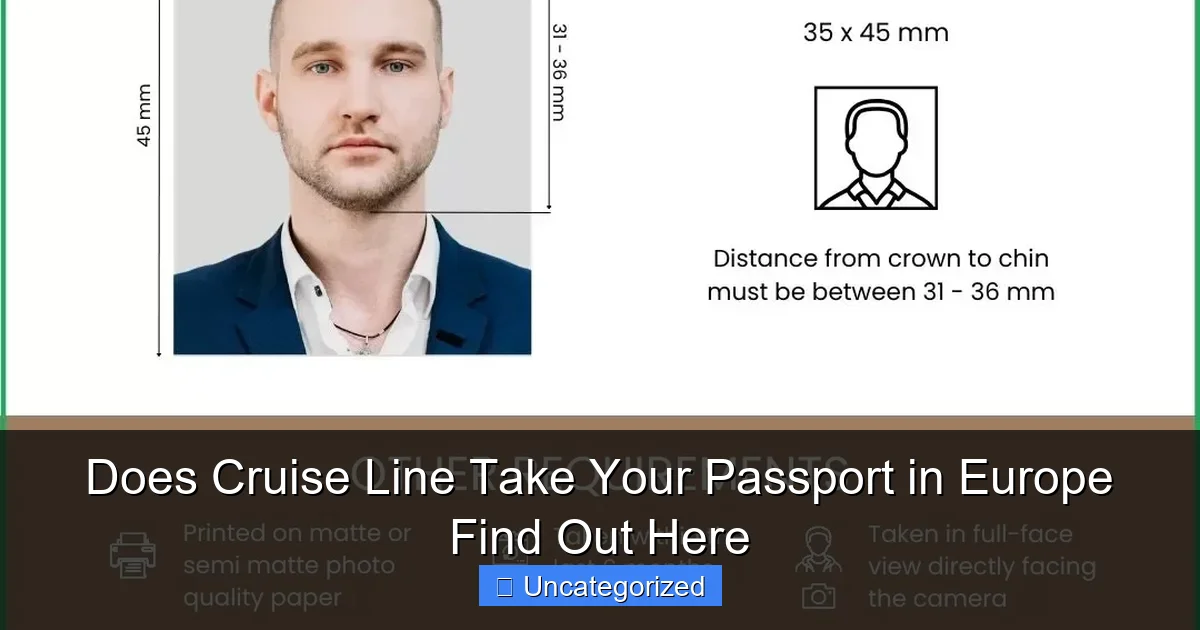
Featured image for does cruise line take your passport in europe
Image source: visasforfuture.com
Most European cruise lines do not take your passport, but they often require it for check-in, security, and immigration checks at ports. Always carry your passport with you—while the cruise line may temporarily hold it for verification, you’ll need it for shore excursions, border crossings, and emergencies. Never surrender it permanently without confirmation from the cruise staff.
Key Takeaways
- Verify cruise line policies: Always check if your cruise line collects passports in Europe.
- Carry a photocopy: Keep a copy of your passport when it’s held onboard.
- Retain it for Schengen: Some lines return passports for independent Schengen zone travel.
- Use secure storage: Store your passport safely if kept by the cruise line.
- Check port rules: Certain ports require passports for immigration checks.
- Ask about excursions: Independent tours may require your passport for entry.
📑 Table of Contents
- Does Cruise Line Take Your Passport in Europe? Find Out Here
- Why Cruise Lines May Collect Your Passport in Europe
- When Cruise Lines Allow You to Keep Your Passport
- Passport Validity and Entry Requirements in Europe
- What Happens If Your Passport Is Lost or Damaged Onboard?
- Best Practices for Managing Your Passport on a European Cruise
- Conclusion: Stay Informed, Stay Safe
Does Cruise Line Take Your Passport in Europe? Find Out Here
Embarking on a European cruise is a dream come true for many travelers. The idea of gliding through the Mediterranean, exploring the fjords of Norway, or stepping ashore in historic ports like Venice, Barcelona, or Athens evokes a sense of adventure and cultural discovery. Yet, amid the excitement, one critical question often arises: Does the cruise line take your passport in Europe? This concern is not just about convenience—it’s about security, compliance with international laws, and peace of mind while traveling across multiple countries.
For first-time cruisers, especially those unfamiliar with the nuances of international maritime travel, passport policies can seem confusing. Some cruise lines collect passports upon boarding, while others allow passengers to keep them. Why the variation? What are the risks and benefits of each approach? And how do European Union (EU) border regulations, Schengen Area rules, and port-specific requirements affect this process? This comprehensive guide dives deep into the passport-handling practices of cruise lines operating in Europe, offering clarity, practical tips, and expert insights to ensure your journey is smooth, secure, and stress-free. Whether you’re sailing the Baltic, the Adriatic, or the Iberian coast, knowing what to expect can make all the difference.
Why Cruise Lines May Collect Your Passport in Europe
Passport collection by cruise lines is a common practice—especially in Europe—and it’s not arbitrary. Cruise operators have specific logistical, legal, and security reasons for taking control of passengers’ travel documents during the voyage. Understanding these reasons helps travelers appreciate the process rather than fear it.
Visual guide about does cruise line take your passport in europe
Image source: media.cntraveller.com
1. Streamlined Immigration Clearance at Ports
One of the primary reasons cruise lines collect passports is to expedite immigration clearance at foreign ports. In Europe, where a single cruise itinerary may include stops in multiple Schengen and non-Schengen countries, immigration officials require a complete manifest of all passengers and crew before the ship docks. By collecting passports early, the cruise line can:
- Submit a consolidated list of passengers to local authorities.
- Ensure that all documents are valid and meet entry requirements (e.g., minimum passport validity).
- Facilitate a smoother disembarkation process, reducing wait times at ports.
For example, when a ship docks in Dubrovnik, Croatia (a Schengen member), the Croatian Border Police need to verify all non-EU nationals. The cruise line’s port agent handles this bulk clearance using the collected passports, allowing passengers to disembark quickly without individual checks at the gangway.
2. Compliance with Maritime and Border Regulations
International maritime law and national border policies require cruise ships to maintain accurate passenger records. The International Ship and Port Facility Security (ISPS) Code mandates that ships report all individuals on board to host countries. Cruise lines act as intermediaries, ensuring compliance with:
- Schengen Area rules (e.g., 90/180-day rule for non-EU citizens).
- EU Entry/Exit System (EES) requirements, set to launch in 2024, which will record biometric data at borders.
- Port state control inspections, where authorities may demand to review passenger documentation.
By holding passports, cruise lines can respond swiftly to regulatory demands, avoiding fines or delays. This is particularly critical in countries like Greece or Italy, where immigration scrutiny can be high due to migration patterns.
3. Enhanced Security and Theft Prevention
Passports are valuable targets for theft, especially in crowded tourist areas. Cruise lines mitigate this risk by:
- Storing passports in secure, locked safes or vaults on board.
- Using digital scanning systems to create backups (e.g., Royal Caribbean’s “Passport Vault” program).
- Issuing passengers temporary ID cards or wristbands for on-ship use.
For instance, Norwegian Cruise Line (NCL) collects passports and provides passengers with a cruise ID card. This card serves as proof of identity on board and during organized excursions, reducing the need to carry the original document.
When Cruise Lines Allow You to Keep Your Passport
While many European cruise lines collect passports, some do not—and there are valid reasons for this approach. Whether you keep your passport depends on the cruise line’s policy, the itinerary, and your nationality.
1. Cruise Lines with “Passport-Free” Policies
A few premium and luxury cruise lines, such as Regent Seven Seas Cruises and Silversea, often allow passengers to retain their passports. These lines prioritize convenience and cater to affluent travelers who value autonomy. Key reasons include:
- Smaller passenger loads: With fewer guests, the cruise line can manage immigration checks more efficiently without collecting documents.
- All-inclusive excursions: Passengers on organized tours rarely need to present passports at ports, as the cruise line handles all formalities.
- Enhanced trust: High-end lines assume passengers will follow rules, reducing the need for strict document control.
For example, on a Silversea cruise from Venice to Athens, passengers may keep their passports but are advised to carry them only during independent shore visits.
2. Itineraries Within the Schengen Area
Cruises that operate entirely within the Schengen Zone (e.g., Barcelona → Marseille → Nice → Rome) often don’t require passport collection. Since Schengen countries have no internal border controls, passengers can move freely between ports. However, this doesn’t mean passports are irrelevant:
- You must still carry your passport during shore excursions, as random checks by local police are possible.
- If your itinerary includes a non-Schengen country (e.g., Turkey or the UK), the cruise line will likely collect passports for that leg.
Tip: Always check your cruise line’s policy—even on intra-Schengen itineraries. Some lines (e.g., MSC Cruises) still collect passports as a precaution.
3. U.S. and Canadian Citizens on Closed-Loop Cruises
U.S. and Canadian travelers on closed-loop cruises (departing and ending in the same Schengen country) may keep their passports if the cruise line complies with U.S. Customs and Border Protection (CBP) requirements. The CBP allows U.S. citizens to use a passport card or certified copy of birth certificate for re-entry, but:
- Most cruise lines recommend carrying a valid passport anyway, as airlines or foreign authorities may demand it.
- Passport collection may still occur for non-U.S. ports or if the ship makes unscheduled stops.
Practical Example: A Holland America cruise from Rome to Rome, visiting only Schengen ports, may not collect U.S. passports. But if the ship diverts to Tunis due to weather, passengers must have their passports ready.
Passport Validity and Entry Requirements in Europe
Before worrying about whether your cruise line will take your passport, ensure your document meets Europe’s entry requirements. Failure to do so can result in denied boarding or entry—regardless of the cruise line’s policy.
1. Minimum Passport Validity Rules
Most European countries require that your passport be valid for at least three months beyond your intended departure date, and sometimes six months. The Schengen Area’s official rule states:
- Passport must be valid for at least three months after the date you plan to leave the Schengen Zone.
- Passport must have been issued within the last 10 years.
Example: If your cruise departs on July 1 and you plan to stay until July 15, your passport must be valid until at least October 15. Some cruise lines (e.g., Carnival) enforce stricter six-month rules.
2. Visa Requirements for Non-EU Travelers
Citizens of the U.S., Canada, Australia, and New Zealand can enter the Schengen Area for up to 90 days without a visa. However:
- Starting in 2025, the European Travel Information and Authorisation System (ETIAS) will require pre-travel authorization for visa-exempt travelers.
- Non-Schengen countries (e.g., UK, Turkey, Albania) have their own visa rules. For example, Turkey requires an e-Visa for U.S. citizens.
Tip: Use the cruise line’s online portal to upload passport and visa details in advance. This allows the line to verify compliance before you board.
3. Passport Pages and Stamps
Ensure your passport has at least two blank pages for entry/exit stamps. Some ports (e.g., Istanbul) may deny entry if pages are full. Also, note that:
- Schengen countries no longer stamp passports for intra-zone travel, but non-Schengen ports (e.g., Morocco) still do.
- Frequent cruisers may need to renew passports early to avoid page shortages.
What Happens If Your Passport Is Lost or Damaged Onboard?
Even with the cruise line holding your passport, mishaps can occur. Lost, stolen, or damaged documents can derail your trip, but cruise lines have protocols to handle emergencies.
1. Immediate Steps to Take
If you realize your passport is missing:
- Report it immediately to the cruise line’s guest services and security team.
- Request a written incident report for insurance and embassy purposes.
- Contact your country’s nearest consulate or embassy (e.g., U.S. Consulate in Naples).
Most cruise lines (e.g., Princess Cruises) have partnerships with local embassies to expedite emergency passport issuance.
2. Emergency Travel Documents
Consulates can issue emergency passports or laissez-passer documents, but the process takes 24–72 hours. During this time:
- You may be restricted from disembarking at ports.
- The cruise line may provide temporary ID for on-ship activities.
- You’ll need to cover all costs (e.g., document fees, courier charges).
Example: A passenger on a Celebrity Cruises ship in the Aegean Sea lost their passport. The cruise line arranged a helicopter transfer to Athens, where the U.S. Embassy issued an emergency passport within 48 hours.
3. Insurance Coverage
Travel insurance is essential. Look for policies that cover:
- Lost/stolen passport replacement costs.
- Emergency travel to a consulate.
- Trip delays or interruptions due to document issues.
Tip: Carry a digital backup of your passport (scanned and stored in a secure cloud) to speed up replacement processes.
Best Practices for Managing Your Passport on a European Cruise
Whether your cruise line collects your passport or not, proactive planning ensures a hassle-free experience. Follow these best practices:
1. Pre-Cruise Preparation
- Check validity: Confirm your passport meets Schengen and cruise line requirements.
- Photocopy/scan: Make two copies (one physical, one digital) and store them separately.
- Upload to cruise portal: Submit passport details early via the cruise line’s website (e.g., Royal Caribbean’s Cruise Planner).
2. During the Cruise
- Keep a temporary ID: Use the cruise line’s ID card or wristband for onboard identification.
- Carry a photocopy: If allowed to keep your passport, carry a copy during shore excursions.
- Secure storage: Use in-room safes or the cruise line’s safe-deposit box for valuables.
3. Shore Excursions and Independent Travel
- Carry the original passport: Required for independent travel, especially outside Schengen.
- Check local laws: Some countries (e.g., France) require foreigners to carry ID at all times.
- Use a money belt: Keep your passport, cash, and cards secure in crowded areas.
4. Post-Cruise
- Verify passport return: Ensure the cruise line returns your document before disembarkation.
- Check stamps: Review entry/exit stamps to confirm compliance with Schengen rules.
- Update records: Notify your bank and credit card companies if your passport number changes.
Data Table: Cruise Line Passport Policies in Europe (2024)
| Cruise Line | Passport Collection Policy | Exceptions/Notes | Recommended for |
|---|---|---|---|
| Royal Caribbean | Collects passports for all European cruises | Returns passports for independent shore visits; uses digital scans | First-time cruisers, families |
| Norwegian Cruise Line (NCL) | Collects passports; issues cruise ID cards | Allows temporary return for excursions | Flexible itinerary cruisers |
| MSC Cruises | Collects passports for most itineraries | No collection for intra-Schengen cruises if pre-approved | Budget travelers, Mediterranean routes |
| Silversea | Allows passengers to keep passports | Collects only for non-Schengen stops (e.g., Turkey) | Luxury travelers, small-ship enthusiasts |
| Holland America | Collects passports for transatlantic and multi-country cruises | No collection for round-trip Schengen cruises | Traditional cruisers, seniors |
| Celebrity Cruises | Collects passports; uses secure digital vaults | Returns passports for pre-booked excursions | Mid-range luxury, couples |
Conclusion: Stay Informed, Stay Safe
So, does the cruise line take your passport in Europe? The answer is: it depends. Most major cruise lines—especially those operating large ships with diverse itineraries—collect passports to streamline immigration, ensure compliance, and enhance security. However, luxury lines and certain Schengen-only cruises may allow you to keep your document. The key is to research your specific cruise line and itinerary well in advance, understand the rules, and prepare accordingly.
Remember, your passport is more than a travel document—it’s your gateway to adventure. By following best practices, carrying backups, and staying informed about Schengen and national regulations, you can focus on what matters: exploring Europe’s breathtaking ports, savoring local cuisine, and creating unforgettable memories. Whether your passport is in a cruise line vault or your money belt, the journey is yours to enjoy. Bon voyage!
Frequently Asked Questions
Do cruise lines take your passport in Europe?
Most cruise lines in Europe will collect your passport upon boarding for security and customs compliance. They typically return it after verifying your details or at the end of the cruise.
Why does the cruise line take your passport in Europe?
Cruise lines take your passport to streamline border checks at multiple ports and ensure compliance with Schengen Zone regulations. This helps avoid delays during disembarkation at each destination.
Is it safe to hand over your passport to a cruise line in Europe?
Yes, it’s standard practice and generally safe. Reputable cruise lines have secure systems and return passports promptly, often within hours or at the end of the voyage.
When does the cruise line return your passport in Europe?
Passports are often returned after initial verification or kept until the end of the cruise, depending on the itinerary. Check with your cruise line for their specific policy.
What happens if you refuse to give your passport to the cruise line in Europe?
Refusing to hand over your passport may result in denied boarding or removal from the ship. Cruise lines require passports to meet international maritime and immigration laws.
Can I keep my passport if I’m doing a short shore excursion in Europe?
Some cruise lines may allow you to keep your passport for short excursions, but this varies. Always confirm their policy during embarkation to avoid complications at port.