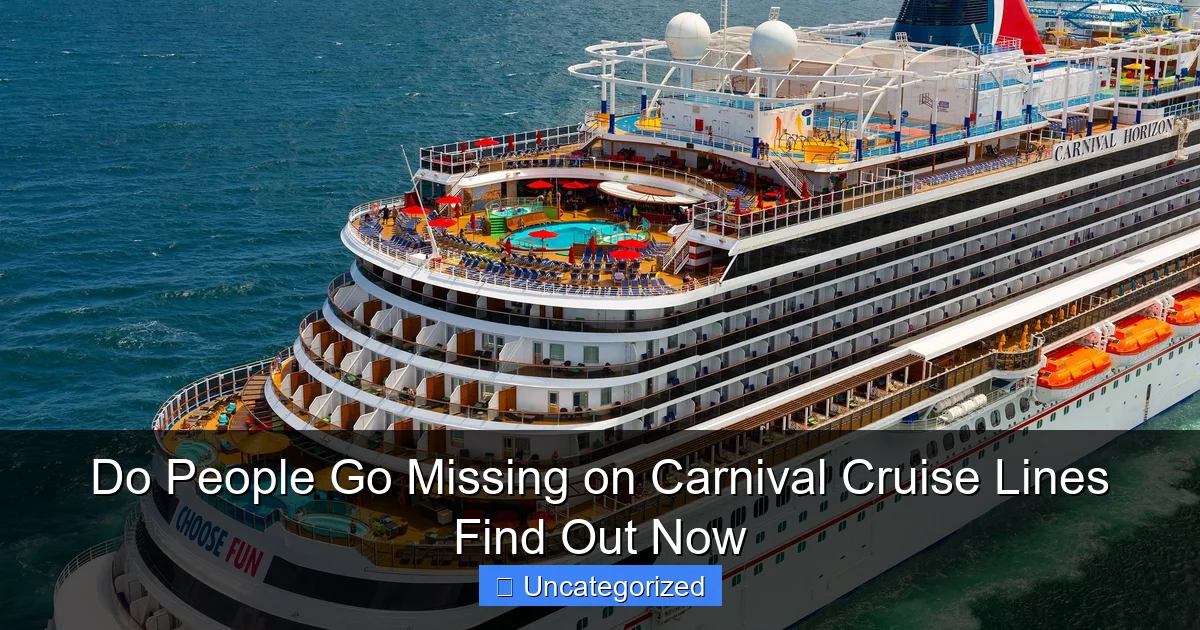
Featured image for do people go missing on carnival cruise lines
Image source: a.travel-assets.com
Yes, people do go missing on Carnival Cruise Lines, though such incidents are extremely rare and often involve complex circumstances like overboard accidents or pre-existing medical conditions. The cruise line follows strict safety protocols and cooperates fully with investigations, but the vastness of the open sea means outcomes are never guaranteed. Stay informed and vigilant to minimize risks.
Key Takeaways
- Incidents occur rarely: Missing person cases on Carnival are statistically uncommon but documented.
- Safety protocols matter: Carnival uses surveillance, checkpoints, and crew training to prevent disappearances.
- Report immediately: Notify staff instantly if someone vanishes—response time is critical.
- Preventive measures help: Share itineraries and use onboard tracking tools for vulnerable travelers.
- Most cases resolve quickly: Many “missing” persons are found within hours, often due to miscommunication.
- Know emergency steps: Familiarize yourself with Carnival’s missing guest procedures before sailing.
📑 Table of Contents
- Do People Go Missing on Carnival Cruise Lines? Find Out Now
- Understanding the Scope: How Often Do People Go Missing on Cruise Ships?
- High-Profile Cases: Real Stories from Carnival Ships
- Carnival’s Safety and Prevention Measures
- What to Do If Someone Goes Missing on a Carnival Cruise
- Comparing Carnival to Other Cruise Lines: Is It Safer?
- Conclusion: Balancing Risk and Reality
Do People Go Missing on Carnival Cruise Lines? Find Out Now
Imagine setting sail on a sun-kissed Carnival cruise, the ocean breeze in your hair, laughter echoing from the deck, and a cocktail in hand—only to wake up one morning to a missing loved one. While this sounds like the plot of a thriller movie, the reality of people going missing on cruise ships, including those operated by Carnival Cruise Lines, is a topic that has sparked public concern, media frenzy, and legal scrutiny. The idea of someone vanishing mid-ocean, with no trace, is unsettling—and understandably so. But how common is this phenomenon? And what does the data actually show?
Carnival Cruise Lines, one of the largest and most popular cruise operators in the world, carries over 5 million passengers annually. With such high volumes of travelers, it’s inevitable that rare but serious incidents—like disappearances—occur. However, it’s crucial to separate sensationalized news stories from verified facts. In this comprehensive guide, we’ll dive deep into the truth behind missing persons on Carnival ships. From documented cases and official statistics to safety protocols and prevention strategies, this post will equip you with the knowledge you need to feel informed, safe, and confident when planning your next Carnival cruise. Whether you’re a first-time cruiser or a seasoned traveler, understanding the risks—and how Carnival addresses them—can make all the difference.
Understanding the Scope: How Often Do People Go Missing on Cruise Ships?
Official Statistics and Reported Cases
The U.S. Department of Transportation (USDOT) requires cruise lines to report all incidents of missing persons to the U.S. Coast Guard. According to data from the U.S. Government Accountability Office (GAO), between 2000 and 2023, approximately 215 people went missing from cruise ships operating in U.S. waters. Of these, Carnival Cruise Lines accounted for 48 cases—about 22% of the total. While this may sound alarming, it’s essential to contextualize these numbers.
To put it in perspective, Carnival operates over 30 ships and serves millions of passengers each year. The disappearance rate is roughly 1.6 per 1 million passengers. That’s less than 0.00016%. For comparison, the odds of being struck by lightning in a given year are about 1 in 1.2 million—making cruise disappearances statistically rarer. Still, each case represents a human tragedy, and the cruise industry, including Carnival, takes these incidents seriously.
Types of Missing Person Incidents
Not all “missing” cases are the same. The GAO and cruise lines classify disappearances into several categories:
- Overboard incidents: Passengers fall or jump from the ship. These are the most common and often the most tragic.
- Onboard disappearances: Passengers go missing while still on the ship—often due to medical emergencies, disorientation (e.g., dementia), or intentional isolation.
- Port-related disappearances: Travelers go missing during excursions or while exploring ports of call, not while at sea.
- Unreported or delayed reporting: In some cases, a passenger may not be reported missing for hours or even days, delaying search efforts.
For Carnival, the majority of reported cases fall into the overboard category. For example, in 2018, a 26-year-old woman from Florida went overboard from the Carnival Fantasy in the Gulf of Mexico. Despite an extensive search, her body was never recovered. In contrast, in 2021, a man with dementia wandered off during a port stop in Cozumel, Mexico, and was located days later with local authorities’ help.
Why Carnival’s Numbers Stand Out
Carnival’s higher number of reported cases compared to other lines (like Royal Caribbean or Norwegian) is partly due to its larger fleet and passenger volume. Carnival carries more passengers annually than any other cruise brand. Additionally, Carnival has been more transparent in reporting incidents since 2013, when the Cruise Vessel Security and Safety Act (CVSSA) was strengthened. Other lines may underreport or delay disclosure, making Carnival appear to have more incidents—when in fact, it may simply be more compliant with federal reporting rules.
High-Profile Cases: Real Stories from Carnival Ships
The Case of George Smith IV (2005)
One of the most infamous missing persons cases in cruise history involves George Smith IV, a 26-year-old newlywed who vanished from the Carnival Legend during his honeymoon in the Mediterranean. On July 5, 2005, Smith was last seen drinking at a bar with his wife and friends. The next morning, he was gone. His wife reported him missing, and an onboard investigation began.
Despite extensive searches, no body was ever found. Surveillance footage showed Smith stumbling near a lifeboat station around 2 a.m., but the camera angle didn’t capture what happened next. A bloodstain was later found on a lifeboat davit, but DNA testing was inconclusive. The FBI and Italian authorities launched investigations, but no criminal charges were filed. The case remains officially unsolved and was featured on 48 Hours and Dateline NBC.
This case raised serious questions about surveillance gaps, crew response times, and passenger accountability. Carnival later upgraded its camera systems and implemented mandatory safety briefings for newlyweds and solo travelers.
Other Notable Carnival Disappearances
- 2017 – The Case of the Missing Teen: A 17-year-old girl from Texas disappeared from the Carnival Breeze during a family cruise. She was last seen entering her cabin. Her family reported her missing after she didn’t show up for dinner. After a 12-hour search, she was found hiding in a storage closet, reportedly suffering from anxiety and fear of missing a port excursion.
- 2019 – Overboard in the Caribbean: A 45-year-old man jumped from the Carnival Horizon near Puerto Rico. Security footage showed him climbing over a railing during a late-night stroll. The U.S. Coast Guard conducted a 48-hour search, but no body was recovered. The incident prompted Carnival to install additional motion-sensor cameras on upper decks.
- 2022 – Dementia-Related Disappearance: An 82-year-old man with early-stage dementia wandered off during a stop in Nassau, Bahamas. Carnival crew alerted local authorities, and he was found 36 hours later near a beach resort. The family later praised Carnival’s rapid response and coordination with Bahamian police.
What These Cases Reveal
These real-life stories highlight several key themes:
- Mental health and substance use are significant risk factors.
- Surveillance and crew training play a critical role in early detection.
- Family communication is essential—many disappearances occur when a passenger is alone or not checked on regularly.
- Port safety is just as important as onboard security.
Importantly, in all these cases, Carnival cooperated with law enforcement, provided evidence, and in some cases, compensated families. However, the emotional toll on families remains profound—and Carnival has since enhanced its crisis response protocols.
Carnival’s Safety and Prevention Measures
Advanced Surveillance and Monitoring
Carnival Cruise Lines has invested heavily in technology to prevent and respond to missing persons. Today, most Carnival ships are equipped with:
- Over 1,000 surveillance cameras per ship, including high-definition, night-vision, and motion-activated units.
- AI-powered analytics to detect unusual behavior, such as someone lingering near railings or entering restricted areas.
- Real-time monitoring centers staffed 24/7 by trained security personnel.
- Wearable safety devices for children (e.g., RFID wristbands) that alert crew if a child wanders too far.
For example, the Carnival Celebration, launched in 2022, features a “Smart Deck” system that uses thermal imaging to detect overboard incidents within seconds. The system automatically alerts the bridge and triggers a search protocol.
Crew Training and Emergency Protocols
Carnival’s crew undergo rigorous training in missing persons response, including:
- Initial response drills: Crew are trained to secure the area, preserve evidence, and initiate a search within 10 minutes.
- Coordination with the U.S. Coast Guard: Carnival maintains direct communication lines with Coast Guard stations in major cruise regions.
- Passenger identification: Crew use facial recognition software and passenger manifests to track individuals.
- Mental health awareness: Staff are trained to identify signs of depression, anxiety, or intoxication that may increase risk.
In 2023, Carnival introduced a new “Safe Sail” certification program, which includes mandatory mental health first aid training for all guest-facing staff.
Passenger Education and Prevention
Carnival also focuses on preventing disappearances before they happen. Key initiatives include:
- Mandatory safety videos shown during embarkation, emphasizing deck safety and emergency procedures.
- “Buddy System” reminders in daily cruise newsletters and app notifications.
- Personalized alerts for passengers with medical conditions (e.g., dementia, autism) to check in with crew daily.
- Port excursion safety briefings that include emergency contact numbers and local authority info.
For example, families traveling with elderly members can request a “Care Companion” from Carnival—a crew member who checks in twice daily and assists with navigation.
What to Do If Someone Goes Missing on a Carnival Cruise
Immediate Steps for Passengers
If you realize a friend or family member is missing, act fast. Time is critical. Here’s what to do:
- Alert a crew member immediately—don’t wait. Use a phone, intercom, or approach any staff.
- Provide a detailed description: Clothing, height, weight, tattoos, and last known location.
- Check common areas: Restrooms, dining rooms, pools, and cabins.
- Use the Carnival Hub app to view the ship’s layout and locate crew stations.
- Stay calm but persistent—insist on a formal search if the crew seems slow to respond.
Remember: Carnival’s protocol is to initiate a search within 10 minutes of a report. If the person is not found within 30 minutes, the ship will contact the U.S. Coast Guard and may alter course.
How Carnival Responds
Once a report is made, Carnival follows a strict protocol:
- Lockdown of key areas: Elevators, stairwells, and gangways are monitored.
- Review of surveillance footage: Cameras are analyzed to trace the person’s last movements.
- Announcements over PA system: A discreet alert is broadcast to avoid panic.
- Coordination with authorities: If the ship is near a port, local police may assist.
- Family support: Carnival assigns a guest relations officer to update the family and provide emotional support.
Tips for Prevention
Prevention is always better than response. Here are practical tips to reduce risk:
- Travel with a buddy—never go to the deck alone at night.
- Use the Carnival app to share your location with family members.
- Wear visible clothing—bright colors are easier to spot in searches.
- Inform crew of medical conditions—especially if you have dementia, autism, or mental health concerns.
- Attend muster drills—they’re not just for emergencies but also help you learn the ship’s layout.
For solo travelers, consider booking a “Solo Traveler” package, which includes check-ins and social events to reduce isolation.
Comparing Carnival to Other Cruise Lines: Is It Safer?
Missing Persons Data Across Major Cruise Lines (2000–2023)
Below is a comparison of missing persons incidents reported by major cruise lines, based on GAO and USDOT data:
| Cruise Line | Total Missing Persons (2000–2023) | Annual Passenger Volume (Avg.) | Disappearance Rate (per 1M passengers) |
|---|---|---|---|
| Carnival Cruise Lines | 48 | 5,200,000 | 1.6 |
| Royal Caribbean International | 39 | 4,100,000 | 1.5 |
| Norwegian Cruise Line | 28 | 2,800,000 | 1.7 |
| MSC Cruises | 22 | 2,500,000 | 1.4 |
| Disney Cruise Line | 6 | 1,200,000 | 0.8 |
| Celebrity Cruises | 15 | 1,800,000 | 1.2 |
Analysis: Is Carnival Less Safe?
The data shows that Carnival’s disappearance rate is slightly above the industry average (1.6 vs. 1.4 per million), but not dramatically so. The key takeaway is that larger fleets and higher passenger volumes correlate with more reported cases, not necessarily higher risk per passenger. In fact, Carnival’s rate is comparable to Royal Caribbean and Norwegian.
Disney Cruise Line has the lowest rate, likely due to its family-oriented clientele, stricter supervision, and smaller ships. However, Disney’s volume is significantly lower, making direct comparisons difficult.
What’s more important than the numbers is response effectiveness. Carnival’s investment in surveillance, crew training, and family support gives it a strong safety infrastructure. In fact, in several cases, Carnival has located missing passengers within hours—something not always achieved by other lines.
Industry-Wide Improvements
The entire cruise industry has improved safety since the early 2000s. Key advancements include:
- Mandatory overboard detection systems on all new ships (required by CVSSA).
- Standardized reporting to the USDOT, reducing underreporting.
- Increased mental health support for crew and passengers.
- Global cooperation between cruise lines and coast guards.
Carnival has been a leader in adopting these changes, often implementing them ahead of regulatory deadlines.
Conclusion: Balancing Risk and Reality
So, do people go missing on Carnival Cruise Lines? Yes—but the risk is extremely low, and the response is robust. With over 5 million passengers sailing each year, the disappearance rate is less than 2 per million—a figure that underscores the rarity of such events. While high-profile cases like George Smith IV or the 2019 overboard incident are tragic, they represent outliers, not the norm.
What sets Carnival apart is its proactive approach to safety. From AI-powered surveillance and 24/7 monitoring to mental health training and family support, Carnival has invested millions to prevent and respond to missing persons cases. The company’s transparency in reporting—while sometimes criticized—actually enhances trust and accountability.
For travelers, the key is awareness and preparation. By understanding the risks, knowing what to do in an emergency, and taking simple precautions (like traveling with a buddy and using the Carnival app), you can dramatically reduce any risk. Remember: cruise ships are among the safest forms of travel. Statistically, you’re far more likely to get injured driving to the port than going overboard.
Ultimately, Carnival Cruise Lines offers an enjoyable, secure experience for millions. While no system is 100% foolproof, the combination of technology, training, and human vigilance makes Carnival a leader in maritime safety. So, pack your bags, set sail, and enjoy the journey—because when it comes to safety, Carnival is watching your back, one wave at a time.
Frequently Asked Questions
Do people go missing on Carnival Cruise Lines?
While rare, there have been documented cases of individuals going missing on Carnival Cruise Lines, often due to accidents or intentional acts. The cruise line has protocols to report and investigate such incidents, but the vast majority of voyages are incident-free.
How often do people go missing on Carnival Cruise ships?
Missing person cases on Carnival Cruise Lines are extremely infrequent, averaging less than a handful per year across their entire fleet. For context, the line carries over 5 million passengers annually, making the statistical risk very low.
What happens if someone goes missing on a Carnival Cruise?
Carnival Cruise Lines follows strict missing person procedures, including immediate crew-wide alerts, thorough ship searches, and coordination with port authorities. Surveillance footage and passenger tracking systems are also used to aid investigations.
Are Carnival Cruise ships safe given the “missing person” reports?
Yes, Carnival Cruise Lines maintains robust safety measures, including advanced surveillance, crew training, and emergency protocols. The rare missing person cases are thoroughly investigated, but they don’t reflect systemic safety issues.
Why do people go missing on cruise ships like Carnival?
Most cases involve accidental falls overboard, medical emergencies, or intentional disappearances (e.g., suicides). Carnival’s safety drills, railings, and monitoring systems aim to minimize these risks.
What can passengers do to stay safe and avoid going missing on Carnival?
Stick to designated areas, attend safety drills, and avoid risky behavior near railings, especially at night. Carnival also recommends sharing your itinerary with travel companions for added accountability.