Featured image for do all cruise lines require the covid vaccine
Not all cruise lines require the COVID-19 vaccine, as policies vary widely by company, destination, and sailing date. Major lines like Carnival and Royal Caribbean have dropped mandatory vaccination rules for most voyages, but some—especially those visiting stricter ports or offering high-risk itineraries—may still enforce them. Always check the latest requirements directly with your cruise line before booking.
Key Takeaways
- Vaccine rules vary: Check each cruise line’s policy before booking.
- Unvaccinated options exist: Some lines allow testing instead of vaccination.
- Children exempt: Age-based rules often apply for under 12s.
- Proof required: Always carry official vaccination documentation onboard.
- Rules evolve: Stay updated as policies change frequently.
📑 Table of Contents
- Do All Cruise Lines Require the Covid Vaccine? Find Out Here
- Understanding the Current Landscape of Cruise Line Vaccination Policies
- Major Cruise Lines and Their Vaccination Requirements (2023–2024)
- Regional and Destination-Specific Requirements
- Options for Unvaccinated Travelers
- Data Table: Cruise Line Vaccination Requirements (2024)
- Tips for a Smooth and Safe Cruise Experience
Do All Cruise Lines Require the Covid Vaccine? Find Out Here
The cruise industry, once brought to a standstill by the global pandemic, has made a remarkable comeback. As travelers once again set sail to explore the world’s most beautiful destinations, one question lingers in the minds of many: Do all cruise lines require the Covid vaccine? The answer, as with many things in the post-pandemic travel landscape, is not a simple yes or no. Policies vary widely depending on the cruise line, destination, itinerary, and even the time of year. For some, vaccination is a non-negotiable requirement; for others, it’s merely a recommendation or optional. This complexity has left many travelers confused and uncertain about what they need to board a cruise ship today.
Understanding the current vaccination requirements is crucial for a smooth and stress-free vacation. Whether you’re a seasoned cruiser or planning your first voyage, knowing the rules in advance can help you avoid last-minute surprises, denied boarding, or unexpected expenses. In this comprehensive guide, we’ll dive deep into the evolving policies of major cruise lines, examine regional differences, explore alternatives for unvaccinated travelers, and provide up-to-date data and practical tips to help you navigate the waters of modern cruising. So, if you’ve been wondering, “Do all cruise lines require the Covid vaccine?” — you’re in the right place.
Understanding the Current Landscape of Cruise Line Vaccination Policies
The cruise industry’s approach to Covid-19 vaccination has evolved significantly since 2020. What began as a universal mandate across nearly all major operators has shifted into a more nuanced, flexible framework. Today, the decision to require vaccination depends on multiple factors, including public health guidelines, local regulations, and the cruise line’s own risk tolerance.
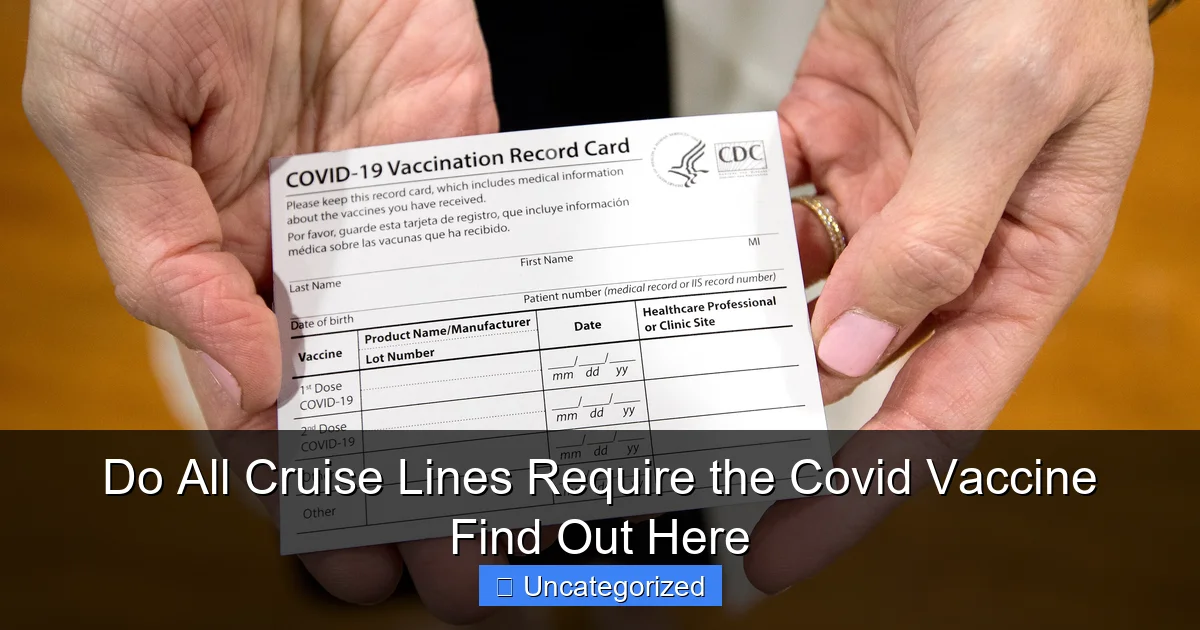
Visual guide about do all cruise lines require the covid vaccine
Image source: static01.nyt.com
Why Policies Have Changed
At the height of the pandemic, cruise lines implemented strict vaccination requirements to protect passengers, crew, and the communities they visited. With the widespread availability of vaccines, declining hospitalization rates, and updated guidance from health authorities like the CDC and WHO, many cruise operators have relaxed their rules. The shift reflects a broader trend in global travel: from emergency protocols to sustainable, long-term health management.
For example, in early 2022, Royal Caribbean and Norwegian Cruise Line required all passengers aged 12 and over to be fully vaccinated. By mid-2023, both companies had eliminated mandatory vaccination for most itineraries, replacing it with testing or self-declaration systems. This change was driven not only by improved public health conditions but also by customer demand for more flexible booking options.
Factors Influencing Cruise Line Decisions
Several key factors now shape each cruise line’s policy:
- Destination Regulations: Some countries still require proof of vaccination for entry. For example, Australia and New Zealand maintained strict entry requirements well into 2023, forcing cruise lines to enforce vaccination on affected itineraries.
- Port of Departure: U.S.-based cruises may have different rules than those departing from Europe or Asia. The CDC’s Conditional Sailing Order, which once governed U.S. cruise operations, expired in 2022, giving lines more autonomy.
- Itinerary Length and Type: Longer cruises or those visiting multiple high-risk regions may have stricter health protocols than short, domestic sailings.
- Crew Health and Safety: While passenger policies have relaxed, many lines still require crew to be vaccinated to minimize onboard transmission.
As a result, the answer to “Do all cruise lines require the Covid vaccine?” is a resounding no — but it’s not a free-for-all. Each line has its own framework, and travelers must research specific itineraries carefully.
Major Cruise Lines and Their Vaccination Requirements (2023–2024)
To help you plan your next cruise, here’s a detailed look at the vaccination policies of the world’s leading cruise lines. These policies are current as of late 2023 and early 2024, but they are subject to change, so always verify with the cruise line before booking.
Royal Caribbean International
Royal Caribbean has one of the most flexible policies in the industry. As of 2023, vaccination is no longer mandatory for most sailings. However, unvaccinated passengers must:
- Present a negative PCR or antigen test taken within 2–3 days before embarkation.
- Undergo additional health screening during embarkation.
- Wear masks in certain indoor areas if community transmission is high.
Exceptions apply for cruises to Australia, New Zealand, and some Asian destinations, where local laws still require vaccination. Royal Caribbean also offers “vaccinated-only” sailings upon request, catering to travelers seeking a higher level of protection.
Carnival Cruise Line
Carnival has adopted a “vaccination-encouraged, not required” stance for most U.S. and Caribbean itineraries. Unvaccinated guests must:
- Take a pre-cruise Covid-19 test (PCR or antigen).
- Submit a health declaration form.
- Follow any additional protocols if an outbreak occurs onboard.
Notably, Carnival’s “Cruise with Confidence” program still allows for flexible cancellations due to Covid-related illness, making it a popular choice for cautious travelers.
Norwegian Cruise Line (NCL)
NCL has removed mandatory vaccination for most sailings but maintains a tiered system:
- Vaccinated passengers: No testing required.
- Unvaccinated passengers: Must test negative within 72 hours of embarkation.
For cruises to Alaska, NCL still recommends vaccination due to limited medical facilities in remote ports. The line also requires crew to be fully vaccinated and boosted.
Princess Cruises
Princess Cruises follows a similar model, with no mandatory vaccination for most itineraries. However, they strongly recommend vaccination and offer priority boarding and onboard perks (like dining reservations) for vaccinated guests. Unvaccinated passengers must test before boarding and may be subject to random testing during the cruise.
MSC Cruises
MSC Cruises has one of the strictest remaining policies. While vaccination is not mandatory for all sailings, it is required for cruises to certain destinations, including the Mediterranean and South America. Unvaccinated passengers may be denied boarding or required to purchase travel insurance that covers medical evacuation.
MSC also operates “Covid-secure” ships with enhanced air filtration and medical facilities, appealing to health-conscious travelers.
Smaller and Luxury Lines
Lines like Regent Seven Seas, Oceania Cruises, and Silversea have maintained more conservative policies. Many still require vaccination for all passengers, especially on longer, international voyages. These lines emphasize safety and exclusivity, and their clientele often includes older travelers or those with underlying health conditions.
Regional and Destination-Specific Requirements
Even if a cruise line doesn’t require vaccination, your destination might. This is one of the most overlooked aspects of planning a cruise. A ship may leave from a country with relaxed rules, but if it docks in a nation with strict entry requirements, you could be denied disembarkation.
North America and the Caribbean
Most ports in the U.S., Mexico, and the Caribbean no longer require vaccination for entry. However, exceptions exist:
- Cuba: Requires proof of vaccination for all foreign visitors.
- Haiti: May require a negative test or vaccination, depending on current conditions.
- Canada: Removed its vaccination requirement in 2022, but individual provinces may have their own rules for land excursions.
Tip: Always check the cruise line’s “Travel Requirements” page and consult the embassy website of each port country.
Europe and the Mediterranean
European Union regulations are largely harmonized, and vaccination is not mandatory for most countries. However:
- Italy: Requires proof of vaccination or a negative test for cruises longer than 12 hours.
- Greece: May require unvaccinated passengers to test before docking during peak season.
- France: No requirement, but cruise lines may impose their own rules for shore excursions.
Additionally, some smaller islands (e.g., Malta, Cyprus) may have last-minute changes based on local outbreaks.
Asia and the Pacific
This region has some of the strictest remaining requirements:
- Japan: Only recently reopened to cruise ships and may require vaccination and pre-arrival testing.
- Australia and New Zealand: Require all international cruise passengers to be vaccinated. Unvaccinated travelers may be allowed to board but not disembark.
- China: Not currently accepting international cruise passengers, but when it does, strict health protocols are expected.
Tip: If your itinerary includes Asian or Pacific ports, assume vaccination will be required unless the cruise line explicitly states otherwise.
Alaska and Canada
Alaska cruises often stop in Canadian ports like Vancouver or Victoria. While Canada no longer requires vaccination, some shore excursions may only be accessible to vaccinated passengers. For example, national parks or cultural sites may enforce their own rules.
Options for Unvaccinated Travelers
If you’re unvaccinated — whether by choice, medical exemption, or personal belief — you’re not out of luck. There are still ways to enjoy a cruise, though they may require extra planning and flexibility.
Cruise Lines with Flexible Policies
Several major lines allow unvaccinated passengers with additional safeguards:
- Royal Caribbean: Accepts unvaccinated guests with pre-cruise testing.
- Carnival: Offers a “vaccine-free” option with testing and health screening.
- Norwegian: Allows unvaccinated passengers on most sailings with a negative test.
These lines often market these options as “inclusive” and emphasize their commitment to accessibility.
Domestic and Short-Duration Cruises
Shorter cruises (3–7 days) within the U.S. or Caribbean are more likely to accept unvaccinated passengers. These itineraries often avoid countries with strict entry rules and have lower medical risks.
Example: A 4-day Bahamas cruise from Miami with Carnival or Royal Caribbean is a viable option for unvaccinated travelers, provided they test before boarding.
Medical Exemptions and Accommodations
Most cruise lines offer medical exemptions for passengers with documented health conditions that prevent vaccination. You’ll typically need to:
- Submit a letter from your doctor.
- Provide proof of a negative test.
- Sign a liability waiver.
Note: Exemptions are not guaranteed and may be denied if the cruise line deems the risk too high.
Travel Insurance and Cancellation Policies
Unvaccinated travelers should invest in comprehensive travel insurance. Look for policies that cover:
- Trip cancellation due to Covid illness.
- Medical evacuation from the ship.
- Quarantine expenses if you test positive.
Some insurers, like Allianz and World Nomads, offer “Covid-specific” add-ons that provide extra protection.
Data Table: Cruise Line Vaccination Requirements (2024)
Below is a comparison of major cruise lines and their current vaccination policies. Always verify with the cruise line before booking, as policies can change.
| Cruise Line | Vaccine Required? | Testing Required if Unvaccinated? | Destinations with Mandatory Vaccination | Notes |
|---|---|---|---|---|
| Royal Caribbean | No (most sailings) | Yes (PCR/antigen within 2–3 days) | Australia, New Zealand, Japan | Offers vaccinated-only sailings |
| Carnival | No | Yes (within 72 hours) | None (as of 2024) | Health declaration required |
| Norwegian | No | Yes (within 72 hours) | Alaska (recommended) | Crew must be vaccinated |
| Princess | No | Yes (random testing possible) | None | Perks for vaccinated guests |
| MSC | Yes (some sailings) | Yes (if not vaccinated) | Mediterranean, South America | Insurance required for unvaccinated |
| Regent Seven Seas | Yes | N/A | All itineraries | Strict policy for safety |
Tips for a Smooth and Safe Cruise Experience
Regardless of your vaccination status, these practical tips will help ensure a safe and enjoyable cruise:
1. Research Early and Often
Check the cruise line’s website at least 30 days before departure. Policies can change with little notice. Sign up for email alerts from the cruise line and monitor travel advisories from the CDC, WHO, and local embassies.
2. Carry Digital and Physical Copies of Documents
Keep digital and printed copies of:
- Vaccination certificate (if applicable).
- Negative test results.
- Travel insurance policy.
- Passport and cruise ticket.
Use a secure app like Google Drive or Apple Wallet to store them.
3. Pack a Travel Health Kit
Include:
- Rapid antigen tests.
- High-quality masks (KN95 or N95).
- Hand sanitizer.
- Thermometer.
- Prescription medications.
4. Know the Onboard Medical Protocols
Ask the cruise line about their medical facilities, quarantine procedures, and evacuation plans. Most ships have isolation cabins and telemedicine services.
5. Stay Informed During the Cruise
Attend the mandatory safety briefing and check the daily newsletter for any health alerts. If an outbreak occurs, follow the crew’s instructions promptly.
The cruise industry has entered a new era — one defined by flexibility, personal responsibility, and informed decision-making. While the answer to “Do all cruise lines require the Covid vaccine?” is definitively no, the landscape is far from uniform. Policies vary by line, destination, and even the specific ship you’re sailing on. For some, vaccination remains a requirement; for others, it’s a choice backed by testing and health declarations.
As you plan your next voyage, remember that preparation is key. Research your cruise line’s policy, understand the entry requirements for each port, and consider your own health and risk tolerance. Whether you’re vaccinated or not, there’s a cruise out there for you — but it pays to be informed. By staying up-to-date and following best practices, you can set sail with confidence, knowing you’ve done everything possible to protect yourself and your fellow travelers. The open sea awaits — and with the right information, you can explore it safely, no matter your vaccination status.
Frequently Asked Questions
Do all cruise lines require the COVID vaccine for passengers?
Not all cruise lines require the COVID vaccine, but many major companies like Royal Caribbean and Carnival still enforce it for most sailings. Policies vary by destination, ship, and local regulations, so always check your cruise line’s latest requirements.
Can I cruise without a COVID vaccine if I have a medical exemption?
Some cruise lines allow unvaccinated passengers with valid medical exemptions, but additional testing or documentation may be required. Contact the cruise line directly to confirm their policy and required paperwork.
Do children need the COVID vaccine to go on a cruise?
Most cruise lines follow age-specific guidelines: vaccinated adults may be required to have the COVID vaccine, while unvaccinated children often face stricter testing rules. Requirements differ by cruise line and itinerary.
Are there cruise lines that don’t require the COVID vaccine?
Yes, a few cruise lines, like Norwegian Cruise Line and Virgin Voyages, have relaxed their COVID vaccine requirements on select routes. However, unvaccinated guests may need to show proof of negative test results pre-departure.
Has the COVID vaccine requirement changed for international cruises?
International cruise policies depend on the ports visited; some countries may enforce stricter rules than the cruise line itself. Always verify entry requirements for each destination alongside the cruise line’s COVID vaccine rules.
Why do some cruise lines still require the COVID vaccine?
To ensure passenger and crew safety, cruise lines with high-risk populations (e.g., elderly travelers) or those sailing to regions with strict health laws maintain the COVID vaccine requirement. It helps reduce outbreak risks in enclosed environments.