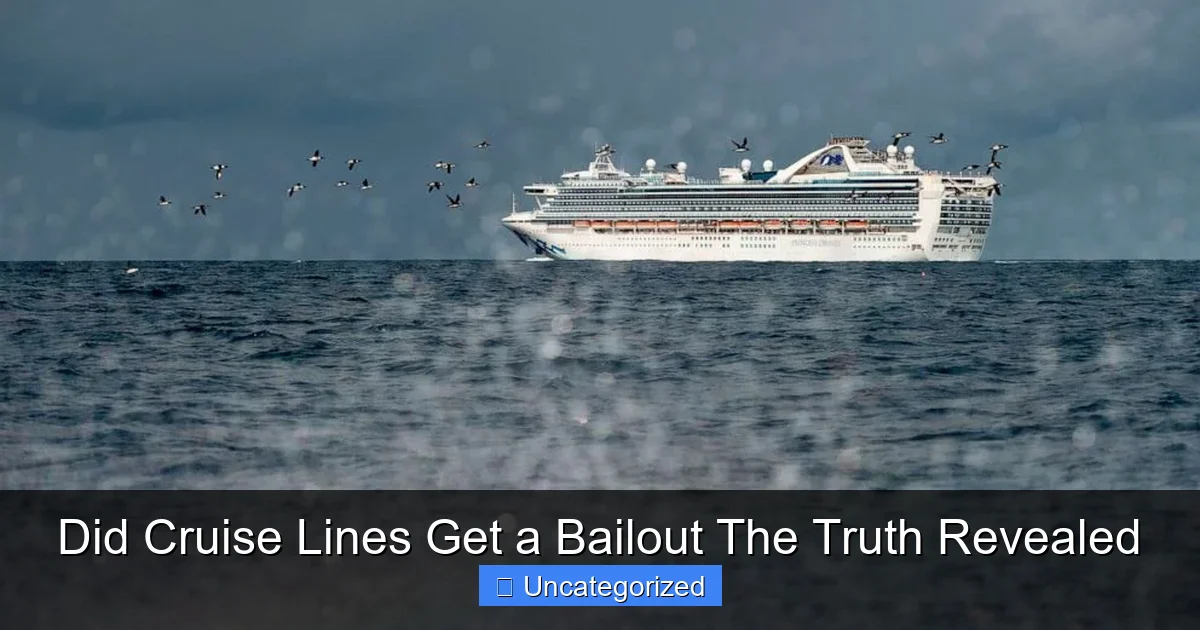
Featured image for did cruise lines get a bailout
Image source: s.abcnews.com
Cruise lines did not receive a direct government bailout during the pandemic, despite widespread speculation and industry struggles. While they benefited from broader economic relief programs like the CARES Act—accessing loans and tax deferrals—no industry-specific rescue package was approved, setting them apart from airlines and other hard-hit sectors.
Key Takeaways
- Cruise lines received no direct bailout from U.S. government during pandemic.
- Some accessed CARES Act loans like other industries, but not cruise-specific aid.
- Taxpayer-funded payroll support excluded major cruise operators due to foreign incorporation.
- Private financing saved companies through debt, stock sales, and asset sales.
- Public backlash shaped policy as lawmakers resisted cruise industry bailout requests.
- Long-term recovery relies on health protocols, consumer confidence, and flexible booking.
📑 Table of Contents
Did Cruise Lines Get a Bailout The Truth Revealed
The global cruise industry, once a symbol of luxury and adventure, faced unprecedented challenges during the COVID-19 pandemic. With ships idled in ports, millions of passengers stranded, and revenues plummeting to zero, the question on everyone’s mind was: Did cruise lines get a bailout? The answer, as it turns out, is far more complex than a simple yes or no. While some governments stepped in with emergency aid, the cruise industry’s financial survival relied on a mix of corporate maneuvers, taxpayer-funded programs, and strategic lobbying. In this deep dive, we’ll unravel the truth behind the bailout narrative, separating fact from fiction and examining the real financial lifelines that kept the industry afloat.
From the early days of the pandemic, cruise lines like Carnival, Royal Caribbean, and Norwegian Cruise Line were among the hardest-hit sectors. With travel bans, port closures, and a public health crisis unfolding on ships like the Diamond Princess, the industry’s vulnerability was laid bare. But behind the scenes, these companies were navigating a web of financial instruments, government relief programs, and investor confidence. This article explores the nuances of whether cruise lines received direct bailouts, how they leveraged existing economic support, and what it means for the future of the industry.
The Pandemic’s Impact on the Cruise Industry
The Immediate Fallout: A Sector at a Standstill
The cruise industry’s reliance on global travel made it uniquely susceptible to pandemic disruptions. By March 2020, the U.S. Centers for Disease Control and Prevention (CDC) issued a No Sail Order, grounding all major cruise operations in American waters. Ships like the Grand Princess became floating quarantine zones, while others were denied entry at international ports. The financial toll was staggering: Carnival Corporation reported a $10.2 billion net loss in 2020, while Royal Caribbean’s revenue dropped by 80% compared to 2019.
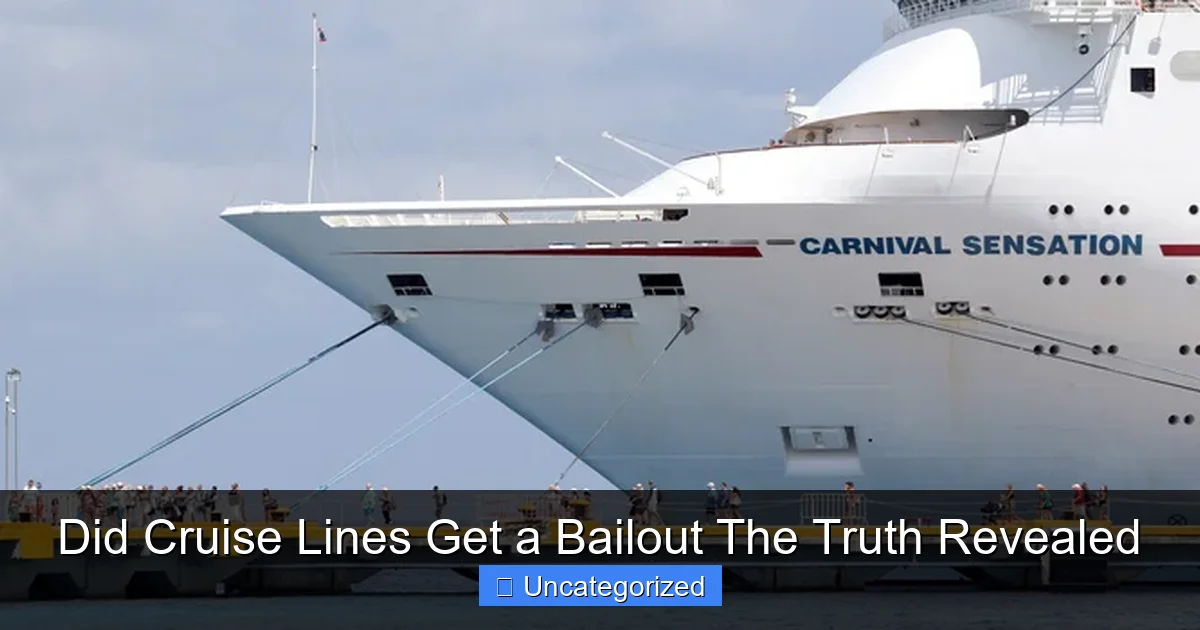
Visual guide about did cruise lines get a bailout
Image source: i.insider.com
- Passenger cancellations: Over 1 million cruise bookings were canceled in the first six months of 2020.
- Employee furloughs: Tens of thousands of crew members were laid off or repatriated.
- Stock price collapse: Carnival’s shares fell from $50+ in early 2020 to under $8 by May.
Why Bailouts Seemed Inevitable
With no revenue and massive fixed costs (e.g., ship maintenance, insurance, and payroll), cruise lines faced existential threats. Unlike airlines, which often receive direct government aid during crises, cruise companies are structured as multi-jurisdictional entities, complicating rescue efforts. For example:
- Carnival Corporation is incorporated in Panama but headquartered in the U.S.
- Royal Caribbean is registered in Liberia but operates primarily from Miami.
This legal complexity meant traditional bailouts were unlikely. Instead, the industry turned to alternative funding sources.
Direct Bailouts: The Myth vs. Reality
Why Cruise Lines Weren’t Eligible for Traditional Bailouts
The term “bailout” typically implies direct government grants or loans to prevent bankruptcy. In the U.S., such aid was primarily funneled through the Coronavirus Aid, Relief, and Economic Security (CARES) Act, which allocated $2.2 trillion in relief. However, cruise lines were excluded from key programs like the Paycheck Protection Program (PPP) because they were classified as “foreign corporations” under U.S. tax law. A Carnival spokesperson stated in 2020: “We pay no U.S. income taxes because our ships operate internationally.”
Exceptions and Workarounds
Despite these barriers, cruise lines accessed indirect aid through:
- State-level grants: Florida, a hub for cruise operations, provided $20 million in emergency grants to support port workers and infrastructure.
- EU state aid: European subsidiaries (e.g., Costa Cruises in Italy) received grants under the EU’s Temporary Framework for State Aid.
- Tax deferrals: The U.S. allowed deferral of payroll taxes under the CARES Act, which Carnival and Royal Caribbean utilized.
Case Study: The Norwegian Cruise Line Controversy
In 2020, Norwegian Cruise Line Holdings (NCLH) lobbied the U.S. government for inclusion in the PPP, arguing that its U.S. operations (including Miami headquarters) qualified. The request was denied, but NCLH later secured a $1.5 billion loan from private investors, including a $500 million investment from private equity firm L Catterton—a move criticized as a “backdoor bailout” by taxpayer advocacy groups.
Alternative Lifelines: How Cruise Lines Survived
Debt Financing and Corporate Bonds
With no direct bailouts, cruise lines turned to capital markets. Carnival raised $6 billion in debt and equity offerings in 2020, including a $4 billion bond issuance at 11.5% interest—a record high for the company. Royal Caribbean followed suit, issuing $2.3 billion in bonds and securing a $2.2 billion revolving credit facility.
- Example: In April 2020, Carnival sold $4 billion in senior secured notes, backed by its fleet as collateral.
- Risk: These moves increased long-term debt, with Carnival’s total liabilities rising from $22 billion (2019) to $32 billion (2022).
Government-Backed Loan Programs
While excluded from U.S. programs, cruise lines accessed aid through:
- U.S. Federal Reserve’s Corporate Credit Facilities: Carnival and Royal Caribbean sold bonds eligible for purchase under the Fed’s Secondary Market Corporate Credit Facility (SMCCF), indirectly lowering borrowing costs.
- International support: The U.K.’s Coronavirus Large Business Interruption Loan Scheme (CLBILS) aided P&O Cruises.
Operational Adjustments
Cost-cutting measures included:
- Furloughs: Carnival furloughed 50% of its U.S. staff in 2020.
- Ship sales: Royal Caribbean sold three older ships, including the Empress of the Seas, to raise cash.
- Delayed new builds: Carnival postponed the delivery of two LNG-powered ships.
The Role of Tax Havens and Lobbying
How Tax Structures Shaped the Debate
Cruise lines’ incorporation in tax havens (e.g., Bermuda, Panama, Liberia) became a lightning rod for criticism. These jurisdictions allow companies to avoid U.S. corporate taxes but also disqualify them from direct aid. Critics argued this created a “double standard”, as highlighted by Senator Elizabeth Warren in 2020: “Why should taxpayers bail out companies that pay no taxes?”
Lobbying Efforts and Public Perception
The Cruise Lines International Association (CLIA) spent $2.3 million on lobbying in 2020, advocating for inclusion in relief programs. Their efforts focused on:
- Emphasizing the industry’s economic impact (e.g., $55 billion in U.S. output pre-pandemic).
- Highlighting job losses (over 300,000 U.S. jobs tied to cruising).
- Promoting health protocols to reassure policymakers.
While unsuccessful in securing direct aid, these campaigns influenced public opinion and media coverage.
Ethical Dilemmas
The bailout debate raised ethical questions:
- Should companies with tax avoidance strategies receive public aid?
- Is the cruise industry “too big to fail”?
- How do we balance economic recovery with accountability?
A 2021 Harvard Business Review analysis noted that the industry’s survival relied more on “private sector resilience” than government handouts.
Recovery and the Road Ahead
2021–2023: A Gradual Rebound
By 2022, cruise lines began resuming operations, but challenges persisted:
- Passenger hesitancy: A 2021 CLIA survey found 60% of travelers were “cautious” about cruising.
- Debt burdens: Carnival’s net debt peaked at $28 billion in 2021.
- Supply chain delays: New ship deliveries were postponed due to global disruptions.
Financial Performance: A Mixed Picture
Below is a comparison of key financial metrics for major cruise lines (2019 vs. 2022):
| Company | 2019 Revenue ($B) | 2022 Revenue ($B) | 2019 Net Income ($B) | 2022 Net Income ($B) | Debt Increase (2019–2022) |
|---|---|---|---|---|---|
| Carnival | 20.8 | 12.1 | 2.9 | -6.1 | +45% |
| Royal Caribbean | 10.9 | 8.9 | 1.9 | -0.6 | +38% |
| Norwegian | 6.5 | 4.8 | 0.9 | -1.6 | +52% |
While revenues rebounded, profitability remained elusive. Carnival’s 2022 revenue was just 58% of pre-pandemic levels, and all three companies reported net losses.
Future Outlook and Sustainability
The industry’s recovery hinges on:
- Health and safety: Enhanced sanitation protocols and vaccine requirements.
- Debt management: Carnival plans to reduce debt to $25 billion by 2025.
- Environmental regulations: New IMO 2023 rules on carbon emissions may increase costs.
Analysts predict a full recovery by 2025, but the era of “cheap cruising” may be over due to higher operational costs.
The Verdict: Did Cruise Lines Get a Bailout?
So, did cruise lines get a bailout? The answer is a nuanced no—and yes. While they did not receive the direct taxpayer-funded grants seen in the airline industry, they accessed:
- Indirect government support (e.g., Fed bond purchases, tax deferrals).
- State and international aid for subsidiaries.
- Corporate financing backed by public market mechanisms.
The real story is one of adaptation and resilience. Cruise lines leveraged every tool available—from debt markets to operational cuts—to survive. As one industry analyst noted, “They didn’t get a bailout, but they certainly benefited from the broader economic safety net.”
For travelers, the takeaway is clear: The cruise industry’s survival was not a handout but a testament to its financial engineering. However, the debt accumulated during the pandemic will shape pricing, itineraries, and onboard experiences for years to come. As the industry rebuilds, the debate over corporate accountability and public aid will remain—a reminder that in times of crisis, the line between rescue and reckoning is often blurred.
Frequently Asked Questions
Did cruise lines get a bailout during the COVID-19 pandemic?
Yes, major cruise lines like Carnival, Royal Caribbean, and Norwegian received indirect financial relief through broader pandemic aid programs, such as the CARES Act, which provided loans and tax breaks. However, they were not included in targeted bailouts like airlines.
Why did cruise lines get a bailout while other industries struggled?
Cruise lines benefited from general economic relief measures due to their role in tourism and employment, but they faced stricter repayment terms. Critics argued their offshore corporate structures made them less eligible than domestic-focused industries.
How much money did cruise lines receive from the government?
Exact figures are unclear, but estimates suggest hundreds of millions in low-interest loans and tax deferrals. For example, Carnival secured $6 billion in private financing with federal loan guarantees, not direct cash injections.
Were cruise lines required to meet conditions for the bailout funds?
Yes, recipients had to maintain certain employment levels and adhere to debt covenants. However, unlike airline bailouts, there were no strict mandates to suspend dividends or executive bonuses.
Did taxpayers ultimately pay for the cruise line bailout?
Most funds were structured as loans, meaning companies are expected to repay them. However, tax breaks and delayed payroll taxes created indirect costs for taxpayers.
How did the cruise line bailout impact the industry’s recovery?
The financial support helped cruise lines avoid mass bankruptcies and restart operations faster. But some argue it allowed poorly managed companies to survive without significant restructuring.