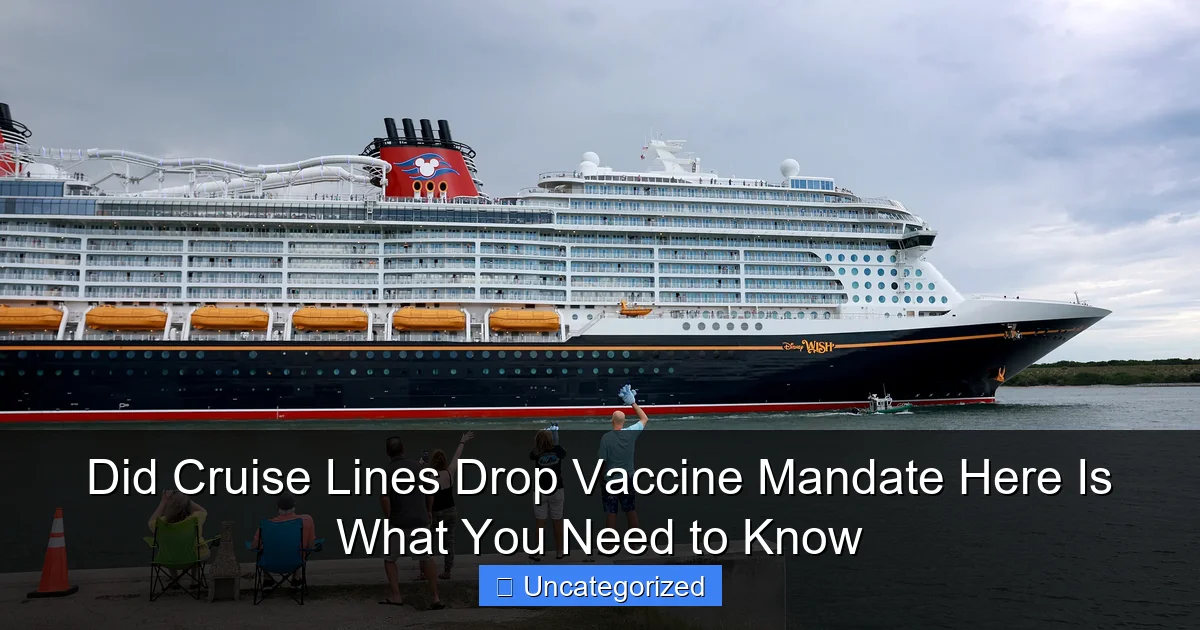
Featured image for did cruise lines drop vaccine mandate
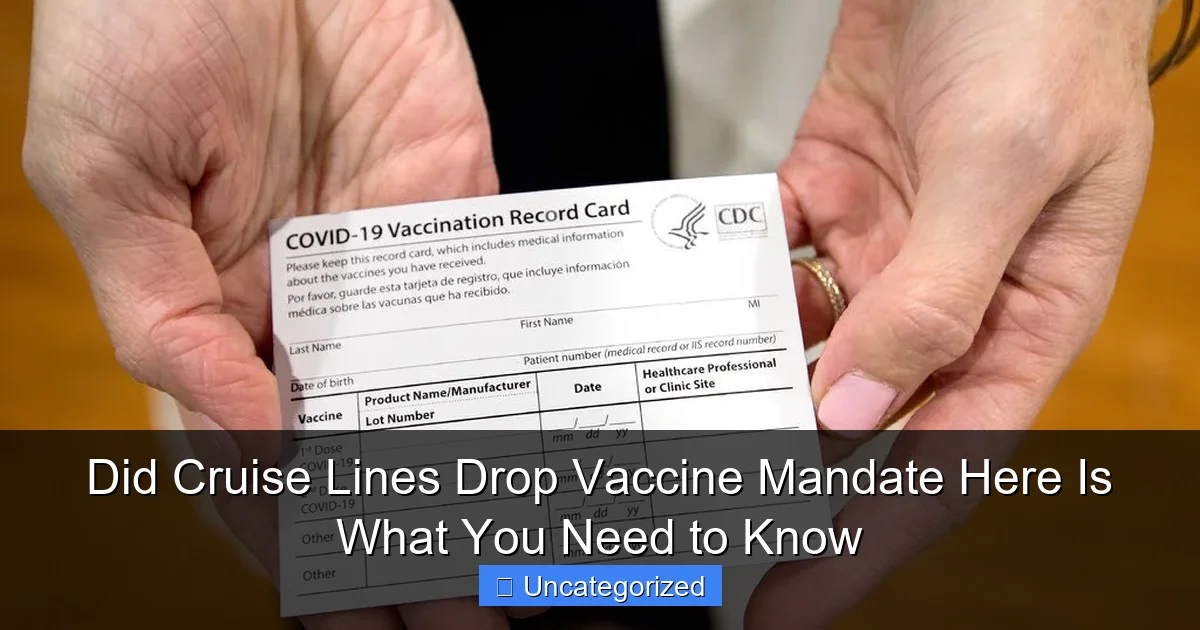
Image source: gannett-cdn.com
Most major cruise lines have now dropped their COVID-19 vaccine mandates, marking a significant shift in travel policy as of 2023. This change allows unvaccinated passengers to sail freely on most global itineraries, though testing requirements and destination-specific rules may still apply—check your cruise line’s latest guidelines before booking.
Key Takeaways
- Vaccine mandates dropped: Most major cruise lines no longer require COVID-19 vaccination for passengers.
- Check individual policies: Always verify requirements per cruise line—rules vary by operator and destination.
- Pre-travel testing may still apply: Some lines require negative tests even without vaccine mandates.
- Unvaccinated travelers welcome: Many ships now allow unvaccinated guests but may impose extra protocols.
- Documentation remains critical: Carry proof of vaccination or test results to avoid boarding issues.
- Destinations dictate rules: Port countries may enforce stricter rules than the cruise line itself.
📑 Table of Contents
- Did Cruise Lines Drop Vaccine Mandate Here Is What You Need to Know
- Why Vaccine Mandates Were Introduced in the First Place
- Which Cruise Lines Have Officially Dropped the Vaccine Mandate?
- What Happens If You’re Unvaccinated? Current Testing and Health Protocols
- How to Stay Updated: Tracking Policy Changes by Cruise Line
- Data Snapshot: Cruise Line Vaccine and Testing Policies (Mid-2024)
- Looking Ahead: The Future of Cruise Health Policies
Did Cruise Lines Drop Vaccine Mandate Here Is What You Need to Know
The cruise industry has undergone a dramatic transformation since the early days of the pandemic. Once considered high-risk zones for virus transmission due to their enclosed environments and large passenger volumes, cruise ships were among the first sectors to impose strict health and safety protocols. Among the most significant of these measures was the vaccine mandate, requiring all passengers and crew to be fully vaccinated before boarding. This policy, introduced in 2021 by major cruise lines such as Royal Caribbean, Carnival, and Norwegian, was seen as a crucial step toward restoring consumer confidence and ensuring a safe return to sea.
Fast forward to 2023 and 2024, and the landscape has shifted dramatically. With global vaccination rates rising, the World Health Organization (WHO) declaring the end of the Public Health Emergency of International Concern (PHEIC) in May 2023, and most countries lifting travel restrictions, cruise lines have begun to reevaluate their health policies. The big question on travelers’ minds now is: Did cruise lines drop the vaccine mandate? The answer isn’t a simple “yes” or “no”—it varies by cruise line, destination, ship, and even sailing date. In this comprehensive guide, we’ll break down the current state of cruise vaccine policies, what changes have occurred, what to expect when booking a cruise, and how to stay informed to avoid surprises at the gangway.
Why Vaccine Mandates Were Introduced in the First Place
The Pandemic and Cruise Industry Shutdown
When the pandemic hit in early 2020, the cruise industry came to a grinding halt. The infamous outbreaks on ships like the Diamond Princess and Grand Princess made headlines worldwide, with hundreds of passengers and crew infected in confined spaces. These incidents led to port rejections, extended quarantines, and a complete suspension of operations for over a year. By mid-2020, the Centers for Disease Control and Prevention (CDC) issued a “No Sail Order,” effectively grounding the entire U.S. cruise fleet.
Visual guide about did cruise lines drop vaccine mandate
Image source: static01.nyt.com
As the industry worked to restart operations in 2021, it needed a way to reassure travelers that cruising could be safe. The solution? A layered health strategy that included enhanced sanitation, air filtration systems, testing protocols, and most notably—mandatory vaccination for all guests and crew. The vaccine mandate wasn’t just a public health measure; it was a business imperative. Without it, cruise lines feared they’d never regain consumer trust.
How Vaccine Mandates Were Implemented
Starting in mid-2021, major cruise lines began rolling out vaccine requirements. For example:
- Royal Caribbean required all guests aged 12 and older to be fully vaccinated, with limited exceptions for medical or religious reasons.
- Carnival Cruise Line mandated vaccines for all passengers over 12, with unvaccinated guests needing to apply for an exemption and undergo additional testing.
- Norwegian Cruise Line went further, initially requiring 100% vaccination for all guests, including children, though this later evolved.
- MSC Cruises implemented a “Healthy Sail” program with mandatory vaccination and pre-embarkation testing.
These policies were enforced through digital health platforms like VeriFLY and the cruise line’s own apps, where passengers uploaded vaccination cards and test results. Non-compliance meant denied boarding, often without a refund. The mandates were widely credited with helping the industry resume operations and reduce onboard outbreaks during the early recovery phase.
The Role of Government and Health Authorities
Beyond internal policies, cruise lines had to comply with regulations from the CDC, local port authorities, and international health bodies. The CDC’s Framework for Conditional Sailing Order (CSO), which governed U.S.-based cruises, required a 95% vaccination rate among passengers and 98% among crew. This created a de facto mandate, even for lines that wanted more flexibility. International destinations, such as the Caribbean and Europe, also imposed their own rules, often requiring proof of vaccination for entry—further reinforcing the need for cruise lines to maintain strict policies.
Which Cruise Lines Have Officially Dropped the Vaccine Mandate?
Major U.S.-Based Lines: The Shift in 2023–2024
The turning point came in late 2022 and early 2023, as the global health situation improved and public pressure mounted for more flexible policies. Several major cruise lines began relaxing or eliminating their vaccine mandates. Here’s a breakdown of the current status (as of mid-2024):
- Royal Caribbean International: Dropped its vaccine mandate for most sailings as of August 2023. However, unvaccinated guests must provide a negative PCR or antigen test taken within 24–72 hours before boarding. This applies to all itineraries except those visiting countries with their own vaccination requirements (e.g., some Asian destinations).
- Carnival Cruise Line: Removed the mandate in October 2023. Unvaccinated guests must submit a negative test within 3 days of sailing. Carnival still strongly encourages vaccination and offers onboard testing for symptomatic guests.
- Norwegian Cruise Line (NCL): One of the first to drop the mandate, doing so in June 2023. NCL now follows a “test-to-sail” model, with unvaccinated passengers required to test before departure. They also offer rapid antigen tests onboard for a fee.
- MSC Cruises: Ended its 100% vaccination requirement in September 2023. Now, unvaccinated guests must test negative within 72 hours. MSC still requires vaccination for certain high-risk itineraries, such as world cruises or sailings to remote regions.
- Princess Cruises: Lifted the mandate in November 2023. Unvaccinated travelers must test negative within 3 days. Princess continues to recommend vaccination, especially for older or immunocompromised guests.
Exceptions and Special Cases
While most mainstream lines have dropped the mandate, there are important exceptions:
- Itinerary-Based Requirements: Some destinations still require vaccination for entry. For example, Japan and South Korea may require proof of vaccination for cruise passengers disembarking. If your cruise stops in such ports, you may still need to be vaccinated—even if the cruise line doesn’t require it.
- World Cruises and Extended Voyages: Lines like Holland America and Cunard often maintain stricter policies for long-duration cruises due to the increased risk of illness over weeks at sea. For example, Cunard still recommends vaccination for its world cruises, and some itineraries may require it.
- Private Charter Cruises: On occasion, a cruise may be chartered by a private group (e.g., a company, religious organization, or university) that imposes its own vaccine rules. In these cases, the cruise line will enforce the charterer’s policy, which may be more or less strict than the line’s standard rules.
Smaller and Luxury Lines: A Different Approach
Smaller and luxury cruise lines have taken a more nuanced approach. For example:
- Regent Seven Seas Cruises and Oceania Cruises dropped their mandates in early 2024 but still require unvaccinated guests to test before sailing and during the cruise if symptoms arise.
- Silversea maintains a flexible policy, allowing unvaccinated guests but requiring them to test at embarkation and mid-cruise on voyages longer than 7 days.
- Windstar Cruises eliminated the mandate in late 2023 but strongly encourages vaccination and offers free testing onboard.
These lines often cater to older or more health-conscious travelers, so while they’ve relaxed mandates, they’ve enhanced other health protocols to maintain safety.
What Happens If You’re Unvaccinated? Current Testing and Health Protocols
Pre-Departure Testing Requirements
Now that most cruise lines have dropped vaccine mandates, the focus has shifted to testing. Here’s what unvaccinated travelers need to know:
- Timing: Most lines require a negative test taken within 24 to 72 hours before boarding. This can be a PCR test or a supervised antigen test (self-tests are often not accepted unless verified by a healthcare provider).
- Documentation: You must upload your test results to the cruise line’s health portal (e.g., Royal Caribbean’s Health & Safety Portal, Carnival’s VeriFLY app). Paper copies may be accepted at check-in, but digital submission is strongly recommended.
- Testing Options: Many cruise lines partner with third-party testing providers (e.g., CVS, Walgreens, or Labcorp) to offer discounted or convenient testing. Some even provide testing kits for pre-cruise use.
Tip: Schedule your test at least 48 hours before departure to allow time for results and upload. Delays in test results are the most common reason for last-minute boarding denials.
Onboard Health Measures
Even without a vaccine mandate, cruise lines continue to enforce health protocols to protect passengers and crew:
- Enhanced Sanitation: High-touch areas are disinfected multiple times daily. Hand sanitizer stations are ubiquitous.
- Air Filtration: Most modern ships use MERV-13 or HEPA filters to reduce airborne pathogens.
- Masking Policies: Masks are now optional in most areas, but may be required during outbreaks, in medical centers, or on tenders to remote ports.
- Isolation Protocols: If a passenger tests positive onboard, they are isolated in a designated cabin, and close contacts may be asked to quarantine or test.
- Onboard Testing: Rapid antigen tests are available onboard for a fee (typically $50–$100). Some lines offer free testing for symptomatic guests.
Travel Insurance and Cancellation Policies
Unvaccinated travelers should consider the following:
- Travel Insurance: Purchase a policy that covers trip cancellation due to illness, including positive test results before or during the cruise. Not all policies cover this, so read the fine print.
- Flexible Booking: Opt for cruise lines that offer free cancellations or date changes up to 48–72 hours before departure. This reduces financial risk if you test positive last minute.
- Refund Policies: If you’re denied boarding due to a positive test, most lines offer a future cruise credit (FCC) or partial refund, but not a full cash refund. Check your cruise contract for details.
How to Stay Updated: Tracking Policy Changes by Cruise Line
Why Policies Change Frequently
Cruise health policies are not set in stone. They evolve based on:
- Global Health Trends: A surge in cases in a key destination (e.g., a Caribbean island) may prompt a line to reinstate temporary testing or vaccination requirements.
- Government Regulations: If a port country reintroduces entry restrictions, the cruise line must comply.
- Onboard Outbreaks: A spike in illnesses on a particular ship or route may trigger enhanced protocols for future sailings.
- Seasonal Shifts: Some lines apply stricter rules during flu season (winter months) or for cruises with high elderly passenger loads.
Best Sources for Real-Time Updates
To avoid surprises, use these tools to stay informed:
- Official Cruise Line Websites: Check the “Health & Safety” or “Travel Requirements” section of your cruise line’s site. For example, Royal Caribbean updates its policy page weekly.
- Email Alerts: Sign up for newsletters or opt-in to health policy updates when booking. Most lines will email you 30–14 days before departure with final requirements.
- Mobile Apps: Use the cruise line’s app (e.g., Carnival Hub, NCL Mobile) for real-time updates, test uploads, and boarding passes.
- Travel Agent Communication: Reputable agents receive direct updates from cruise lines and can alert you to changes before you do.
- CDC and IATA Websites: For international travel, check the CDC’s Travel Health Notices and the International Air Transport Association (IATA) Travel Centre for destination-specific rules.
Create a Pre-Cruise Checklist
To ensure a smooth embarkation, use this checklist 2 weeks before departure:
- Confirm current vaccine and testing requirements for your itinerary.
- Book a pre-departure test at a verified facility.
- Download and set up the cruise line’s health app.
- Upload vaccination card (if applicable) and test results.
- Review travel insurance coverage for illness-related cancellations.
- Pack masks, hand sanitizer, and a home test kit for use onboard.
Data Snapshot: Cruise Line Vaccine and Testing Policies (Mid-2024)
Below is a summary of current policies across major cruise lines. Note that requirements may vary by itinerary and sailing date.
| Cruise Line | Vaccine Mandate? | Testing for Unvaccinated | Mask Policy | Onboard Testing Available? | Notes |
|---|---|---|---|---|---|
| Royal Caribbean | No (as of Aug 2023) | PCR or antigen within 24–72 hrs | Optional | Yes ($75–$100) | Required for some Asian ports |
| Carnival Cruise Line | No (Oct 2023) | Antigen within 3 days | Optional | Yes ($50–$75) | Free testing for symptomatic guests |
| Norwegian Cruise Line | No (June 2023) | PCR or antigen within 72 hrs | Optional | Yes ($75) | Rapid test kits available onboard |
| MSC Cruises | No (Sept 2023) | Antigen within 72 hrs | Optional | Yes (free for symptomatic) | Required for world cruises |
| Princess Cruises | No (Nov 2023) | Antigen within 3 days | Optional | Yes ($50) | Recommended for older travelers |
| Cunard | Recommended (not required) | Antigen within 3 days | Optional | Yes (free) | Required on some world cruises |
| Holland America | No (Dec 2023) | Antigen within 3 days | Optional | Yes ($75) | Enhanced cleaning protocols |
Looking Ahead: The Future of Cruise Health Policies
The cruise industry is at a crossroads. On one hand, the removal of vaccine mandates has opened the door to millions of unvaccinated travelers who previously avoided cruising. This has led to record bookings and revenue growth in 2023–2024. On the other hand, health experts warn that relaxing protocols too quickly could lead to new outbreaks, especially with new variants or seasonal flu surges.
Looking ahead, we can expect:
- Dynamic Policies: Cruise lines will likely adopt risk-based protocols, tightening rules during outbreaks or in high-risk regions, then relaxing them when conditions improve.
- Digital Health Passports: More lines may integrate with global health platforms (e.g., CommonPass, IATA Travel Pass) for seamless verification of test results and vaccination status.
- Personalized Health Plans: High-end lines may offer optional health screenings, on-demand testing, and telemedicine services as premium add-ons.
- Transparency and Communication: Expect cruise lines to provide more real-time updates via apps and email, helping passengers make informed decisions.
For travelers, the key takeaway is this: flexibility is essential. While the era of mandatory vaccines appears to be over for most mainstream cruises, the industry remains vigilant. Staying informed, preparing for testing, and purchasing travel insurance will be your best tools for a smooth, stress-free cruise experience.
In conclusion, yes—many cruise lines have dropped the vaccine mandate, but they’ve replaced it with a new framework of testing, sanitation, and real-time health monitoring. The sea is calling, and with the right preparation, you can answer it safely and confidently. Whether you’re vaccinated or not, the world of cruising is more accessible than ever—just make sure you’re ready for the journey.
Frequently Asked Questions
Did cruise lines drop vaccine mandates for all passengers?
Most major cruise lines, including Carnival, Royal Caribbean, and Norwegian, have dropped vaccine mandates for most itineraries as of 2023. However, some sailings—especially those to specific destinations—may still require proof of vaccination, so check your cruise line’s policy before booking.
Why did cruise lines drop the vaccine mandate?
Cruise lines dropped the vaccine mandate due to improved public health conditions, updated CDC guidance, and declining COVID-19 cases. This shift aligns with broader travel industry trends toward normalizing pre-pandemic protocols.
Are unvaccinated passengers allowed on cruises now?
Yes, many cruise lines now allow unvaccinated passengers, but they may face additional requirements like pre-trip testing or health screenings. The rules vary by cruise line and destination, so review the latest guidelines before sailing.
Do I still need a COVID-19 test if cruise lines dropped the vaccine mandate?
Some cruise lines require pre-travel testing for unvaccinated passengers, while others have eliminated all testing requirements. Always confirm the specific testing policy for your cruise, as it depends on the itinerary and departure location.
Which cruise lines still enforce a vaccine mandate?
A few niche or luxury lines (e.g., Virgin Voyages) may still require vaccination for select sailings, particularly longer voyages or international routes. Always verify with your cruise line or travel agent before finalizing plans.
Can cruise lines reinstate the vaccine mandate in the future?
Yes, cruise lines may reinstate the vaccine mandate if public health conditions change, such as a surge in COVID-19 cases or new variants. Policies remain fluid, so staying updated via official cruise line communications is essential.