Featured image for can you exchange money on norwegian cruise line
Image source: oceanblissjourneys.com
Norwegian Cruise Line does not offer currency exchange services onboard its ships, so passengers should plan ahead and exchange money before sailing or at ports of call. ATMs and credit cards are widely accepted onboard, but carrying local currency is recommended for shore excursions and small vendors in foreign destinations.
Key Takeaways
- No onboard currency exchange: Norwegian Cruise Line doesn’t offer cash exchange services on ships.
- Use major currencies: Stick to USD or widely accepted currencies to avoid exchange issues.
- Notify your bank: Alert them before traveling to prevent card blocks abroad.
- Withdraw cash pre-cruise: Get local currency at your destination before boarding.
- Credit cards are key: Use cards for onboard purchases; they auto-convert currencies.
- Check port options: Some ports have ATMs or exchange desks for local cash needs.
📑 Table of Contents
- Can You Exchange Money on Norwegian Cruise Line? Here Is What You Need to Know
- Understanding Norwegian Cruise Line’s Onboard Currency Policy
- Best Ways to Exchange Money Before and During Your Cruise
- Smart Strategies for Managing Money in Different Cruise Destinations
- Digital Tools and Apps to Simplify Currency Exchange
- Data Table: Currency Exchange Options Compared
- Safety Tips and Common Pitfalls to Avoid
Can You Exchange Money on Norwegian Cruise Line? Here Is What You Need to Know
Imagine setting sail on a luxurious Norwegian Cruise Line (NCL) vessel, the ocean breeze in your hair, the sun setting over turquoise waters—only to realize you’ve forgotten to exchange your currency for the local tender at your next port of call. You’re not alone. One of the most common questions cruisers have before boarding an NCL ship is: Can you exchange money on Norwegian Cruise Line? Whether you’re planning to explore the vibrant streets of Cozumel, the fjords of Norway, or the bustling markets of Santorini, understanding how currency exchange works on a cruise is essential for a stress-free vacation.
Norwegian Cruise Line, known for its Freestyle Cruising concept and global itineraries, caters to travelers from all over the world. With destinations spanning from the Caribbean and Alaska to Europe and Asia, the need for foreign currency is inevitable. While onboard amenities like dining, entertainment, and spa services are charged in U.S. dollars (USD) and added to your onboard account, shore excursions, local shopping, and dining in port cities often require local currency. This raises a critical question: does NCL offer currency exchange services onboard, and if not, what are your best alternatives? In this comprehensive guide, we’ll break down everything you need to know about exchanging money on Norwegian Cruise Line—covering onboard policies, port strategies, digital tools, safety tips, and real-world examples to ensure you’re never left shortchanged on your next cruise adventure.
Understanding Norwegian Cruise Line’s Onboard Currency Policy
What Currency Is Used Onboard?
Norwegian Cruise Line operates on a U.S. dollar (USD) basis for all onboard transactions. This includes:
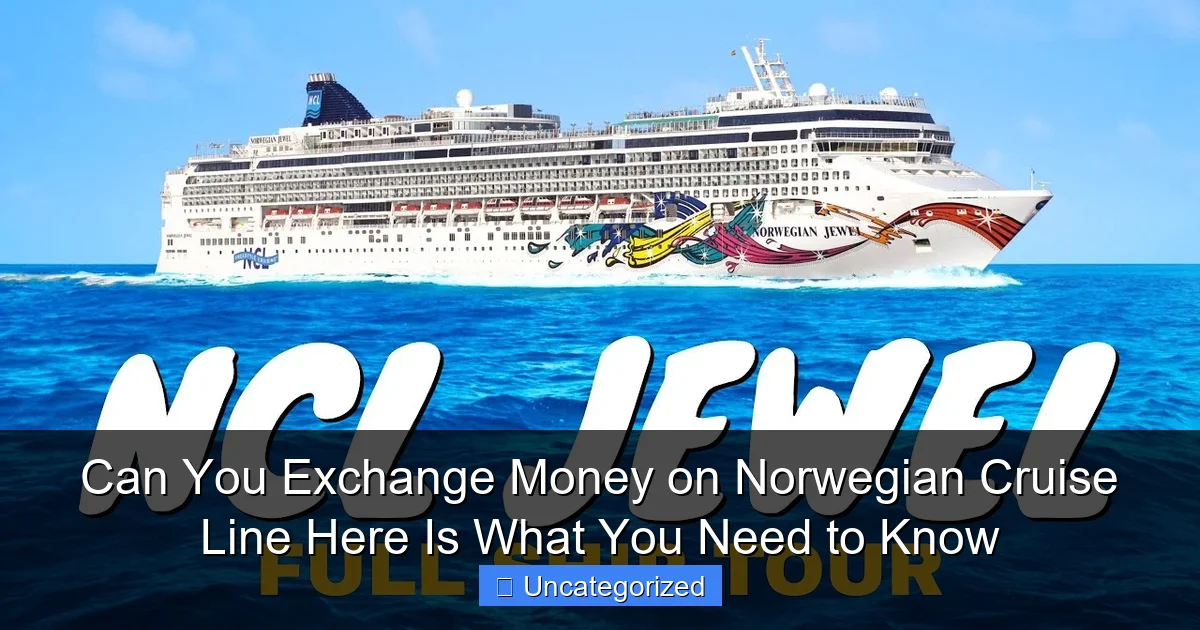
Visual guide about can you exchange money on norwegian cruise line
Image source: i.ytimg.com
- Gratuities (service charges)
- Specialty dining reservations
- Spa and wellness treatments
- Shore excursions booked through NCL
- Gift shop purchases
- Alcohol and beverage packages
Your onboard account—linked to your room key card—is charged in USD, regardless of your nationality. This standardized system simplifies billing and ensures consistency across the fleet. However, this also means that you cannot use foreign currency (e.g., euros, pesos, yen) to pay for onboard services.
Does NCL Offer Onboard Currency Exchange?
Here’s the short answer: No, Norwegian Cruise Line does not provide official currency exchange services onboard its ships. Unlike some luxury or river cruise lines that may have a dedicated exchange counter, NCL’s focus is on convenience through digital and card-based transactions. The ship’s front desk, guest services, and pursers do not exchange cash for foreign currencies.
This policy aligns with NCL’s modern, tech-forward approach. Instead of handling cash, the line encourages the use of credit/debit cards and digital payments. However, this doesn’t mean you’re out of options. The lack of onboard exchange is intentional—NCL wants you to prepare in advance or use more efficient alternatives during your trip.
Why Doesn’t NCL Exchange Money?
There are several practical reasons why Norwegian Cruise Line avoids offering currency exchange:
- Security: Handling large volumes of cash increases theft and counterfeiting risks.
- Cost: Currency exchange is a low-margin, high-effort service that requires trained staff and inventory.
- Logistics: Ships visit multiple countries with different currencies, making it impossible to stock every denomination.
- Regulation: International financial regulations make onboard exchange complex and legally cumbersome.
As a result, NCL focuses on what it does best—delivering exceptional cruise experiences—while leaving currency exchange to more specialized providers.
Best Ways to Exchange Money Before and During Your Cruise
1. Exchange Currency Before You Board
The most cost-effective and reliable method is to exchange currency before your cruise. Here’s how:
- Local Banks: Visit your home bank or credit union. They often offer competitive rates with low or no fees. Call ahead to reserve foreign currency (e.g., euros, Mexican pesos, Norwegian kroner).
- Currency Exchange Kiosks at Airports: While convenient, airport exchanges (e.g., Travelex, ICE) typically have higher fees and less favorable rates. Use them only as a last resort.
- Online Services: Platforms like Wise (formerly TransferWise), Revolut, or Currency Exchange International (CEI) offer better rates. You can order currency online and have it delivered to your home or pick it up at a branch.
Pro Tip: Exchange enough for your first 2–3 ports. For example, if you’re cruising the Mediterranean, get euros for Italy, Spain, and France. Avoid carrying large sums—$100–$200 per port is usually sufficient for souvenirs, snacks, and small purchases.
2. Use Your Debit Card at Port ATMs
ATMs in major ports (e.g., Barcelona, St. Thomas, Vancouver) are widely available and offer competitive exchange rates. Here’s what to do:
- Withdraw local currency directly from your debit card (not credit card, which incurs cash advance fees).
- Choose the “Local Currency” option when prompted (not USD) to avoid dynamic currency conversion (DCC) fees.
- Use ATMs affiliated with major banks (e.g., Banco Santander, CIBC) to reduce risk of skimming.
Example: In Nassau, Bahamas, you’ll need Bahamian dollars (BSD), which are pegged 1:1 to USD. However, most vendors accept USD, but you’ll get change in BSD. Using an ATM ensures you have local currency for small vendors who don’t accept USD.
3. Use a No-Foreign-Transaction-Fee Credit Card
Carry a credit card with no foreign transaction fees (e.g., Chase Sapphire Preferred, Capital One Venture, Citi Premier). Use it for:
- Shore excursions booked locally (often cheaper than NCL’s excursions)
- Restaurants and cafes
- Large purchases (e.g., jewelry, art)
Your card issuer will apply the interbank exchange rate (the fairest rate), and you’ll avoid ATM withdrawal fees. Plus, you earn rewards points!
4. Carry USD as a Backup
In many destinations (especially the Caribbean and Latin America), U.S. dollars are widely accepted. Vendors often prefer USD because it’s stable and easy to exchange. However:
- You may get change in local currency, which is less convenient.
- Exchange rates may be less favorable than market rates.
- Some countries (e.g., Costa Rica, Jamaica) require local currency for taxis, markets, and small shops.
Tip: Carry small USD bills ($1, $5, $10) for tips and small purchases. Avoid $50 and $100 bills—they’re harder to break and more likely to be counterfeit.
Smart Strategies for Managing Money in Different Cruise Destinations
Caribbean & Mexico: USD Dominance with Local Flair
Destinations like Cozumel, Jamaica, and St. Maarten are USD-friendly. Most shops, restaurants, and taxis accept USD, but:
- Exchange rate: Vendors may use a 1:1 rate, but you’ll get change in pesos (Mexico) or Eastern Caribbean dollars (ECC). This means you’re effectively paying 10–20% more.
- ATMs: Use them in Cozumel (pesos) or Nassau (BSD) for better value.
- Markets: Local artisans and street vendors often only accept local currency.
Example: In Cozumel, a $20 USD souvenir might cost 200 pesos locally. If you pay in USD, you get 200 pesos back as change—losing the exchange benefit. Withdrawing pesos from an ATM avoids this.
Europe: The Euro Zone and Beyond
European cruises (e.g., Mediterranean, Baltic) require euros (EUR) in most countries. Exceptions:
- Norway: Norwegian kroner (NOK) – not part of the EU, so no euros.
- UK: British pounds (GBP) – even in EU ports like Southampton.
- Denmark: Danish kroner (DKK) – uses its own currency.
Strategy: Exchange USD to euros before your cruise. For Norway and the UK, use ATMs in port. Avoid exchanging USD to NOK at airports—rates are poor.
Asia & Australia: High-Tech and Cash-Heavy
Destinations like Singapore, Hong Kong, and Sydney blend cash and digital payments:
- Singapore: Singapore dollars (SGD). ATMs are everywhere, but some street food vendors only take cash.
- Japan: Japanese yen (JPY). Despite being tech-savvy, cash is still dominant in markets and temples.
- Australia: Australian dollars (AUD). Credit cards are widely accepted, but small towns may prefer cash.
Tip: In Japan, carry 5,000–10,000 yen (~$35–$70) for temples, vending machines, and small shops. Use your card for larger purchases.
Alaska & Canada: USD and CAD Compatibility
Alaska (U.S.) and Canada (Vancouver, Quebec) use USD and Canadian dollars (CAD), respectively. Both are accepted in border regions, but:
- CAD: Use ATMs in Vancouver or Quebec City for better rates.
- USD in Canada: Some vendors accept USD, but change is given in CAD (often at a poor rate).
Digital Tools and Apps to Simplify Currency Exchange
1. Currency Conversion Apps
Download apps like XE Currency or OANDA to:
- Check real-time exchange rates
- Track historical trends
- Calculate costs in your home currency
Example: Use XE to convert 100 euros to USD before buying a souvenir in Barcelona. The app shows the exact amount you’ll pay, avoiding sticker shock.
2. Digital Wallets and Prepaid Cards
Consider:
- Wise Multi-Currency Card: Load USD, EUR, GBP, etc. The card uses the interbank rate and has no foreign fees.
- Revolut: Similar to Wise, with budgeting tools and ATM withdrawals (free up to a limit).
- Google Pay/Apple Pay: Use contactless payments at ports with NFC terminals.
Pro Tip: Load your Wise or Revolut card with multiple currencies before your cruise. For example, load USD for onboard, EUR for Europe, and JPY for Japan.
3. Budgeting and Expense Trackers
Apps like Mint or Splitwise help you:
- Track daily spending
- Set a budget per port
- Split costs with travel companions
Example: Set a $150/day budget for your Mediterranean cruise. The app alerts you when you’re nearing your limit.
Data Table: Currency Exchange Options Compared
| Method | Exchange Rate | Fees | Convenience | Best For |
|---|---|---|---|---|
| Local Bank Exchange | Competitive (near interbank) | $0–$10 | Medium (requires advance order) | Pre-cruise preparation |
| Airport Kiosks | Poor (10–15% markup) | $5–$15 | High | Last-minute emergencies |
| Port ATMs | Very Good (interbank rate) | $2–$5 per withdrawal | High (24/7 access) | On-the-go currency needs |
| No-Fee Credit Card | Excellent (interbank rate) | $0 (no foreign fee) | Very High | Large purchases, dining |
| Wise/Revolut Card | Excellent (interbank rate) | $0–$3 per withdrawal | Very High (digital + physical) | Multi-currency trips |
| Cash in USD | Poor (vendor markup) | None, but poor value | High | Small purchases, tips |
Safety Tips and Common Pitfalls to Avoid
1. Avoid Dynamic Currency Conversion (DCC)
When paying by card, vendors may ask, “Would you like to pay in USD or local currency?” Always choose local currency. If you select USD, the vendor applies a poor exchange rate and charges a hidden fee (DCC). This can cost you 5–10% extra.
2. Beware of Counterfeit Bills
Carry a UV pen or use your phone’s flashlight to check security features. In markets, avoid large bills—use $5, $10, or $20 notes.
3. Don’t Over-Exchange
Unused foreign currency is hard to convert back. Only exchange what you’ll need. For example, 100 euros for a 3-day port stop in Rome.
4. Keep Receipts and Track Spending
Save ATM receipts and card statements. If you’re overcharged, dispute it with your bank.
5. Use the Ship as a Safe
Store extra cash in your cabin safe. Never carry more than $100–$200 at a time.
6. Check Your Bank’s Foreign Policies
Inform your bank you’re traveling to avoid fraud alerts. Confirm:
- Foreign transaction fees
- ATM withdrawal limits
- Emergency card replacement process
Navigating currency exchange on a Norwegian Cruise Line voyage doesn’t have to be stressful. While NCL doesn’t offer onboard exchange, the lack of this service opens the door to smarter, more cost-effective alternatives. By preparing in advance—exchanging currency at home, using ATMs in port, leveraging no-fee credit cards, and embracing digital tools—you can save money, avoid scams, and focus on what matters: enjoying your cruise.
Remember, the key is planning and flexibility. Exchange enough for your first few ports, use ATMs and cards for the rest, and always carry a mix of cash and digital payment options. Whether you’re sipping espresso in Venice, bargaining in a Jamaican market, or hiking in Alaska, you’ll be equipped to handle any currency challenge. So pack your bags, download your currency app, and set sail with confidence—because now you know exactly how to handle money on Norwegian Cruise Line. Bon voyage!
Frequently Asked Questions
Can you exchange money on Norwegian Cruise Line?
Yes, Norwegian Cruise Line (NCL) offers currency exchange services at guest services or onboard reception desks. Availability may vary by ship and destination, so check with the front desk upon boarding.
Where can I exchange currency on an NCL cruise?
You can exchange money on Norwegian Cruise Line at the guest services desk, usually located on the main lobby deck. Some larger ships may also have dedicated currency exchange counters during peak hours.
What currencies can I exchange on Norwegian Cruise Line?
NCL typically exchanges major currencies like USD, EUR, GBP, CAD, and AUD. However, exchange options depend on the ship’s itinerary and demand, so it’s best to confirm available currencies once onboard.
Is exchanging money on Norwegian Cruise Line a good deal?
Onboard exchange rates are often less favorable than banks or local exchange bureaus. If possible, exchange currency before your cruise to save money—especially for ports of call.
Can I exchange Norwegian kroner (NOK) on an NCL cruise?
While Norwegian Cruise Line is a Norwegian company, onboard currency exchange is primarily for major global currencies. NOK may be limited unless the ship is sailing in Scandinavia—always verify in advance.
Does NCL charge fees for exchanging money?
Yes, Norwegian Cruise Line applies service fees and uses adjusted exchange rates, which may be higher than market value. Review the posted rates and fees at guest services before exchanging money.