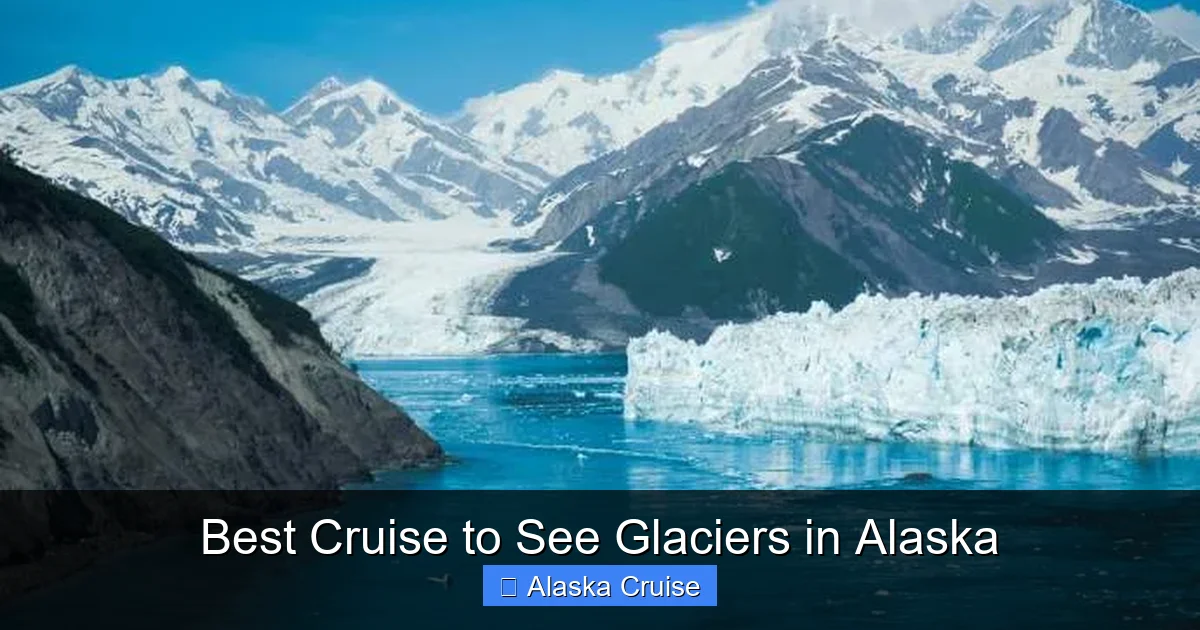
If you’re dreaming of standing face-to-face with towering glaciers, Alaska is the ultimate destination—and a cruise is the best way to experience it. From the awe-inspiring Hubbard Glacier to the thunderous calving of Margerie Glacier, the right cruise line and itinerary can make all the difference in creating a once-in-a-lifetime journey.
This is a comprehensive guide about best cruise to see glaciers in alaska.
Key Takeaways
- Glacier-heavy itineraries are key: Choose cruises that spend multiple days in Glacier Bay National Park or include stops near Hubbard, Tracy Arm, or College Fjord for maximum glacier viewing.
- Smaller ships offer better access: Boutique and expedition-style vessels can navigate narrower fjords and get closer to glaciers than large mega-ships.
- Timing matters: May through September offers the best weather and longest daylight hours, with peak glacier activity in July and August.
- Wildlife and scenery go hand-in-hand: Glacier cruises often include sightings of humpback whales, sea otters, bears, and bald eagles.
- Expert guides enhance the experience: Look for ships with naturalists or park rangers on board to provide educational commentary and context.
- Pack for variable weather: Even in summer, layers, waterproof gear, and binoculars are essential for comfort and glacier spotting.
- Book early for best cabins and deals: Popular glacier routes fill up quickly, especially for balcony staterooms with ocean views.
[FEATURED_IMAGE_PLACEHOLDER]
Why Alaska Is the Ultimate Glacier Destination
Alaska isn’t just home to glaciers—it’s practically defined by them. With over 100,000 glaciers covering nearly 30,000 square miles, the Last Frontier offers some of the most dramatic and accessible ice formations on Earth. Unlike glaciers in other parts of the world that require strenuous hikes or remote expeditions, Alaska’s glaciers are often visible from the deck of a cruise ship, making them accessible to travelers of all ages and abilities.
What makes Alaska’s glaciers so special isn’t just their size—though many are massive—but their activity. These aren’t static ice fields; they’re dynamic, moving rivers of ice that calve icebergs into the sea with thunderous cracks that echo across the fjords. Standing on the deck of a ship as a chunk of ice the size of a house breaks off and crashes into the water is a moment you’ll never forget. It’s nature’s power on full display.
And the best way to experience this spectacle? A cruise. Unlike land-based tours, which are limited to viewpoints and short boat rides, a cruise lets you glide through icy waters for hours, often with multiple glacier stops. You’ll wake up to a new frozen wonder each morning, from the turquoise waters of Tracy Arm to the towering walls of Hubbard Glacier. Plus, you’ll enjoy the comfort of a floating hotel, gourmet meals, and expert guides—all while soaking in one of the planet’s last great wildernesses.
Top Glacier Spots You’ll See on an Alaska Cruise
Not all glaciers are created equal, and not all cruise routes visit the same icy giants. To get the most out of your glacier experience, it helps to know which glaciers are must-sees and which itineraries include them.
Hubbard Glacier: The Giant of the North
At over 7 miles wide and 700 feet tall where it meets the sea, Hubbard Glacier is one of the largest and most active tidewater glaciers in North America. Located in Disenchantment Bay near Yakutat, it advances about 100 feet per year—yes, it’s actually growing. This makes it a rare example of a “surge glacier,” and its sheer scale is humbling.
Most major cruise lines that sail the Gulf of Alaska include a stop at Hubbard Glacier. Ships typically spend several hours in the area, allowing passengers to watch for calving events and listen to the deep groans of the glacier as it shifts. The best views come from the starboard (right) side of the ship as you approach, so if you’re booking a cabin, consider one on that side for prime glacier gazing.
Margerie and Grand Pacific Glaciers in Glacier Bay
Glacier Bay National Park is a UNESCO World Heritage Site and one of the crown jewels of the Alaska cruise experience. Here, you’ll find a concentration of glaciers unlike anywhere else, with Margerie and Grand Pacific Glaciers standing out as two of the most dramatic.
Margerie Glacier is a classic tidewater glacier that stretches over 20 miles from its source in the Saint Elias Mountains down to the bay. It’s known for its deep blue ice and frequent calving, often producing icebergs that float like sculptures in the water. Grand Pacific Glacier, just across the bay, is equally impressive and offers a different perspective with its wide, sweeping face.
Cruises that include Glacier Bay typically spend a full day in the park, often with a National Park Service ranger boarding the ship to provide commentary. This adds immense value, helping you understand the geology, ecology, and cultural history of the area. The ranger might point out bear tracks on the shore, identify bird species, or explain how the glaciers have retreated over the past century.
Tracy Arm and the Fords Terror Wilderness
For a more intimate and dramatic glacier experience, Tracy Arm is hard to beat. This narrow, winding fjord cuts through the Tongass National Forest and ends at the twin Sawyer Glaciers—North and South Sawyer. The fjord is surrounded by 3,000-foot granite cliffs, waterfalls cascading from the peaks, and frequent wildlife sightings.
Because of its narrow width, only smaller ships can navigate Tracy Arm, which means fewer crowds and a more immersive experience. The silence of the fjord, broken only by the sound of dripping water and distant bird calls, makes the sudden crack of a calving glacier all the more powerful.
Many cruise lines offer optional excursions into Tracy Arm via smaller boats or kayaks, allowing you to get even closer to the ice. These excursions are highly recommended if you’re looking for adventure and photography opportunities.
College Fjord: A Hidden Gem
Lesser-known but equally stunning, College Fjord is home to more than a dozen glaciers, many of which were named after Ivy League colleges by a group of Harvard and Yale alumni who explored the area in the late 1800s. You’ll find glaciers like Harvard, Yale, and Smith, each with its own character and beauty.
What makes College Fjord special is its accessibility and the variety of glaciers in one location. Unlike Glacier Bay, which focuses on a few major glaciers, College Fjord offers a gallery of icy formations, from slow-moving valley glaciers to dramatic hanging glaciers clinging to the cliffs.
Most cruises that visit College Fjord do so on the way to or from Seward, and the ship typically spends several hours drifting slowly past the glaciers. It’s a quieter, more contemplative experience compared to the busier Glacier Bay, perfect for travelers who want to soak in the scenery without the crowds.
Best Cruise Lines for Glacier Viewing
Not all cruise lines are created equal when it comes to glacier experiences. Some prioritize luxury and entertainment, while others focus on adventure and education. Here’s a breakdown of the top cruise lines for seeing glaciers in Alaska.
Holland America Line: The Glacier Expert
Holland America has been sailing Alaska for over 50 years and is widely regarded as one of the best cruise lines for glacier viewing. Their ships spend more time in Glacier Bay than most competitors, often with a full day in the park and a park ranger on board.
Their mid-sized ships, like the Nieuw Amsterdam and Koningsdam, are large enough to offer stability and comfort but small enough to navigate narrow fjords. They also offer a range of shore excursions, from whale watching to glacier trekking, and their dining and service are consistently high quality.
One standout feature is their “Glacier Bay Experience,” which includes enhanced programming, special lectures, and even glacier-themed cocktails. If you’re looking for a balance of comfort, education, and glacier access, Holland America is a top choice.
Princess Cruises: Scenic and Comfortable
Princess Cruises is another Alaska veteran, with a fleet of ships designed specifically for Alaskan waters. Their “North to Alaska” program includes immersive experiences like lumberjack shows, local cuisine, and cultural performances.
Their ships, such as the Grand Princess and Ruby Princess, offer excellent viewing areas, including large outdoor decks and forward-facing lounges. They also spend significant time in Glacier Bay and often include stops at Hubbard Glacier and College Fjord.
Princess is known for its “Movies Under the Stars” program, where you can watch films on a giant outdoor screen while wrapped in a blanket—perfect for chilly glacier mornings. They also offer a range of balcony cabins, which are ideal for private glacier viewing.
UnCruise Adventures: Small Ship, Big Experience
If you’re looking for a more adventurous and intimate glacier experience, UnCruise Adventures is the way to go. Their small ships—some carrying as few as 22 passengers—can navigate places larger ships can’t, like the narrow channels of Tracy Arm and the remote corners of Glacier Bay.
UnCruise focuses on active exploration, with daily kayaking, hiking, and Zodiac tours. Their itineraries often include multiple glacier stops, and their naturalist guides provide in-depth commentary on everything from glacier formation to local wildlife.
While the cabins are more modest than on luxury lines, the experience is unmatched for travelers who want to get up close and personal with Alaska’s icy wonders. It’s a great option for families, solo travelers, and anyone who prefers adventure over all-inclusive pampering.
National Geographic-Lindblad Expeditions: Science Meets Adventure
For the ultimate educational glacier cruise, consider National Geographic-Lindblad Expeditions. Their ships, like the National Geographic Quest and Sea Bird, are equipped with research tools, including microscopes, hydrophones, and underwater cameras.
Their expeditions are led by a team of experts—marine biologists, geologists, photographers—who provide daily lectures and guided excursions. You might find yourself kayaking near a calving glacier one day and learning about glacial retreat from a climate scientist the next.
These cruises are ideal for curious travelers who want to understand the science behind the scenery. While they’re on the higher end of the price spectrum, the depth of experience and access to remote areas make them worth the investment.
When to Go: Timing Your Glacier Cruise
Timing is everything when it comes to seeing glaciers in Alaska. While the cruise season runs from May to September, each month offers a different experience.
May and June: Quiet and Wild
Early season cruises in May and June offer fewer crowds, lower prices, and a sense of discovery. The weather is cooler, and some areas may still have snow, but the glaciers are active and the wildlife is abundant. Bears are often seen foraging along the shorelines, and migratory birds are arriving in full force.
One downside is that some shore excursions may be limited due to snow or ice, and daylight hours, while long, aren’t at their peak yet. Still, if you’re looking for a peaceful, budget-friendly glacier cruise, early season is a great option.
July and August: Peak Season
These are the most popular months for Alaska cruises, and for good reason. The weather is warmest, the days are longest (up to 18 hours of daylight in Juneau), and all excursions are fully operational. This is also when glacier calving is most active, thanks to warmer temperatures and increased meltwater.
The downside? Crowds. Popular ports like Skagway and Ketchikan can feel busy, and balcony cabins book up fast. If you’re traveling during peak season, book at least 6–12 months in advance to secure the best cabins and deals.
September: Fall Colors and Fewer Crowds
Late-season cruises in September offer a unique experience. The summer crowds have thinned, the prices drop, and the fall colors begin to appear in the forests. The weather is still mild, and the glaciers remain active.
One bonus of September is the chance to see the northern lights in the northern parts of Alaska, though sightings are never guaranteed. It’s also a great time for wildlife, as animals prepare for winter.
What to Pack for a Glacier Cruise
Packing for an Alaska glacier cruise is all about layers and preparedness. The weather can change quickly, and even in summer, temperatures near the glaciers can be chilly.
Essential Clothing
Start with a base layer of moisture-wicking fabric, add a mid-layer like a fleece or down vest, and top it off with a waterproof and windproof outer shell. A warm hat, gloves, and a scarf are also must-haves, especially for early morning glacier viewing.
Waterproof boots with good grip are essential, as decks can be slippery and shore excursions often involve wet or uneven terrain. Don’t forget sunglasses and sunscreen—the reflection off the ice can be intense.
Gear and Accessories
Binoculars are a must for spotting wildlife and getting a closer look at distant glaciers. A good camera with a zoom lens will help you capture the details of calving ice and soaring eagles.
A reusable water bottle, daypack, and portable charger are also useful for shore excursions. And if you’re prone to motion sickness, bring medication—some fjords can be choppy.
Dining and Onboard Comfort
Most cruise lines offer heated indoor viewing areas, but nothing beats being outside when a glacier calves. Many ships provide complimentary parkas or blankets, but it’s wise to bring your own warm layers.
Dining is usually included, and most lines offer Alaskan specialties like fresh salmon and king crab. Special dietary needs can typically be accommodated with advance notice.
Tips for Maximizing Your Glacier Experience
Seeing glaciers is one thing—experiencing them fully is another. Here are some insider tips to make the most of your cruise.
Choose the Right Cabin
If glacier viewing is your priority, book a balcony cabin on the starboard side of the ship for southbound itineraries (Seattle to Seward) or port side for northbound (Seward to Seattle). This ensures you have unobstructed views during key glacier stops.
Arrive Early for Viewing
Popular viewing spots on the ship fill up quickly, especially during glacier passages. Arrive at least 30 minutes early to secure a good spot on the deck or in a lounge.
Stay Patient and Present
Glacier calving is unpredictable. You might wait hours for a big event, or see multiple in a row. Bring a book, chat with fellow passengers, or simply enjoy the silence. The anticipation is part of the magic.
Take Advantage of Shore Excursions
While the ship-based viewing is incredible, shore excursions offer a different perspective. Kayaking near a glacier, hiking to a viewpoint, or taking a flightseeing tour can deepen your appreciation and provide unique photo opportunities.
Ask Questions
Don’t hesitate to talk to the crew, naturalists, or park rangers. They’re full of fascinating facts and stories that can enrich your experience.
Conclusion
A cruise to see glaciers in Alaska isn’t just a vacation—it’s a journey into one of the planet’s most awe-inspiring natural wonders. From the thunderous calving of Hubbard Glacier to the serene beauty of College Fjord, the experience is as educational as it is emotional. Whether you choose a luxury liner, a small expedition ship, or something in between, the key is to pick an itinerary that prioritizes glacier-heavy routes and expert guidance.
With the right planning—timing your trip, packing smart, and choosing the right cruise line—you’ll come away with memories that last a lifetime. So bundle up, grab your camera, and get ready to witness the raw power and beauty of Alaska’s icy giants. The glaciers are waiting.
Frequently Asked Questions
What is the best month to see glaciers in Alaska?
July and August offer the best combination of warm weather, long daylight hours, and active glacier calving. However, May and September provide fewer crowds and lower prices, with still-excellent glacier viewing.
Can you get close to the glaciers on a cruise?
Yes, most cruise ships get within a few hundred yards of the glaciers, especially in areas like Glacier Bay and Tracy Arm. Smaller expedition ships can get even closer, and optional kayak or Zodiac tours offer the closest access.
Do I need to book shore excursions in advance?
It’s highly recommended, especially for popular tours like glacier kayaking or flightseeing. These excursions often sell out months in advance, particularly during peak season.
Are glaciers guaranteed to calve during the cruise?
No, calving is a natural and unpredictable process. While many passengers witness at least one calving event, there’s no guarantee. The experience is still breathtaking even without a big breakup.
What should I wear when viewing glaciers?
Dress in layers with a waterproof outer shell, warm hat, gloves, and sturdy waterproof boots. Even in summer, temperatures near glaciers can be chilly, especially in the early morning.
Are there age restrictions for glacier cruises?
Most cruise lines welcome passengers of all ages, but some adventure-focused excursions (like kayaking or hiking) may have age or fitness requirements. Check with your cruise line before booking.