If you’re dreaming of spotting humpback whales, brown bears, and bald eagles in their natural habitat, Alaska is the ultimate destination. This guide highlights the best cities in Alaska for seeing wildlife cruises, from the lush rainforests of Ketchikan to the icy fjords near Seward, so you can plan the perfect adventure.
Alaska is a land of raw beauty, where towering glaciers meet dense rainforests and the ocean teems with life. For nature lovers, it’s a dream destination—especially when it comes to wildlife. Whether you’re hoping to see a humpback whale breach, a brown bear catching salmon, or a bald eagle soaring above a fjord, Alaska delivers unforgettable moments. And one of the best ways to experience this wild frontier is by taking a wildlife cruise.
But not all ports are created equal. While every Alaskan cruise stop offers something special, some cities stand out as prime hubs for spotting wildlife. These are the places where the land, sea, and sky come alive with animals in their natural environment. From the misty shores of Ketchikan to the icy waters near Seward, each city offers unique ecosystems and viewing opportunities. Whether you’re on a large cruise liner or a small expedition ship, knowing where to go can make all the difference.
In this guide, we’ll explore the best cities in Alaska for seeing wildlife cruises. We’ll dive into what makes each port special, what animals you’re likely to see, and how to make the most of your time ashore. Whether you’re a first-time visitor or a seasoned traveler, this guide will help you plan an Alaskan adventure that’s rich in wildlife encounters and natural wonder.
Key Takeaways
- Juneau offers prime whale-watching and glacier access: As Alaska’s capital, Juneau is a top cruise port with frequent humpback whale sightings and close proximity to Tracy Arm Fjord.
- Ketchikan is a rainforest wildlife hub: Known as the “Salmon Capital of the World,” Ketchikan provides excellent opportunities to see black bears, eagles, and marine life in Misty Fjords.
- Seward delivers dramatic coastal encounters: Gateway to Kenai Fjords National Park, Seward is ideal for spotting sea otters, puffins, and orcas near Resurrection Bay.
- Homer offers remote wilderness access: Though less common on standard cruises, Homer provides access to Kachemak Bay and abundant coastal wildlife, including sea lions and bald eagles.
- Sitka blends history and wildlife: This coastal town offers rich Tlingit culture and frequent sightings of Steller sea lions, sea otters, and migrating whales.
- Timing matters: The best wildlife viewing occurs from May to September, with peak activity in July and August.
- Choose small ships for better access: Smaller vessels can navigate narrow fjords and remote inlets, increasing your chances of close wildlife encounters.
📑 Table of Contents
Juneau: The Capital of Wildlife Encounters
Juneau, Alaska’s capital city, is more than just a political center—it’s a wildlife lover’s paradise. Nestled between the Gastineau Channel and the towering peaks of the Coast Mountains, Juneau is one of the most popular stops on Alaska cruise itineraries. And for good reason: it offers some of the best wildlife viewing in the state.
One of the top reasons Juneau makes our list is its proximity to some of Alaska’s most dramatic natural attractions. Just a short boat ride from the city, you’ll find Tracy Arm Fjord—a narrow, glacier-carved inlet that’s home to seals, sea lions, and even the occasional black bear along the shoreline. But the real star of the show here is the humpback whale. During the summer months, these majestic creatures migrate to Alaskan waters to feed on krill and small fish. In Juneau, whale-watching tours are a daily occurrence, and sightings are almost guaranteed.
Whale-Watching in Juneau
Whale-watching is arguably the most popular wildlife activity in Juneau. From May through September, humpback whales gather in the nutrient-rich waters around the city. Many cruise lines offer shore excursions that include a guided boat tour into Auke Bay or the Stephens Passage. These tours often last 3–4 hours and are led by naturalists who share insights about whale behavior, migration patterns, and conservation efforts.
One of the best things about whale-watching in Juneau is the variety of experiences available. You can choose a small, high-speed zodiac for a more intimate adventure, or opt for a larger, more stable vessel with indoor seating and a heated cabin. Some tours even include hydrophones so you can listen to the haunting songs of male humpbacks as they communicate beneath the waves.
Glaciers and Glacier Wildlife
While whales steal the spotlight, Juneau’s glaciers are equally impressive—and they play a key role in the local ecosystem. The Mendenhall Glacier, located just 12 miles from downtown Juneau, is one of the most accessible glaciers in Alaska. While you won’t see wildlife directly on the ice, the surrounding Mendenhall Glacier Recreation Area is home to black bears, bald eagles, and salmon runs in the summer.
During peak salmon season (typically July and August), bears gather along the streams and rivers feeding into the glacier lake. If you’re lucky, you might spot a bear fishing for salmon near the Nugget Falls trail. Just remember to keep a safe distance and follow park guidelines—bears are wild animals, and safety is paramount.
Tips for Visiting Juneau
– Book whale-watching tours in advance, especially during peak season (July–August).
– Dress in layers—weather can change quickly, even in summer.
– Bring binoculars for better wildlife viewing, especially from the ship or shoreline.
– Consider a combination tour that includes both whale-watching and a glacier visit for a full day of adventure.
Ketchikan: The Rainforest Wildlife Capital
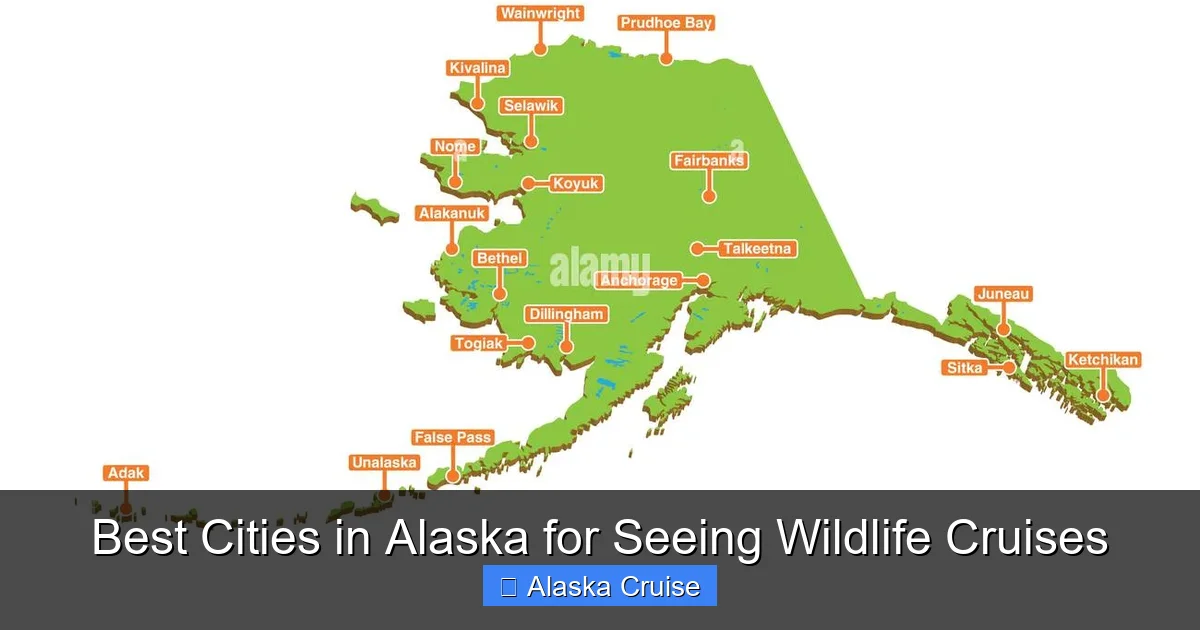
Visual guide about Best Cities in Alaska for Seeing Wildlife Cruises
Image source: c8.alamy.com
If you’re looking for a lush, green escape filled with wildlife, Ketchikan is the place to be. Known as the “Salmon Capital of the World,” this charming coastal town is surrounded by temperate rainforest and is one of the rainiest places in Alaska. But don’t let the rain deter you—Ketchikan’s wet climate supports a thriving ecosystem that’s perfect for wildlife enthusiasts.
Ketchikan is a frequent stop on Inside Passage cruises, and it’s easy to see why. The town sits at the southern tip of Alaska, where the Pacific Ocean meets the Tongass National Forest—the largest national forest in the United States. This unique environment creates ideal conditions for a wide range of animals, from marine mammals to forest-dwelling species.
Black Bears and Salmon Runs
One of the most iconic wildlife experiences in Ketchikan is watching black bears feed on salmon. During the summer months, salmon return to local rivers to spawn, drawing bears from the surrounding forest. The best place to see this natural spectacle is at the Ketchikan Creek or the Herring Cove area, where bears often fish in shallow waters.
Several local operators offer bear-watching tours that take you by boat or floatplane to remote streams and estuaries. These excursions typically include a naturalist guide who explains the salmon life cycle, bear behavior, and the importance of conservation. Some tours even allow you to observe bears from a safe, elevated platform—perfect for photography without disturbing the animals.
Misty Fjords National Monument
Just a short flight from Ketchikan lies one of Alaska’s most breathtaking natural wonders: Misty Fjords National Monument. This 2.3-million-acre wilderness area features dramatic cliffs, waterfalls, and dense rainforest. While it’s not possible to cruise directly into the fjords on most ships, many cruise lines offer flightseeing tours that give you a bird’s-eye view of the landscape.
From the air, you’ll spot eagles nesting on cliff ledges, sea lions basking on rocky outcrops, and even the occasional black bear foraging along the shoreline. The combination of towering peaks and deep fjords creates a stunning backdrop for wildlife photography.
Marine Life in the Tongass
Ketchikan’s waters are also rich in marine life. Harbor seals, sea otters, and porpoises are commonly seen in the channels around the city. Some cruise excursions include a guided kayak tour through calm inlets, where you can paddle quietly and observe animals in their natural habitat.
One popular route is the George Inlet, a narrow waterway surrounded by old-growth forest. Paddling here feels like stepping back in time—towering spruce and hemlock trees line the banks, and the only sounds are the splash of your paddle and the call of a loon.
Tips for Visiting Ketchikan
– Bring a waterproof jacket and sturdy shoes—rain is common, even in summer.
– Book bear-watching or flightseeing tours early, as they fill up quickly.
– Visit the Southeast Alaska Discovery Center to learn about local wildlife before heading out.
– Try fresh salmon at a local restaurant—Ketchikan is famous for its seafood.
Seward: Gateway to Kenai Fjords
Located on the Kenai Peninsula, Seward is a rugged coastal town that serves as the gateway to Kenai Fjords National Park. Unlike the more urban ports of Juneau and Ketchikan, Seward has a laid-back, frontier vibe that appeals to adventurers and nature lovers alike. It’s also one of the best cities in Alaska for seeing wildlife cruises, thanks to its proximity to some of the most productive marine ecosystems in the state.
Kenai Fjords National Park is the main draw here. This 669,000-acre park is dominated by the Harding Icefield, which feeds over 40 glaciers that flow into the sea. The result is a dynamic landscape where ice meets ocean, creating ideal conditions for marine wildlife.
Whales, Sea Lions, and Puffins
One of the top reasons to visit Seward is the chance to see orcas, humpback whales, and minke whales in their natural habitat. The nutrient-rich waters of Resurrection Bay and the Gulf of Alaska attract these giants of the sea, especially during the summer feeding season.
Many wildlife cruises from Seward venture into the park’s inner fjords, where you’ll glide past towering glaciers and watch for marine mammals. Sea otters are especially common—you’ll often see them floating on their backs, using rocks to crack open shellfish. Steller sea lions haul out on rocky islands, and tufted puffins nest on coastal cliffs during the breeding season.
Glacier Wildlife Encounters
While the glaciers themselves are awe-inspiring, the real wildlife action happens at their feet. As glaciers calve into the ocean, they release nutrients that attract schools of fish. This, in turn, draws in whales, seals, and seabirds.
One of the most popular cruise routes is to Aialik Bay, where you can see active glaciers like Aialik Glacier and Holgate Glacier. These glaciers frequently calve, sending massive icebergs crashing into the water. It’s a dramatic sight—and a reminder of the power of nature.
Tips for Visiting Seward
– Book a full-day wildlife cruise for the best chance to see a variety of animals.
– Bring warm layers—even in summer, it can be chilly on the water.
– Keep your camera ready—wildlife sightings can happen at any moment.
– Visit the Alaska SeaLife Center to learn about local marine species before or after your cruise.
Homer: The Remote Wilderness Experience
Homer is a bit of a hidden gem when it comes to Alaska wildlife cruises. While it’s not a standard stop on most major cruise lines, it’s a favorite among expedition cruises and small-ship adventures. Located on the Kenai Peninsula, Homer is known for its artistic community, stunning views of Kachemak Bay, and abundant wildlife.
What makes Homer special is its remote location and pristine environment. The town sits at the end of the Sterling Highway, surrounded by mountains and water. This isolation has preserved the natural habitat, making it an ideal spot for spotting wildlife.
Kachemak Bay Wildlife
Kachemak Bay is a marine sanctuary that’s home to a rich diversity of species. Harbor seals, sea otters, and porpoises are commonly seen in the bay. During the summer, bald eagles nest in the tall trees along the shoreline, and black bears forage in the tidal flats.
One of the best ways to experience Homer’s wildlife is by taking a guided kayak tour. Paddling through the calm waters of the bay, you’ll have a front-row seat to the natural world. Guides often point out bird nests, seal haul-outs, and even the occasional whale passing by.
Halibut Fishing and Birdwatching
Homer is also famous for halibut fishing, and many visitors combine a wildlife cruise with a fishing charter. While you’re on the water, keep an eye out for seabirds like murres, kittiwakes, and cormorants. The area is a hotspot for birdwatchers, especially during migration seasons.
Tips for Visiting Homer
– Look for small-ship cruises that include Homer as a port of call.
– Rent a kayak or book a guided tour to explore Kachemak Bay.
– Visit the Pratt Museum to learn about local wildlife and culture.
– Try fresh halibut at a local restaurant—Homer is known for its seafood.
Sitka: Where Culture Meets Wildlife
Sitka, located on Baranof Island, is a town rich in history and natural beauty. Once the capital of Russian Alaska, Sitka blends Tlingit culture with stunning coastal scenery. It’s also one of the best cities in Alaska for seeing wildlife cruises, thanks to its location along the Pacific migration route.
Marine Mammals and Seabirds
Sitka’s waters are home to Steller sea lions, sea otters, and harbor seals. The nearby St. Lazaria Island is a National Wildlife Refuge and a haven for seabirds. During the summer, thousands of birds nest on the island, including puffins, auklets, and murres.
Many wildlife cruises from Sitka include a visit to St. Lazaria, where you can observe birds up close from a safe distance. The island is also a great spot for spotting whales, especially during migration.
Tips for Visiting Sitka
– Book a wildlife cruise that includes St. Lazaria Island.
– Visit the Sitka National Historical Park to learn about Tlingit culture.
– Try local seafood at a waterfront restaurant.
– Bring binoculars for birdwatching.
Conclusion
Alaska is a wildlife wonderland, and the best cities for seeing wildlife cruises each offer something unique. Whether you’re chasing whales in Juneau, bears in Ketchikan, or puffins in Sitka, you’re sure to create memories that last a lifetime. Plan your trip between May and September for the best wildlife viewing, and consider smaller ships for more intimate encounters. With the right preparation, your Alaskan wildlife cruise will be an adventure you’ll never forget.
Frequently Asked Questions
What is the best time of year for wildlife cruises in Alaska?
The best time for wildlife cruises in Alaska is from May to September. Peak wildlife activity occurs in July and August, when whales, bears, and birds are most active. Early summer offers longer days, while late summer provides the best salmon runs and bear sightings.
Can I see bears on a wildlife cruise?
Yes, you can see bears on wildlife cruises, especially in ports like Ketchikan and Juneau. Bears are often spotted along shorelines and rivers during salmon runs. Most sightings occur during guided shore excursions, not from the cruise ship itself.
Do I need to book wildlife tours in advance?
Yes, it’s highly recommended to book wildlife tours in advance, especially during peak season. Popular excursions like whale-watching in Juneau or bear-viewing in Ketchikan fill up quickly. Booking early ensures you get your preferred tour and time slot.
What should I bring on a wildlife cruise?
Bring layers of clothing, a waterproof jacket, sturdy shoes, binoculars, sunscreen, and a camera with a zoom lens. Even in summer, weather can be unpredictable, and binoculars help you spot distant wildlife.
Are wildlife cruises safe?
Yes, wildlife cruises are generally safe when operated by reputable companies. Guides are trained to maintain a safe distance from animals, and ships follow strict wildlife viewing guidelines. Always listen to crew instructions and stay within designated areas.
Can I see whales from the cruise ship?
Yes, it’s possible to see whales from the cruise ship, especially in areas like the Stephens Passage near Juneau or the waters around Seward. However, dedicated whale-watching tours offer closer encounters and better viewing opportunities.