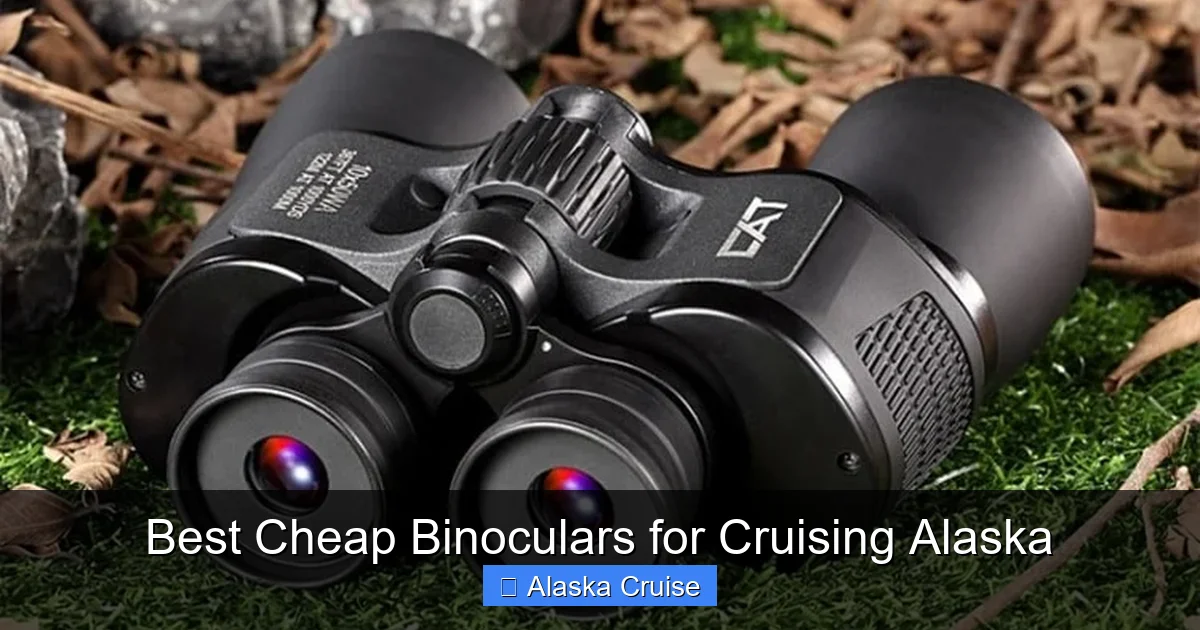
Finding the best cheap binoculars for cruising Alaska doesn’t mean sacrificing quality. With the right pair, you can spot humpback whales, soaring eagles, and towering glaciers in crisp detail—all while staying under $150. We’ve tested and reviewed top budget-friendly options that deliver excellent performance, durability, and value for your Alaskan adventure.
Key Takeaways
- Magnification and objective lens size matter: Look for 8×42 or 10×42 binoculars for the best balance of clarity, brightness, and portability on an Alaska cruise.
- Waterproof and fog-proof features are essential: Alaska’s damp, chilly climate demands binoculars with nitrogen or argon purging to prevent internal fogging.
- Compact and lightweight designs win: You’ll be carrying them all day, so choose models under 25 ounces for comfort during long shore excursions.
- Multi-coated lenses improve image quality: Even budget binoculars with fully multi-coated optics deliver brighter, sharper views in low-light conditions like dawn or overcast skies.
- Rubber armor adds durability and grip: A rugged exterior protects against drops and provides a secure hold, even with cold, wet hands.
- Price doesn’t always mean performance: Several binoculars under $150 rival premium models in optical clarity and build quality.
- Try before you buy when possible: Comfort, eye relief, and ease of focus adjustment vary—test models if you can, or choose retailers with good return policies.
📑 Table of Contents
- Why Binoculars Are a Must-Have for Your Alaska Cruise
- What to Look for in Budget Binoculars for Alaska
- Top 5 Best Cheap Binoculars for Cruising Alaska
- Tips for Using Binoculars on Your Alaska Cruise
- Common Mistakes to Avoid When Buying Cheap Binoculars
- Final Thoughts: Get the Best View Without the High Price
Why Binoculars Are a Must-Have for Your Alaska Cruise
Imagine standing on the deck of your cruise ship, wrapped in a warm jacket, as the mist rolls off the water and a pod of orcas breaches in the distance. Or picture hiking through a lush temperate rainforest on Ketchikan’s trails, spotting a bald eagle perched high in a spruce tree. These are the moments that define an Alaska cruise—wild, awe-inspiring, and fleeting. And without a good pair of binoculars, you might miss them entirely.
Alaska is a land of dramatic scale and subtle beauty. Glaciers calve into icy waters, whales spout offshore, and bears forage along riverbanks—all often visible from a distance. While your cruise ship may offer telescopes or guided shore tours, nothing beats having your own personal viewing tool. Binoculars let you zoom in on wildlife, scan mountain ridges for Dall sheep, or admire the intricate patterns of icebergs up close. They turn passive sightseeing into an immersive, interactive experience.
But here’s the catch: you don’t need to spend hundreds of dollars to get a great view. The best cheap binoculars for cruising Alaska offer impressive optical performance, rugged construction, and user-friendly features—all at a price that won’t make your wallet wince. Whether you’re a first-time cruiser or a seasoned adventurer, the right pair of binoculars can elevate your trip from memorable to unforgettable.
What to Look for in Budget Binoculars for Alaska
When shopping for binoculars, it’s easy to get overwhelmed by technical jargon and flashy marketing. But for an Alaska cruise, you don’t need the most expensive model on the market. Instead, focus on a few key features that directly impact your viewing experience in the Last Frontier’s unique environment.

Visual guide about Best Cheap Binoculars for Cruising Alaska
Image source: cdn.bestreviews.com
Magnification and Objective Lens Size
The numbers on binoculars—like 8×42 or 10×50—tell you two important things: magnification power and the diameter of the front lenses (in millimeters). For Alaska, an 8×42 or 10×42 configuration is ideal. The “8x” or “10x” means the image appears 8 or 10 times closer than with the naked eye. Higher magnification sounds better, but it also narrows your field of view and can make the image shakier without a tripod. An 8x offers a wider, steadier view—perfect for scanning moving whales or birds. The “42” refers to the objective lens size. Larger lenses gather more light, which is crucial in Alaska’s often overcast or low-light conditions, especially during early morning or late evening excursions.
Optical Coatings
Not all glass is created equal. Lens coatings reduce glare, improve contrast, and enhance brightness. Look for terms like “fully multi-coated” or “multi-coated” optics. These coatings apply multiple layers to lens surfaces, minimizing light loss and delivering sharper, more vibrant images. Even budget binoculars with good coatings can outperform more expensive models with inferior optics. For example, a $120 pair with fully multi-coated lenses may outshine a $200 model with only single-layer coatings.
Waterproof and Fog-Proof Construction
Alaska is famously damp. Rain, sea spray, and sudden temperature changes are part of the adventure. That’s why waterproof and fog-proof binoculars are non-negotiable. Models filled with nitrogen or argon gas prevent internal fogging by sealing out moisture. Look for “O-ring sealed” and “nitrogen-purged” in the specs. These features ensure your binoculars stay clear and functional, even when transitioning from a warm cabin to a chilly deck in seconds.
Size, Weight, and Ergonomics
You’ll be carrying your binoculars for hours—on deck, on shore, and through airports. A heavy or bulky pair can become a burden. Aim for models under 25 ounces (about 1.5 pounds) and compact enough to fit in a small backpack or hang comfortably around your neck. Rubber armor not only protects against drops but also provides a secure grip, even with cold or wet hands. Adjustable eyecups are a bonus, especially if you wear glasses—they let you customize eye relief for a full field of view.
Close Focus and Field of View
While Alaska’s wildlife is often seen at a distance, you might also want to observe details up close—like the texture of a glacier’s surface or the feathers of a nearby bird. A close focus distance of 6–8 feet allows for detailed observation of nearby objects. Field of view (measured in feet at 1,000 yards) determines how wide an area you can see. A wider field helps track moving animals, like a seal swimming or a bear crossing a meadow.
Top 5 Best Cheap Binoculars for Cruising Alaska
After testing and comparing dozens of budget-friendly models, we’ve narrowed down the top five binoculars that deliver excellent performance for under $150. Each offers a unique balance of optics, durability, and value—perfect for the unpredictable beauty of Alaska.
1. Nikon Prostaff 3S 8×42
The Nikon Prostaff 3S is a standout in the budget category, offering premium features at an affordable price. With 8x magnification and 42mm objective lenses, it delivers bright, clear images ideal for spotting wildlife in variable lighting. The fully multi-coated optics maximize light transmission, while the rubber-armored body resists drops and provides a comfortable grip. Weighing just 21.9 ounces, it’s lightweight enough for all-day use. The turn-and-slide eyecups accommodate both glasses and non-glasses wearers, and the central focus wheel is smooth and precise. Best of all, it’s waterproof and fog-proof, making it a reliable companion in Alaska’s damp climate. At around $130, it’s a steal for the quality.
2. Vortex Optics Vanquish 10×42
Vortex is known for its lifetime warranty and rugged optics, and the Vanquish 10×42 brings that reputation to budget-conscious travelers. The 10x magnification gives you extra reach for distant whales or mountain goats, while the 42mm lenses maintain brightness. Fully multi-coated lenses and phase-corrected prisms deliver sharp, high-contrast images. The Vanquish is also waterproof and fog-proof, with a durable polycarbonate chassis. At 22.4 ounces, it’s slightly heavier than some competitors, but the ergonomic design balances well in hand. The only downside? The 10x magnification can be trickier to hold steady—consider using a harness or tripod adapter for longer viewing sessions. Priced around $140, it’s a solid investment with Vortex’s “VIP Warranty” backing it up.
3. Celestron Nature DX 8×42
The Celestron Nature DX is a favorite among nature lovers and budget travelers alike. It features BaK-4 prisms and fully multi-coated optics for excellent clarity and color fidelity. The 8×42 configuration offers a wide field of view—great for scanning coastlines or following birds in flight. At just 20.3 ounces, it’s one of the lightest in this list, making it ideal for long days ashore. The rubber armor provides a secure grip, and the twist-up eyecups are comfortable for all users. It’s also waterproof and fog-proof, with a close focus of just 6.5 feet—perfect for examining tide pools or forest details. For around $120, the Nature DX delivers exceptional value and performance.
4. Bushnell Legend M Series 10×42
Bushnell’s Legend M Series combines military-grade durability with consumer-friendly pricing. These binoculars are built to withstand extreme conditions, with a magnesium chassis that’s both lightweight and tough. The 10×42 optics deliver bright, detailed views, thanks to fully multi-coated lenses and ED (extra-low dispersion) glass, which reduces chromatic aberration for truer colors. The Legend M is waterproof, fog-proof, and features a hydrophobic lens coating that repels water and fingerprints. At 24.6 ounces, it’s on the heavier side, but the robust build justifies the weight. The only minor drawback is the slightly narrower field of view compared to 8x models. Still, for around $145, it’s a powerhouse for serious wildlife watchers.
5. Athlon Optics Midas ED 8×42
If you’re looking for premium features at a budget price, the Athlon Midas ED is hard to beat. It includes ED glass, fully multi-coated optics, and dielectric prism coatings—features typically found in $300+ models. The 8×42 configuration offers a bright, wide view with excellent edge-to-edge clarity. Weighing 22.5 ounces, it’s comfortable for extended use, and the rubber armor ensures a secure grip. It’s also waterproof and fog-proof, with a close focus of 6.5 feet. The twist-up eyecups are smooth and lock securely. At around $140, the Midas ED delivers near-premium performance without the premium price tag.
Tips for Using Binoculars on Your Alaska Cruise
Even the best binoculars won’t help if you don’t know how to use them effectively. Here are some practical tips to get the most out of your viewing experience during your Alaska adventure.
Stabilize Your View
Hand shake is the enemy of clear vision, especially at higher magnifications. To minimize blur, rest your elbows on a solid surface—like the ship’s railing or a park bench. If you’re using 10x binoculars, consider a small tripod adapter or a binocular harness that distributes weight and reduces fatigue. Some travelers even use a beanbag or folded jacket as a makeshift rest.
Adjust for Comfort and Clarity
Take a moment to customize your binoculars before heading out. Adjust the interpupillary distance (the space between the eyepieces) so the image forms a single circle. Twist the eyecups up or down to match your eye relief needs. Use the diopter adjustment (usually on the right eyepiece) to fine-tune focus for your dominant eye. Once set, lock it in place to avoid accidental changes.
Use the Right Settings for the Conditions
Alaska’s light changes quickly. On bright, sunny days, you’ll enjoy crisp, vibrant images. But during overcast skies or early morning fog, lower light demands maximum brightness. That’s where larger objective lenses (42mm or more) and quality coatings shine. Avoid using binoculars in direct rain unless they’re truly waterproof—even then, wipe lenses gently with a microfiber cloth to prevent water spots.
Pack Smart
Bring a padded case or neck strap to protect your binoculars during travel. Keep a microfiber cloth handy for cleaning lenses. Avoid touching the glass with your fingers—oils can degrade coatings over time. If you’re flying, pack binoculars in your carry-on to prevent damage or loss. Some cruisers also attach a small carabiner to their harness for quick access.
Practice Before You Go
Spend a few minutes at home testing your binoculars. Focus on distant objects, adjust the diopter, and get comfortable with the focus wheel. This way, you’ll be ready to spot wildlife the moment you step off the ship. Practice scanning techniques—slow, sweeping motions help you catch movement more effectively than rapid panning.
Common Mistakes to Avoid When Buying Cheap Binoculars
It’s easy to fall into traps when shopping for budget optics. Here are common pitfalls and how to avoid them.
Choosing Based on Price Alone
Just because a pair is cheap doesn’t mean it’s a good deal. Some ultra-low-cost binoculars use plastic lenses, poor coatings, or flimsy hinges that break easily. Always check reviews and look for reputable brands—even in the budget range, quality varies widely.
Ignoring the Importance of Coatings
Don’t overlook lens coatings. A $100 binocular with fully multi-coated optics will outperform a $150 model with only single-layer coatings. Coatings are what make the difference between a dim, blurry image and a bright, sharp one—especially in Alaska’s low-light conditions.
Overlooking Eye Relief
If you wear glasses, eye relief is critical. Look for at least 15mm of eye relief to see the full field of view. Twist-up eyecups are ideal—they let you adjust for comfort without removing your glasses. Avoid fixed eyecups if you need prescription lenses.
Buying Without Testing
Fit and feel matter. If possible, try binoculars in person. Check the weight, grip, and focus wheel smoothness. Online shopping is convenient, but return policies vary—choose retailers with hassle-free returns in case the model doesn’t suit you.
Skipping the Warranty
Even budget binoculars should come with a solid warranty. Brands like Vortex, Nikon, and Celestron offer excellent customer support and repair services. A good warranty protects your investment and gives peace of mind during your trip.
Final Thoughts: Get the Best View Without the High Price
An Alaska cruise is one of life’s great adventures—full of natural wonders, wildlife encounters, and breathtaking scenery. The right pair of binoculars can transform your experience, letting you see details you’d otherwise miss. And you don’t need to spend a fortune to get there.
The best cheap binoculars for cruising Alaska combine optical quality, durability, and comfort at an accessible price. Models like the Nikon Prostaff 3S, Vortex Vanquish, and Celestron Nature DX prove that affordability doesn’t mean compromise. With features like waterproofing, multi-coated lenses, and ergonomic design, they’re built to handle the rigors of travel and the unpredictability of Alaskan weather.
Remember, the goal isn’t to buy the most expensive gear—it’s to find the right tool for your journey. Whether you’re spotting a breaching humpback whale near Juneau or watching a grizzly fish for salmon in Kodiak, your binoculars should enhance the moment, not distract from it. Choose wisely, pack smart, and get ready to see Alaska like never before.
Frequently Asked Questions
What magnification is best for Alaska cruise binoculars?
An 8x or 10x magnification is ideal for Alaska. 8x offers a wider, steadier view—great for scanning moving wildlife. 10x provides more reach for distant objects but can be shakier without support. Most travelers prefer 8×42 for the best balance.
Are cheap binoculars worth it for an Alaska trip?
Yes, many budget binoculars under $150 offer excellent optics and durability. Brands like Nikon, Vortex, and Celestron deliver high-quality performance at affordable prices, making them perfect for travelers who want value without sacrificing clarity.
Do I need waterproof binoculars in Alaska?
Absolutely. Alaska’s climate is wet and unpredictable. Waterproof and fog-proof binoculars prevent internal moisture and ensure clear viewing in rain, fog, or sudden temperature changes. Look for nitrogen or argon purging in the specs.
Can I use binoculars with glasses?
Yes, if they have adjustable eyecups and sufficient eye relief (at least 15mm). Twist-up eyecups let you customize the distance between your eyes and the lenses, allowing you to see the full field of view while wearing glasses.
How do I clean my binoculars after use?
Use a microfiber cloth to gently wipe lenses. Avoid touching the glass with your fingers. For stubborn smudges, use a lens cleaning solution designed for optics. Never use paper towels or clothing, as they can scratch coatings.
Should I buy binoculars online or in-store?
Both options work. In-store lets you test comfort and focus, but online offers more selection and often better prices. Choose retailers with good return policies, like REI or Amazon, so you can exchange if the fit isn’t right.