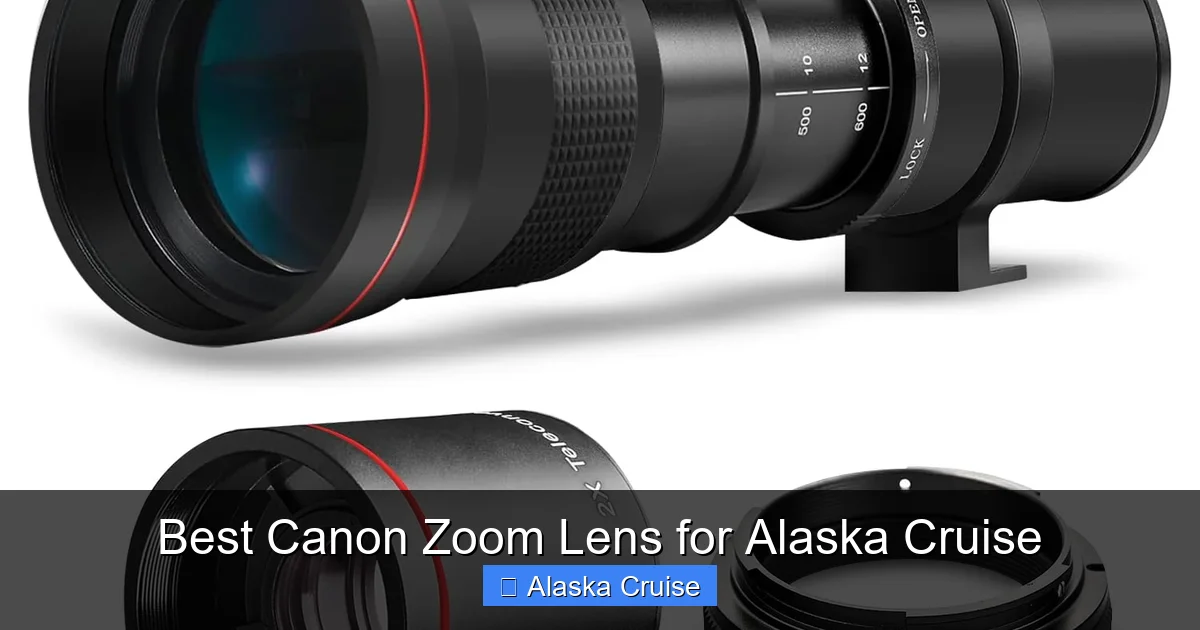
Choosing the best Canon zoom lens for an Alaska cruise means balancing reach, image quality, and portability. Whether you’re photographing grizzly bears, glaciers, or the Northern Lights, the right lens ensures you don’t miss a moment. This guide highlights top-performing Canon lenses that deliver stunning results in Alaska’s unpredictable conditions.
Planning an Alaska cruise is an adventure in itself—majestic glaciers, towering mountains, playful sea otters, and the elusive Northern Lights all await. But to truly preserve these moments, you need the right gear. Among the most critical decisions is choosing the best Canon zoom lens for Alaska cruise photography. With so many options available, it’s easy to feel overwhelmed. Should you go for maximum reach? Prioritize image quality? Or focus on portability?
The truth is, Alaska’s diverse environments demand a lens that can adapt. One moment you’re shooting a sweeping fjord from the deck of your ship, and the next, you’re zooming in on a bald eagle perched in a distant pine. Weather can shift in minutes—rain, fog, and salt spray are common. And let’s not forget the challenge of shooting from a moving vessel. That’s why your lens needs to be more than just sharp—it needs to be reliable, versatile, and built to handle the elements.
In this guide, we’ll walk you through the top Canon zoom lenses that excel in Alaska’s unique conditions. Whether you’re a seasoned photographer or a passionate traveler with a Canon DSLR or mirrorless camera, you’ll find practical advice, real-world examples, and expert tips to help you make the best choice. Let’s dive in and find the perfect lens to capture your Alaskan adventure.
Key Takeaways
- Prioritize long reach: A telephoto zoom (200mm+) is essential for capturing wildlife like whales, bears, and eagles from a safe distance.
- Weather sealing matters: Alaska’s damp, cold, and windy conditions demand lenses with robust weather protection.
- Versatility is key: A single zoom covering wide to telephoto ranges (e.g., 24-105mm or 70-300mm) reduces gear changes and weight.
- Image stabilization (IS) is a must: IS helps counteract camera shake on moving ships and in low-light conditions like dawn or dusk.
- Consider weight and size: You’ll be carrying your gear on excursions, so compact, lightweight lenses are ideal.
- Pair with a full-frame or APS-C camera: Match your lens to your Canon camera body for optimal performance and field of view.
- Test before you go: Practice using your lens in similar conditions to ensure you’re comfortable and ready.
📑 Table of Contents
Why a Zoom Lens is Essential for Alaska Cruise Photography
Alaska is a land of extremes—vast wilderness, dramatic landscapes, and unpredictable wildlife. Unlike a studio shoot or a city tour, you can’t control your environment. Animals appear suddenly and disappear just as fast. Weather changes in minutes. And you’re often confined to a ship or a guided tour, limiting your mobility. That’s where a high-quality zoom lens becomes indispensable.
A zoom lens gives you the flexibility to frame your shot without changing position. Imagine spotting a humpback whale breaching 200 yards away. With a prime lens, you’d miss the shot. But with a telephoto zoom, you can zoom in, capture the splash, and still have room to reframe if the whale surfaces again. Similarly, when you’re anchored near a glacier, a wide-angle zoom lets you include the towering ice walls and the reflection in the water—all in one frame.
Another advantage is efficiency. Carrying multiple prime lenses means constant swapping, which increases the risk of dust and moisture entering your camera. On a cruise, where you’re often on the move, minimizing gear changes is a huge plus. A single zoom lens that covers a broad focal range—say, 24-105mm or 70-300mm—lets you shoot landscapes, wildlife, and portraits without missing a beat.
Moreover, many Canon zoom lenses come with advanced features like image stabilization (IS), fast autofocus, and weather sealing—all crucial for Alaska’s conditions. IS helps reduce blur from hand shake, especially important when shooting from a rocking boat. Fast autofocus ensures you lock onto moving subjects like birds in flight. And weather sealing protects against rain, snow, and sea spray.
In short, a zoom lens isn’t just convenient—it’s essential. It empowers you to respond quickly, adapt to changing scenes, and capture moments that would otherwise be lost. For Alaska, where every shot is a once-in-a-lifetime opportunity, that flexibility is priceless.
Top Canon Zoom Lenses for Alaska Cruise Photography
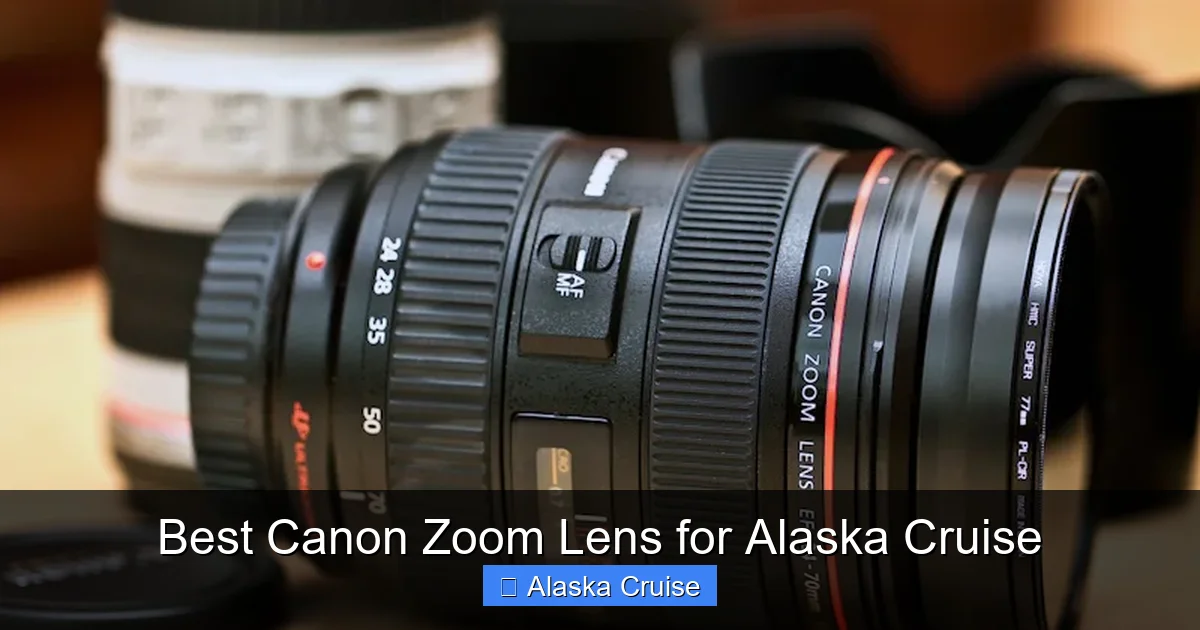
Visual guide about Best Canon Zoom Lens for Alaska Cruise
Image source: ehabphotography.com
Now that we’ve established why a zoom lens is vital, let’s explore the best Canon options for your Alaska adventure. These lenses have been selected based on real-world performance, user reviews, and suitability for the unique challenges of Alaskan photography.
Canon RF 100-500mm f/4.5-7.1L IS USM
If wildlife photography is your priority, the Canon RF 100-500mm f/4.5-7.1L IS USM is a top contender. Designed for Canon’s full-frame mirrorless cameras like the EOS R5 and R6, this lens offers incredible reach—perfect for capturing distant subjects like bears, whales, and mountain goats.
The 100-500mm range gives you the flexibility to shoot tight portraits of wildlife or zoom out for environmental shots. The built-in 5-stop image stabilization is a game-changer, especially when shooting handheld from a moving ship. Even at 500mm, you can achieve sharp images in low light, thanks to the lens’s advanced optical design.
Weighing just 1.3 kg (about 2.9 lbs), it’s surprisingly lightweight for its reach. The weather-sealed construction protects against moisture and dust, making it ideal for Alaska’s damp climate. The Nano USM motor ensures fast, quiet autofocus—critical when photographing skittish animals.
One real-world example: A photographer on a Glacier Bay cruise used this lens to capture a grizzly bear fishing for salmon from 150 yards away. The result? A stunning, detailed image with beautiful background blur (bokeh), despite the distance.
Canon EF 70-300mm f/4-5.6L IS II USM
For Canon DSLR users, the EF 70-300mm f/4-5.6L IS II USM is a powerhouse. It’s one of the best telephoto zooms in Canon’s EF lineup, offering excellent image quality and robust build quality.
This lens features a 4-stop image stabilization system and a fast, quiet USM autofocus motor. The weather sealing is top-notch, with fluorine coating on the front element to repel water and fingerprints. It’s compatible with Canon’s full-frame and APS-C DSLRs, though on crop sensors, the effective focal length becomes 112-480mm—great for extra reach.
A practical tip: Use this lens during a whale-watching excursion. At 300mm, you can capture the fluke of a diving humpback without disturbing the pod. The lens handles backlighting well, so even when the sun is behind the whale, you’ll get a well-exposed image.
One minor drawback is its size and weight (1.4 kg), which might be tiring on long hikes. But for ship-based photography, it’s manageable and highly effective.
Canon RF 24-105mm f/4L IS USM
Not every shot requires extreme zoom. For versatile, all-around performance, the Canon RF 24-105mm f/4L IS USM is a standout. It covers everything from wide-angle landscapes to short telephoto portraits, making it ideal for general cruise photography.
The constant f/4 aperture ensures consistent exposure across the zoom range, and the 5-stop image stabilization helps in low light. The lens is weather-sealed and features a fluorine coating for easy cleaning—important when shooting near saltwater.
Imagine standing on the deck at sunrise, capturing the mist rising off a fjord. At 24mm, you get the full scene. Zoom to 105mm, and you can isolate a lone kayaker paddling through the calm water. This lens does it all.
It’s also compact and lightweight (700g), perfect for carrying on excursions. Pair it with a telephoto lens like the 100-500mm, and you’ve got a complete kit for Alaska.
Canon EF 24-70mm f/2.8L II USM
For low-light performance and professional image quality, the EF 24-70mm f/2.8L II USM is hard to beat. Its fast f/2.8 aperture allows for shallow depth of field and better performance in dim conditions—like during the Northern Lights or early morning wildlife shoots.
This lens is a favorite among photojournalists and travel photographers. It’s sharp across the frame, with minimal distortion and chromatic aberration. The weather sealing is excellent, and the build quality is rugged.
Use it for indoor ship photography, sunset portraits, or capturing the glow of the aurora borealis. At 24mm, it’s wide enough for group shots; at 70mm, it’s great for tighter compositions.
One tip: Use a tripod or monopod when shooting the Northern Lights at f/2.8 and high ISO. The lens handles noise well, but stability is key for long exposures.
Canon RF 70-200mm f/2.8L IS USM
Compact and powerful, the RF 70-200mm f/2.8L IS USM is a marvel of engineering. It’s significantly smaller and lighter than its EF predecessor, making it ideal for travelers.
The f/2.8 aperture provides excellent low-light performance and beautiful bokeh. The 5-stop IS system ensures sharp images even at slow shutter speeds. The lens is weather-sealed and features a customizable control ring.
Use it for wildlife at medium range, like sea lions on a rocky outcrop, or for portraits of fellow travelers against a scenic backdrop. Its versatility makes it a great second lens to pair with a wider zoom.
Choosing the Right Lens Based on Your Camera and Needs
Not all Canon lenses are compatible with every camera. Before you buy, consider your camera system—DSLR (EF mount) or mirrorless (RF mount)—and your shooting style.
DSLR vs. Mirrorless: What’s the Difference?
Canon DSLRs use EF or EF-S lenses, while mirrorless cameras use RF lenses. If you own a DSLR like the EOS 5D Mark IV or 90D, you’ll need EF lenses. For mirrorless models like the EOS R5 or R7, choose RF lenses.
Adapters are available to use EF lenses on RF cameras, but native RF lenses often perform better due to optimized communication between lens and body.
Full-Frame vs. APS-C Sensors
Full-frame sensors (e.g., EOS R5, 5D Mark IV) offer better low-light performance and wider field of view. APS-C sensors (e.g., EOS 90D, R7) have a 1.6x crop factor, which effectively increases focal length—great for wildlife.
For example, a 70-300mm lens on an APS-C camera becomes 112-480mm, giving you extra reach without buying a longer lens.
Matching Lens to Your Photography Style
– Wildlife enthusiasts: Go for the RF 100-500mm or EF 70-300mm. Maximum reach is key.
– Landscape lovers: The RF 24-105mm or EF 24-70mm offers great versatility.
– Low-light shooters: The EF 24-70mm f/2.8 or RF 70-200mm f/2.8 excels in dim conditions.
– Travel light: Consider the RF 24-105mm f/4 or RF 70-200mm f/2.8 for compact performance.
Practical Tips for Using Your Lens in Alaska
Even the best lens won’t help if you’re not prepared. Here are some practical tips to get the most out of your gear during your cruise.
Protect Your Gear from the Elements
Alaska’s weather is unpredictable. Rain, fog, and salt spray can damage your equipment. Use a rain cover or plastic bag with a hole for the lens. Keep silica gel packs in your camera bag to absorb moisture.
Use a Polarizing Filter
A circular polarizer reduces glare from water and enhances sky contrast. It’s especially useful when photographing glaciers, lakes, and ocean reflections.
Shoot in RAW
RAW files retain more detail and allow for greater flexibility in post-processing. This is crucial when adjusting exposure for high-contrast scenes like sunrises over glaciers.
Master Image Stabilization
Enable IS when shooting handheld. On moving ships, use a slower shutter speed with IS to compensate for motion. For tripod use, turn IS off to avoid interference.
Practice Before You Go
Familiarize yourself with your lens’s zoom range, focus modes, and settings. Practice panning with moving subjects and shooting in low light. The more comfortable you are, the better your results.
Pack Smart
Bring extra batteries (cold drains them faster), memory cards, lens cleaning cloths, and a sturdy camera strap. Consider a small tripod or monopod for long exposures.
Conclusion
Choosing the best Canon zoom lens for Alaska cruise photography is about balancing reach, image quality, and practicality. Whether you’re capturing the raw power of a calving glacier or the quiet grace of a moose wading in a river, the right lens makes all the difference.
The Canon RF 100-500mm f/4.5-7.1L IS USM is ideal for wildlife, while the RF 24-105mm f/4L IS USM offers unmatched versatility. DSLR users will love the EF 70-300mm f/4-5.6L IS II USM and EF 24-70mm f/2.8L II USM for their sharpness and build quality.
Remember to match your lens to your camera system, protect your gear, and practice before your trip. With the right equipment and preparation, you’ll return home with images that truly capture the spirit of Alaska.
Don’t let a subpar lens hold you back. Invest in quality, embrace the adventure, and let your camera tell the story of one of the world’s most breathtaking destinations.
Frequently Asked Questions
What is the best Canon zoom lens for wildlife on an Alaska cruise?
The Canon RF 100-500mm f/4.5-7.1L IS USM is the top choice for wildlife. Its long reach, image stabilization, and weather sealing make it perfect for capturing distant animals like bears and whales with sharp detail.
Can I use EF lenses on a Canon mirrorless camera?
Yes, you can use EF lenses on Canon RF cameras with the EF-EOS R adapter. However, native RF lenses often provide better performance and autofocus speed.
Do I need a telephoto lens for Alaska cruise photography?
Yes, a telephoto zoom (200mm+) is highly recommended. Wildlife is often far away, and a long lens lets you capture intimate details without disturbing the animals.
Is image stabilization important on a cruise ship?
Absolutely. Ships move constantly, and IS helps reduce camera shake, especially at long focal lengths or in low light. It’s essential for sharp handheld shots.
What focal length is best for landscape photography in Alaska?
A 24-105mm zoom is ideal for landscapes. It covers wide-angle views of fjords and mountains, as well as tighter compositions of glaciers and wildlife.
How do I protect my lens from salt spray and moisture?
Use a weather-sealed lens, carry a rain cover, and store your gear with silica gel packs. Clean the lens regularly with a microfiber cloth to remove salt residue.