Choosing the best Canon lens for an Alaska cruise means balancing versatility, image quality, and portability. Whether you’re photographing towering glaciers, breaching whales, or dense forests, the right lens ensures stunning results in unpredictable conditions.
Key Takeaways
- Versatility is key: A zoom lens with a wide focal range (like 24-70mm or 24-105mm) covers most cruise photography needs.
- Wildlife demands reach: A telephoto lens (70-200mm or 100-400mm) helps capture distant animals like bears, eagles, and whales.
- Weather sealing matters: Alaska’s damp, cold climate requires lenses built to withstand moisture and temperature swings.
- Image stabilization is a must: Shooting from a moving ship or in low light benefits greatly from lens-based stabilization.
- Lightweight gear wins: You’ll be carrying your camera all day—opt for compact, travel-friendly lenses when possible.
- Wide-angle for grand landscapes: Glaciers and fjords look best with a 16-35mm or similar wide-angle lens.
- Consider your camera body: Match lens compatibility (EF vs. RF) to your Canon DSLR or mirrorless model.
📑 Table of Contents
- Why the Right Lens Makes All the Difference on an Alaska Cruise
- Understanding Your Alaska Cruise Photography Needs
- Top Canon Lenses for Alaska Cruise Photography
- Matching Lenses to Your Canon Camera System
- Practical Tips for Shooting on an Alaska Cruise
- Conclusion: Choosing Your Perfect Alaska Cruise Lens
Why the Right Lens Makes All the Difference on an Alaska Cruise
An Alaska cruise isn’t just a vacation—it’s a once-in-a-lifetime visual feast. From the towering blue glaciers of Glacier Bay to the playful humpback whales near Juneau, every moment offers a photo opportunity. But capturing these scenes in sharp, vibrant detail requires more than just a good camera body. The lens you choose plays a starring role in how your memories are preserved.
Alaska’s environment is as breathtaking as it is challenging. You’ll face rapidly changing light, cold temperatures, sea spray, and the constant motion of a ship. Add in the need to photograph both sweeping landscapes and distant wildlife, and it’s clear why a one-size-fits-all approach won’t work. A lens that’s perfect for a city street won’t cut it when you’re trying to photograph a grizzly bear fishing in a river 100 yards away.
That’s why selecting the best Canon lens for an Alaska cruise is about more than specs—it’s about matching your gear to the unique demands of this wild, remote destination. Whether you’re a seasoned photographer or a passionate traveler with a Canon DSLR or mirrorless camera, the right lens can turn good shots into unforgettable images.
Understanding Your Alaska Cruise Photography Needs
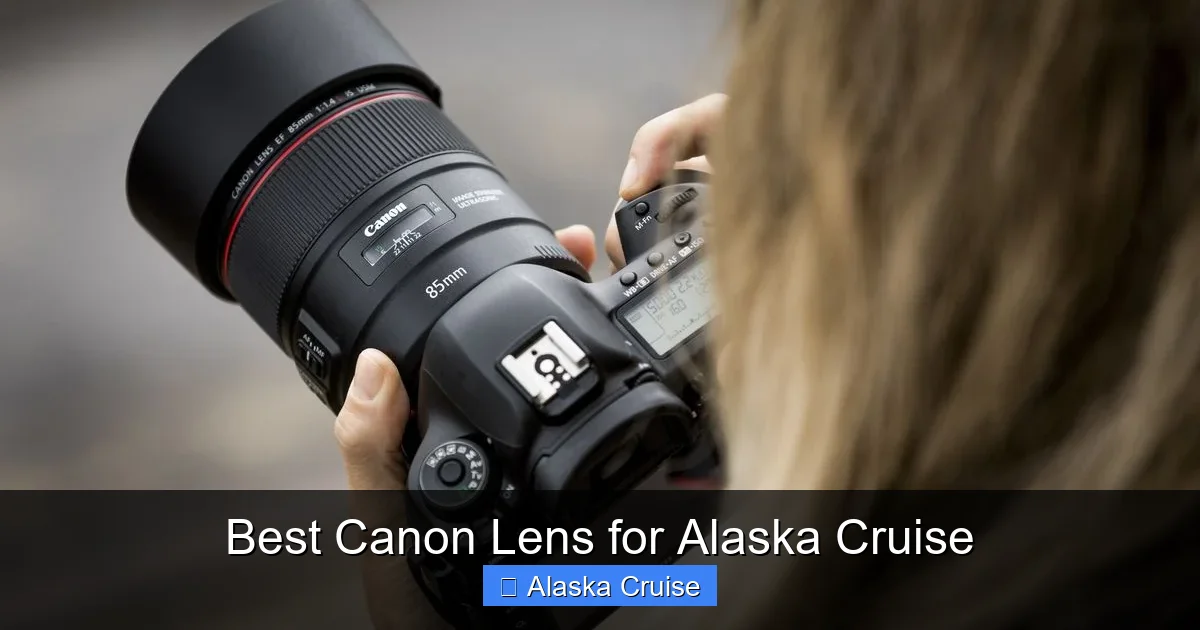
Visual guide about Best Canon Lens for Alaska Cruise
Image source: cdn.mos.cms.futurecdn.net
Before diving into specific lenses, it’s important to understand what you’ll actually be photographing during your cruise. Alaska’s scenery is incredibly diverse, and your lens needs will shift depending on the activity and location.
Landscape and Scenic Shots
From the moment your ship glides into a fjord, you’ll be surrounded by dramatic landscapes. Think snow-capped peaks, dense evergreen forests, and massive glaciers calving into icy waters. These scenes call for wide-angle lenses that can capture the grandeur of the environment. A lens like the Canon EF 16-35mm f/2.8L III or the RF 15-35mm f/2.8L IS USM lets you include vast horizons and foreground details like rocks or water reflections.
Wide-angle lenses also work well in ports like Skagway or Ketchikan, where historic buildings and mountain backdrops create compelling compositions. Just be mindful of distortion at the edges—especially with ultra-wide focal lengths—and use it creatively to add depth.
Wildlife Photography
Alaska is a wildlife photographer’s dream. You might spot bald eagles soaring overhead, sea otters floating on their backs, or even a black bear foraging along the shore. But these animals are often far from the ship or shore, especially when you’re cruising through protected areas like Tracy Arm or Kenai Fjords.
This is where telephoto lenses shine. A 70-200mm f/2.8 lens gives you excellent reach for mid-distance wildlife, while a 100-400mm lens (like the Canon EF 100-400mm f/4.5-5.6L IS II) is ideal for capturing distant subjects without disturbing them. For mirrorless users, the RF 100-500mm f/4.5-7.1L IS USM offers even greater reach and sharpness.
Keep in mind that wildlife can appear suddenly—so having a fast autofocus system and image stabilization is crucial. You don’t want to miss a breaching whale because your lens was hunting for focus.
Shipboard and Low-Light Challenges
Even on a sunny day, you’ll often be shooting from the deck of a moving ship. This introduces motion blur, especially at longer focal lengths or in overcast conditions. Image stabilization (IS) becomes your best friend here. Lenses with IS help counteract hand shake and ship movement, allowing you to shoot at slower shutter speeds without a tripod.
Additionally, Alaska’s northern latitude means shorter daylight hours in spring and fall, and overcast skies are common. A lens with a wide maximum aperture (like f/2.8 or wider) lets in more light, enabling faster shutter speeds and better performance in dim conditions. This is especially helpful during early morning or late evening excursions.
Port Exploration and Everyday Use
When you’re on land, you’ll want a lens that’s versatile enough for street photography, local culture, and close-up details. A standard zoom like the Canon EF 24-70mm f/2.8L II or the RF 24-70mm f/2.8L IS USM covers everything from group shots to detailed shots of totem poles or local markets.
These lenses are also great for indoor shots in museums or lodges, where lighting may be low and space is limited. Their fast aperture and sharp optics make them reliable all-rounders.
Top Canon Lenses for Alaska Cruise Photography
Now that you understand the shooting scenarios, let’s look at the best Canon lenses that meet these needs. We’ll break them down by category and use case.
Best All-Around Zoom: Canon RF 24-105mm f/4L IS USM
If you’re traveling light and want one lens to do it all, the RF 24-105mm f/4L is a standout choice for Canon mirrorless users. It covers wide-angle to short telephoto, making it perfect for landscapes, portraits, and even some wildlife. The constant f/4 aperture ensures consistent exposure across the zoom range, and the built-in image stabilization gives you up to 5 stops of shake correction.
This lens is weather-sealed, so it can handle light rain and sea spray—common on deck during glacier viewing. It’s also relatively compact, which is a big plus when you’re carrying your camera all day. While it doesn’t have the reach of a dedicated telephoto, it’s sharp, reliable, and incredibly versatile.
For DSLR users, the EF 24-105mm f/4L IS II USM offers similar performance and is a favorite among travel photographers.
Best for Wildlife: Canon EF 100-400mm f/4.5-5.6L IS II USM
When it comes to capturing distant wildlife, the EF 100-400mm is one of Canon’s most respected telephoto zooms. Its long reach lets you photograph bears, whales, and birds without getting too close—important for both safety and ethical wildlife photography.
The lens features advanced image stabilization (up to 4 stops), fast and quiet autofocus, and excellent sharpness even at 400mm. It’s also weather-sealed, so you can use it confidently in damp conditions. While it’s heavier than standard zooms (about 3 pounds), the image quality and reach make it worth the extra weight if wildlife is a priority.
Mirrorless shooters should consider the RF 100-500mm f/4.5-7.1L IS USM, which extends to 500mm and offers improved autofocus performance with Canon’s latest mirrorless cameras.
Best for Landscapes: Canon RF 15-35mm f/2.8L IS USM
For those epic glacier and fjord shots, a high-quality wide-angle lens is essential. The RF 15-35mm f/2.8L delivers stunning clarity, minimal distortion, and a fast f/2.8 aperture for low-light flexibility. The built-in image stabilization is a game-changer when shooting handheld in dim light or from a moving deck.
This lens is ideal for capturing the scale of Alaska’s natural wonders. Imagine framing a massive iceberg with foreground rocks and distant mountains—this lens makes it possible. It’s also great for astrophotography if you’re lucky enough to see the northern lights during your cruise.
DSLR users can opt for the EF 16-35mm f/2.8L III USM, which offers similar performance and is equally weather-resistant.
Best Standard Zoom: Canon EF 24-70mm f/2.8L II USM
The 24-70mm f/2.8 is a classic workhorse lens for a reason. It’s sharp, fast, and covers the most commonly used focal lengths for travel photography. Whether you’re shooting a group photo on deck, a close-up of a glacier’s texture, or a portrait in a port town, this lens handles it all.
The f/2.8 aperture allows for beautiful background blur (bokeh) and excellent performance in low light. It’s also relatively compact and well-balanced on both DSLR and mirrorless bodies (with an adapter). While it lacks the reach of a telephoto, it’s a must-have for any serious photographer.
Best Lightweight Option: Canon RF 24-70mm f/2.8L IS USM
If you’re using a Canon mirrorless camera and want a lighter alternative to the EF 24-70mm, the RF version is a great upgrade. It’s about 20% lighter and includes image stabilization—something the EF version lacks. This makes it easier to carry all day and better suited for handheld shooting in challenging conditions.
The optical quality is top-notch, with improved corner sharpness and reduced distortion. It’s a fantastic choice for travelers who want professional results without the bulk.
Matching Lenses to Your Canon Camera System
One of the most common mistakes travelers make is not considering lens compatibility. Canon has two main lens mounts: EF (for DSLRs) and RF (for mirrorless cameras like the EOS R5, R6, or R7).
EF Lenses on DSLR Cameras
If you’re using a Canon DSLR like the EOS 5D Mark IV or 90D, you’ll be using EF lenses. These have been around for decades and offer a huge selection of high-quality optics. Many of the lenses mentioned above—like the EF 100-400mm and EF 24-70mm—are EF mounts and are excellent choices.
Just remember that EF lenses are generally larger and heavier than their RF counterparts. They also lack some of the newer features like advanced stabilization or faster autofocus systems optimized for mirrorless cameras.
RF Lenses on Mirrorless Cameras
Canon’s mirrorless system (EOS R series) uses RF lenses, which are designed for shorter flange distances and larger lens openings. This allows for better optical performance, faster autofocus, and more compact designs.
If you’re using an EOS R5 or R6, investing in RF lenses like the RF 24-105mm f/4L or RF 15-35mm f/2.8L will give you the best possible image quality and performance. These lenses also support Canon’s Dual Pixel CMOS AF II, which delivers incredibly smooth and accurate focus tracking—perfect for capturing moving wildlife or people.
Using EF Lenses on Mirrorless Bodies
Good news: you can still use your existing EF lenses on a Canon mirrorless camera with the Canon Mount Adapter EF-EOS R. This adapter maintains full autofocus, image stabilization, and electronic communication. It’s a cost-effective way to transition to mirrorless without replacing all your glass.
However, keep in mind that adapted lenses may not perform quite as well as native RF lenses, especially in terms of autofocus speed and stabilization. For casual shooting, it’s fine—but for critical wildlife or action shots, native RF lenses are preferable.
Practical Tips for Shooting on an Alaska Cruise
Even with the best lens, photography on a cruise requires some strategy. Here are some practical tips to help you get the most out of your gear.
Protect Your Gear from the Elements
Alaska’s weather is unpredictable. Rain, fog, and sea spray are common, especially near glaciers. Always use a rain cover or plastic bag with a hole for the lens when shooting in wet conditions. Silica gel packs in your camera bag help prevent condensation when moving between cold and warm environments.
Consider a lens hood to reduce flare and protect the front element. And never leave your camera uncovered on deck during rough weather.
Use a Polarizing Filter
A circular polarizing filter is one of the most useful accessories for Alaska photography. It reduces glare on water, enhances sky contrast, and makes colors pop—especially important when photographing glaciers and fjords. Just remember to remove it when shooting in low light or using a wide aperture.
Shoot in RAW
Always shoot in RAW format if your camera supports it. RAW files contain more image data, giving you greater flexibility in post-processing. This is especially helpful when dealing with high-contrast scenes (like bright ice against dark water) or recovering details in shadows.
Be Ready for Golden Hour
The best light often comes during early morning or late evening—times when many cruise passengers are still asleep or dining. Wake up early to catch the soft, warm light on glaciers or wildlife. The “blue hour” just before sunrise can also create stunning, moody images.
Respect Wildlife and Regulations
Always maintain a safe distance from animals. Use your telephoto lens instead of approaching too closely. Many cruise lines and parks have strict rules about wildlife interaction—follow them to protect both yourself and the animals.
Backup Your Photos Daily
With limited internet access on most cruises, it’s crucial to back up your photos every night. Use an external hard drive or portable SSD to store copies. Consider a dual-slot camera that writes to two memory cards simultaneously for extra security.
Conclusion: Choosing Your Perfect Alaska Cruise Lens
There’s no single “best” Canon lens for an Alaska cruise—only the best lens for your specific needs, camera system, and shooting style. If you’re a landscape lover, prioritize a wide-angle lens like the RF 15-35mm f/2.8L. Wildlife enthusiasts should lean toward a telephoto like the EF 100-400mm. For maximum versatility, the RF 24-105mm f/4L is hard to beat.
Remember, Alaska rewards preparation. Bring the right lens, protect your gear, and be ready to adapt. Whether you’re framing a towering iceberg or capturing a bald eagle in flight, the right Canon lens will help you preserve these moments in stunning detail.
So pack smart, shoot often, and let Alaska’s wild beauty inspire your best work yet.
Frequently Asked Questions
What’s the best all-in-one Canon lens for an Alaska cruise?
The Canon RF 24-105mm f/4L IS USM is ideal for travelers who want one versatile lens. It covers wide-angle to short telephoto, works well in low light, and includes image stabilization—perfect for landscapes, wildlife, and everyday shots.
Do I need a telephoto lens for Alaska wildlife?
Yes, a telephoto lens like the Canon EF 100-400mm f/4.5-5.6L IS II is highly recommended. Wildlife is often far away, and a long reach helps you capture detailed, ethical shots without disturbing animals.
Can I use my EF lenses on a Canon mirrorless camera?
Absolutely. With the Canon Mount Adapter EF-EOS R, you can use EF lenses on EOS R series cameras. Autofocus and stabilization still work, though native RF lenses may perform better.
Is image stabilization important on a cruise?
Very important. Shooting from a moving ship or in low light benefits greatly from lens-based stabilization. Look for lenses with IS, like the RF 24-70mm f/2.8L IS or EF 100-400mm IS II.
Should I bring a tripod on an Alaska cruise?
A lightweight travel tripod can be useful for long exposures or astrophotography, but it’s not essential. Most shots can be done handheld with a stabilized lens, especially during daytime excursions.
What’s the best wide-angle lens for glaciers and fjords?
The Canon RF 15-35mm f/2.8L IS USM is excellent for capturing Alaska’s vast landscapes. It’s sharp, weather-sealed, and includes stabilization—ideal for dramatic glacier and fjord photography.