An Alaska cruise offers breathtaking scenery and rare wildlife encounters—don’t miss a moment. Choosing the right camera ensures you capture crisp glaciers, soaring eagles, and misty fjords in stunning detail. Whether you’re a beginner or a pro, the best cameras for Alaska cruise trips balance portability, durability, and image quality.
Key Takeaways
- Weather resistance is essential: Alaska’s coastal climate brings rain, fog, and sea spray—choose a camera with weather sealing.
- Optical zoom beats digital: Wildlife like whales and bears are often far away; a long optical zoom (20x or more) is ideal.
- Compact doesn’t mean low quality: Many mirrorless and advanced point-and-shoots deliver DSLR-level results without the bulk.
- Image stabilization matters: On a moving ship or in low light, stabilization helps prevent blurry shots.
- Battery life is critical: Cold weather drains batteries fast—pack extras or choose a model with long life.
- Ease of use enhances enjoyment: You want to focus on the view, not fiddling with settings—intuitive controls are a must.
- Video capabilities add value: 4K video lets you relive the sounds of calving glaciers and splashing orcas.
📑 Table of Contents
Why Camera Choice Matters on an Alaska Cruise
An Alaska cruise is more than a vacation—it’s a front-row seat to one of nature’s greatest shows. Towering glaciers calve into icy waters, humpback whales breach just feet from the ship, and bald eagles soar above snow-capped peaks. These moments are fleeting, and capturing them requires the right tool. That’s why choosing the best cameras for Alaska cruise adventures isn’t just about gear—it’s about preserving memories that last a lifetime.
Unlike a city tour or beach getaway, Alaska presents unique photographic challenges. The weather can shift from sunny to stormy in minutes. Lighting changes rapidly, especially during summer’s extended daylight or shoulder-season overcast skies. And because you’re often on a moving vessel, stability and quick focus are crucial. A camera that’s too complicated, too heavy, or not rugged enough can leave you frustrated—or worse, missing the shot of a lifetime.
This guide will help you find a camera that matches your skill level, travel style, and budget. Whether you’re snapping photos for Instagram or building a professional portfolio, we’ll cover the features that matter most in Alaskan conditions. From compact powerhouses to versatile zoom lenses, you’ll discover options that keep up with the pace of adventure—without weighing down your backpack.
Top Features to Look for in an Alaska Cruise Camera
Visual guide about Best Cameras for Alaska Cruise
Image source: cruisediscover.com
When shopping for the best cameras for Alaska cruise trips, it’s easy to get overwhelmed by specs and brands. But focusing on a few key features will narrow your choices and ensure you get the most value. Let’s break down what really matters when photographing in Alaska’s dynamic environment.
Weather Resistance and Durability
Alaska’s coastal climate is famously unpredictable. Salt spray, sudden rain, and high humidity are common, especially near glaciers and fjords. A camera with weather sealing—protection against moisture and dust—is non-negotiable. Look for models rated with IPX or similar certifications, or those explicitly labeled as weather-resistant.
For example, the Olympus Tough TG-6 is built like a tank. It’s waterproof to 50 feet, freeze-proof down to 14°F, and shockproof from heights of 7 feet. That means you can shoot from a Zodiac boat in choppy water or hike through misty rainforests without worry. Even if you drop it on a rocky trail, it’ll likely survive.
But you don’t need a rugged camera to be protected. Many mirrorless models, like the Fujifilm X-T5, offer excellent weather sealing without sacrificing image quality. Just remember: no camera is fully waterproof unless specified. Always use a rain cover or protective sleeve in heavy conditions.
Optical Zoom Range
Wildlife is a major draw on Alaska cruises. You might spot a bear foraging on a distant shore, a pod of orcas surfacing near the ship, or a moose wading through a river delta. These moments happen quickly and from a distance—so a strong optical zoom is essential.
Digital zoom simply crops the image, reducing quality. Optical zoom, on the other hand, uses the lens to magnify the subject without losing detail. For Alaska, we recommend a minimum 20x optical zoom. Cameras like the Sony RX10 IV offer a massive 24-600mm equivalent zoom, perfect for capturing both wide landscapes and distant wildlife.
Bridge cameras, such as the Panasonic Lumix FZ300, combine long zoom with portability. They’re a great middle ground between bulky DSLRs and limited point-and-shoots. Just be aware that longer zooms can make the camera heavier and may require a tripod in low light.
Image Stabilization
Even the steadiest hands can’t compensate for a moving ship. Ocean swells, wind, and walking on uneven decks all contribute to camera shake—especially when using zoom. That’s where image stabilization (IS) comes in.
Optical or sensor-shift stabilization reduces blur by compensating for movement. It’s especially helpful in low-light conditions, like early morning or evening wildlife sightings. Most modern cameras include some form of IS, but the effectiveness varies.
For example, the Canon PowerShot G5 X Mark II features 5-axis stabilization, which works well for both photos and video. If you’re shooting handheld at 300mm, this feature can mean the difference between a sharp image and a blurry disappointment.
Battery Life and Cold Weather Performance
Cold temperatures are notorious for draining camera batteries. A battery that lasts all day in California might die in two hours in Juneau. That’s why battery life is a critical factor—especially on long shore excursions.
Look for cameras with high-capacity batteries or the option to use external power banks. Some models, like the Nikon Z30, support USB charging, so you can top up during lunch on the ship. Always carry at least one spare battery, stored in an inner pocket to keep it warm.
Also, consider how quickly the camera powers on. In Alaska, wildlife appears without warning. A camera that takes 5 seconds to wake up might miss a breaching whale. Fast startup times and quick autofocus are must-haves.
Ease of Use and Portability
You didn’t come to Alaska to wrestle with your camera. The best cameras for Alaska cruise trips are intuitive, lightweight, and easy to operate—even with gloves on.
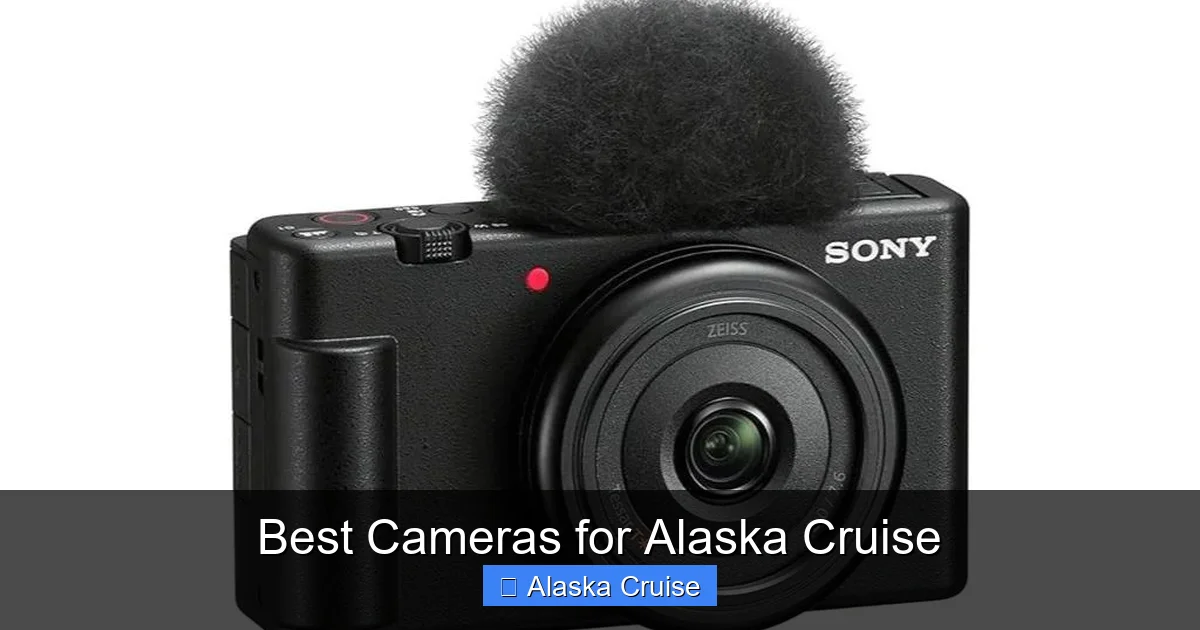
Touchscreen interfaces, customizable buttons, and scene modes help beginners get great shots without diving into manual settings. For example, the Sony ZV-1 II has a flip-out screen and built-in ND filter, making it ideal for vlogging and quick snaps.
Size matters too. A bulky DSLR might be overkill if you’re mostly shooting from the ship’s deck. Compact mirrorless cameras like the Sony α6700 or Canon EOS R10 offer professional features in a travel-friendly package. Pair them with a lightweight zoom lens, and you’ve got a powerful setup that won’t slow you down.
Best Camera Types for Alaska Cruises
Not all cameras are created equal—and not all travelers have the same needs. Let’s explore the main types of cameras and how they perform in Alaskan conditions.
Compact Point-and-Shoot Cameras
These are the simplest and most portable options. Ideal for travelers who want high quality without complexity, modern point-and-shoots pack impressive sensors and zoom lenses into pocket-sized bodies.
The Sony RX100 VII is a standout. It features a 1-inch sensor, 24-200mm zoom, and lightning-fast autofocus. It’s perfect for capturing both wide-angle glacier views and distant wildlife. Plus, it’s small enough to fit in a jacket pocket.
Another great choice is the Canon PowerShot G7 X Mark III. It has a bright f/1.8-2.8 lens, excellent for low-light sunrises over the water, and supports 4K video. Its flip-up screen is perfect for selfies with a glacier backdrop.
Pros: Lightweight, easy to use, great image quality.
Cons: Limited zoom compared to bridge cameras, smaller sensors than mirrorless.
Bridge Cameras
Bridge cameras sit between point-and-shoots and DSLRs. They offer superzoom lenses, manual controls, and better image quality—all in one fixed-lens body.
The Panasonic Lumix FZ300 is a favorite among cruise photographers. Its 24-600mm f/2.8 lens lets you shoot everything from sweeping fjords to a distant sea lion colony—all without changing lenses. It’s also weather-sealed and shoots 4K video.
Similarly, the Nikon Coolpix P1000 boasts an insane 24-3000mm zoom. While the image quality at max zoom isn’t perfect, it’s unmatched for spotting details like a bear cub on a hillside miles away.
Pros: Long zoom, all-in-one design, good for wildlife.
Cons: Heavier than compacts, smaller sensors than mirrorless.
Mirrorless Cameras
Mirrorless cameras offer DSLR-level image quality with a lighter, more compact design. They’re ideal for serious photographers who want flexibility without the bulk.
The Fujifilm X-S20 is a top pick. It has a 26.1MP sensor, 6.5-stop image stabilization, and excellent color reproduction—perfect for capturing Alaska’s vibrant sunsets and lush greenery. It’s also weather-resistant and supports 6.2K video.
The Sony α7 IV is another powerhouse. With a full-frame sensor, it delivers stunning dynamic range and low-light performance. Pair it with a 70-300mm lens, and you’re ready for anything from glacier close-ups to eagle portraits.
Pros: High image quality, interchangeable lenses, advanced features.
Cons: Higher cost, requires lens investment, steeper learning curve.
Action Cameras
For adventure seekers, action cameras like the GoPro Hero 12 Black are indispensable. They’re waterproof, mountable, and built for extreme conditions.
Mount one on your kayak during a glacier tour, or wear it while hiking in Tongass National Forest. The Hero 12 shoots 5.3K video, has HyperSmooth stabilization, and captures slow-motion footage of splashing whales.
While not ideal for still photography, action cameras excel at immersive video and hands-free recording. They’re a great complement to your main camera.
Pros: Rugged, versatile, great for video.
Cons: Limited zoom, smaller sensor, not ideal for stills.
Top Camera Recommendations for Alaska Cruises
Now that we’ve covered the features and types, here are our top picks for the best cameras for Alaska cruise adventures—based on real-world performance and traveler feedback.
Best Overall: Sony RX10 IV
This bridge camera is a jack-of-all-trades. With a 24-600mm f/2.4-4 lens, 1-inch sensor, and fast autofocus, it handles everything from landscapes to wildlife. It’s weather-resistant, shoots 4K video, and has excellent image stabilization.
Why it’s great for Alaska: You get DSLR-like zoom and quality in a single, travel-friendly body. No need to carry extra lenses.
Best for Beginners: Canon PowerShot G5 X Mark II
With a 24-120mm f/1.8-2.8 lens, 1-inch sensor, and flip-up touchscreen, this camera is user-friendly and powerful. It has 5-axis stabilization, 4K video, and a built-in EVF.
Why it’s great for Alaska: Easy to use, compact, and delivers stunning results—even in low light.
Best for Wildlife: Nikon Coolpix P1000
The 3000mm zoom is unmatched. While image quality drops at full zoom, it’s perfect for identifying distant animals or capturing extreme close-ups.
Why it’s great for Alaska: No other camera lets you zoom in on a bear from a mile away.
Best Mirrorless: Fujifilm X-T5
With a 40MP sensor, 6-stop stabilization, and weather sealing, this camera is built for adventure. It has film simulation modes that add a vintage touch to your photos.
Why it’s great for Alaska: High resolution, rugged build, and beautiful color science.
Best Budget Option: Panasonic Lumix ZS80
This compact camera offers a 30x zoom (24-720mm), 4K video, and a 1-inch sensor—all under $500. It’s lightweight and easy to use.
Why it’s great for Alaska: Affordable, versatile, and travel-ready.
Best for Video: Sony ZV-1 II
Designed for content creators, this camera has a 15.3mm ultra-wide lens, background defocus, and excellent audio. It shoots 4K and has a flip-out screen.
Why it’s great for Alaska: Perfect for vlogging your cruise adventures with minimal setup.
Photography Tips for Alaska Cruise Success
Having the right camera is only half the battle. These practical tips will help you get the most out of your Alaska photography experience.
Shoot in RAW
RAW files capture more detail and allow greater editing flexibility. While they take up more space, they’re worth it for dramatic Alaskan lighting. Most mirrorless and advanced compacts support RAW.
Use a Polarizing Filter
Glare from water and snow can ruin a shot. A polarizing filter reduces reflections and enhances sky contrast. Many cameras have built-in digital versions, but a physical filter works best.
Shoot During Golden Hour
Early morning and late evening light is softer and more flattering. On Alaska cruises, this often means shooting at 5 a.m. or 9 p.m.—but the results are worth it.
Bring a Tripod or Monopod
For long zooms or low-light scenes, a small tripod or monopod adds stability. Look for compact models like the Joby GorillaPod.
Protect Your Gear
Use a dry bag or waterproof case when on shore excursions. Silica gel packs help prevent condensation inside your camera bag.
Respect Wildlife
Never disturb animals for a photo. Use your zoom instead of approaching. Remember: safety and ethics come first.
Conclusion
An Alaska cruise is a once-in-a-lifetime experience, and the right camera ensures you capture every awe-inspiring moment. From the thunder of calving glaciers to the silent grace of a moose in a misty meadow, these memories deserve to be preserved in the highest quality possible.
The best cameras for Alaska cruise trips combine durability, zoom power, and ease of use. Whether you choose a compact powerhouse like the Sony RX100 VII, a superzoom bridge camera like the Panasonic FZ300, or a full-featured mirrorless like the Fujifilm X-T5, focus on what matters: weather resistance, optical zoom, and battery life.
Don’t let gear stress overshadow your adventure. Pick a camera that fits your style, pack extra batteries, and get ready to shoot. With the right tool in hand, you’ll return home not just with souvenirs—but with a visual story of Alaska’s wild, untamed beauty.
Frequently Asked Questions
What’s the best camera for wildlife on an Alaska cruise?
The Nikon Coolpix P1000 is ideal for wildlife thanks to its 3000mm zoom. It lets you capture distant animals like bears and whales in detail. For better image quality, the Sony RX10 IV offers a strong 600mm zoom with a larger sensor.
Do I need a waterproof camera for Alaska?
While not required, a weather-sealed or waterproof camera is highly recommended. Alaska’s coastal environment includes rain, fog, and sea spray. Models like the Olympus Tough TG-6 or weather-sealed mirrorless cameras offer peace of mind.
Can I use my smartphone instead of a camera?
Smartphones are improving, but they lack the zoom and low-light performance needed for Alaska. A dedicated camera with optical zoom and stabilization will deliver far better results, especially for wildlife and landscapes.
How many batteries should I bring?
Bring at least two spare batteries. Cold weather drains power quickly, and you don’t want to miss a shot. Store extras in an inner pocket to keep them warm and functional.
Is a tripod necessary on a cruise?
A small tripod or monopod is helpful for long zooms and low-light shots. It reduces camera shake, especially on a moving ship. Compact models like the Joby GorillaPod are easy to pack and use.
What’s the best time of day to take photos in Alaska?
Golden hour—just after sunrise and before sunset—offers the most flattering light. In summer, this can mean shooting at 5 a.m. or 9 p.m., but the soft, warm glow enhances glaciers, forests, and wildlife.