
Choosing the best camera/lens for an Alaska cruise means balancing portability, versatility, and image quality. You’ll want gear that handles everything from close-up wildlife to sweeping landscapes in changing light. This guide covers top picks for every budget and skill level—so you never miss a breathtaking moment.
Key Takeaways
- Prioritize zoom range: A telephoto lens (200mm+) is essential for capturing distant wildlife like whales, bears, and eagles.
- Weather sealing matters: Alaska’s damp, cold, and unpredictable climate demands durable, weather-resistant gear.
- Mirrorless cameras lead the pack: Lightweight, high-resolution mirrorless models offer excellent image quality without the bulk.
- Wide-angle lenses for landscapes: Capture massive glaciers, fjords, and mountain ranges with a 16-35mm or similar lens.
- Image stabilization is a must: On moving ships and in low light, in-body or lens stabilization helps prevent blur.
- Don’t forget extra batteries: Cold temperatures drain power fast—pack spares and keep them warm.
- Consider a compact backup: A pocket-sized camera or smartphone with pro features ensures you’re always ready.
📑 Table of Contents
- Why Your Camera Choice Matters on an Alaska Cruise
- Top Camera Systems for Alaska Cruises
- Essential Lenses for Alaska’s Diverse Landscapes
- Weather Protection and Durability: Surviving Alaska’s Elements
- Shooting Tips for Alaska Cruise Photography
- Packing Smart: What to Bring (and What to Leave Behind)
- Conclusion: Capture Alaska Like a Pro
Why Your Camera Choice Matters on an Alaska Cruise
An Alaska cruise isn’t just a vacation—it’s a once-in-a-lifetime visual feast. From towering glaciers calving into icy waters to humpback whales breaching in the distance, every moment feels like a National Geographic spread. But if your camera gear isn’t up to the task, you could miss the shot—or worse, end up with blurry, underexposed photos that don’t do the scenery justice.
The unique challenges of cruising Alaska—constant motion, rapidly changing weather, and vast distances between subjects—mean your camera and lens combo needs to be both versatile and reliable. You’ll be shooting from a moving ship, hiking onshore, and often in low-light conditions during early morning or late evening excursions. That’s why choosing the best camera/lens for Alaska cruise isn’t just about megapixels—it’s about matching your gear to the environment, your shooting style, and the types of photos you want to bring home.
Whether you’re a seasoned photographer or a casual snapper, this guide will help you pick the right tools. We’ll break down the top camera systems, lens recommendations, and practical tips to ensure you capture Alaska’s raw beauty in stunning detail.
Top Camera Systems for Alaska Cruises
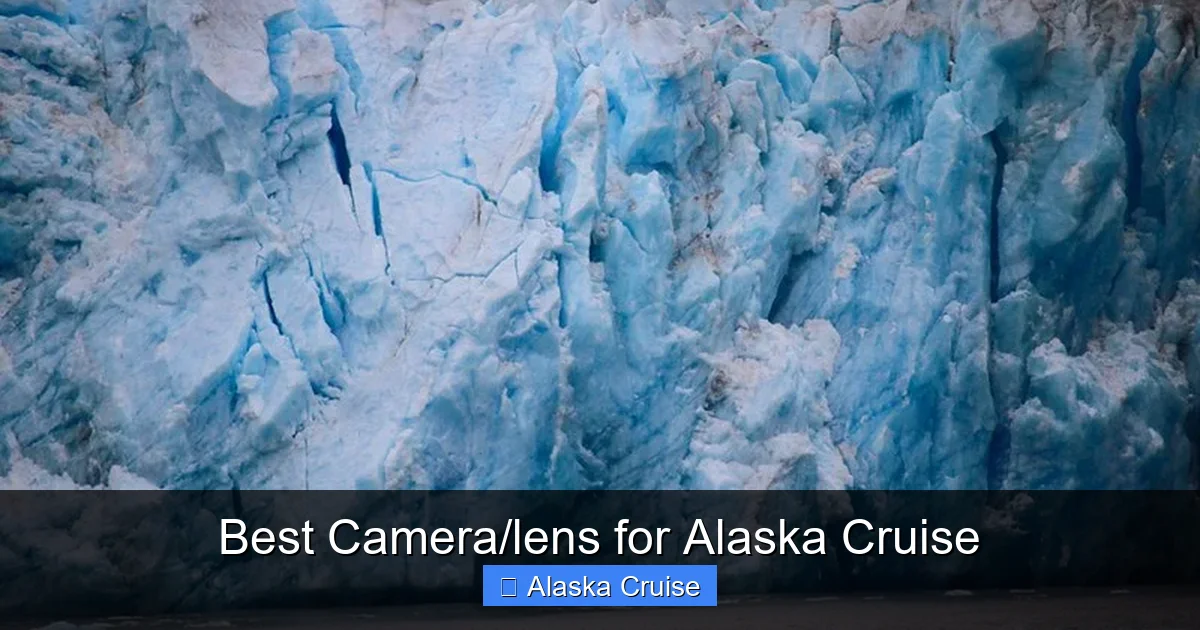
Visual guide about Best Camera/lens for Alaska Cruise
Image source: farm9.staticflickr.com
When it comes to cameras, mirrorless systems have taken the lead—and for good reason. They’re lighter, quieter, and often pack more advanced features than traditional DSLRs. For an Alaska cruise, where every ounce counts and silence can matter when photographing wildlife, mirrorless is the way to go.
Best Overall: Sony Alpha a7 IV
The Sony a7 IV is a powerhouse for travelers who want professional-quality images without the bulk. With a 33-megapixel full-frame sensor, excellent dynamic range, and fast autofocus, it handles everything from low-light glacier shots to fast-moving wildlife. Its in-body image stabilization (IBIS) is a game-changer on a swaying ship, and the weather sealing keeps it safe in rain, snow, and sea spray. Pair it with a versatile zoom lens, and you’ve got a setup that’s ready for anything Alaska throws at you.
Best for Wildlife: Canon EOS R7
If your main goal is photographing bears, whales, and eagles, the Canon R7 is a standout. This APS-C mirrorless camera offers a 32.5-megapixel sensor and an impressive 15 fps continuous shooting speed—perfect for capturing that perfect whale tail slap. Its Dual Pixel CMOS AF II system locks onto moving subjects with precision, even in dim light. Plus, it’s compact and lightweight, making it ideal for long days on shore excursions.
Best Budget Option: Fujifilm X-S20
Don’t let the price fool you—the Fujifilm X-S20 delivers exceptional image quality and color science at a fraction of the cost of high-end models. With a 26.1-megapixel APS-C sensor, 6K video, and in-body stabilization, it’s a fantastic choice for travelers who want great photos without breaking the bank. Fujifilm’s film simulation modes also add a nostalgic, artistic touch to your Alaska shots, making your photos stand out.
Best for Simplicity: Olympus OM-D E-M10 Mark IV
For those who prefer point-and-shoot ease with interchangeable lens flexibility, the Olympus E-M10 Mark IV is a gem. It’s compact, intuitive, and packed with features like 5-axis stabilization and 4K video. While it uses a smaller Micro Four Thirds sensor, it still produces sharp, vibrant images—especially when paired with high-quality lenses. It’s perfect for travelers who want to travel light but still capture high-quality memories.
Essential Lenses for Alaska’s Diverse Landscapes
Your camera is only as good as the lens you put on it. Alaska’s scenery demands a range of focal lengths—from ultra-wide for epic landscapes to super-telephoto for distant wildlife. Here’s how to build a lens kit that covers all your bases.
Wide-Angle Lens: Capture the Grand Scale
Nothing says “Alaska” like a massive glacier framed by misty mountains and a deep blue fjord. A wide-angle lens (typically 16-35mm for full-frame or 10-20mm for APS-C) lets you fit it all in. The Sony FE 16-35mm f/2.8 GM is a top-tier choice, offering sharpness, minimal distortion, and fast autofocus. For a more budget-friendly option, the Tamron 17-28mm f/2.8 Di III VXD delivers excellent performance at half the price.
Pro tip: Use a polarizing filter with your wide-angle lens to reduce glare off water and enhance the contrast of skies and ice.
Telephoto Zoom: Get Close to Wildlife
Wildlife in Alaska is often far away—bears foraging on riverbanks, whales surfacing miles offshore, or eagles perched high in spruce trees. A telephoto zoom lens (200mm or longer) is non-negotiable. The Canon RF 100-500mm f/4.5-7.1L IS USM is a favorite among wildlife photographers for its reach, image stabilization, and weather sealing. If you’re using a Sony system, the Sony FE 200-600mm f/5.6-6.3 G OSS offers incredible reach and sharpness, especially in good light.
For APS-C cameras like the Canon R7 or Fujifilm X-S20, consider the Canon RF-S 100-400mm f/5.6-8 IS USM or the Fujifilm XF 100-400mm f/4.5-5.6 R LM OIS WR. These lenses give you even more effective reach due to the crop factor—making 400mm feel like 600mm or more.
All-in-One Zoom: Convenience and Flexibility
If you want to travel light and avoid constant lens changes, an all-in-one zoom is your best friend. The Sony FE 24-105mm f/4 G OSS is a versatile workhorse that covers wide landscapes, mid-range portraits, and even some close wildlife shots. It’s sharp, stabilized, and weather-sealed—perfect for cruising.
Another excellent option is the Tamron 28-200mm f/2.8-5.6 Di III RXD, which offers a massive zoom range in a compact body. While it sacrifices some aperture speed at the long end, it’s ideal for travelers who prioritize convenience over ultimate image quality.
Prime Lenses: For Maximum Sharpness and Low Light
Prime lenses (fixed focal length) often deliver superior sharpness and wider apertures than zooms. A fast prime like the Sigma 35mm f/1.4 DG DN Art or the Sony FE 50mm f/1.2 GM is perfect for low-light interiors, sunset portraits, or moody glacier shots at dusk. While less versatile, they’re worth considering if you’re serious about image quality and don’t mind changing lenses.
Weather Protection and Durability: Surviving Alaska’s Elements
Alaska is beautiful—but it’s also brutal on gear. Rain, snow, fog, and salt spray are common, and temperatures can swing from near freezing to surprisingly warm in a single day. Your camera and lens need to be built to handle it.
Weather Sealing: Non-Negotiable
Look for cameras and lenses with robust weather sealing—rubber gaskets around buttons, ports, and lens mounts that keep moisture and dust out. Sony, Canon, and Fujifilm all offer excellent weather-resistant models. The Sony a7 IV, Canon R7, and Fujifilm X-S20 all feature comprehensive sealing, making them ideal for Alaska’s damp climate.
Lens Hoods and Filters: Extra Protection
Always use a lens hood—it protects the front element from rain, snow, and accidental bumps. Pair it with a high-quality UV or clear protective filter to shield against scratches and salt corrosion. Just make sure the filter is multi-coated to avoid degrading image quality.
Rain Covers and Dry Bags
Even the best-sealed gear can benefit from extra protection. A rain cover like the Think Tank Photo Hydrophobia or a simple DIY plastic bag with a hole for the lens can save your camera during sudden downpours. Store your gear in a dry bag when not in use, especially on zodiac rides or kayaking trips.
Battery Care in the Cold
Cold weather kills battery life. Keep spare batteries warm by storing them in an inner pocket close to your body. When you’re ready to use them, let them acclimate to the outdoor temperature gradually to avoid condensation. Consider a battery grip for extended shooting sessions.
Shooting Tips for Alaska Cruise Photography
Great gear is only part of the equation—how you use it matters just as much. Here are some practical tips to help you get the most out of your Alaska cruise photography.
Shoot in RAW
Always shoot in RAW format. It gives you maximum flexibility in post-processing, especially when dealing with tricky lighting—like the flat, overcast skies common in Alaska. RAW files retain more detail in shadows and highlights, letting you recover blown-out skies or dark foregrounds.
Use a Tripod or Monopod
On a moving ship, a tripod can be tricky—but a compact travel tripod or monopod helps stabilize your shots, especially with long lenses. Look for lightweight carbon fiber models like the Peak Design Travel Tripod or the Manfrotto Befree Advanced.
Golden Hour is Your Best Friend
The soft, warm light of early morning and late evening transforms Alaska’s landscapes. Plan your shore excursions around sunrise and sunset for the most dramatic shots. Even on the ship, wake up early—many of the best glacier views happen at dawn.
Patience Pays Off with Wildlife
Wildlife doesn’t follow a schedule. Bring a thermos of coffee, dress warmly, and be ready to wait. Use continuous autofocus (AF-C) and burst mode to increase your chances of capturing the perfect moment.
Respect Wildlife and Regulations
Always maintain a safe distance from animals. Use your telephoto lens instead of getting too close. Many cruise lines and parks have strict rules about wildlife interaction—follow them to protect both you and the animals.
Packing Smart: What to Bring (and What to Leave Behind)
Space and weight are limited on a cruise, so pack wisely. Here’s a checklist of essentials:
- Camera body: Choose one primary camera based on your needs.
- Lenses: Bring 2-3 lenses max—wide-angle, telephoto zoom, and maybe a prime or all-in-one.
- Extra batteries: At least 2-3, stored in a padded case.
- Memory cards: Bring more than you think you’ll need—Alaska inspires lots of shooting.
- Lens cleaning kit: Microfiber cloths, blower, and lens pen for fog and salt removal.
- Rain cover and dry bag: For protection during wet excursions.
- Tripod or monopod: Compact and lightweight.
- Portable hard drive: To back up photos daily.
Avoid bringing multiple camera bodies or heavy tripods unless absolutely necessary. Remember, you’ll be carrying this gear on hikes, zodiac rides, and long walks—keep it light.
Conclusion: Capture Alaska Like a Pro
An Alaska cruise is a visual adventure unlike any other. With the right camera and lens, you can preserve those fleeting moments—the glow of the midnight sun on a glacier, the spray of a whale’s breath, the quiet majesty of a bear in the wild.
The best camera/lens for Alaska cruise isn’t necessarily the most expensive—it’s the one that fits your style, budget, and the shots you want to take. Whether you go with a high-end mirrorless system or a compact all-in-one setup, prioritize versatility, weather resistance, and image stabilization.
Pack smart, shoot often, and don’t forget to put the camera down sometimes to just soak it all in. But when you do pick it up, you’ll be ready to capture Alaska in all its wild, untamed glory.
Frequently Asked Questions
What’s the best camera for a beginner on an Alaska cruise?
The Fujifilm X-S20 is an excellent choice for beginners. It’s user-friendly, lightweight, and produces stunning images with minimal setup. Its film simulation modes add a creative touch, making it fun and easy to use.
Do I need a telephoto lens for Alaska?
Yes, a telephoto lens (200mm or longer) is highly recommended. Wildlife like whales, bears, and eagles are often far away, and a telephoto lens lets you capture detailed, close-up shots without disturbing them.
Can I use my smartphone instead of a camera?
Modern smartphones can take great photos, especially in good light. However, they lack the zoom range, low-light performance, and weather resistance needed for serious Alaska photography. Use it as a backup, not a replacement.
How do I protect my camera from rain and salt spray?
Use weather-sealed gear, a rain cover, and a protective filter on your lens. Store your camera in a dry bag when not in use, and wipe it down regularly to remove salt and moisture.
What’s the best time of day to photograph in Alaska?
Golden hour—just after sunrise and before sunset—offers the most flattering light. The low angle and warm tones enhance landscapes and wildlife, creating dramatic, memorable images.
Should I bring a tripod on an Alaska cruise?
A compact travel tripod or monopod is useful, especially for long exposures or stabilizing heavy telephoto lenses. Just make sure it’s lightweight and easy to carry on excursions.