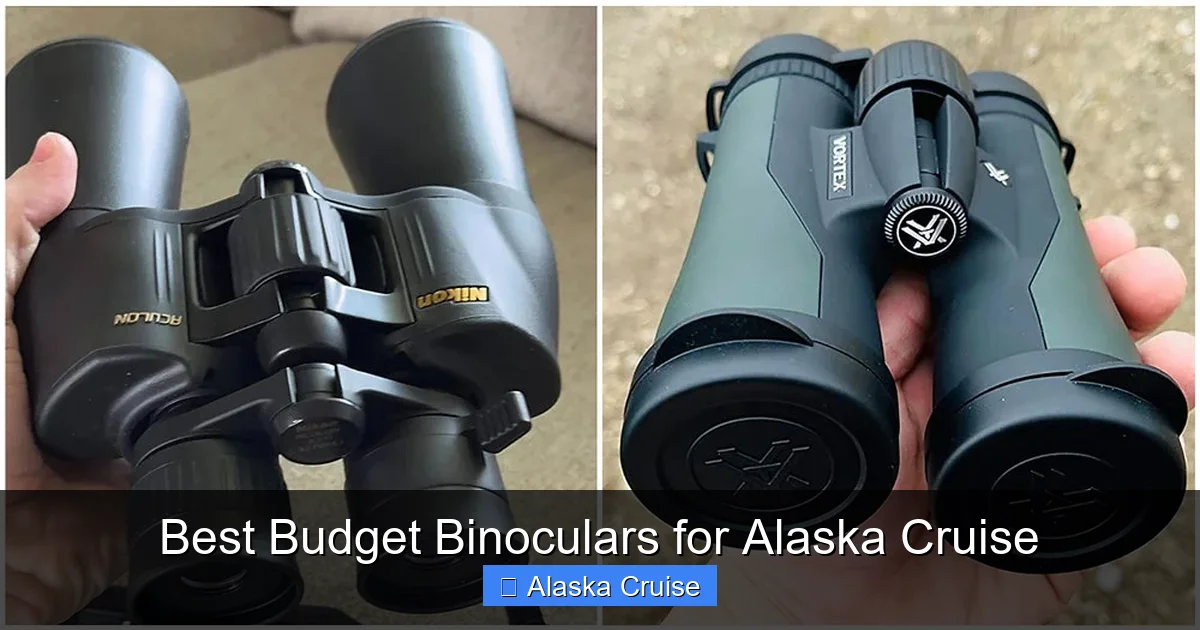
Finding the best budget binoculars for an Alaska cruise doesn’t mean sacrificing quality. With the right pair, you can enjoy crisp, bright views of whales, eagles, and icy fjords without spending a fortune. This guide helps you choose affordable, reliable optics that enhance your Alaskan journey.
Key Takeaways
- Magnification and Objective Lens Matter: Look for 8×42 or 10×42 binoculars—ideal balance of power, brightness, and portability for Alaska’s variable lighting.
- Waterproof and Fog-Proof Are Essential: Alaska’s damp, cold climate demands nitrogen-purged, O-ring sealed binoculars to prevent internal fogging and water damage.
- Compact and Lightweight Wins: You’ll be carrying these around your neck all day—choose models under 25 ounces for comfort during long shore excursions.
- Close Focus Distance Helps Spot Wildlife: Binoculars with a close focus of 6–8 feet let you observe birds and marine life up close, especially in dense coastal areas.
- Rubber Armor Adds Durability: A rugged, textured grip protects against drops and makes handling easier with cold or wet hands.
- Price Doesn’t Always Mean Performance: Several sub-$200 models offer excellent optics, making them perfect for budget-conscious cruisers.
- Try Before You Buy (If Possible): Test ergonomics and eye relief, especially if you wear glasses, to ensure a comfortable viewing experience.
📑 Table of Contents
Why Binoculars Are a Must-Have for Your Alaska Cruise
Imagine standing on the deck of your cruise ship, the crisp Alaskan air filling your lungs, as a pod of humpback whales breaches just 200 yards away. Without binoculars, you’re squinting into the distance, missing the spray of their blows and the graceful arc of their tails. But with a good pair of binoculars? You’re right there—close enough to see the barnacles on their skin and the curious glint in their eyes.
An Alaska cruise is one of the most visually stunning travel experiences on Earth. From towering glaciers calving into icy waters to bald eagles perched on rocky outcrops, the scenery is nothing short of breathtaking. But much of the magic happens at a distance. Wildlife doesn’t always come close to the ship, and glaciers can stretch for miles along the coastline. That’s where binoculars come in—not as a luxury, but as a necessity. They transform fleeting glimpses into immersive moments, letting you truly connect with the wild beauty of Alaska.
Now, you might be thinking, “I’ll just use my phone’s zoom.” But let’s be honest—digital zoom blurs details and drains your battery. Binoculars offer real optical magnification, brighter images, and a wider field of view. Plus, they’re built for outdoor use. Whether you’re scanning the shoreline for brown bears or tracking a distant cruise ship through misty fjords, binoculars give you the clarity and confidence to make the most of every moment.
What to Look for in Budget Binoculars for Alaska
When shopping for the best budget binoculars for an Alaska cruise, it’s easy to get overwhelmed by technical jargon and flashy marketing. But don’t worry—you don’t need to be an optics expert to make a smart choice. Focus on a few key features that directly impact your experience in Alaska’s unique environment.
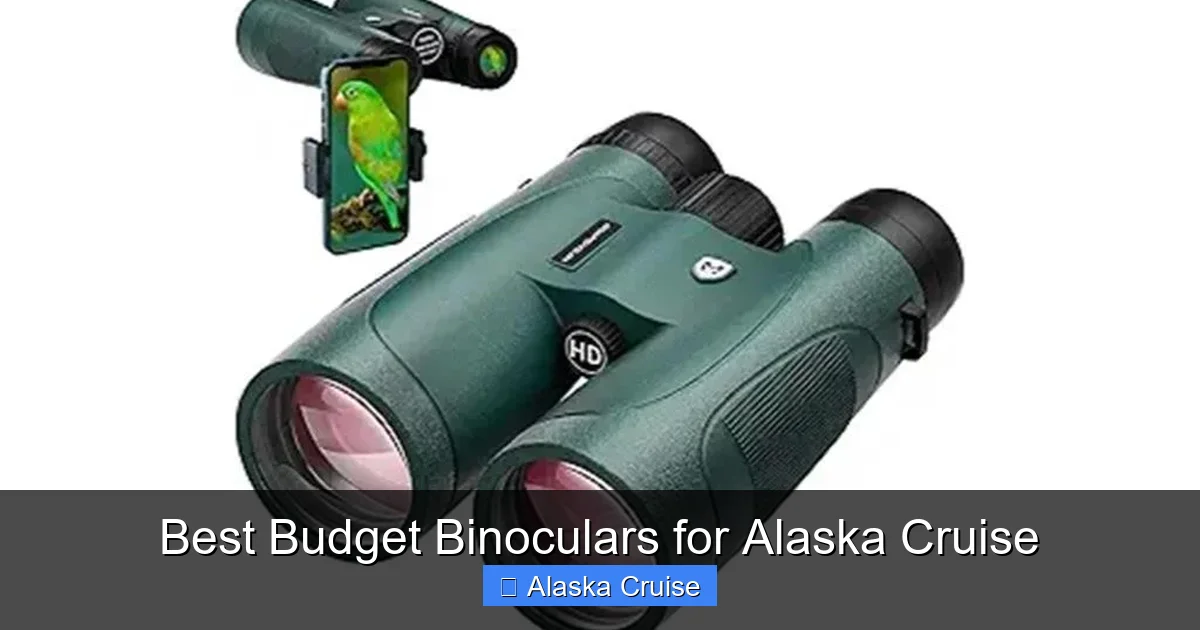
Visual guide about Best Budget Binoculars for Alaska Cruise
Image source: cruisediscover.com
Magnification and Objective Lens Size
The first thing you’ll see on any binocular box is a number like “8×42” or “10×50.” The first number is the magnification—how many times closer the image appears. The second is the diameter of the objective (front) lens in millimeters, which determines how much light the binoculars can gather.
For Alaska, 8×42 is the sweet spot. It offers enough power to see distant wildlife without making the image too shaky (higher magnification amplifies hand movement). The 42mm lens provides excellent brightness, even in overcast conditions—common in coastal Alaska. If you prefer a bit more zoom, 10×42 is also a solid choice, but be prepared to use a tripod or steady your arms against the ship’s railing.
Avoid anything below 8x magnification—you’ll miss too much detail. And steer clear of oversized lenses like 50mm or more unless you’re willing to carry heavier gear. On a cruise, every ounce counts.
Waterproof and Fog-Proof Construction
Alaska is famously wet. Rain, sea spray, and morning mist are part of the experience. Your binoculars must be able to handle it. Look for models labeled waterproof and fog-proof. These terms mean the internal optics are sealed with O-rings and filled with inert gas (usually nitrogen or argon). This prevents moisture from entering and stops lenses from fogging up when moving between cold outdoor air and warm indoor spaces.
Cheaper binoculars may claim to be “water-resistant,” but that’s not enough. A sudden downpour or a splash from the deck could ruin them. Invest in true waterproofing—it’s non-negotiable for Alaska.
Close Focus Distance
You might not think about it upfront, but close focus distance is crucial. This is how near an object can be while still staying in sharp focus. In Alaska, you’ll often find yourself observing birds, seals, or even wildflowers just a few feet away from the shore.
Look for binoculars with a close focus of 6 to 8 feet. This lets you zoom in on a curious sea otter floating near the dock or a cluster of colorful wildflowers along a hiking trail. Models with longer close focus (10+ feet) will leave you frustrated when trying to examine nearby details.
Weight and Portability
You’ll be wearing these binoculars around your neck for hours—sometimes all day. A heavy pair might feel fine at first, but after a few hours on a glacier tour or a long walk through a rainforest trail, you’ll notice the strain.
Aim for binoculars under 25 ounces. Compact models in the 18–22 ounce range are ideal. They’re light enough to carry comfortably but still offer full-sized performance. Many budget models now use lightweight materials like polycarbonate without sacrificing durability.
Eye Relief and Eyecup Design
If you wear glasses, eye relief is a big deal. This is the distance between your eye and the eyepiece where you can still see the full field of view. Look for at least 15mm of eye relief. Anything less, and you’ll have to press your glasses against the lenses, which is uncomfortable and can scratch them.
Twist-up or fold-down eyecups are a bonus. They let you adjust the distance to match your eyes, whether you’re wearing glasses or not. Some budget models have fixed eyecups, which can be a dealbreaker for glasses wearers.
Top Budget Binoculars for Alaska Cruises
Now that you know what to look for, let’s dive into some of the best budget binoculars that deliver excellent performance without the premium price tag. These models have been tested by travelers, reviewed by experts, and proven reliable in real-world Alaskan conditions.
1. Nikon Prostaff 7S 8×42
The Nikon Prostaff 7S 8×42 is a favorite among budget-conscious nature lovers. Priced around $150–$180, it offers premium features at a fraction of the cost of high-end models. With fully multi-coated lenses and a phase-corrected roof prism, it delivers bright, sharp images even in low light.
It’s waterproof, fog-proof, and built with a durable rubber armor that absorbs shocks. At just 22.9 ounces, it’s lightweight enough for all-day use. The close focus is an impressive 6.6 feet, perfect for spotting seabirds or marine life near the shore. Eye relief is 19.5mm—excellent for glasses wearers.
One reviewer noted, “I used these on a 7-day Alaska cruise and saw everything from orcas to mountain goats. The clarity was stunning, especially at dawn when the light was soft.”
2. Vortex Optics Crossfire HD 8×42
Vortex is known for its lifetime warranty and solid optics, and the Crossfire HD 8×42 lives up to the reputation. At around $130, it’s one of the best values in the budget category. It features HD (high-definition) glass for improved color fidelity and reduced chromatic aberration.
The binoculars are nitrogen-purged, waterproof, and fog-proof. The rubber armor provides a secure grip, even with wet hands. At 23.8 ounces, it’s slightly heavier than the Nikon but still manageable. Close focus is 8.2 feet—good, but not exceptional. Eye relief is 17mm, suitable for most glasses wearers.
Travelers love the Vortex for its durability. “I dropped these on a rocky trail in Juneau, and they survived without a scratch. The image stayed crystal clear,” said one cruiser.
3. Celestron Nature DX 8×42
The Celestron Nature DX 8×42 is a standout for under $120. It’s packed with features usually found in more expensive models: BaK-4 prisms, fully multi-coated optics, and a close focus of just 6.5 feet. It’s also waterproof and fog-proof, making it ideal for Alaska’s damp climate.
At 22.2 ounces, it’s one of the lightest in this lineup. The twist-up eyecups and 18mm eye relief make it comfortable for glasses users. The field of view is wide—393 feet at 1,000 yards—so you can scan large areas like glaciers or whale pods without losing your target.
One user shared, “I saw a brown bear fishing for salmon from 300 yards away. The detail was incredible—I could see the water dripping from its fur.”
4. Bushnell Legend M Series 10×42
If you prefer a bit more magnification, the Bushnell Legend M Series 10×42 is a great option. Priced around $160, it offers 10x power without sacrificing brightness. The ED (extra-low dispersion) glass reduces color fringing and enhances contrast.
It’s waterproof, fog-proof, and built with a magnesium chassis for durability without added weight. At 24.7 ounces, it’s on the heavier side, but still manageable. Close focus is 8.2 feet, and eye relief is 15.5mm—just enough for most glasses wearers.
Be aware that 10x magnification can make images shakier. Use the ship’s railing or a monopod for stability. Still, many cruisers appreciate the extra reach for spotting distant wildlife.
5. Olympus Trooper 8×40
For those who want a classic, no-frills option, the Olympus Trooper 8×40 is a reliable choice. At under $100, it’s one of the most affordable binoculars that still delivers solid performance. It’s waterproof, fog-proof, and features multi-coated lenses for good light transmission.
At 21.2 ounces, it’s lightweight and easy to carry. Close focus is 8.2 feet, and eye relief is 16mm. While it lacks some of the premium coatings of higher-end models, it’s a great entry-level option for casual observers.
One cruiser said, “I didn’t want to spend a lot, and these worked perfectly. I saw glaciers, eagles, and even a moose from the deck.”
Tips for Using Binoculars on an Alaska Cruise
Having the right binoculars is only half the battle. Knowing how to use them effectively will make your Alaska experience even more rewarding. Here are some practical tips to get the most out of your gear.
Stabilize Your View
Even the steadiest hands can’t eliminate all shake, especially on a moving ship. To reduce blur, brace your elbows against your body or use the ship’s railing as a support. If you’re on a small boat or kayak, try resting your arms on your knees.
For 10x binoculars, consider a small tripod adapter or a chest harness. These accessories help stabilize the view and reduce fatigue during long observation sessions.
Use the Right Settings
Most binoculars have a central focus wheel and a diopter adjustment (usually on the right eyepiece). Set the diopter once for your eyes, then use the central focus for quick adjustments. This ensures both eyes are perfectly aligned for sharp images.
If you’re sharing binoculars with others, reset the diopter each time. It only takes a few seconds and makes a big difference in clarity.
Protect Your Investment
Keep your binoculars in a protective case when not in use. A neck strap is essential—drop them overboard, and they’re gone forever. Consider a floating strap if you’re on a smaller vessel or near the water.
Clean the lenses with a microfiber cloth and lens cleaner designed for optics. Avoid using clothing or paper towels, which can scratch the coatings.
Know When to Use Them
Binoculars are most useful during scenic cruising, wildlife watching, and shore excursions. Use them to scan ahead for wildlife, examine geological features, or read distant signage. But don’t forget to put them down sometimes—Alaska is as much about feeling the moment as seeing it.
Common Mistakes to Avoid
Even with the best binoculars, a few common mistakes can ruin your experience. Avoid these pitfalls to get the most out of your Alaska cruise.
Buying Based on Price Alone
Just because a pair is cheap doesn’t mean it’s a good deal. Some ultra-low-cost models have poor optics, weak build quality, or no waterproofing. Stick to reputable brands and read reviews from other travelers.
Ignoring the Return Policy
Binoculars are personal—what works for one person might not work for you. Buy from retailers with generous return policies so you can test them at home before your trip.
Overlooking the Importance of Fit
Try the binoculars on. Do they feel comfortable around your neck? Can you reach the focus wheel easily? Are the eyecups the right height? A poor fit can lead to frustration and missed opportunities.
Forgetting to Charge Your Phone
While binoculars are essential, your phone is still useful for recording sightings, checking maps, or sharing photos. Keep it charged and consider a portable power bank.
Final Thoughts: Make the Most of Your Alaskan Adventure
An Alaska cruise is a once-in-a-lifetime experience, and the right pair of binoculars can elevate it from memorable to unforgettable. You don’t need to spend hundreds of dollars to enjoy crisp, bright views of glaciers, wildlife, and coastal landscapes. With the best budget binoculars for Alaska cruise adventures, you can spot a whale’s tail slap, a bear catching salmon, or a distant mountain peak emerging from the clouds—all without straining your eyes or your wallet.
Remember, the goal isn’t to have the most powerful or expensive optics. It’s to have reliable, comfortable, and durable binoculars that enhance your connection to the wild beauty of Alaska. Whether you choose the Nikon Prostaff, Vortex Crossfire, or Celestron Nature DX, you’re making a smart investment in your travel experience.
So pack your binoculars, bring your sense of wonder, and get ready to see Alaska like never before. The glaciers are waiting, the wildlife is calling, and every moment is worth a closer look.
Frequently Asked Questions
What magnification is best for Alaska cruise binoculars?
The best magnification for Alaska cruise binoculars is 8x or 10x. 8x offers a stable, wide view ideal for moving ships, while 10x provides more detail for distant wildlife. Avoid anything below 8x or above 12x for practical use.
Do I really need waterproof binoculars in Alaska?
Yes, waterproof binoculars are essential in Alaska. The climate is wet and unpredictable, with rain, sea spray, and fog common. Waterproof, fog-proof models protect your investment and ensure clear viewing in all conditions.
Can I use my phone instead of binoculars on a cruise?
While phone zoom can help, it can’t match the optical quality, brightness, and field of view of real binoculars. Phones also drain battery quickly and struggle in low light—binoculars are far superior for wildlife and scenic viewing.
Are budget binoculars durable enough for Alaska?
Yes, many budget binoculars are built to last. Look for models with rubber armor, waterproofing, and reputable brand names. Brands like Nikon, Vortex, and Celestron offer durable options under $200 that perform well in harsh conditions.
Should I buy binoculars before or during my cruise?
Buy before your cruise. This gives you time to test them, adjust settings, and ensure they’re comfortable. Onboard shops may have limited selection and higher prices, and you’ll miss early wildlife sightings.
What’s the best way to carry binoculars on a cruise?
Use a comfortable neck strap or harness. A padded strap reduces strain, and a floating strap adds safety near water. Keep them in a protective case when not in use, and avoid leaving them in direct sunlight or damp areas.