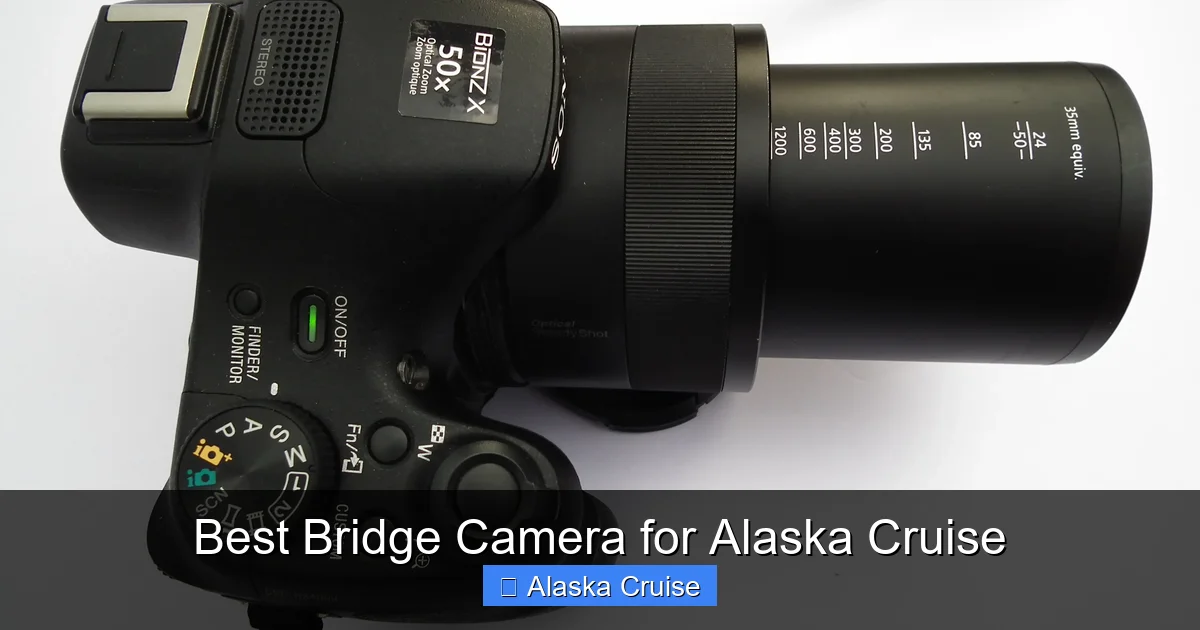
Choosing the best bridge camera for Alaska cruise travel means balancing zoom power, image quality, portability, and durability. These all-in-one cameras offer DSLR-like features without the bulk—perfect for capturing everything from breaching whales to towering glaciers in changing Alaskan weather.
Key Takeaways
- Superzoom capability is essential: Look for cameras with 50x optical zoom or higher to photograph distant wildlife like bears, eagles, and whales from cruise ship decks.
- Weather sealing matters: Alaska’s coastal climate brings rain, mist, and humidity—opt for a rugged, splash-resistant body to protect your gear.
- Image stabilization is a must: On a moving ship, optical or lens-based stabilization helps prevent blurry shots, especially at long zoom ranges.
- Fast autofocus improves success rates: Wildlife moves quickly—cameras with responsive autofocus and burst shooting help you capture sharp action shots.
- Compact and lightweight design: You’ll be carrying your camera all day—choose a model that’s easy to handle during shore excursions and long walks.
- Good low-light performance: Alaska’s long summer days are bright, but overcast skies and early mornings call for sensors that handle dim lighting well.
- Built-in Wi-Fi and GPS add convenience: Easily share photos or geotag your shots to remember where you captured that stunning fjord or glacier.
Why a Bridge Camera Is Ideal for an Alaska Cruise
An Alaska cruise is one of the most visually stunning travel experiences on Earth. From icy glaciers calving into the sea to bald eagles soaring above dense forests, the scenery changes every hour. Wildlife sightings—like humpback whales, sea otters, and brown bears—are common, but often happen at a distance. That’s where a bridge camera shines.
Unlike bulky DSLRs or mirrorless cameras with multiple lenses, a bridge camera packs a powerful zoom lens into a single, easy-to-carry body. You get the flexibility of a telephoto lens without the hassle of swapping gear. Whether you’re on deck watching for orcas or hiking through Tongass National Forest, a bridge camera lets you switch from wide-angle landscapes to tight wildlife close-ups in seconds.
Bridge cameras also offer automatic shooting modes that are perfect for travelers who want great photos without fiddling with settings. Many models include scene recognition, face detection, and even animal-eye autofocus—ideal for capturing sharp images of fast-moving subjects. Plus, they’re generally more affordable than professional setups, making them a smart choice for vacation photographers.
For Alaska specifically, the combination of long distances, unpredictable weather, and fleeting wildlife moments makes a bridge camera the sweet spot between performance and practicality. You won’t miss a shot because you’re lugging around extra lenses or struggling with manual controls in the cold.
Top Features to Look for in a Bridge Camera for Alaska
High Optical Zoom (50x or More)
One of the biggest advantages of a bridge camera is its superzoom lens. In Alaska, you’ll often be viewing wildlife from a distance—whether it’s a bear fishing in a river or a whale spouting offshore. A 50x optical zoom (equivalent to 1200mm or more) lets you get close without disturbing the animals or risking your safety.
For example, the Nikon Coolpix P1000 offers a staggering 125x optical zoom, allowing you to photograph details on a glacier or identify bird species from afar. While such extreme zoom isn’t always necessary, having that reach gives you creative freedom. Just remember: higher zoom ranges can make the camera heavier and more sensitive to hand shake, so pair it with good stabilization.
Optical Image Stabilization (OIS)
When you’re on a moving cruise ship or hiking on uneven terrain, even slight movements can blur your photos—especially at long zoom lengths. Optical image stabilization compensates for hand shake by shifting lens elements or the sensor to counteract motion.
Look for cameras with 5-axis or lens-based stabilization. Models like the Panasonic Lumix FZ300 feature Power O.I.S. (Optical Image Stabilization), which is highly effective at reducing blur in low light or when zoomed in. This feature is a game-changer for capturing sharp images of distant wildlife or smooth video of calving glaciers.
Weather Resistance and Durability
Alaska’s weather is famously unpredictable. Rain, sea spray, and high humidity are common, even in summer. A bridge camera with weather sealing—such as splash-proof construction and sealed buttons—will protect your investment and keep shooting when others pack up.
The Olympus Tough TG-6, while technically a compact camera, offers full waterproofing and shock resistance, making it a great backup. For bridge cameras, the Panasonic Lumix FZ300 and FZ80 are splash-proof and built to handle tough conditions. Avoid fully unsealed models if you plan to shoot near water or in light rain.
Fast and Accurate Autofocus
Wildlife doesn’t wait. A camera with fast autofocus (AF) and subject tracking ensures you don’t miss a breaching whale or a bear catching salmon. Look for models with phase-detection AF, animal-eye detection, or AI-powered tracking.
The Sony Cyber-shot RX10 IV, for instance, uses a BIONZ X processor and 24 fps burst shooting with real-time tracking—perfect for capturing action. Even mid-range bridge cameras like the Canon PowerShot SX70 HS now include improved AF systems that lock onto moving subjects quickly.
Good Low-Light Performance
While Alaska enjoys long daylight hours in summer, overcast skies, early mornings, and forested areas can create low-light conditions. A larger sensor (like a 1-inch type) captures more light and produces cleaner images with less noise.
Cameras like the Sony RX10 IV use a 1-inch stacked CMOS sensor, offering excellent dynamic range and low-light clarity. Smaller sensors (1/2.3-inch) are common in budget bridge cameras but may struggle in dim settings. If you plan to shoot at dawn or dusk—prime wildlife times—prioritize sensor size and aperture (f/2.8 or wider is ideal).
Built-in Wi-Fi, Bluetooth, and GPS
Sharing your Alaskan adventures in real time is part of the fun. Built-in Wi-Fi and Bluetooth let you transfer photos to your smartphone for instant sharing on social media or cloud storage. GPS tagging records your location, so you’ll always remember where you took that perfect shot of a glacier or mountain range.
Many modern bridge cameras, including the Nikon Coolpix P950 and Canon SX70 HS, include these connectivity features. Some even allow remote shooting via a smartphone app—great for group photos or self-portraits on scenic trails.
Top Bridge Cameras for Alaska Cruises in 2024
Sony Cyber-shot RX10 IV – Best Overall Performance
The Sony RX10 IV is the premium choice for serious travelers who want DSLR-quality images without the extra gear. It features a 1-inch sensor, 24-600mm f/2.4-4 zoom lens, and blazing-fast autofocus with 24 fps burst shooting. The built-in electronic viewfinder (EVF) and tilting touchscreen make composing shots easy, even in bright sunlight.
Its weather-sealed magnesium alloy body handles rain and dust well, and the lens has a constant aperture, meaning exposure stays consistent throughout the zoom range. While it’s pricier than other options, the image quality, speed, and versatility make it the best bridge camera for Alaska cruise enthusiasts who demand top performance.
Panasonic Lumix FZ300 – Best for Weather Resistance
If you’re sailing through misty fjords or hiking in light rain, the Panasonic FZ300 is built to last. It’s splash-proof, dust-proof, and freeze-proof down to 14°F (-10°C)—perfect for Alaskan conditions. The 25-600mm f/2.8 lens offers a constant wide aperture, ideal for low light and shallow depth of field.
The camera includes 5-axis stabilization, 4K video recording, and a high-resolution EVF. Its compact size and lightweight design make it easy to carry all day. While the sensor is smaller (1/2.3-inch), the image quality is impressive for its class, especially in good light.
Nikon Coolpix P1000 – Best for Extreme Zoom
For photographers who want to capture distant wildlife in incredible detail, the Nikon P1000 is unmatched. With a 24-3000mm equivalent lens and 125x optical zoom, you can photograph a bear from a mile away or zoom in on ice formations on a glacier. It also features 4K video, built-in GPS, and Wi-Fi.
The downside? It’s bulky and heavy, and the small sensor limits low-light performance. But if zoom is your top priority, the P1000 delivers. Use a tripod or monopod for stability, especially at full zoom. It’s ideal for cruise passengers who want to document rare sightings with maximum clarity.
Canon PowerShot SX70 HS – Best Value for Money
The Canon SX70 HS offers an excellent balance of features, performance, and price. Its 20.3MP sensor, 21-1365mm (65x zoom) lens, and DIGIC 8 processor deliver sharp images and smooth video. The flip-up LCD screen is great for vlogging or shooting from low angles.
It includes Wi-Fi, Bluetooth, and Canon’s reliable autofocus system with eye detection. While not weather-sealed, it’s durable enough for most cruise conditions if kept dry. At under $500, it’s a fantastic entry point for travelers who want serious zoom without breaking the bank.
Olympus OM-D E-M10 Mark IV (with M.Zuiko 14-150mm Lens) – Best Hybrid Option
Technically a mirrorless camera, the Olympus E-M10 Mark IV with a superzoom lens functions like a high-end bridge camera. It features a 20MP Micro Four Thirds sensor, 5-axis stabilization, and a compact, stylish design. The 14-150mm lens (300mm equivalent) offers solid zoom for most Alaskan scenes.
It’s lightweight, has excellent image quality, and includes advanced features like 4K video and in-body RAW processing. While not as zoom-heavy as true bridge cameras, it’s a great choice if you want better image quality and interchangeable lenses in a travel-friendly package.
Practical Tips for Using Your Bridge Camera on an Alaska Cruise
Pack Smart: Accessories That Make a Difference
Even the best bridge camera benefits from a few key accessories. Bring a sturdy tripod or monopod for long zoom shots, especially on windy decks. A UV or polarizing filter reduces glare from water and enhances sky contrast. Extra batteries are a must—cold weather drains power quickly, and you won’t want to miss a shot because your camera died.
A protective camera case or rain cover adds peace of mind during shore excursions. Consider a neck or wrist strap to prevent drops overboard. And don’t forget a high-capacity memory card—Alaska’s scenery will have you shooting all day.
Master the Settings Before You Go
Spend time familiarizing yourself with your camera’s modes before your trip. Practice using manual mode, aperture priority, and burst shooting. Set up custom buttons for quick access to ISO, focus, or zoom. Many bridge cameras allow you to save custom settings—use this to your advantage.
For wildlife, use shutter priority mode to freeze motion. For landscapes, switch to aperture priority for depth of field control. Enable image stabilization and use a fast shutter speed (1/500s or faster) when zoomed in.
Shoot in RAW for Maximum Flexibility
While JPEGs are convenient, shooting in RAW gives you more control over editing later. RAW files retain more detail in shadows and highlights, which is helpful when adjusting photos taken in mixed lighting—like a bright sky over a dark forest.
Most bridge cameras support RAW capture. Use it for important shots, then switch to JPEG for everyday snaps. Just remember RAW files take up more space, so bring extra memory cards.
Respect Wildlife and the Environment
Alaska is a protected wilderness. Always follow park guidelines and keep a safe distance from animals. Use your zoom instead of approaching wildlife. Avoid loud noises or sudden movements that could disturb animals or other travelers.
Leave no trace: pack out all trash, stay on marked trails, and respect local cultures. Your camera is a tool for appreciation, not intrusion.
Common Mistakes to Avoid
Even experienced photographers make errors on cruise trips. One common mistake is relying solely on auto mode. While convenient, auto settings may not optimize for wildlife or low light. Take time to adjust ISO, white balance, and exposure compensation.
Another pitfall is overpacking. You don’t need multiple cameras or lenses—your bridge camera is designed to handle it all. Focus on mastering one tool rather than juggling several.
Don’t forget to back up your photos. Use a portable hard drive or cloud storage to safeguard your memories. And finally, charge your batteries every night—Alaska’s beauty won’t wait for a dead camera.
Conclusion
An Alaska cruise is a once-in-a-lifetime adventure, and the right bridge camera ensures you capture every breathtaking moment. Whether you’re photographing a grizzly bear in Katmai, a glacier in Glacier Bay, or the Northern Lights in the evening sky, a high-quality bridge camera gives you the reach, speed, and versatility to document it all.
Look for models with strong zoom, image stabilization, weather resistance, and fast autofocus. The Sony RX10 IV leads in performance, while the Panasonic FZ300 excels in durability. For budget-conscious travelers, the Canon SX70 HS offers excellent value. No matter your choice, practice with your camera, pack the right accessories, and respect the wild beauty around you.
With the best bridge camera for Alaska cruise travel in hand, you’re ready to return home with a photo album full of stunning, shareable memories—proof that the Last Frontier is as unforgettable as it is untamed.
This is a comprehensive guide about best bridge camera for alaska cruise.
Key Takeaways
- Understanding best bridge camera for alaska cruise: Provides essential knowledge
Frequently Asked Questions
What is a bridge camera?
A bridge camera is a type of digital camera that sits between compact point-and-shoots and professional DSLRs. It features a fixed superzoom lens, manual controls, and advanced features in a single body—ideal for travelers who want versatility without carrying multiple lenses.
Do I need a tripod for Alaska wildlife photography?
A tripod or monopod is highly recommended, especially when using long zoom ranges. It stabilizes your camera, reduces blur, and helps you track moving subjects like whales or birds. A lightweight travel tripod is easy to pack and use on deck or during hikes.
Can I use a bridge camera in rainy or snowy conditions?
Yes, but only if it’s weather-sealed. Models like the Panasonic FZ300 are splash-proof and can handle light rain or snow. Avoid fully exposing unsealed cameras to moisture, and always dry them thoroughly after use.
Is a bridge camera better than a smartphone for Alaska photos?
Absolutely. Bridge cameras offer superior zoom, image quality, and manual controls. While smartphones are convenient, they can’t match the reach or low-light performance needed for distant wildlife or overcast Alaskan skies.
How do I protect my camera from cold weather?
Keep spare batteries warm in an inner pocket, as cold drains power quickly. Use a protective case and avoid sudden temperature changes that can cause condensation. Let your camera acclimate slowly when moving from cold to warm environments.
Should I shoot in RAW or JPEG on my Alaska trip?
Shoot in RAW for important or challenging shots to retain maximum detail for editing. Use JPEG for everyday photos to save space. Many bridge cameras allow dual format shooting, so you can get both.