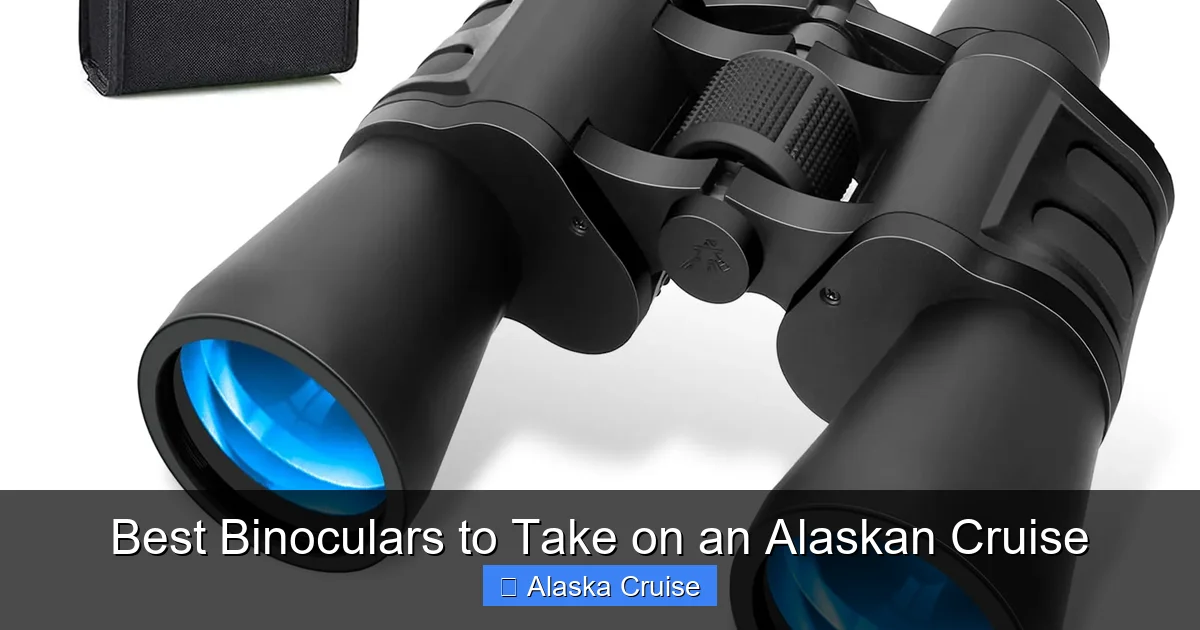
Choosing the right binoculars for your Alaskan cruise can make or break your wildlife viewing experience. With so many options on the market, it’s essential to pick a pair that’s durable, weatherproof, and delivers crisp, bright images—even in low light or choppy seas.
Key Takeaways
- Waterproof and fog-proof design is essential: Alaska’s damp, cold climate demands binoculars that can withstand rain, sea spray, and temperature shifts without internal fogging.
- 7x to 10x magnification works best: Higher magnification can make images shaky on a moving ship; 7x or 8x offers a stable, wide field of view ideal for scanning vast landscapes.
- Compact and lightweight models are ideal for travel: You’ll be carrying them around all day—look for models under 25 ounces that fit easily in a daypack or jacket pocket.
- Look for fully multi-coated lenses: These enhance light transmission, crucial for early morning or overcast conditions common in Alaska.
- Rubber armor adds grip and protection: A textured, shock-absorbent exterior helps prevent drops and improves handling in wet or gloved hands.
- Consider eye relief if you wear glasses: Longer eye relief (15mm or more) allows comfortable viewing without removing your glasses.
- Test before you buy: If possible, try different models to ensure comfort, balance, and ease of focus adjustment.
📑 Table of Contents
Why Binoculars Are a Must-Have for Your Alaskan Cruise
An Alaskan cruise isn’t just a vacation—it’s a front-row seat to one of the planet’s most dramatic natural theaters. From towering glaciers calving into icy waters to pods of humpback whales breaching just yards from your ship, the experiences are nothing short of breathtaking. But here’s the catch: many of the most unforgettable moments happen at a distance. That’s where a good pair of binoculars becomes your most valuable travel companion.
Imagine standing on the deck at dawn, the air crisp and salty, as a lone orca glides through the mist. Or spotting a grizzly bear foraging along a riverbank miles away from your anchored vessel. Without binoculars, these moments might remain blurry shapes on the horizon. With them, you’re transported into the heart of the action—close enough to see the spray from a whale’s blowhole or the texture of a mountain goat’s coat.
But not all binoculars are created equal, especially when you’re navigating the unpredictable conditions of Alaska’s coastal waters. The wind whips, the deck sways, and the light shifts quickly from golden sunrise to gray overcast. You need optics that are not only powerful but also rugged, reliable, and easy to use. That’s why choosing the best binoculars to take on an Alaskan cruise isn’t just a suggestion—it’s a necessity for maximizing your adventure.
What to Look for in Binoculars for Alaska

Visual guide about Best Binoculars to Take on an Alaskan Cruise
Image source: voyagerinfo.com
When shopping for binoculars for your Alaskan cruise, it’s easy to get overwhelmed by technical jargon and flashy marketing. But focusing on a few key features will help you narrow down your options and find a pair that truly enhances your journey.
Magnification and Objective Lens Size
The first thing you’ll notice on any binocular box is a number like “8×42” or “10×50.” The first number is the magnification—how many times closer the subject appears. The second is the diameter of the objective lens in millimeters, which determines how much light the binoculars can gather.
For Alaska, a magnification of 7x to 10x is ideal. While 10x might seem tempting for long-distance viewing, it also magnifies hand shake and ship movement, making images harder to stabilize. An 8x magnification strikes a perfect balance, offering enough power to see details without sacrificing stability. Pair that with a 42mm objective lens, and you get a bright, clear image even in low-light conditions like early morning or dusk—prime wildlife-watching times.
Optical Coatings Matter
Not all glass is created equal. Look for binoculars with fully multi-coated lenses. These coatings reduce glare, improve color fidelity, and maximize light transmission. In Alaska’s often overcast skies, every bit of brightness counts. Fully multi-coated lenses ensure you’re not missing out on subtle details—like the white tip of a bald eagle’s tail or the shimmer of a sea otter’s fur.
Waterproof and Fog-Proof Construction
Alaska is famously damp. Sea spray, rain, and sudden temperature drops are part of the experience. That’s why your binoculars must be both waterproof and fog-proof. Nitrogen or argon purging inside the barrels prevents internal fogging when moving from cold outdoor air to a warm cabin. O-ring seals keep moisture out entirely. Without these features, your optics could fog up or fail when you need them most.
Durability and Build Quality
You’re not just using these binoculars on dry land—you’re handling them on a moving ship, often with gloves on. A rubber-armored exterior provides a secure grip and absorbs shock from accidental drops. Look for models with a sturdy hinge and smooth focus wheel that’s easy to adjust, even with cold fingers.
Size and Weight
You’ll be carrying these binoculars for hours—on deck, during shore excursions, and even on Zodiac boat tours. A compact, lightweight model (under 25 ounces) is ideal. Mid-size binoculars (like 8×42) offer a great compromise between portability and performance. Avoid heavy, full-size models unless you’re planning extended wildlife photography sessions.
Eye Relief for Eyeglass Wearers
If you wear glasses, eye relief—the distance from the eyepiece to your eye where the full image is visible—is crucial. Look for at least 15mm of eye relief. This allows you to see the entire field of view without pressing the binoculars against your glasses, which can scratch lenses and reduce comfort.
Top Binocular Recommendations for Alaskan Cruises
Now that you know what to look for, let’s explore some of the best binoculars to take on an Alaskan cruise. These models have been tested and praised by travelers, naturalists, and outdoor enthusiasts for their performance in real-world Alaskan conditions.
Nikon Monarch M5 8×42
The Nikon Monarch M5 8×42 is a favorite among cruise passengers for good reason. It delivers bright, sharp images with excellent color accuracy, thanks to its fully multi-coated Eco-Glass lenses and dielectric high-reflective multilayer prism coatings. Weighing just 21.8 ounces, it’s lightweight enough for all-day use, and its ergonomic design fits comfortably in hand.
The Monarch M5 is waterproof and fog-proof, making it ideal for Alaska’s damp environment. The rubber armor provides a secure grip, and the focus wheel is smooth and precise. With 15.5mm of eye relief, it’s a great choice for glasses wearers. Whether you’re scanning for sea lions on a rocky outcrop or watching a glacier calve in Tracy Arm, this model won’t let you down.
Vortex Optics Diamondback HD 10×42
If you prefer a bit more magnification, the Vortex Diamondback HD 10×42 is a solid pick. It offers 10x power for detailed viewing, while the 42mm objective lens ensures plenty of light gathering. The HD (high-definition) glass minimizes chromatic aberration, delivering crisp, true-to-life colors.
Like the Nikon, it’s fully waterproof and fog-proof, with a durable rubber armor coating. At 24.2 ounces, it’s slightly heavier but still manageable for most travelers. Vortex also includes a lifetime warranty—peace of mind when investing in quality optics. This model excels in low-light conditions, making it perfect for early morning wildlife spotting or evening glacier viewing.
Steiner Navigator Pro 7×30
For those who prioritize compactness and stability, the Steiner Navigator Pro 7×30 is a standout. Its 7x magnification is ideal for use on a moving ship, reducing shake and providing a wide field of view. The 30mm lenses keep the weight down to just 17.6 ounces—perfect for slipping into a jacket pocket.
Steiner is known for marine-grade optics, and this model lives up to the reputation. It’s waterproof to 16 feet, fog-proof, and built to withstand rough handling. The floating prism system absorbs shock, and the ergonomic design makes it easy to hold steady. While the smaller objective lens means slightly less brightness than 42mm models, the trade-off in portability and stability is worth it for many cruisers.
Zeiss Terra ED 8×42
If budget isn’t a concern, the Zeiss Terra ED 8×42 offers premium optics at a mid-range price. Zeiss is a legendary name in optics, and this model delivers exceptional clarity and contrast. The ED (extra-low dispersion) glass reduces color fringing, producing images that are sharp and vibrant.
Weighing 22.9 ounces, it’s well-balanced and comfortable for extended use. The hydrophobic lens coating repels water and dirt, a handy feature when sea spray is flying. Fully waterproof and fog-proof, it’s built to handle Alaska’s elements. While it’s pricier than some options, the image quality justifies the cost for serious nature lovers.
Leupold BX-4 Pro Guide HD 8×42
Leupold is another trusted brand in outdoor optics, and the BX-4 Pro Guide HD 8×42 is a top contender for Alaskan adventures. It features high-definition glass and fully multi-coated lenses for superior brightness and clarity. The Twilight Max Light Management System enhances performance in low light—ideal for Alaska’s long summer days and early dawns.
At 23.5 ounces, it’s lightweight and durable, with a rugged rubber armor exterior. It’s waterproof, fog-proof, and backed by Leupold’s legendary warranty. The twist-up eyecups make it easy to adjust for glasses wearers. Whether you’re spotting puffins on a remote island or tracking a moose in the distance, this model delivers reliable performance.
Tips for Using Binoculars on a Cruise Ship
Even the best binoculars won’t help if you’re not using them effectively. Here are some practical tips to get the most out of your optics during your Alaskan cruise.
Stabilize Your View
Ships move—sometimes a lot. To reduce shake, brace your elbows against your body or use a railing for support. If you’re on a Zodiac or smaller vessel, try resting your arms on your knees. Some travelers use a small monopod or binocular harness with a stabilizing strap, though this is more common among photographers.
Scan Slowly and Systematically
Don’t just sweep the horizon wildly. Instead, scan in slow, overlapping horizontal lines. Start from one side and move across, pausing briefly to let your eyes adjust. This method helps you spot movement—like a whale spout or a bird in flight—that might otherwise be missed.
Use the Right Settings
Most binoculars have a center focus wheel and a diopter adjustment (usually on the right eyepiece) to compensate for differences between your eyes. Set the diopter once at the start of your trip, then use the center focus for quick adjustments. Avoid over-focusing—small tweaks are all you need.
Protect Your Investment
Always use a neck strap or harness to prevent drops. Store your binoculars in a padded case when not in use. Avoid leaving them in direct sunlight or extreme cold for long periods, as this can damage internal components. If they get wet, dry them gently with a microfiber cloth—never wipe with rough fabric.
Share the Experience
Binoculars are more fun when shared. Pass them around with family or fellow passengers, especially during wildlife sightings. It’s a great way to connect and ensure everyone gets a chance to see the magic up close.
When and Where to Use Binoculars on an Alaskan Cruise
Knowing where and when to use your binoculars can dramatically improve your cruise experience. Alaska’s wildlife and landscapes are vast and varied, and your optics will be invaluable in several key scenarios.
Glacier Viewing
Places like Glacier Bay, Tracy Arm, and College Fjord offer some of the most stunning glacier views in the world. From a distance, glaciers look like massive ice walls—but with binoculars, you can see the deep blue crevasses, the texture of the ice, and even the moment a chunk calves into the water. Look for calving events, which often happen without warning and create powerful splashes.
Whale Watching
Humpback whales, orcas, and gray whales are common along Alaska’s coast. Binoculars let you track their movements, see their flukes up close, and observe behaviors like breaching or bubble-net feeding. Keep an eye on the horizon for spouts—a quick scan with binoculars can confirm if it’s a whale or just mist.
Birdwatching
Alaska is a birdwatcher’s paradise. From puffins and murres to bald eagles and bald-headed ospreys, the skies and shores are alive with avian activity. Binoculars help you identify species, observe nesting behaviors, and spot rare migrants. Try scanning rocky cliffs or tidal flats for seabird colonies.
Wildlife on Shore
When your ship docks or anchors near wildlife-rich areas, binoculars let you observe animals from a safe distance. Look for brown bears fishing in rivers, mountain goats on steep slopes, or sea otters floating on their backs. Remember: never approach wildlife too closely—binoculars help you enjoy them responsibly.
Scenic Landscapes
Even without animals, Alaska’s landscapes are worth a closer look. Use your binoculars to study the layers of a mountain range, the flow of a river through a valley, or the patterns of ice in a fjord. It’s a great way to deepen your appreciation of the region’s natural beauty.
Common Mistakes to Avoid
Even experienced travelers make errors when choosing or using binoculars. Avoid these common pitfalls to ensure you get the most out of your Alaskan adventure.
Buying Based on Price Alone
Cheap binoculars may seem like a good deal, but they often lack the optical quality, durability, and weather resistance needed for Alaska. Investing in a mid-range or premium model pays off in performance and longevity.
Ignoring Fit and Comfort
If binoculars don’t feel right in your hands or are uncomfortable to use, you won’t reach for them. Always check the grip, weight, and ease of focus before buying. A model that feels awkward will spend more time in your bag than in use.
Forgetting Eye Relief
Glasses wearers who ignore eye relief will struggle to see the full image. Look for at least 15mm of eye relief, and consider models with twist-up eyecups for easy adjustment.
Overlooking Maintenance
Binoculars need care. Clean lenses with a microfiber cloth and lens cleaner, store them in a dry place, and avoid exposing them to extreme temperatures. Regular maintenance ensures they last for many trips.
Not Practicing Before the Trip
Spend time with your binoculars before your cruise. Practice focusing, adjusting the diopter, and scanning different distances. The more familiar you are with your gear, the quicker you’ll be to capture those fleeting wildlife moments.
Conclusion
An Alaskan cruise is a once-in-a-lifetime experience, and the right pair of binoculars can elevate it from memorable to unforgettable. Whether you’re watching a glacier calve, tracking a pod of whales, or spotting a bald eagle in flight, high-quality optics bring you closer to the magic of Alaska’s wild landscapes.
The best binoculars to take on an Alaskan cruise are those that combine durability, optical clarity, and portability. Look for waterproof, fog-proof models with 7x to 10x magnification, fully multi-coated lenses, and a comfortable grip. Brands like Nikon, Vortex, Steiner, Zeiss, and Leupold offer excellent options tailored to the demands of marine and wilderness environments.
Remember, binoculars are more than just tools—they’re your window into the soul of Alaska. Choose wisely, use them well, and let them guide you through one of the most awe-inspiring journeys on Earth.
Frequently Asked Questions
What magnification is best for binoculars on an Alaskan cruise?
An 8x magnification is ideal for most Alaskan cruise scenarios. It provides enough power to see details without amplifying hand shake or ship movement. 7x is also excellent for stability, while 10x can be useful but harder to hold steady.
Do I need waterproof binoculars for Alaska?
Yes, absolutely. Alaska’s coastal environment is wet and unpredictable. Waterproof binoculars with O-ring seals prevent moisture from entering, and fog-proofing (via nitrogen or argon purging) stops internal condensation during temperature changes.
Can I use binoculars on a moving cruise ship?
Yes, but lower magnification (7x or 8x) helps reduce image shake. Brace your arms against your body or a railing for stability. Compact, lightweight models are easier to manage on a swaying deck.
Are compact binoculars good enough for wildlife viewing in Alaska?
Compact models (like 8×32 or 7×30) are great for portability but may lack brightness in low light. Mid-size 8×42 binoculars offer the best balance of size, weight, and optical performance for Alaska’s conditions.
Should I buy binoculars with image stabilization for Alaska?
Image stabilization can help on rough seas, but it adds weight, cost, and battery dependency. For most cruisers, a well-designed 8×42 model with good ergonomics is sufficient and more practical.
How do I clean my binoculars after exposure to sea spray?
Rinse them gently with fresh water to remove salt, then dry with a soft microfiber cloth. Avoid wiping lenses while wet, as salt crystals can scratch the surface. Store in a dry case when not in use.