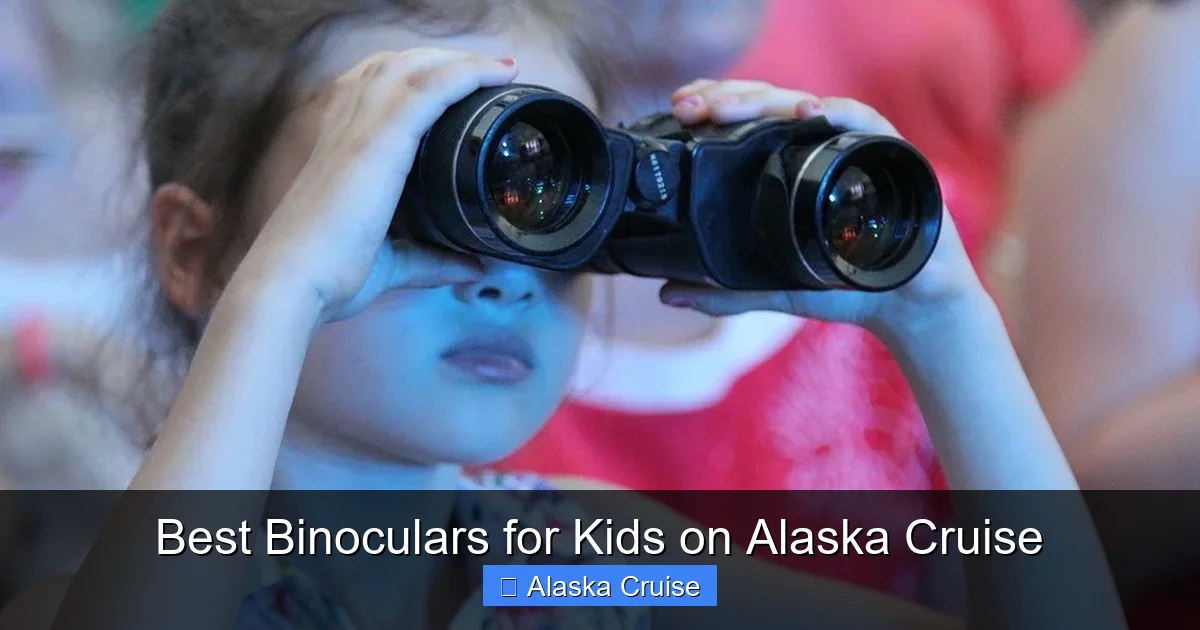
Choosing the right binoculars for kids on an Alaska cruise can make all the difference in their adventure. The ideal pair should be lightweight, easy to use, and rugged enough to handle cold, wet conditions while delivering clear views of whales, eagles, and towering glaciers.
Key Takeaways
- Size and weight matter: Kids need compact, lightweight binoculars they can comfortably hold and carry for hours.
- Durability is essential: Look for waterproof and fog-proof models that can withstand Alaska’s unpredictable weather.
- Magnification and lens size: 7×35 or 8×40 binoculars offer the best balance of clarity, brightness, and ease of use for young explorers.
- Simple focus and grip: Center focus wheels and rubberized coatings help kids operate the binoculars independently.
- Eye relief for glasses wearers: If your child wears glasses, choose models with adjustable eyecups or long eye relief.
- Fun and educational features: Some binoculars come with activity guides or cases that turn observation into a learning game.
- Value over price: You don’t need the most expensive model—just one that’s reliable, safe, and kid-friendly.
📑 Table of Contents
- Why Binoculars Are a Must-Have for Kids on an Alaska Cruise
- What to Look for in Kids’ Binoculars for an Alaska Cruise
- Top 5 Best Binoculars for Kids on an Alaska Cruise
- How to Help Kids Use Binoculars Effectively on a Cruise
- Common Mistakes to Avoid When Buying Kids’ Binoculars
- Bonus Tips for Maximizing the Alaska Cruise Experience
- Conclusion
Why Binoculars Are a Must-Have for Kids on an Alaska Cruise
An Alaska cruise is one of the most breathtaking family adventures you can take. From towering glaciers calving into icy waters to pods of orcas gliding beneath snow-capped peaks, the scenery is nothing short of magical. But for kids, the real magic happens when they can zoom in and truly see the details—the whiskers on a sea otter, the wings of a bald eagle in flight, or the spray from a humpback whale’s blowhole.
That’s where binoculars come in. While adults might casually glance at wildlife from the deck, kids thrive on discovery. Giving them their own pair of binoculars turns passive sightseeing into an active, engaging experience. It encourages curiosity, patience, and a deeper connection with nature. Plus, it keeps them entertained during long stretches at sea or while waiting for wildlife to appear.
But not all binoculars are created equal—especially when it comes to kids. You don’t want something too heavy, too complicated, or too fragile. The best binoculars for kids on an Alaska cruise are designed with small hands, developing eyes, and adventurous spirits in mind. They should be easy to use, tough enough to survive a drop on the deck, and capable of delivering bright, clear images even in low light—like during early morning fjord tours or overcast afternoons.
What to Look for in Kids’ Binoculars for an Alaska Cruise
When shopping for binoculars for your child’s Alaska cruise, it’s easy to get overwhelmed by technical terms and flashy features. But the truth is, simplicity and functionality are your best friends. Here’s what to prioritize:
Size and Weight
Kids’ arms get tired fast. Heavy binoculars may seem impressive, but they’re impractical for small users. Look for models under 1.5 pounds (around 680 grams) and compact enough to fit comfortably in a child’s hands. Roof prism binoculars are usually more compact than porro prism designs, making them ideal for travel.
For example, the Nikon Trailblazer 8×25 weighs just 10.6 ounces and fits easily into a small backpack or pocket. It’s small enough for a 6-year-old to manage but still delivers solid performance.
Durability and Weather Resistance
Alaska’s weather is famously unpredictable. One minute it’s sunny, the next it’s raining or foggy. Your binoculars need to handle moisture, cold, and the occasional splash from the ocean. Waterproof and fog-proof binoculars are a must. These models are sealed with O-rings and filled with nitrogen or argon gas to prevent internal fogging.
Rubber armor is another key feature. It protects the binoculars from bumps and drops—something that’s almost guaranteed to happen with excited kids. Brands like Vortex and Bushnell offer rugged, kid-friendly options with reinforced bodies.
Magnification and Objective Lens Size
This is where many parents go wrong. Higher magnification isn’t always better—especially for kids. While 10x or 12x binoculars might seem powerful, they’re harder to hold steady, have a narrower field of view, and can make images dimmer.
For kids on an Alaska cruise, 7x or 8x magnification is ideal. It provides enough zoom to see wildlife clearly without sacrificing stability. Pair that with a 35mm or 40mm objective lens (the front lens), and you get a bright, wide view that’s perfect for scanning the horizon.
The 8×40 configuration is a sweet spot—offering great brightness and detail without being too heavy. It’s also easier for kids to find and track moving animals like seals or birds.
Ease of Use
Kids want to use their binoculars independently. Complicated focus systems or tiny buttons can frustrate them and ruin the experience. Look for models with a large, easy-to-turn center focus wheel. Some binoculars also have a diopter adjustment for fine-tuning focus—just make sure it’s simple enough for your child to understand.
Interpupillary distance (the distance between the eyepieces) should be adjustable to fit smaller faces. Many kids’ binoculars are designed with this in mind, allowing the eyepieces to move closer together.
Eye Relief and Eyecups
If your child wears glasses, eye relief becomes crucial. Eye relief is the distance between your eye and the eyepiece where you can still see the full image. Long eye relief (15mm or more) allows glasses wearers to see clearly without removing their glasses.
Twist-up or fold-down eyecups are helpful—they let kids adjust the eyepieces to their comfort level. Some models even have soft, cushioned eyecups that feel gentle on young faces.
Field of View
A wider field of view makes it easier for kids to scan large areas and track moving animals. Measured in feet at 1,000 yards, a field of view of 350 feet or more is excellent for spotting whales or birds in flight.
For example, the Oberwerk 8×40 Kids Binoculars offer a 420-foot field of view—perfect for keeping up with fast-moving wildlife.
Top 5 Best Binoculars for Kids on an Alaska Cruise
Now that you know what to look for, here are five top-rated binoculars that are perfect for young adventurers on an Alaska cruise.
1. Vortex Optics Vanquish 8×42
The Vortex Vanquish is a standout choice for families. It’s lightweight (just 22 ounces), fully waterproof, and built with a rugged rubber armor exterior. The 8×42 configuration delivers bright, sharp images—even in low light—making it ideal for early morning wildlife tours.
What makes it great for kids? The focus wheel is large and smooth, and the interpupillary distance adjusts easily for smaller faces. Plus, Vortex offers a lifetime warranty, so you know it’s built to last.
2. Nikon Prostaff 3S 8×40
Nikon is a trusted name in optics, and the Prostaff 3S is a fantastic mid-range option. It’s compact, durable, and delivers excellent color fidelity and clarity. The 8×40 specs are perfect for Alaska’s varied lighting conditions.
The rubber coating provides a secure grip, and the turn-and-slide eyecups accommodate glasses wearers. At around $120, it’s a great value for a high-quality pair.
3. Bushnell H2O 8×42
If you’re looking for affordability without sacrificing performance, the Bushnell H2O is a winner. It’s fully waterproof and fog-proof, with a non-slip rubber grip that’s easy for small hands to hold.
The 8×42 configuration offers bright, clear views, and the large focus knob is simple to use. At under $100, it’s one of the best budget-friendly options for families.
4. Celestron Outland X 8×42
Celestron is known for astronomy gear, but their Outland X series is perfect for terrestrial use. These binoculars are lightweight, durable, and come with a carrying case and neck strap—great for keeping them secure on the ship.
The multi-coated lenses enhance brightness and clarity, and the twist-up eyecups work well for kids who wear glasses. Plus, they’re backed by Celestron’s reputation for quality.
5. Oberwerk 8×40 Kids Binoculars
Specifically designed for children, the Oberwerk 8×40 is a top pick for young explorers. It’s lightweight (1.25 pounds), has a wide field of view, and features a simple focus system.
The rubber armor is soft and comfortable, and the binoculars come with a fun activity guide to help kids learn about Alaskan wildlife. It’s a great way to turn observation into education.
How to Help Kids Use Binoculars Effectively on a Cruise
Even the best binoculars won’t be useful if your child doesn’t know how to use them. Here are some tips to help them get the most out of their new gear:
Practice Before the Trip
Let your child practice using the binoculars at home or in the backyard. Show them how to adjust the focus, hold them steady, and scan for objects. The more familiar they are, the more confident they’ll be on the cruise.
Teach Proper Holding Technique
Encourage your child to use both hands and rest their elbows on a stable surface—like the ship’s railing—to reduce shaking. This helps them see clearer images, especially at higher magnifications.
Use a Neck Strap or Lanyard
A neck strap prevents drops and makes it easier for kids to carry their binoculars around. Some models come with adjustable straps that can be shortened for smaller users.
Make It a Game
Turn wildlife spotting into a scavenger hunt. Create a checklist of animals to find—like whales, sea lions, eagles, and puffins—and reward your child when they spot one. This keeps them engaged and excited.
Pair with a Field Guide
Bring a simple field guide to Alaskan wildlife. Let your child identify what they’re seeing through the binoculars. It’s a great way to combine fun with learning.
Common Mistakes to Avoid When Buying Kids’ Binoculars
Even with the best intentions, parents often make mistakes when choosing binoculars for their kids. Here’s what to avoid:
Buying Adult Binoculars
Just because they’re on sale doesn’t mean they’re right for your child. Adult binoculars are often too heavy, have narrow eye relief, and are difficult for small hands to operate. Always choose models designed for kids or teens.
Overlooking Weather Resistance
Alaska’s climate is harsh. Skimping on waterproofing or fog-proofing can lead to disappointment—or worse, damaged optics. Always choose binoculars that are fully sealed and nitrogen-purged.
Ignoring Eye Relief
If your child wears glasses, don’t assume they can just take them off. Long eye relief ensures they can see the full image comfortably. Check the specs before buying.
Choosing High Magnification
While 10x or 12x binoculars might seem impressive, they’re harder to hold steady and have a narrower field of view. For kids, 7x or 8x is more than enough—and much easier to use.
Forgetting the Case or Strap
A carrying case protects the binoculars from scratches and damage. A neck strap prevents drops. These accessories are often overlooked but are essential for travel.
Bonus Tips for Maximizing the Alaska Cruise Experience
Binoculars are just one part of the adventure. Here are a few extra tips to make the most of your family’s Alaska cruise:
Pack a Small Backpack
Let your child carry their binoculars, a water bottle, and a snack in a small backpack. It gives them a sense of independence and keeps essentials within reach.
Plan Wildlife Viewing Times
Early mornings and late afternoons are the best times to spot wildlife. Whales are often more active during these hours, and the light is softer—perfect for viewing.
Attend Onboard Presentations
Many cruise lines offer naturalist-led talks about Alaskan wildlife. These sessions can help your child learn what to look for and make binocular use more meaningful.
Take Photos Through the Binoculars
Some smartphones can be held up to the eyepiece to take photos. It’s a fun way to capture memories—just be careful not to drop the phone!
Encourage Journaling
Give your child a small notebook to draw or write about what they see. It’s a creative way to reflect on the trip and remember the details.
Conclusion
An Alaska cruise is a once-in-a-lifetime experience, and the right binoculars can make it even more magical for your child. By choosing a pair that’s lightweight, durable, and easy to use, you’re giving them the tools to explore, discover, and connect with nature in a whole new way.
Remember, the best binoculars for kids on an Alaska cruise aren’t the most expensive or the most powerful—they’re the ones that fit comfortably in small hands, survive the elements, and spark a sense of wonder. Whether they’re spotting a breaching whale or watching a glacier calve, those moments will stay with them long after the cruise ends.
So pack those binoculars, grab your camera, and get ready for an adventure your family will never forget.
Frequently Asked Questions
What magnification is best for kids’ binoculars on an Alaska cruise?
For kids, 7x or 8x magnification is ideal. It provides enough zoom to see wildlife clearly without being too shaky or hard to hold steady. Higher magnifications like 10x can be difficult for small hands to manage.
Do kids’ binoculars need to be waterproof?
Yes, absolutely. Alaska’s weather is unpredictable, and binoculars can easily get wet from rain, sea spray, or accidental drops. Waterproof and fog-proof models ensure clear views and long-term durability.
Can kids wear glasses while using binoculars?
Yes, as long as the binoculars have long eye relief (15mm or more) and adjustable eyecups. Twist-up or fold-down eyecups allow glasses wearers to see the full image comfortably.
How do I keep my child’s binoculars safe on a cruise?
Use a neck strap or lanyard to prevent drops, and store them in a protective case when not in use. Teach your child to hold them securely and avoid swinging them around.
Are expensive binoculars worth it for kids?
Not necessarily. While high-end models offer premium optics, many mid-range binoculars provide excellent performance for kids. Focus on durability, ease of use, and weather resistance rather than price.
What age is appropriate for kids to start using binoculars?
Most children can start using binoculars around age 5 or 6, especially if the model is lightweight and simple to operate. Younger kids may enjoy them with supervision and practice.