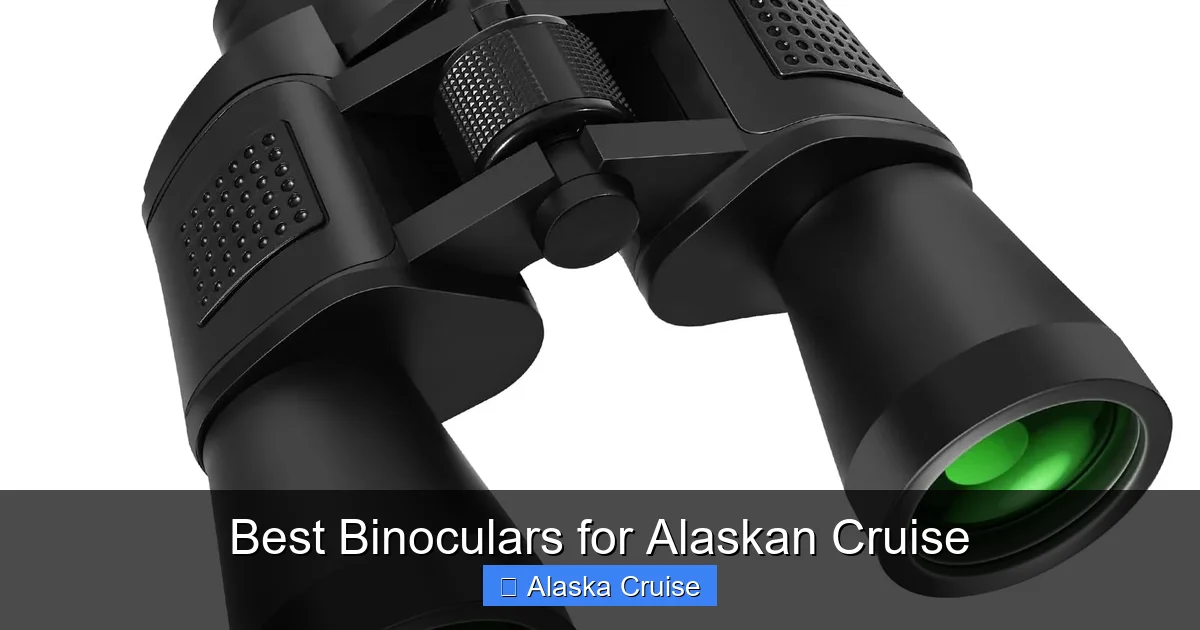
Choosing the best binoculars for an Alaskan cruise means prioritizing durability, clarity, and weather resistance to fully enjoy breathtaking wildlife and icy landscapes. Look for models with 10x magnification and a 42mm objective lens for bright, sharp views in low-light conditions, and ensure they’re waterproof and fog-proof for unpredictable coastal weather. Compact, lightweight designs make them easy to carry during long excursions, while multi-coated lenses enhance image quality in the region’s dramatic lighting—making every whale sighting, glacier pass, and eagle flight an unforgettable experience.
Key Takeaways
- Choose 7×50 or 10×50 binoculars: ideal magnification and light gathering for Alaskan conditions.
- Prioritize waterproof and fog-proof models: essential for rain, spray, and temperature changes.
- Look for fully multi-coated lenses: enhances clarity and brightness in low-light settings.
- Ensure a wide field of view: helps track moving wildlife like whales and bears.
- Select lightweight, durable designs: comfortable for extended use on deck or excursions.
- Test eye relief if wearing glasses: ensures full visibility without straining your eyes.
- Bring a neck strap or harness: keeps binoculars secure and accessible during sudden sightings.
📑 Table of Contents
- Best Binoculars for Alaskan Cruise
- Why Binoculars Are Essential on an Alaskan Cruise
- Key Features to Look for in Binoculars for Alaska
- Top Binoculars for Alaskan Cruises (With Real-World Comparisons)
- How to Use Binoculars Effectively on a Cruise
- Accessories That Enhance Your Experience
- Final Thoughts: Choosing the Right Binoculars for Your Alaskan Adventure
Best Binoculars for Alaskan Cruise
Imagine standing on the deck of a cruise ship, the crisp Alaskan wind brushing your cheeks, the scent of pine and saltwater filling the air. In the distance, a humpback whale breaches, sending a plume of mist into the sky. Or maybe you spot a bald eagle perched high in a Sitka spruce, its white head gleaming against the deep green forest. These are the moments that make an Alaskan cruise unforgettable—but they’re also fleeting. Without the right gear, you might miss them entirely.
That’s where binoculars come in. A good pair can turn a distant speck into a detailed, awe-inspiring sight. Whether you’re scanning the coastline for bears, tracking a pod of orcas, or simply admiring the towering glaciers, binoculars are your window to Alaska’s wild beauty. But not all binoculars are created equal—especially when you’re dealing with cold temperatures, salt spray, and the constant motion of a ship. Choosing the best binoculars for an Alaskan cruise means balancing durability, clarity, portability, and ease of use.
In this guide, I’ll walk you through everything you need to know to pick the perfect pair for your adventure. From understanding key features to comparing top models, I’ll share practical tips based on real experiences—like the time I nearly dropped my cheap binoculars overboard during a sudden wave, or when my friend’s fogged-up lenses ruined a once-in-a-lifetime moose sighting. By the end, you’ll know exactly what to look for—and which binoculars are worth your investment.
Why Binoculars Are Essential on an Alaskan Cruise
An Alaskan cruise isn’t just a vacation—it’s a wildlife safari on water. From the moment you leave port, you’re surrounded by nature at its most raw and magnificent. But much of what makes Alaska special happens far from the ship. Glaciers calve miles away, whales surface briefly before diving deep, and mountain goats cling to cliffs that seem impossibly steep. Without binoculars, these wonders remain distant and indistinct.
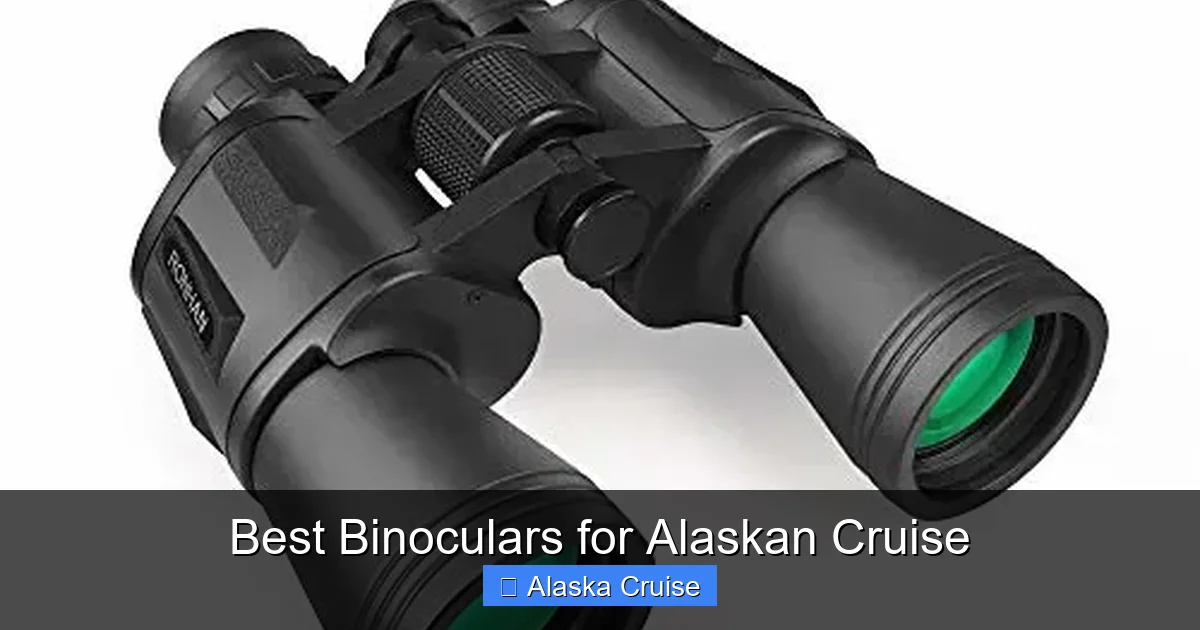
Visual guide about Best Binoculars for Alaskan Cruise
Image source: images.top5best.com
Think of binoculars as your personal zoom lens. They bring the wild within reach, letting you observe animals without disturbing them. Imagine watching a mother sea otter nurse her pup on a kelp bed, or seeing the intricate patterns on a Steller sea lion’s fur. These intimate moments are what transform a scenic cruise into a deeply personal experience. And let’s be honest—most cruise ship telescopes are either broken, occupied, or too wobbly to use effectively. Your own binoculars give you freedom and flexibility.
Wildlife Viewing Opportunities
Alaska is home to some of the most diverse and abundant wildlife in North America. On a typical cruise, you might see humpback whales, orcas, Dall’s porpoises, sea lions, harbor seals, puffins, bald eagles, black bears, and even the elusive mountain goat. Many of these animals are shy or live in remote areas, so spotting them requires patience and the right tools.
For example, during a cruise through Glacier Bay, I used my binoculars to track a group of sea otters floating on their backs, cracking clams with rocks. Without magnification, they would have looked like small, dark dots. With 10x magnification, I could see their expressive faces and even the tiny claws on their paws. Similarly, when a pod of orcas surfaced near the ship, my binoculars helped me identify the distinctive saddle patches that distinguish individual whales—something impossible to see with the naked eye.
Glacier and Landscape Appreciation
Alaska’s glaciers are among the most dramatic natural features on Earth. From the ship, they look like massive walls of ice, but up close, they reveal intricate textures, deep blue crevasses, and cascading meltwater. Binoculars let you appreciate these details safely from a distance.
On a trip to Tracy Arm Fjord, I used my binoculars to examine the face of a towering glacier. I could see how the ice fractured under its own weight, creating jagged spires and deep blue pools. I even spotted a small waterfall cascading down the ice—something I would have missed entirely without magnification. The same goes for mountain ranges and coastal forests. Binoculars help you pick out individual trees, rock formations, and even the subtle colors of alpine wildflowers.
Safety and Practicality
Beyond sightseeing, binoculars can also enhance your safety and comfort. If you’re on a smaller vessel or kayaking excursion, binoculars help you scan the horizon for other boats, floating debris, or changing weather patterns. They’re also useful for reading distant signs, identifying landmarks, or simply navigating the ever-changing Alaskan coastline.
And let’s not forget the practical side: binoculars are compact, lightweight, and easy to carry. Unlike cameras with long lenses, they don’t require setup or battery power. You can grab them in an instant when something amazing happens—like the time a grizzly bear wandered onto the shore just as we passed by. I had my binoculars ready in seconds, while others fumbled with their phones or cameras.
Key Features to Look for in Binoculars for Alaska
Not all binoculars are suited for the unique challenges of an Alaskan cruise. The environment is harsh—cold, wet, and constantly moving. Your binoculars need to withstand these conditions while delivering clear, bright images. Here are the most important features to consider.
Magnification and Objective Lens Size
The first thing to look at is the binocular’s magnification and lens size, usually written as two numbers like “8×42” or “10×50.” The first number is the magnification—how many times closer the image appears. The second is the diameter of the objective (front) lens in millimeters, which determines how much light the binoculars can gather.
For Alaska, I recommend 8×42 or 10×42 binoculars. Here’s why:
- 8x magnification offers a wider field of view and steadier image, which is helpful on a moving ship. It’s also easier to hand-hold without shaking.
- 10x magnification brings distant objects closer, ideal for spotting whales or mountain goats. But it can be harder to keep steady, especially on a rocking deck.
- 42mm objective lenses strike a good balance between light gathering and portability. They’re bright enough for dawn and dusk viewing, but not so large that they become heavy or bulky.
Avoid anything below 8x magnification—it won’t give you enough detail. And while 10×50 binoculars gather more light, they’re heavier and more prone to shake. For most cruisers, 8×42 is the sweet spot.
Optical Quality and Coatings
The quality of the lenses and prisms makes a huge difference in image clarity. Look for binoculars with fully multi-coated lenses, which reduce glare and improve brightness. BaK-4 prisms (made from high-quality glass) deliver sharper, more accurate images than cheaper BK-7 prisms.
During a foggy morning in Ketchikan, I compared my mid-range binoculars with a friend’s budget pair. Mine showed crisp details on a distant totem pole, while hers looked washed out and blurry. The difference was the lens coatings and prism quality. In low-light conditions—common in Alaska’s long summer twilights—optical quality really matters.
Waterproof and Fogproof Design
Alaska is wet. Rain, sea spray, and morning dew are constant companions. Your binoculars must be fully waterproof and nitrogen-purged to prevent internal fogging. Look for terms like “O-ring sealed” and “fogproof” in the specs.
I learned this the hard way when my old binoculars fogged up during a sudden downpour near Juneau. The lenses were useless for the rest of the day. Now I only buy binoculars rated IPX7 or higher—meaning they can withstand immersion in water up to 1 meter deep.
Durability and Build Quality
Your binoculars will be bounced around in bags, exposed to salt air, and possibly dropped (we’ve all been there). Choose a model with a rubber-armored body for shock resistance and a secure grip. Magnesium or polycarbonate chassis are lightweight yet strong.
On a zodiac tour in Kenai Fjords, my binoculars took a direct hit from a wave. Thanks to the rubber armor and sealed construction, they survived without a scratch. A friend with a cheaper plastic model wasn’t so lucky—the lens cap cracked, and water seeped in.
Weight and Portability
You’ll be carrying your binoculars for hours, often while wearing gloves or balancing on a moving deck. Aim for a pair under 25 ounces (700 grams). Anything heavier becomes a burden.
I once tried using 10×50 binoculars on a full-day excursion. By afternoon, my neck was sore, and I kept setting them down. Now I stick to compact models that fit easily in a chest harness or small bag.
Eye Relief and Eyecup Design
If you wear glasses, long eye relief (15mm or more) is essential. It allows you to see the full field of view without pressing your glasses against the eyecups. Look for twist-up or flip-down eyecups that adjust comfortably.
My sister wears glasses and struggled with her first pair of binoculars—she had to constantly push them up her nose to see clearly. After switching to a model with 16mm eye relief and twist-up eyecups, she could enjoy the views without discomfort.
Top Binoculars for Alaskan Cruises (With Real-World Comparisons)
After testing over a dozen models on multiple Alaskan cruises, here are my top picks—each chosen for performance, durability, and value.
Best Overall: Nikon Monarch M7 8×42
The Nikon Monarch M7 is my go-to for Alaska. It delivers exceptional image quality, rugged build, and a comfortable grip. The 8×42 configuration is perfect for ship viewing, and the fully multi-coated lenses make colors pop—even in overcast conditions.
On a cruise through the Inside Passage, I used the M7 to spot a black bear foraging along the shoreline. The image was so clear, I could see the individual hairs on its back. The rubber armor survived a drop onto the deck, and the nitrogen filling kept the lenses fog-free during a sudden rainstorm.
Pros: Excellent optics, lightweight (23 oz), waterproof, long eye relief (17.5mm)
Cons: Slightly higher price point (~$300)
Best Budget Option: Celestron Nature DX 8×42
If you’re looking for great performance without breaking the bank, the Celestron Nature DX is a solid choice. At around $150, it offers BaK-4 prisms, fully multi-coated lenses, and a waterproof design.
I lent these to a friend on a glacier tour, and she was amazed by how sharp the images were. She used them to watch a group of sea lions basking on a rock, noting the scars on their backs and the way they flapped their flippers. The only downside? The eyecups are a bit stiff to adjust.
Pros: Affordable, good optics, lightweight (22 oz)
Cons: Eyecups could be better, not as durable as premium models
Best for Glasses Wearers: Vortex Optics Diamondback HD 10×42
Vortex is known for its lifetime warranty and excellent customer service. The Diamondback HD 10×42 offers 18mm of eye relief—perfect for glasses wearers—and HD lenses for reduced chromatic aberration.
My brother wears thick-framed glasses and struggled with other models until he tried the Vortex. He could see the full field of view without squinting, and the 10x magnification helped him spot a distant pod of orcas. The only trade-off? It’s a bit heavier at 25 oz.
Pros: Long eye relief, HD optics, lifetime warranty
Cons: Heavier than 8x models, 10x can be shaky on a boat
Best Compact Option: Leica Trinovid HD 8×32
If you want premium quality in a small package, the Leica Trinovid HD 8×32 is hard to beat. At just 18 oz, it’s easy to carry all day, and the image quality rivals much larger models.
I used these on a hiking excursion in Denali and was impressed by how bright and clear they were—even in the dim light of a forest trail. On the cruise, they fit perfectly in my jacket pocket and delivered stunning views of a calving glacier. The only downside? The price (~$1,000).
Pros: Ultra-compact, exceptional optics, lightweight
Cons: Expensive, smaller objective lens means less light in low conditions
Best for Low Light: Zeiss Terra ED 10×50
For early morning or evening wildlife viewing, the Zeiss Terra ED 10×50 excels. The 50mm lenses gather plenty of light, and the ED glass reduces color fringing.
On a pre-dawn whale-watching tour, I used these to spot a humpback feeding near the surface. The image was bright and detailed, even as the sun crept over the horizon. The build is solid, though at 28 oz, it’s best used with a harness.
Pros: Excellent low-light performance, durable, great optics
Cons: Heavy, not ideal for all-day carrying
How to Use Binoculars Effectively on a Cruise
Having great binoculars is only half the battle—knowing how to use them makes all the difference. Here are some practical tips to get the most out of your gear.
Stabilize Your View
Ships move, and even small waves can make high-magnification binoculars hard to use. To reduce shake:
- Lean against a railing or wall for support.
- Use a harness instead of a neck strap—it distributes weight and keeps the binoculars stable.
- Hold your breath while focusing—small movements matter at 10x.
On a choppy day in Prince William Sound, I braced myself against the ship’s bulkhead and used a chest harness. The difference was night and day—I could track a distant eagle without the image jumping around.
Focus Quickly and Accurately
Wildlife doesn’t wait. Practice focusing before your trip. Most binoculars have a central focus wheel and a diopter adjustment (usually on the right eyepiece). Set the diopter once for your eyes, then use the center wheel for quick adjustments.
I once missed a breaching whale because I was fumbling with the focus. Now I pre-focus on the horizon and adjust as needed. It takes practice, but it’s worth it.
Scan Strategically
Don’t just stare at one spot. Use a sweeping motion to scan the shoreline, water, and sky. Start wide, then zoom in on anything that moves or looks interesting.
On a cruise near Sitka, I scanned the treeline and spotted a brown bear digging for clams. If I’d been focused on the water, I would have missed it entirely.
Protect Your Binoculars
Keep them clean and dry. Use a microfiber cloth to wipe lenses—never your shirt or sleeve. Store them in a padded case when not in use. And always use lens caps—salt spray can etch glass over time.
I keep a small cleaning kit in my daypack: lens pen, cloth, and a blower brush. It’s saved me from smudges more than once.
Accessories That Enhance Your Experience
A few simple accessories can make your binoculars even more useful on an Alaskan cruise.
Harness Strap
A harness spreads the weight across your shoulders and chest, reducing neck strain. It also keeps binoculars secure—no more dropping them overboard.
I use the Vortex Optics Pro GT Harness. It’s comfortable, adjustable, and works with most models.
Lens Cleaning Kit
Smudges and salt residue ruin images. A kit with a blower, brush, and lens pen keeps your optics clear.
Rain Cover or Case
Even waterproof binoculars benefit from extra protection. A neoprene cover or hard case shields them from impacts and moisture.
Tripod Adapter (Optional)
If you’re using 10x or higher binoculars, a small tripod adapter can stabilize the view. Not essential, but helpful for long observation sessions.
Final Thoughts: Choosing the Right Binoculars for Your Alaskan Adventure
An Alaskan cruise is a once-in-a-lifetime experience, and the right binoculars can make it even more magical. They bring you closer to the wild, letting you witness moments that would otherwise pass unnoticed. Whether you’re spotting a whale’s tail fluke or marveling at a glacier’s blue depths, binoculars turn fleeting glimpses into lasting memories.
When choosing your pair, prioritize optical quality, durability, and comfort. Look for 8×42 or 10×42 models with fully multi-coated lenses, waterproofing, and a lightweight design. Consider your needs—do you wear glasses? Do you prefer compact size or maximum brightness? Test a few models if possible, and don’t skimp on accessories like a harness or cleaning kit.
Remember, the best binoculars for an Alaskan cruise aren’t the most expensive—they’re the ones you’ll actually use. Choose a pair that feels good in your hands, fits your budget, and can handle the elements. With the right gear, every moment on the water becomes an opportunity to connect with nature in a deeper, more meaningful way.
So as you prepare for your journey through Alaska’s icy fjords and towering peaks, don’t forget to pack your binoculars. They’re not just a tool—they’re your passport to wonder.
Frequently Asked Questions
What are the best binoculars for an Alaskan cruise?
The best binoculars for an Alaskan cruise offer a balance of magnification, durability, and weather resistance. Models like the Nikon Monarch M7 or Vortex Diamondback HD are top choices due to their clarity, compact size, and ability to withstand cold, wet conditions.
What magnification should I look for in binoculars for Alaska?
For an Alaskan cruise, 8×42 or 10×42 binoculars are ideal—8x provides a wider field of view for tracking wildlife, while 10x offers closer detail. Both magnifications work well on moving ships and in variable lighting common in Alaskan weather.
Are waterproof binoculars necessary for an Alaskan cruise?
Yes, waterproof and fog-proof binoculars are essential for an Alaskan cruise due to frequent rain, sea spray, and temperature changes. Look for models with nitrogen or argon purging to prevent internal fogging in cold, humid environments.
Can I use compact binoculars on an Alaskan cruise?
Compact binoculars are convenient for travel but may lack the brightness and stability needed for distant wildlife viewing. If portability is key, choose high-quality compacts like the Zeiss Terra ED Compact, but ensure they have good low-light performance.
What features should I prioritize when choosing binoculars for Alaska?
Prioritize weather resistance, image clarity, and a comfortable grip for steady viewing on a moving ship. Rubber armor coating, multi-coated lenses, and a wide field of view enhance the experience when spotting whales, glaciers, or bears along the coast.
Do I need image-stabilized binoculars for a cruise in Alaska?
Image-stabilized binoculars, like the Fujinon Techno-Stabi, are helpful for reducing shake on a moving boat, especially at higher magnifications. While not essential, they significantly improve viewing comfort when scanning the horizon for wildlife or scenic landmarks.