Choosing the best backpack for an Alaska cruise means balancing durability, weather resistance, and comfort. Whether you’re exploring glaciers, hiking coastal trails, or strolling through charming port towns, the right pack ensures your essentials stay dry and accessible. This guide breaks down top picks and key features to help you pick the perfect companion for your Alaskan adventure.
Key Takeaways
- Waterproofing is essential: Alaska’s weather is unpredictable, so a water-resistant or fully waterproof backpack protects your gear from rain, snow, and sea spray.
- Comfort matters for long days: Look for padded shoulder straps, a breathable back panel, and a hip belt to reduce strain during extended excursions.
- Size should match your needs: A 20–35L daypack is ideal for most shore excursions, offering enough space for layers, snacks, and camera gear without being bulky.
- Durability is non-negotiable: Rugged materials like ripstop nylon or Cordura withstand rough handling and rocky terrain.
- Organization features save time: Multiple compartments, quick-access pockets, and secure closures help you stay organized in changing conditions.
- Security features add peace of mind: Lockable zippers, hidden pockets, and slash-resistant fabric deter theft in crowded ports.
- Eco-conscious options are available: Several top brands now offer sustainable backpacks made from recycled materials—great for environmentally aware travelers.
📑 Table of Contents
- Why the Right Backpack Makes All the Difference on an Alaska Cruise
- What to Look for in the Best Backpack for Alaska Cruise Adventures
- Top 5 Backpacks for Alaska Cruise Travelers
- Packing Smart: What to Bring in Your Alaska Cruise Backpack
- Tips for Using Your Backpack on Shore Excursions
- Eco-Friendly and Sustainable Options
- Final Thoughts: Your Backpack, Your Adventure
Why the Right Backpack Makes All the Difference on an Alaska Cruise
An Alaska cruise isn’t your average beach vacation. It’s a journey through some of the most breathtaking—and unforgiving—natural landscapes on Earth. From misty fjords and towering glaciers to dense temperate rainforests and rugged mountain trails, every day brings new adventures. And while your cruise ship provides comfort and luxury, the real magic happens when you step ashore.
That’s where your backpack comes in.
Imagine this: You’re on a guided hike near Juneau, camera in hand, ready to capture a bald eagle soaring above a glacial lake. A sudden drizzle starts—nothing unusual in Alaska—but your phone, snacks, and extra layers are safely tucked inside a water-resistant pack. No panic. No soggy gear. Just pure enjoyment.
Now picture the opposite: a flimsy bag with weak zippers that snag, straps that dig into your shoulders, and no protection from the elements. Your sunscreen melts in the midday sun, your map gets soaked, and by lunchtime, your back aches. Not exactly the Alaskan dream.
The truth is, the best backpack for an Alaska cruise isn’t just a convenience—it’s a necessity. It’s your mobile base camp, your dry storage unit, and your hands-free companion through every port and trail. Whether you’re zodiac-ing through icy waters, exploring historic towns like Skagway, or spotting whales near Ketchikan, your pack needs to be ready for anything.
What to Look for in the Best Backpack for Alaska Cruise Adventures
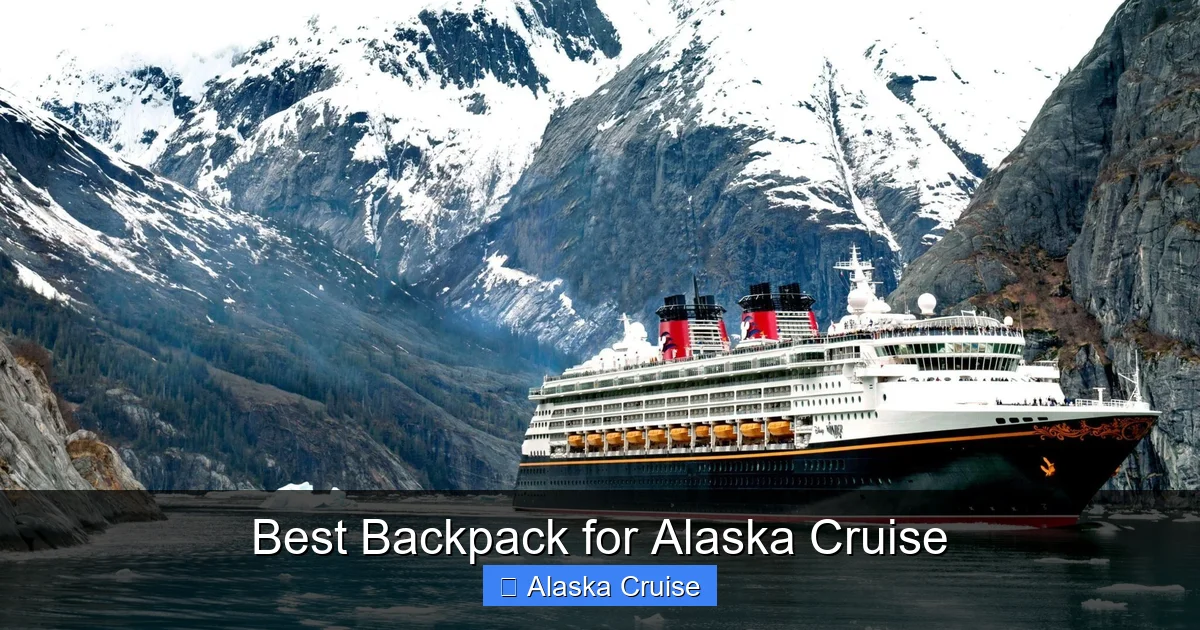
Visual guide about Best Backpack for Alaska Cruise
Image source: eatsleepcruise.com
Choosing the right backpack starts with understanding what Alaska throws at you. The weather can shift from sunny to stormy in minutes. Trails can be muddy, rocky, or steep. And you’ll often be carrying your pack for hours at a time. So, what features matter most?
Weather Resistance: Your First Line of Defense
Alaska is famous for its rain. Coastal regions like Ketchikan receive over 160 inches of precipitation annually. Even in summer, afternoon showers are common. That’s why waterproofing isn’t optional—it’s essential.
Look for backpacks with:
– Water-resistant coatings (like DWR—durable water repellent)
– Sealed or taped seams to prevent leaks
– Roll-top closures or waterproof zippers
– Optional rain covers (some packs include them; others sell separately)
For example, the Osprey Daylite Plus features a water-resistant main compartment and comes with a built-in rain cover. It’s lightweight, compact, and perfect for day trips. Meanwhile, the Patagonia Arbor Grande Pack uses 100% recycled nylon with a water-repellent finish, ideal for eco-conscious travelers who don’t want to sacrifice performance.
Comfort and Fit: Because You’ll Be Wearing It All Day
You might think a backpack is just a bag—but after six hours of hiking with a poorly designed pack, you’ll know the difference. Comfort is key, especially when you’re exploring uneven terrain or climbing stairs in port towns.
Key comfort features include:
– Padded, adjustable shoulder straps
– A ventilated back panel (like Osprey’s AirScape or Deuter’s AirContact)
– A sternum strap to stabilize the load
– A hip belt to transfer weight from your shoulders to your hips
A well-fitted pack should sit snugly against your back without bouncing or shifting. Try it on with weight inside—many outdoor retailers let you test packs with sandbags. If you’re buying online, check sizing guides and read reviews from people with similar body types.
For longer excursions, consider a pack with a torso-adjustable frame, like the Gregory Zulu 30. It’s slightly larger (30L) but offers exceptional support and airflow, making it a favorite among hikers and cruise travelers alike.
Size and Capacity: Big Enough, But Not Too Big
One of the biggest mistakes travelers make? Overpacking.
You don’t need a 60L expedition pack for a day in Glacier Bay. Most shore excursions last 4–8 hours, and you’ll likely return to your ship for meals and rest. A 20–35L daypack is usually perfect.
Here’s what that size can hold:
– A lightweight rain jacket and fleece layer
– Water bottle or hydration bladder
– Snacks and a small lunch
– Camera, phone, and portable charger
– Sunscreen, sunglasses, and a hat
– A small first-aid kit or personal items
Larger packs (40L+) can be useful if you’re combining your cruise with a land tour or planning multi-day hikes. But for most cruisers, a compact, well-organized daypack is the way to go.
Pro tip: Choose a pack with a front-loading design or wide mouth opening. It’s much easier to find items without unpacking everything—especially when you’re in a hurry to catch a wildlife sighting.
Durability: Built to Last Through the Wild
Alaska’s terrain is tough. Rocks, branches, and wet conditions can wear down weak materials fast. Your backpack should be made from tough, abrasion-resistant fabrics.
Top materials include:
– Ripstop nylon (lightweight and tear-resistant)
– Cordura (heavy-duty and long-lasting)
– Polyester with reinforced stitching
Check the denier rating—a measure of fabric thickness. A 300D or higher rating indicates good durability. Also, inspect the zippers: YKK zippers are industry-standard for strength and reliability.
Brands like The North Face, Deuter, and Arc’teryx are known for building rugged, long-lasting packs. The North Face Borealis, for example, uses 600D polyester and features reinforced stress points, making it a solid choice for frequent travelers.
Organization and Accessibility: Stay Efficient on the Go
When you’re exploring a new port or hiking a trail, you don’t want to dig through your entire pack to find your passport or lip balm. Smart organization keeps you efficient and stress-free.
Look for packs with:
– Multiple compartments (main, front, side)
– Quick-access pockets for phones, tickets, or snacks
– Laptop or tablet sleeve (if you plan to work or journal)
– External attachment points for trekking poles or water bottles
The Deuter Speed Lite 20 excels in this area. It has a dedicated hydration sleeve, a front stash pocket, and side mesh pockets for bottles. The REI Co-op Flash 22 is another favorite, with a sleek design, zippered top pocket, and easy-access side zippers.
Bonus: Some packs include a “floating” top lid that expands for extra storage—great if you pick up souvenirs or need to pack a wet rain jacket separately.
Security Features: Protect Your Valuables in Crowded Ports
Alaska’s ports—like Juneau, Ketchikan, and Skagway—can get busy. Tourists flock to shops, cafes, and historic sites, and pickpockets know it. A secure backpack gives you peace of mind.
Security features to consider:
– Lockable zippers (you can add a small travel lock)
– Hidden or slash-resistant pockets for passports and cash
– Cut-resistant straps and fabric
– RFID-blocking pockets (for credit cards and passports)
The Pacsafe Venturesafe EXP32 is a top pick for security-minded travelers. It features lockable zippers, slashguard material, and a hidden pocket behind the back panel. While it’s on the larger side (32L), it’s ideal for cruisers who want maximum protection.
Even if you don’t go full anti-theft, choose a pack with discreet zippers and avoid flashy logos that draw attention.
Top 5 Backpacks for Alaska Cruise Travelers
Now that you know what to look for, here are five of the best backpacks for Alaska cruises—each chosen for performance, comfort, and real-world usability.
1. Osprey Daylite Plus
- Capacity: 20L
- Weight: 1.1 lbs
- Best for: Lightweight day trips and port exploration
- Why it’s great: Ultra-lightweight, water-resistant, includes a rain cover, and has a comfortable suspension system. The front panel pocket is perfect for quick access to maps or snacks.
- Bonus: Compatible with Osprey’s travel packs for easy attachment during transit.
2. Patagonia Arbor Grande Pack
- Capacity: 25L
- Weight: 1.8 lbs
- Best for: Eco-conscious travelers and urban hikes
- Why it’s great: Made from 100% recycled materials, water-repellent, and stylish enough for city walks. The padded laptop sleeve fits up to a 15-inch computer.
- Bonus: Patagonia’s Ironclad Guarantee means they’ll repair or replace it if it wears out.
3. Gregory Zulu 30
- Capacity: 30L
- Weight: 2.6 lbs
- Best for: Longer hikes and multi-activity days
- Why it’s great: Excellent ventilation, adjustable torso length, and a supportive hip belt. The front stretch pocket is perfect for a rain jacket or extra layer.
- Bonus: Includes a hydration reservoir sleeve and tube routing.
4. The North Face Borealis
- Capacity: 28L
- Weight: 2.1 lbs
- Best for: All-around use and durability
- Why it’s great: Rugged 600D fabric, padded laptop compartment, and a comfortable suspension system. The front pocket has great organization for small items.
- Bonus: Reflective details for visibility in low light.
5. Pacsafe Venturesafe EXP32
- Capacity: 32L
- Weight: 2.8 lbs
- Best for: Security-focused travelers and longer excursions
- Why it’s great: Full anti-theft features, lockable zippers, and slash-resistant material. The expandable design adds extra space when needed.
- Bonus: Comes with a portable safe anchor to secure your pack to a fixed object.
Packing Smart: What to Bring in Your Alaska Cruise Backpack
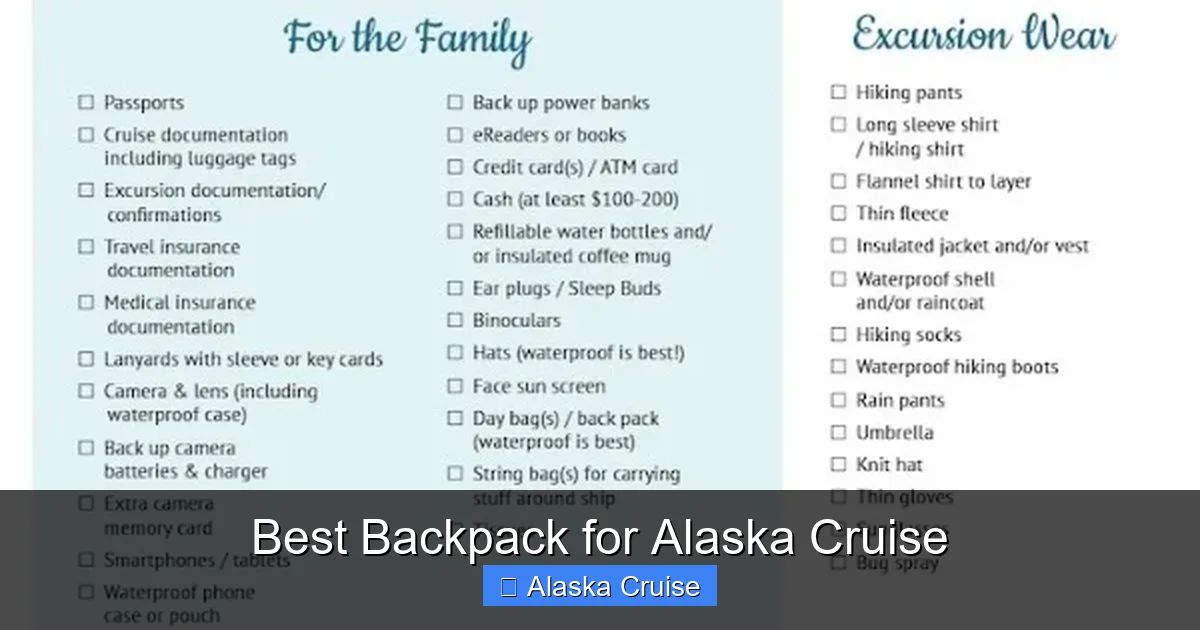
Even the best backpack won’t help if you’re not packing wisely. Here’s a practical checklist of essentials to carry every day:
- Weather-appropriate clothing: Pack layers—moisture-wicking base, insulating mid-layer (fleece or down), and a waterproof outer shell. Alaska’s temperature can vary by 20°F in a single day.
- Footwear: Wear sturdy, broken-in hiking shoes or boots. Bring water-resistant options if you plan to walk on wet docks or trails.
- Hydration: Carry a reusable water bottle or hydration bladder. Many ships and ports offer refill stations.
- Sun protection: Even on cloudy days, UV rays reflect off snow and water. Bring sunscreen, sunglasses, and a wide-brimmed hat.
- Camera gear: A compact camera or smartphone with a good zoom lens is ideal. Consider a waterproof phone case or dry bag for extra protection.
- Snacks: Energy bars, nuts, or fruit keep you fueled during long excursions. Avoid messy or perishable items.
- Personal items: Hand sanitizer, tissues, lip balm, and a small first-aid kit (band-aids, pain relievers, motion sickness meds).
- Documents: Keep your passport, cruise card, and excursion tickets in a secure, waterproof pouch.
Pro tip: Use packing cubes or dry bags inside your backpack to separate wet gear, electronics, and clean clothes. This keeps everything organized and protected.
Tips for Using Your Backpack on Shore Excursions
Your backpack isn’t just for carrying stuff—it’s a tool for enhancing your experience. Use it wisely with these tips:
Keep It Light
The heavier your pack, the more tired you’ll get. Only bring what you’ll actually use. If you’re not sure, leave it behind. You can always buy a souvenir water bottle or snack in port.
Wear It Properly
Adjust the straps so the pack sits high on your back, just below your shoulders. Tighten the hip belt to take pressure off your shoulders. A well-fitted pack feels like part of you—not a burden.
Use the Right Pocket for the Right Item
Store frequently used items (phone, snacks, map) in front or side pockets. Keep valuables (passport, cash) in hidden or zippered compartments. Heavy items should go close to your back for better balance.
Be Mindful of Space on Tours
On zodiac boats or small tour buses, space is limited. Choose a compact pack that fits under your seat or at your feet. Avoid bulky packs that block aisles or other passengers.
Protect Your Gear from Saltwater and Spray
Even if your pack is water-resistant, saltwater can damage zippers and fabric over time. Rinse your backpack with fresh water after beach visits or boat tours. Let it air dry completely before storing.
Charge Devices Before You Go
Many excursions don’t have charging options. Bring a fully charged power bank to keep your phone or camera powered throughout the day.
Eco-Friendly and Sustainable Options
More travelers are choosing gear that aligns with their values. Fortunately, several brands now offer sustainable backpacks made from recycled materials.
The Patagonia Arbor Grande and REI Co-op Flash 22 are both made with recycled fabrics and eco-friendly dyes. Cotopaxi takes sustainability a step further by using remnant fabrics to create colorful, one-of-a-kind packs—each one supports fair labor practices.
Choosing a sustainable backpack isn’t just good for the planet—it’s a statement. It shows you care about the places you’re visiting and want to help preserve them for future travelers.
Final Thoughts: Your Backpack, Your Adventure
An Alaska cruise is a once-in-a-lifetime experience. From the roar of calving glaciers to the quiet beauty of a misty forest, every moment is worth savoring. And the right backpack ensures you’re ready for it all—comfortably, securely, and confidently.
The best backpack for an Alaska cruise isn’t the most expensive or the flashiest. It’s the one that fits your body, protects your gear, and keeps up with your adventures. Whether you choose a minimalist 20L daypack or a feature-rich 32L model, prioritize waterproofing, comfort, and durability.
Remember: your backpack is more than a bag. It’s your companion through wild landscapes, your shield against the elements, and your key to freedom on the go. Choose wisely, pack smart, and get ready to explore Alaska like a true adventurer.
Frequently Asked Questions
What size backpack is best for an Alaska cruise?
A 20–35L daypack is ideal for most Alaska cruise excursions. It’s large enough to hold essentials like layers, snacks, and a camera, but compact enough to carry comfortably on hikes and tours.
Do I need a waterproof backpack for Alaska?
Yes. Alaska’s weather is unpredictable, with frequent rain and sea spray. A water-resistant or waterproof backpack protects your electronics, clothes, and documents from moisture.
Can I bring my backpack on shore excursions?
Absolutely. Most tour operators allow backpacks, but check size restrictions for zodiac boats or small vehicles. Choose a compact, lightweight pack that fits under your seat.
Should I choose a backpack with a hip belt?
If you plan to hike or walk for long periods, a hip belt helps distribute weight and reduce shoulder strain. For short walks in port, it’s less critical.
Are anti-theft backpacks worth it for Alaska?
In busy ports like Juneau or Skagway, anti-theft features like lockable zippers and hidden pockets add peace of mind. They’re especially useful if you carry valuables like passports or cameras.
Can I use my backpack as a carry-on on the cruise ship?
Yes, most cruise lines allow backpacks as personal items. Just ensure it fits under your bed or in your cabin storage. Avoid overpacking to keep it lightweight and easy to stow.