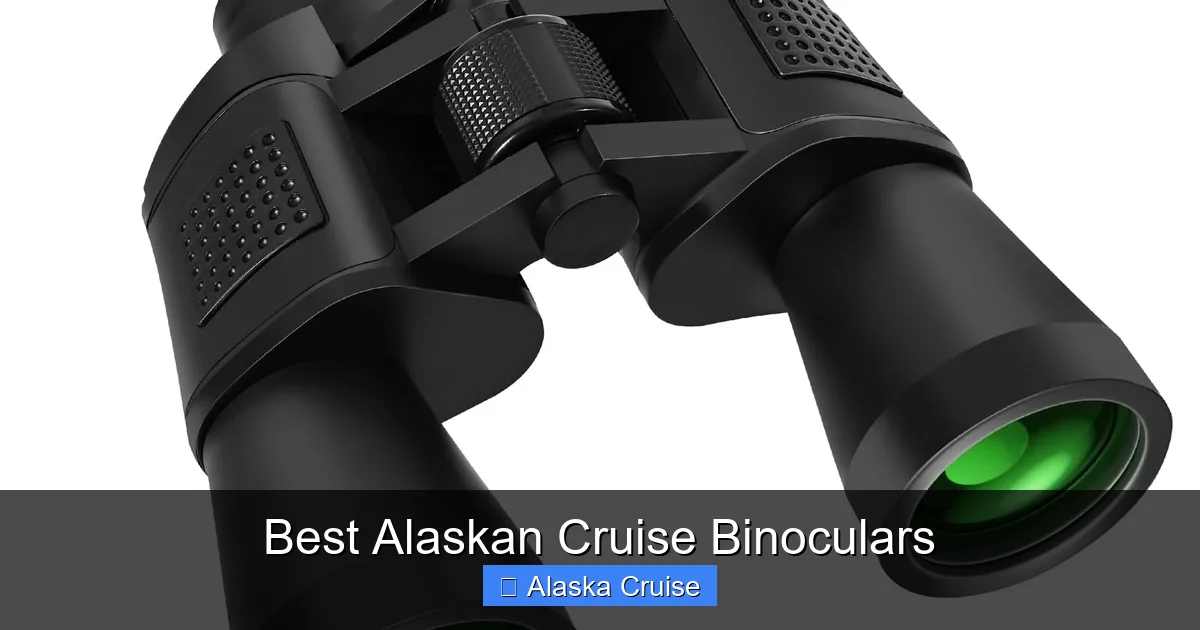
Choosing the right binoculars can transform your Alaskan cruise from good to unforgettable. Whether you’re scanning for humpback whales, watching sea otters play, or marveling at towering glaciers, the best Alaskan cruise binoculars deliver crisp, bright images in all conditions. This guide helps you find the perfect pair for your journey.
Imagine standing on the deck of your cruise ship, the crisp Alaskan air filling your lungs, as a pod of orcas glides through the icy waters just off the bow. You raise your binoculars—only to find the image shaky, blurry, or too dim to make out details. Frustrating, right? That’s why choosing the best Alaskan cruise binoculars isn’t just a nice-to-have—it’s a must-have for anyone serious about making the most of their Alaskan adventure.
Alaska’s rugged coastline, abundant wildlife, and dramatic landscapes demand optics that can keep up. From the towering spires of Glacier Bay to the playful sea lions lounging on rocky outcrops, there’s always something worth seeing up close. But the environment is tough—cold temperatures, sudden rain, sea spray, and long days of use mean your binoculars need to be tough too. The right pair won’t just help you spot a bald eagle soaring overhead; they’ll let you see the individual feathers on its wings.
In this guide, we’ll walk you through everything you need to know to pick the perfect binoculars for your Alaskan cruise. We’ll cover the key features to look for, compare top models, and share real-world tips from travelers who’ve been there. Whether you’re a first-time cruiser or a seasoned explorer, this article will help you find binoculars that enhance every moment of your journey.
Key Takeaways
- Magnification and objective lens size matter: 8×42 or 10×42 binoculars offer the ideal balance of power and light gathering for Alaskan conditions.
- Waterproof and fog-proof construction is essential: Look for nitrogen-purged, O-ring sealed models to handle rain, spray, and humidity.
- Compact and lightweight designs enhance comfort: You’ll be holding them for hours—choose a pair that’s easy to carry and use.
- Image clarity and color accuracy bring wildlife to life: High-quality glass and coatings ensure sharp, vibrant views of distant animals and landscapes.
- Rubber armor and ergonomic grips improve durability and handling: Rough seas and cold hands demand a secure, shock-resistant grip.
- Price doesn’t always equal performance: Mid-range models often outperform premium brands for cruise-specific needs.
- Try before you buy when possible: Comfort and ease of use are just as important as technical specs.
📑 Table of Contents
Why Binoculars Are a Must-Have on an Alaskan Cruise
An Alaskan cruise is more than just a vacation—it’s a front-row seat to one of the world’s most spectacular natural theaters. Every day brings new wonders: breaching humpback whales, glaciers calving into the sea, and dense forests teeming with wildlife. But these moments often happen at a distance. The ship moves slowly, and wildlife keeps its space. That’s where binoculars come in.
Without them, you’re limited to what you can see with the naked eye. With them, the entire experience deepens. You’ll spot a bear foraging along the shoreline long before others notice. You’ll catch the subtle flick of a whale’s tail just below the surface. You’ll see the intricate patterns of ice formations on a glacier wall that would otherwise look like a solid white mass.
But not all binoculars are created equal—especially for Alaskan conditions. The weather can change in minutes. One moment it’s sunny and calm; the next, a cold front brings rain and fog. Sea spray is constant, and temperatures can drop quickly, especially in early summer or late fall. Your binoculars need to handle moisture, resist fogging, and deliver clear images even in low light.
That’s why investing in a quality pair isn’t just about convenience—it’s about immersion. The best Alaskan cruise binoculars let you connect with the environment in a way that’s personal, intimate, and unforgettable. They turn fleeting glimpses into lasting memories.
Key Features to Look for in Alaskan Cruise Binoculars

Visual guide about Best Alaskan Cruise Binoculars
Image source: cruiselineinfo.com
When shopping for binoculars for your Alaskan cruise, it’s easy to get overwhelmed by technical terms and flashy marketing. But focus on a few core features, and you’ll make a smart choice. Here’s what matters most.
Magnification and Objective Lens Size
The two numbers you’ll see on every binocular—like 8×42 or 10×50—tell you everything you need to know about magnification and lens size. The first number is the magnification power. An 8x means the image appears eight times closer than it does to the naked eye. The second number is the diameter of the objective lens in millimeters—the larger the lens, the more light it gathers.
For Alaskan cruises, 8×42 or 10×42 binoculars are the sweet spot. 8x offers a wider field of view and steadier image, which is great for scanning large areas like coastlines or whale pods. 10x gives you more detail for distant objects, like a bear on a faraway beach, but can be harder to hold steady without a tripod.
Avoid anything above 12x unless you plan to mount them. On a moving ship, high magnification can make the image jump around, making it hard to track wildlife.
Waterproof and Fog-Proof Design
Alaska is wet. Rain, snow, and sea spray are part of the experience. Your binoculars must be fully waterproof—look for models labeled “nitrogen-purged” or “fog-proof.” This means the interior is sealed with O-rings and filled with inert gas (like nitrogen) to prevent moisture from entering and causing internal fogging.
Even if you’re careful, accidental drops into water happen. A waterproof pair can survive a dunking, especially if it’s also buoyant. Some models float, which is a huge plus on a boat.
Lens Coatings and Glass Quality
Not all glass is created equal. High-quality binoculars use multi-coated or fully multi-coated lenses, which reduce glare, improve contrast, and deliver brighter, sharper images. Look for terms like “ED glass” (extra-low dispersion) or “phase-corrected prisms,” which enhance color accuracy and clarity—especially important in Alaska’s often overcast or low-light conditions.
Cheaper models may use lower-grade glass that washes out colors or creates a “tunnel vision” effect. For spotting a grizzly bear in the mist or a puffin against a gray sky, you need every bit of clarity you can get.
Size, Weight, and Ergonomics
You’ll be using your binoculars for hours—on deck, during shore excursions, even while dining outdoors. A heavy or bulky pair will tire your arms and neck quickly. Compact or mid-sized models (like 8×42) strike the best balance between performance and portability.
Rubber armor not only protects against drops but also provides a secure grip, even with cold or wet hands. Look for textured grips and a design that fits comfortably in your hands. Some models come with neck straps or harnesses that distribute weight better than a standard strap.
Eye Relief and Adjustability
If you wear glasses, eye relief is critical. This is the distance between your eye and the eyepiece where you can still see the full field of view. Look for at least 15mm of eye relief. Many quality binoculars have twist-up or fold-down eyecups that let you adjust for comfort with or without glasses.
Also, check the focus system. A central focus wheel should be smooth and easy to turn with one hand. Some models offer a diopter adjustment on one eyepiece to compensate for differences between your eyes—don’t skip this if you have vision imbalance.
Top Binocular Models for Alaskan Cruises
Now that you know what to look for, let’s explore some of the best Alaskan cruise binoculars on the market. These models have been tested by travelers, reviewed by experts, and proven in real-world Alaskan conditions.
Nikon Monarch M5 8×42
The Nikon Monarch M5 8×42 is a favorite among cruise travelers for good reason. It delivers exceptional image quality with fully multi-coated lenses and ED glass, making colors pop even in overcast skies. The 8x magnification offers a wide field of view—perfect for scanning coastlines or tracking moving whales.
It’s waterproof, fog-proof, and built with a durable rubber armor that absorbs shocks. At just 21.6 ounces, it’s lightweight enough for all-day use. The twist-up eyecups and smooth focus wheel make it comfortable for glasses wearers and easy to adjust on the fly.
One reviewer noted, “I spotted a bear on a distant hillside that others missed. The clarity was incredible, even in the morning fog.” For around $300, it’s a mid-range gem that outperforms many pricier models.
Vortex Optics Diamondback HD 10×42
If you prefer a bit more magnification, the Vortex Diamondback HD 10×42 is a standout. It uses high-density (HD) glass and fully multi-coated lenses to deliver sharp, bright images. The 10x power lets you zoom in on details—like the pattern on a sea otter’s fur or the cracks in a glacier.
It’s fully waterproof and fog-proof, with a rugged build that can handle drops and dunks. The rubber armor provides a secure grip, and the included harness makes it easy to carry. Vortex also offers a lifetime warranty—“if it breaks, we’ll fix it”—which adds peace of mind.
At about $250, it’s a fantastic value. One cruiser said, “I used these every day for two weeks. They never fogged, never failed, and the image stayed crisp from sunrise to sunset.”
Zeiss Terra ED 8×42
For those willing to invest a bit more, the Zeiss Terra ED 8×42 offers premium optics at a reasonable price. Zeiss is known for its precision engineering, and these binoculars deliver stunning clarity and color fidelity. The ED glass reduces chromatic aberration, so you won’t see color fringes around high-contrast objects like birds against a bright sky.
They’re compact, lightweight (20.8 ounces), and built to last. The ergonomic design fits comfortably in hand, and the focus wheel is buttery smooth. While not as rugged as some competitors, they’re still waterproof and fog-proof for Alaskan conditions.
Priced around $400, they’re ideal for travelers who want top-tier performance without going into the $1,000+ range. A photographer on a recent cruise said, “These made me feel like I was right there with the wildlife. The detail was unreal.”
Carson 3D Series 8×42
If you’re on a budget, the Carson 3D Series 8×42 offers surprising quality for under $150. It features fully multi-coated lenses, phase-corrected prisms, and a waterproof, fog-proof design. The image is bright and clear, especially in good light.
It’s lightweight (20.5 ounces) and comes with a padded case and neck strap. While it doesn’t have the premium feel of higher-end models, it’s a solid choice for casual users or first-time buyers.
One traveler shared, “I wasn’t expecting much, but these held up great. I saw whales, eagles, and even a moose from the ship. For the price, you can’t beat it.”
Steiner Navigator Pro 7×30
For those who prioritize compactness and wide-field viewing, the Steiner Navigator Pro 7×30 is a unique option. With 7x magnification and 30mm lenses, it’s smaller and lighter than most—perfect for packing light or using on long hikes.
It’s built for marine environments, with a floating design and extreme durability. The image is bright and sharp, and the wide field of view makes it easy to track fast-moving wildlife like dolphins or seabirds.
At around $350, it’s a niche pick, but ideal for travelers who want ultra-portability without sacrificing performance.
Tips for Using Binoculars on Your Alaskan Cruise
Owning great binoculars is one thing—using them effectively is another. Here are some practical tips to get the most out of your gear during your cruise.
Stabilize Your View
Even the best binoculars can produce shaky images if you’re not careful. On a moving ship, this is especially challenging. To reduce shake, lean against the railing or a solid surface. Rest your elbows on your knees or a table. Some travelers use a small tripod adapter or a beanbag rest for extra stability.
If you’re using 10x or higher magnification, consider a monopod or a harness that lets you rest the binoculars against your chest.
Adjust for Light Conditions
Alaskan weather can shift from bright sun to heavy fog in minutes. In low light—like early morning or late evening—larger objective lenses (42mm or more) perform better. Avoid using binoculars in complete darkness; they can’t create light, only gather it.
If you’re near a glacier or on a cloudy day, increase your exposure time by scanning slowly. Let your eyes adjust, and you’ll start to see details others miss.
Keep Them Clean and Dry
Salt spray and rain can leave residue on lenses. Always carry a microfiber cloth and lens cleaning solution. Wipe lenses gently—never use your shirt or paper towels, which can scratch coatings.
After exposure to moisture, store binoculars in a dry place with the caps on. If they get wet, dry them thoroughly before sealing in a case.
Practice Before You Go
Don’t wait until you’re on the ship to figure out your binoculars. Practice focusing, adjusting the diopter, and using the eyecups at home. Learn how to quickly locate and track moving objects. The more familiar you are, the faster you’ll spot wildlife.
Share the Experience
Binoculars are more fun when shared. Pass them around during wildlife sightings. Teach kids how to use them. It’s a great way to connect with fellow passengers and make memories together.
Common Mistakes to Avoid
Even experienced travelers make errors when choosing or using binoculars. Here are a few pitfalls to watch out for.
Buying Based on Price Alone
Cheap binoculars may seem like a bargain, but they often fail when you need them most. Blurry images, poor focus, and fogging can ruin your experience. Similarly, the most expensive models aren’t always the best for cruising—some are overbuilt or too heavy.
Focus on value: performance, durability, and comfort for your specific needs.
Ignoring Fit and Comfort
A technically perfect pair won’t help if it’s uncomfortable to use. Try them on—check the weight, grip, and eye relief. If possible, test them at an outdoor store or borrow from a friend.
Forgetting Accessories
A good neck strap or harness makes a big difference. A padded case protects during travel. Lens caps prevent scratches. Don’t overlook these small but important extras.
Using Them in the Wrong Conditions
Binoculars can’t see through fog, heavy rain, or total darkness. Manage your expectations. Sometimes, the best view is simply being present—even without optics.
Conclusion
An Alaskan cruise is a once-in-a-lifetime experience, and the right binoculars can make it even more magical. They bring you closer to the wild heart of Alaska—letting you see what others miss, feel what others overlook, and remember what others forget.
The best Alaskan cruise binoculars aren’t just tools; they’re your window to wonder. Whether you choose the Nikon Monarch M5 for its balance, the Vortex Diamondback HD for its value, or the Zeiss Terra ED for its brilliance, the key is finding a pair that fits your needs, your budget, and your sense of adventure.
So pack your bags, book your cruise, and don’t forget the binoculars. The glaciers are calving, the whales are singing, and the eagles are soaring—your front-row seat is waiting.
Frequently Asked Questions
What magnification is best for Alaskan cruise binoculars?
The best magnification for Alaskan cruise binoculars is 8x or 10x. 8x offers a wider field of view and steadier image, ideal for scanning coastlines and tracking moving wildlife. 10x provides more detail for distant objects but can be harder to hold steady on a moving ship.
Do I need waterproof binoculars for an Alaskan cruise?
Yes, waterproof binoculars are essential. Alaska’s weather is unpredictable, with rain, sea spray, and humidity common. Look for nitrogen-purged, O-ring sealed models to prevent internal fogging and ensure durability in wet conditions.
Can I use binoculars with glasses?
Yes, many binoculars are designed for glasses wearers. Look for models with at least 15mm of eye relief and twist-up or fold-down eyecups. This allows you to see the full field of view comfortably without removing your glasses.
Are compact binoculars good for Alaskan cruises?
Compact binoculars can work, but they often have smaller objective lenses (under 40mm), which gather less light. For Alaskan conditions, mid-sized models like 8×42 offer better brightness and clarity, especially in overcast or low-light situations.
How much should I spend on binoculars for an Alaskan cruise?
You can find excellent binoculars for $200–$400. While budget options under $150 exist, they may lack durability or image quality. Mid-range models often offer the best value, balancing performance, comfort, and price for cruise-specific needs.
Do I need a tripod for binoculars on a cruise?
A tripod isn’t usually necessary, but it can help with high-magnification models (10x or more) on a moving ship. Most travelers use stabilization techniques like leaning against railings or using a harness. For 8x models, handheld use is typically sufficient.