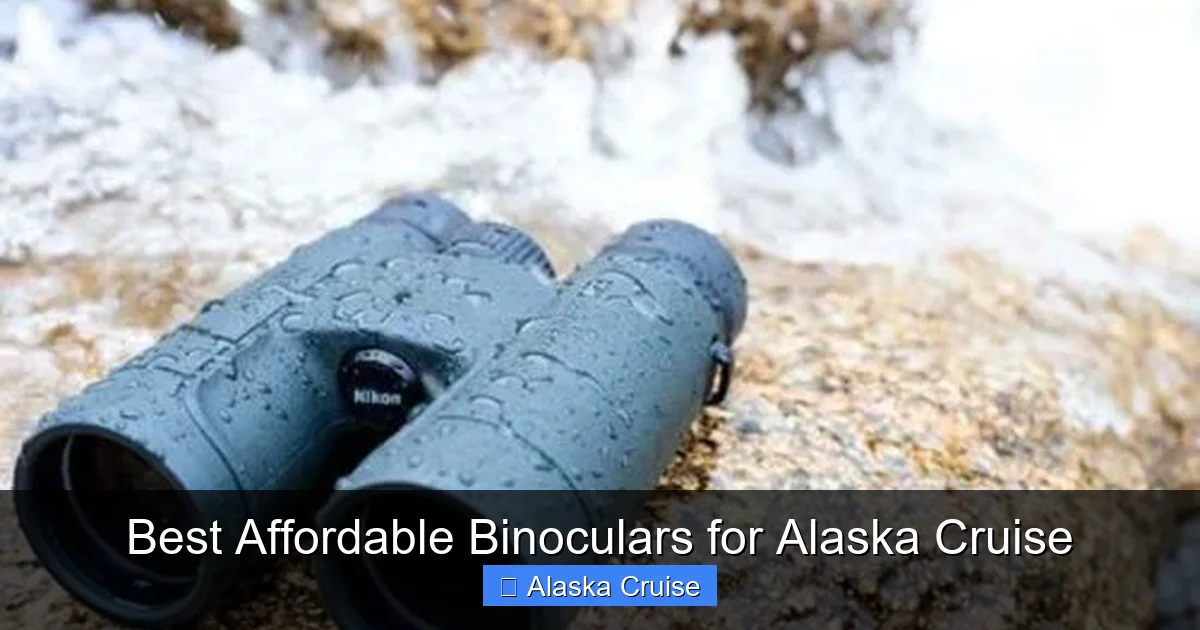
Choosing the right binoculars for your Alaska cruise can make or break your wildlife viewing experience. The best affordable binoculars for Alaska cruise trips balance optical performance, durability, and portability—so you don’t miss a single breathtaking moment.
Planning an Alaska cruise in 2026? You’re in for one of the most visually stunning travel experiences on Earth. From towering glaciers calving into icy waters to humpback whales breaching just yards from your ship, Alaska’s natural drama unfolds at a scale that demands a closer look. But here’s the thing: you won’t always be able to get up close. That’s where a good pair of binoculars comes in—your personal window to the wild.
Yet, not all binoculars are created equal, especially when you’re navigating the unique challenges of an Alaskan voyage. The weather can shift from sunshine to sideways rain in minutes. Wildlife appears and disappears in seconds. And let’s be honest—cruise cabins aren’t known for their spacious storage. So, you need optics that are tough, reliable, and easy to carry. The good news? You don’t need to spend hundreds to get a great view. In 2026, the market is flooded with affordable binoculars that deliver premium performance without the premium price tag.
Whether you’re scanning the coastline for sea otters, tracking a pod of orcas, or marveling at the sheer scale of a glacier, the right pair of binoculars can transform your cruise from memorable to unforgettable. In this guide, we’ll walk you through everything you need to know to pick the best affordable binoculars for your Alaska cruise—so you can focus on the adventure, not the gear.
Key Takeaways
- Magnification and objective lens size matter: Look for 8×42 or 10×42 binoculars for the ideal balance of stability, brightness, and field of view in Alaska’s variable lighting.
- Waterproof and fog-proof are non-negotiable: Alaska’s damp, cold climate demands nitrogen-purged, O-ring sealed optics to prevent internal fogging and water damage.
- Compact and lightweight designs win: You’ll be carrying these on deck, hiking, or storing in small cruise cabins—portability is key.
- Image stabilization isn’t essential—but image clarity is: While high-end stabilized models exist, most affordable options deliver sharp views with steady hands or a monopod.
- Coatings enhance low-light performance: Fully multi-coated lenses improve brightness during overcast skies and early morning or evening wildlife sightings.
- Price doesn’t always mean performance: Several sub-$200 models in 2026 rival premium brands in optical quality and durability.
- Try before you buy—or choose trusted retailers: Reputable sellers like REI, B&H, or Amazon with easy returns let you test comfort and fit risk-free.
📑 Table of Contents
Why Binoculars Are a Must-Have for Your Alaska Cruise
Alaska isn’t just a destination—it’s a sensory overload. The air smells of salt and pine. The sound of ice cracking echoes across fjords. And the sights? They’re nothing short of cinematic. But here’s the catch: many of the most incredible moments happen far from shore. A bald eagle might soar high above a cliff. A bear might amble along a distant riverbank. A whale might surface just beyond the ship’s wake. Without binoculars, these moments become vague shapes on the horizon. With them, they become vivid, immersive experiences.
Think of binoculars as your personal zoom lens. Cruise ships often maintain a safe distance from wildlife and glaciers to protect both passengers and the environment. That means even the most powerful shipboard telescopes can’t replace the intimacy of handheld optics. Plus, you’ll want to use your binoculars during shore excursions—whether you’re hiking through Tongass National Forest or kayaking near a glacier. A lightweight, durable pair lets you explore with confidence.
And let’s not forget the lighting. Alaska’s weather is famously unpredictable. Overcast skies, mist, and early morning or late evening light can all reduce visibility. High-quality optics with good light transmission help you see clearly even when conditions aren’t ideal. In 2026, advancements in lens coatings and prism design mean even budget-friendly models can deliver bright, sharp images in low light.
What to Look for in Affordable Binoculars for Alaska

Visual guide about Best Affordable Binoculars for Alaska Cruise
Image source: cruisediscover.com
When shopping for binoculars, it’s easy to get overwhelmed by specs and jargon. But for an Alaska cruise, you don’t need the most expensive model on the market—you need the right one. Here’s what to prioritize when choosing the best affordable binoculars for Alaska cruise adventures.
Magnification and Objective Lens Size
The first thing you’ll see on any binocular box is a number like “8×42” or “10×50.” The first number is the magnification—how many times closer the subject appears. The second is the diameter of the objective lens in millimeters, which determines how much light enters the binoculars.
For Alaska, 8×42 is the sweet spot. It offers a wide field of view, making it easier to track moving animals like whales or birds. It also provides enough magnification to see details on distant glaciers or shorelines. 10×42 is also a solid choice if you prefer a closer view, but be aware that higher magnification can make the image shakier without a tripod.
Avoid anything below 8x—it won’t bring you close enough—and anything above 12x unless you plan to mount them. Also, steer clear of compact models with small objective lenses (like 25mm or 30mm). They may be lightweight, but they sacrifice brightness and clarity, especially in Alaska’s often dim conditions.
Optical Coatings and Lens Quality
Not all glass is created equal. Look for binoculars with fully multi-coated lenses. This means every glass surface has multiple layers of anti-reflective coating, which reduces glare and increases light transmission. The result? Brighter, sharper images, even at dawn or dusk.
In 2026, many affordable models now include phase-corrected prisms and dielectric coatings—features once reserved for high-end optics. These improve color fidelity and contrast, so you’ll see true-to-life colors when spotting a red fox against snow or a blue whale against dark water.
Don’t be fooled by marketing terms like “HD” or “ultra-clear” without checking the coating specs. A true fully multi-coated lens system is your best bet for performance in variable Alaskan light.
Waterproof and Fog-Proof Construction
Alaska is wet. Rain, sea spray, and humidity are constant companions. Your binoculars must be waterproof—not just water-resistant. Look for models that are O-ring sealed and nitrogen or argon purged. This prevents internal fogging when moving between cold outdoor air and warm indoor spaces, a common issue on cruise ships.
In 2026, even budget models from reputable brands like Nikon, Vortex, and Celestron offer full waterproofing. Avoid cheap, unbranded binoculars that claim to be “weatherproof” but lack proper sealing. A single fogged lens can ruin your trip.
Size, Weight, and Ergonomics
You’ll be carrying these binoculars around your neck for hours. A heavy or bulky pair will become a burden. Aim for models under 25 ounces (about 700 grams) and with a compact design that fits comfortably in your hands.
Look for rubber armor coating—it provides a secure grip even when wet and protects against drops. Also, check the eye relief if you wear glasses. Long eye relief (15mm or more) allows you to see the full field of view without pressing the binoculars against your face.
Some 2026 models now include ergonomic features like adjustable hinge tension and textured grips, making them easier to use for extended periods. Try them out in-store or order from a retailer with a good return policy.
Close Focus and Field of View
You might not think about close focus, but it matters. If you’re on a zodiac tour and a sea lion pops up just 10 feet away, you’ll want binoculars that can focus that close. Look for a close focus distance of 6–8 feet or less.
Field of view (FOV) is measured in feet at 1,000 yards. A wider FOV (like 350+ feet) makes it easier to scan large areas and track moving animals. For Alaska’s vast landscapes, a wide FOV is a big advantage.
Top Affordable Binoculars for Alaska Cruises in 2026
Now that you know what to look for, let’s dive into some of the best affordable binoculars for Alaska cruise trips in 2026. These models offer excellent optical performance, durability, and value—all under $200.
Nikon Prostaff 7S 8×42
Nikon has long been a trusted name in optics, and the Prostaff 7S continues that legacy. Priced around $160, these binoculars feature fully multi-coated lenses, phase-corrected roof prisms, and a rugged, waterproof design.
Weighing just 22.9 ounces, they’re lightweight enough for all-day use. The 8×42 configuration delivers a bright, wide view perfect for spotting wildlife. Users praise the comfortable grip and smooth focus wheel. In 2026, Nikon updated the armor coating for better durability against saltwater exposure—ideal for cruise passengers.
One reviewer noted: “I saw a humpback whale breach from 200 yards away with crystal clarity. The colors were so vivid, it felt like I was right there.”
Vortex Optics Crossfire HD 10×42
Vortex is known for its lifetime warranty and no-questions-asked customer service. The Crossfire HD 10×42 offers 10x magnification for closer views, making it great for detailed glacier observation or distant birdwatching.
At $150, it includes fully multi-coated lenses, dielectric prism coatings, and a nitrogen-purged, waterproof body. The 10x magnification does require a steadier hand, but the wide field of view (341 feet at 1,000 yards) helps compensate.
Weighing 23.8 ounces, it’s slightly heavier than the Nikon but still manageable. The rubber armor provides a secure grip, and the focus wheel is smooth and precise. Vortex also includes a harness strap, which many users prefer over a neck strap for long viewing sessions.
Celestron Nature DX 8×42
Celestron’s Nature DX series has become a favorite among budget-conscious nature lovers. At just $130, it delivers performance that rivals models twice its price.
The 8×42 configuration offers a bright, wide view with a close focus of just 6.5 feet. Fully multi-coated lenses and BaK-4 prisms ensure sharp, high-contrast images. The body is waterproof and fog-proof, with a durable polycarbonate chassis.
Weighing 22.2 ounces, it’s one of the lighter options on this list. The twist-up eyecups are comfortable for both glasses and non-glasses wearers. In 2026, Celestron added improved lens coatings for better low-light performance—perfect for Alaska’s overcast days.
One cruiser shared: “I used these on a glacier tour and was amazed by how clear the ice textures looked. Even in the rain, they stayed dry and fog-free.”
Olympus Trooper 8×40
Olympus may be better known for cameras, but their binoculars are quietly excellent. The Trooper 8×40 offers a slightly smaller objective lens but compensates with superior optical coatings and build quality.
Priced at $140, it features fully multi-coated lenses, phase-corrected prisms, and a waterproof, fog-proof design. The 8x magnification and 40mm lens strike a great balance between brightness and portability.
Weighing 24.7 ounces, it’s a bit heavier but feels solid and well-balanced. The central focus wheel is smooth, and the diopter adjustment is easy to set and lock. Olympus also includes a protective case and lens caps—nice extras at this price.
Carson Mini-Aura 8×21 Compact
If you’re looking for ultra-portability, the Carson Mini-Aura is worth considering. At just $50, it’s one of the most affordable options, though it sacrifices some optical performance.
Weighing only 8.8 ounces, it’s perfect for travelers who want a backup pair or have limited space. The 8×21 configuration is compact but struggles in low light due to the small objective lens.
It’s waterproof and fog-proof, making it suitable for damp conditions. While not ideal for serious wildlife viewing, it’s a great secondary pair for kids or casual use. Keep it in your daypack for quick glances at birds or distant landmarks.
Tips for Using Binoculars on Your Alaska Cruise
Even the best binoculars won’t help if you don’t use them effectively. Here are some practical tips to get the most out of your optics during your 2026 Alaska cruise.
Stabilize Your View
Hand shake is the enemy of clear viewing, especially at higher magnifications. To minimize blur, rest your elbows on a solid surface—like the ship’s railing or a backpack. You can also use a monopod or a small tripod adapter if your binoculars support it.
Some cruisers bring a lightweight travel tripod and mount their binoculars for extended viewing sessions. While not common, it’s a game-changer for spotting distant wildlife.
Scan Methodically
Don’t just sweep the horizon randomly. Use a slow, sweeping motion from left to right, pausing every few seconds to let your eyes adjust. This method helps you spot movement—like a whale spout or a bird in flight—that might otherwise be missed.
Start with the naked eye to locate a general area, then bring the binoculars up to your eyes without moving your head. This reduces neck strain and helps maintain your focus.
Protect Your Investment
Saltwater, sand, and extreme temperatures can damage even the most durable binoculars. Always rinse them with fresh water after exposure to salt spray. Use a microfiber cloth to clean lenses—never your shirt or a rough towel.
Store them in a protective case when not in use. Many 2026 models come with padded cases, but you can also buy aftermarket ones with extra padding.
Share the Experience
Binoculars are more fun when shared. Pass them around during group sightings—it’s a great way to connect with fellow passengers. Just make sure to clean the eyepieces with a lens wipe before sharing.
Consider bringing a small notepad to jot down sightings. Note the time, location, and species. It’s a fun way to track your wildlife encounters and share stories later.
Common Mistakes to Avoid
Even experienced travelers make binocular blunders. Here are a few to watch out for:
– **Buying the cheapest option:** While affordability is key, extremely low-priced binoculars often have poor optics and weak build quality. Stick to reputable brands.
– **Ignoring the return policy:** Comfort and fit are personal. Buy from retailers that allow easy returns so you can test them risk-free.
– **Overpacking:** Don’t bring multiple pairs unless necessary. One high-quality pair is better than two mediocre ones.
– **Forgetting lens caps:** It’s easy to lose them on a windy deck. Use a cap leash or keep them in a secure pocket.
– **Using them in direct sunlight:** Avoid pointing them at the sun, even briefly. It can damage the internal coatings and your eyes.
Final Thoughts: Make Every Moment Count
An Alaska cruise is more than a vacation—it’s a front-row seat to nature’s greatest show. With the right pair of binoculars, you’ll see details others miss, from the texture of glacial ice to the splash of a breaching whale.
The best affordable binoculars for Alaska cruise trips in 2026 offer a perfect blend of performance, durability, and value. You don’t need to spend a fortune to see clearly. Brands like Nikon, Vortex, and Celestron have made high-quality optics accessible to everyone.
So, as you pack your bags for your Alaskan adventure, don’t forget to include a reliable pair of binoculars. Whether you’re scanning the coastline from your balcony or exploring a remote shoreline, they’ll bring the wild closer than ever before.
After all, the best souvenirs aren’t things you can hold—they’re moments you’ll never forget. And with the right view, those moments will be crystal clear.
Frequently Asked Questions
What magnification is best for Alaska cruise binoculars?
8×42 is ideal for most Alaska cruise activities. It offers a wide field of view for tracking moving wildlife and sufficient magnification for detailed observation. 10×42 is also good if you prefer a closer view, but requires a steadier hand.
Do I need waterproof binoculars for an Alaska cruise?
Yes. Alaska’s damp, rainy climate and sea spray demand fully waterproof and fog-proof binoculars. Look for nitrogen-purged, O-ring sealed models to prevent internal fogging and water damage.
Can I use compact binoculars on an Alaska cruise?
Compact models are lightweight and portable, but often sacrifice brightness and clarity due to smaller lenses. They’re fine as a backup, but not recommended as your primary pair for serious wildlife viewing.
Are image-stabilized binoculars worth it for Alaska?
Image stabilization helps reduce shake, but most affordable models don’t include it. For under $200, you’ll get better value from high-quality optics with good coatings than from stabilized but optically inferior models.
How do I clean my binoculars after saltwater exposure?
Rinse them gently with fresh water to remove salt residue. Dry with a soft cloth and use a microfiber lens cloth for the optics. Avoid harsh chemicals or abrasive materials.
Where can I buy the best affordable binoculars for Alaska cruises?
Reputable retailers like REI, B&H Photo, and Amazon offer a wide selection with customer reviews and easy return policies. Buying from trusted sources ensures quality and support if issues arise.