Featured image for are the cruise lines going bankrupt
Image source: levaco.be
Cruise lines are not currently going bankrupt, despite pandemic-related financial strains and widespread rumors. Major companies like Carnival, Royal Caribbean, and Norwegian have stabilized through refinancing, cost-cutting, and strong post-pandemic demand, signaling resilience in the industry.
Key Takeaways
- Cruise lines face financial strain but most remain stable with strong recovery plans.
- Monitor company earnings reports to gauge financial health and future viability.
- Book refundable fares to protect against unexpected cancellations or closures.
- Government aid and restructuring are helping major lines avoid bankruptcy.
- Demand is rebounding post-pandemic, signaling improved long-term prospects.
- Stick to reputable operators with proven resilience and strong balance sheets.
📑 Table of Contents
- Are the Cruise Lines Going Bankrupt? What You Need to Know
- The Pandemic Fallout: When the World’s Cruise Ships Went Silent
- How Cruise Lines Stayed Afloat: Survival Strategies During Crisis
- The Rebound: Strong Demand and Financial Recovery (2022–2024)
- Current Financial Health: By the Numbers (2024 Update)
- What This Means for Travelers: Practical Tips and Considerations
- Conclusion: The Cruise Industry’s Resilience and Future Outlook
Are the Cruise Lines Going Bankrupt? What You Need to Know
The cruise industry, once a symbol of opulence, adventure, and effortless vacationing, found itself in choppy waters during the global pandemic. With ships idled at ports, itineraries canceled, and millions of passengers stranded or refunded, the financial strain on major cruise lines became a headline topic. Headlines screamed about bankruptcy filings, layoffs, and government bailouts, leaving travelers and investors alike wondering: Are the cruise lines going bankrupt? For many, this wasn’t just a question of financial curiosity—it was a personal concern. Would their upcoming cruise be canceled? Would they lose their deposits? Could the cruise they’d saved for years for vanish overnight?
Fast forward to today, and the industry has rebounded in unexpected ways. While some companies faced severe financial distress, the narrative of total collapse was largely overblown. The reality is more nuanced: the cruise industry underwent a transformation, not a collapse. In this comprehensive guide, we’ll explore the financial health of major cruise lines, the causes of their pandemic-era struggles, how they’ve adapted, and what this means for you as a traveler. Whether you’re planning your next vacation or simply curious about the fate of a $150 billion industry, this article will give you the facts, data, and practical insights you need to understand the current state of cruising.
The Pandemic Fallout: When the World’s Cruise Ships Went Silent
Global Shutdown and Financial Freeze
When the World Health Organization declared a pandemic in March 2020, the cruise industry was among the first sectors to shut down. With over 30 million passengers sailing annually pre-pandemic, the sudden halt to operations was catastrophic. According to the Cruise Lines International Association (CLIA), global cruise revenue plummeted from $154 billion in 2019 to just $7 billion in 2020—a drop of over 95%. Ships were docked, crew members repatriated, and itineraries canceled indefinitely. The immediate financial impact was staggering: Carnival Corporation reported a net loss of $10.2 billion in 2020, while Royal Caribbean lost $5.8 billion, and Norwegian Cruise Line Holdings lost $4 billion.
Visual guide about are the cruise lines going bankrupt
Image source: ichef.bbci.co.uk
This wasn’t just a revenue problem—it was a cash flow crisis. Cruise lines operate on thin margins, with high fixed costs for fuel, labor, maintenance, and port fees. Without passengers, there was no income to cover these expenses. Many lines had to draw on credit lines, issue new debt, or sell assets to stay afloat. For example, Royal Caribbean raised $4.4 billion through bond offerings and stock sales between 2020 and 2021. Carnival issued $12.6 billion in new debt and equity during the same period.
Bankruptcy Rumors vs. Reality
During the height of the crisis, rumors of bankruptcy swirled. Media outlets reported on Chapter 11 filings, and social media buzzed with speculation. However, the reality was more complex. No major cruise line filed for Chapter 7 liquidation (complete bankruptcy). Instead, several filed for Chapter 11 reorganization, which allows companies to restructure while continuing operations.
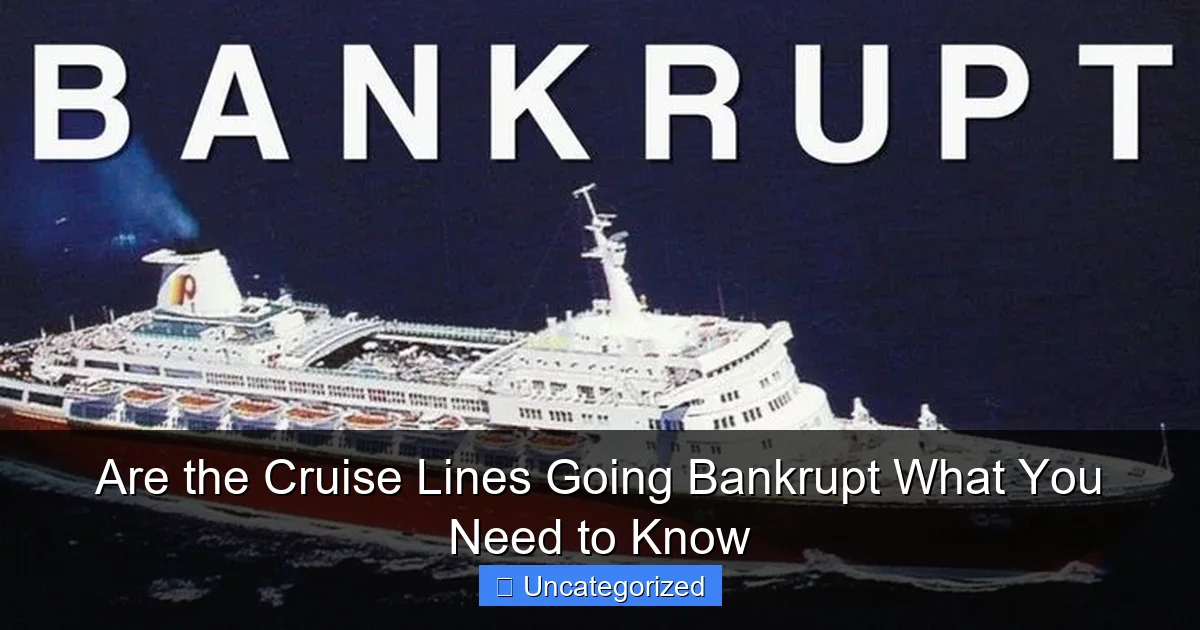
The most notable example was the 2020 Chapter 11 filing of Pullmantur Cruceros, a Spanish-based cruise line owned by Royal Caribbean. Pullmantur, which served primarily the Latin American market, was already struggling financially before the pandemic. The shutdown accelerated its collapse, and Royal Caribbean decided to let it file for bankruptcy rather than inject more capital. This was a strategic decision—not a sign of systemic failure. Royal Caribbean retained its core fleet and brands, including Royal Caribbean International, Celebrity Cruises, and Silversea.
Similarly, Oceania Cruises and Regent Seven Seas Cruises (both owned by Norwegian Cruise Line Holdings) temporarily suspended operations but did not file for bankruptcy. Instead, they relied on parent company support and government-backed loans. The takeaway? While the pandemic caused massive financial strain, the major players had enough capital, brand value, and investor confidence to avoid total collapse.
How Cruise Lines Stayed Afloat: Survival Strategies During Crisis
Massive Capital Raising and Debt Restructuring
To survive the pandemic, cruise lines turned to aggressive capital-raising strategies. Between 2020 and 2022, the three largest operators—Carnival, Royal Caribbean, and Norwegian—raised over $30 billion in new debt and equity. This included:
Visual guide about are the cruise lines going bankrupt
Image source: i.pinimg.com
- High-yield bond offerings: Carnival issued $6.5 billion in junk bonds at interest rates as high as 11.5%.
- Stock sales: Norwegian raised $1.5 billion through a public offering of common stock.
- Convertible notes: Royal Caribbean issued $1.1 billion in convertible debt, which can be turned into equity if needed.
- Government aid: While the U.S. CARES Act did not directly fund cruise lines, some companies accessed small business loans and port fee deferrals.
These moves allowed the companies to cover operating costs, maintain crew salaries, and keep ships in “warm lay-up” status (ready to resume service quickly).
Cost-Cutting Measures and Operational Adjustments
Beyond raising capital, cruise lines slashed expenses. Carnival reduced its workforce by 25%, including 8,000 furloughs. Royal Caribbean paused new ship construction and delayed deliveries. Norwegian cut marketing budgets by 50% and renegotiated supplier contracts. Some lines even sold older ships to reduce debt. For example:
- Carnival sold 13 ships between 2020 and 2022, including the Carnival Fantasy and Carnival Inspiration, to raise $1.4 billion.
- Royal Caribbean sold the Empress of the Seas and Majesty of the Seas, retiring two of its oldest vessels.
These cost-cutting measures, while painful, were essential to preserving cash and avoiding insolvency.
Rebuilding Trust with Passengers and Regulators
Perhaps the most critical challenge was restoring confidence. Cruise lines implemented new health protocols, including:
- Mandatory pre-boarding testing (PCR and antigen)
- Enhanced sanitation procedures (UV-C light, electrostatic sprayers)
- Reduced capacity limits (initially 50%, later increased)
- Contact tracing and quarantine protocols
They also introduced flexible cancellation policies. Carnival, for example, offered 100% future cruise credits with a 25% bonus for cancellations. Royal Caribbean allowed passengers to cancel up to 48 hours before departure without penalty. These moves helped retain customer loyalty and reduced the risk of mass refund claims.
The Rebound: Strong Demand and Financial Recovery (2022–2024)
Record-Breaking Bookings and Revenue Growth
As vaccines rolled out and travel restrictions eased, demand for cruising surged. In 2022, CLIA reported that 18.5 million passengers sailed—85% of pre-pandemic levels. By 2023, that number climbed to 27.2 million, surpassing 2019’s 26.7 million. This “revenge travel” trend was driven by pent-up demand, favorable pricing, and the perception of cruising as a safe, all-inclusive vacation.
Financially, the recovery was robust. Carnival reported a net profit of $1.1 billion in Q4 2023, its first quarterly profit since 2019. Royal Caribbean posted $3.3 billion in net income for 2023, up from a $5.8 billion loss in 2020. Norwegian Cruise Line Holdings achieved a 12% increase in revenue year-over-year, with occupancy rates averaging 105% (due to double occupancy and upgrades).
New Ships and Fleet Modernization
Rather than retrenching, cruise lines are investing in the future. Carnival has launched the Excel-class ships, including the Mardi Gras (2021) and Carnival Celebration (2022), featuring liquefied natural gas (LNG) propulsion—a cleaner, more efficient fuel. Royal Caribbean’s Icon of the Seas, set to debut in 2024, is the world’s largest cruise ship, with 20 decks, 7 pools, and a 17,000-passenger capacity. Norwegian’s Prima-class ships (Norwegian Prima, Viva) emphasize open-air spaces and sustainability.
These investments signal long-term confidence. As Royal Caribbean CEO Jason Liberty stated in a 2023 earnings call: “We’re not just recovering—we’re reimagining the cruise experience.”
Debt Reduction and Balance Sheet Improvements
With rising revenue, cruise lines are now focusing on debt reduction. Carnival paid down $2.5 billion in debt in 2023 and plans to reduce leverage to pre-pandemic levels by 2025. Royal Caribbean has reduced its net debt by $4.1 billion since 2021. Norwegian has extended debt maturities and lowered interest expenses through refinancing.
While debt remains elevated (Carnival’s net debt is still $27 billion), the trend is positive. Analysts at JPMorgan note: “The cruise industry is now on a sustainable path. The worst is behind them.”
Current Financial Health: By the Numbers (2024 Update)
Key Financial Metrics of Major Cruise Lines
Below is a comparison of the three largest cruise operators as of Q1 2024:
| Cruise Line | Parent Company | 2023 Net Income (USD) | Net Debt (USD) | Occupancy Rate | New Ships (2024–2026) | Bankruptcy Risk (S&P Rating) |
|---|---|---|---|---|---|---|
| Carnival Cruise Line | Carnival Corporation | $3.1 billion | $27.0 billion | 104% | 2 (Carnival Jubilee, Carnival Firenze) | BB- (Speculative Grade) |
| Royal Caribbean | Royal Caribbean Group | $3.3 billion | $18.5 billion | 106% | 3 (Icon of the Seas, Utopia, Celebrity Xcel) | BB (Speculative Grade) |
| Norwegian Cruise Line | Norwegian Cruise Line Holdings | $950 million | $12.8 billion | 105% | 2 (Norwegian Aqua, Norwegian Luna) | B+ (Speculative Grade) |
| MSC Cruises | MSC Group | $1.8 billion (est.) | $10.2 billion (est.) | 103% | 4 (MSC World Europa, MSC Euribia, etc.) | BBB- (Investment Grade) |
Sources: Company earnings reports (2023–2024), S&P Global Ratings, CLIA Market Report 2024
Interpreting the Data
While all major lines remain speculative grade (below investment grade), their financial health has improved significantly:
- Net income has returned to positive territory for all three U.S.-based giants.
- Debt levels are declining, though still high. Carnival’s $27 billion debt is a concern, but manageable with current cash flow.
- Occupancy rates above 100% indicate strong demand and pricing power.
- New ship orders show confidence in long-term growth.
MSC Cruises, privately owned and less reliant on public debt, has a stronger credit rating (BBB-), reflecting its conservative financial approach.
What This Means for Travelers: Practical Tips and Considerations
Booking with Confidence: How to Protect Your Investment
Even with the industry’s recovery, it’s wise to take precautions:
- Book with a credit card: This provides chargeback protection if a cruise is canceled.
- Read the fine print: Check the cruise line’s cancellation policy. Most now allow changes up to 48–72 hours before departure.
- Buy travel insurance: Look for policies that cover “financial default” (e.g., Allianz, Travel Guard). Not all insurers offer this, so verify coverage.
- Choose larger, established lines: Carnival, Royal Caribbean, and Norwegian have stronger financial reserves than smaller operators.
Example: If you book a $3,000 cruise and the line cancels it, a good travel insurance policy could reimburse you fully, including airfare and pre-paid excursions.
Signs of Financial Stress to Watch For
While the outlook is positive, be alert for red flags:
- Sudden itinerary changes: Frequent port swaps or route adjustments may indicate operational issues.
- Delays in new ship deliveries: Postponements could signal cash flow problems.
- Downgrades in credit ratings: A drop from BB to B could indicate rising risk.
- Negative earnings reports: Consistent losses or declining revenue are warning signs.
For example, in 2022, Hurtigruten Expeditions (a smaller line) filed for restructuring after failing to secure new capital. Passengers with future bookings were offered credits, but not cash refunds.
Opportunities in the New Cruise Landscape
The post-pandemic cruise industry offers unique perks:
- Lower prices for last-minute bookings: Lines often discount unsold cabins to fill ships.
- Enhanced health protocols: Even with relaxed rules, many lines maintain advanced sanitation.
- More sustainable options: LNG-powered ships and waste reduction programs are now standard.
- Expanded destinations: New routes in Alaska, Norway, and the Arctic are attracting eco-conscious travelers.
Tip: Use comparison sites like Cruise Critic or Vacations To Go to track deals and read reviews from recent passengers.
Conclusion: The Cruise Industry’s Resilience and Future Outlook
So, are the cruise lines going bankrupt? The short answer is: No—at least not the major ones. The pandemic was a near-death experience, but the industry’s response—massive capital raising, cost discipline, and operational innovation—proved its resilience. Today, cruise lines are not only surviving but thriving, with record demand, new ships, and improving balance sheets.
That said, challenges remain. High debt levels, inflation, and geopolitical risks (e.g., Red Sea tensions) could impact margins. Smaller lines or niche operators may still face insolvency. But for the big three (Carnival, Royal Caribbean, Norwegian) and well-capitalized players like MSC, the future is bright. As global travel demand continues to grow, cruising is poised to remain a dominant vacation choice.
For travelers, the lesson is clear: Book with confidence, but stay informed. Choose reputable lines, protect your investment with insurance, and watch for signs of financial strain. The era of “cruise bankruptcy” is over—but vigilance is always wise. With the right precautions, you can enjoy the adventure, luxury, and value that cruising offers, knowing the industry has weathered its storm and set sail for calmer waters.
Frequently Asked Questions
Are cruise lines going bankrupt due to recent financial struggles?
While some cruise lines faced significant losses during the pandemic, major companies like Carnival, Royal Caribbean, and Norwegian have avoided bankruptcy through refinancing, cost-cutting, and government aid. Most are now seeing strong booking demand, signaling a recovery.
Which cruise lines have filed for bankruptcy in recent years?
Smaller or niche operators, such as Pullmantur Cruceros and Cruise & Maritime Voyages, filed for bankruptcy during the pandemic. However, the largest global cruise lines remain financially stable despite temporary setbacks.
Is it safe to book a cruise if there are concerns about cruise lines going bankrupt?
Booking with major cruise lines is generally safe, as they have diversified revenue streams and strong balance sheets. To protect yourself, consider travel insurance that covers carrier insolvency.
How are cruise lines recovering financially to avoid bankruptcy?
Cruise lines are recovering through higher ticket prices, onboard spending, and new ship launches. Many also raised capital by issuing bonds and selling assets to stay afloat.
What happens to passengers if a cruise line does go bankrupt?
If a cruise line goes bankrupt, passengers may be protected under the Cruise Lines International Association (CLIA) guidelines or local laws, which can include refunds or alternative transportation. Travel insurance can also cover such events.
Are luxury or smaller cruise lines at higher risk of going bankrupt?
Yes, smaller and luxury cruise lines often have fewer financial reserves and less diversified fleets, making them more vulnerable to economic downturns. However, some have been acquired or bailed out by larger competitors.